







Strategy Consulting in Bergen County

Strategic decisions degrade when the prefrontal cortex accumulates glutamate faster than the brain can clear it. The quality of your decisions is not a discipline problem — it is an architecture problem.

The gap between a sound strategy and a sound decision is not analytical the brain's self-referential thought system — intrusion silently degrade the judgment of even the most experienced professionals.

Book a Strategy Call
ForbesUSA TodayHuffPostNewsweekAssociated PressCosmopolitanBusiness InsiderForbesUSA TodayHuffPostNewsweekAssociated PressCosmopolitanBusiness Insider

Key Points

  1. Strategic decisions are processed through the same prefrontal circuits that handle every other cognitive demand — meaning operational load directly reduces strategic decision quality.
  2. The brain's loss aversion produces strategic conservatism that is biologically automatic, not rationally chosen — explaining why leaders consistently underweight transformative options.
  3. Intuitive expertise — the rapid pattern recognition that guides experienced strategists — is encoded in neural networks that can be specifically identified and strengthened.
  4. Group strategic planning triggers social conformity circuits that suppress dissenting evaluations, producing consensus that reflects neural dynamics rather than analytical rigor.
  5. Superior strategic capacity requires neural architecture that maintains integrative thinking under the same conditions that typically force other executives into reactive processing.

The Strategy That Your Framework Cannot See

“The frameworks get more sophisticated. The data gets more granular. The advisory teams get more credentialed. And the executive who must synthesize, evaluate, and decide — the most critical variable in the entire chain — is treated as a constant. That assumption is almost always false.”

The analysis was thorough. The data was solid. The strategic recommendation was sound. And yet the decision that followed was conservative, reactive, or simply wrong — not because you lacked the information, but because the brain evaluating that information was no longer operating at specification.

This is the invisible failure point in strategic decision-making. The frameworks get more sophisticated. The data gets more granular. The advisory teams get more credentialed. And the executive who must synthesize, evaluate, and decide — the most critical variable in the entire chain — is treated as a constant. The implicit assumption of every strategy consulting engagement is that the decision-maker’s cognitive hardware is functioning optimally. That assumption is almost always false.

By four o’clock on a demanding day, after eight hours of strategic meetings, evaluations, and sequential decisions, your prefrontal cortex is not the same organ it was at nine in the morning. The degradation is neurochemical, measurable, and predictable. You do not feel impaired. You feel tired, less certain, perhaps more cautious than usual. The subjective experience is unremarkable. The cognitive consequence is not.

This is not a discipline problem or a time management problem. It is a feature of prefrontal cortex architecture under sustained load. The executives who outperform in Miami’s multi-industry, multi-market, bilingual decision environment are not the ones who work longer or harder. They are the ones whose neural decision architecture has been calibrated to operate within its actual constraints and to recover efficiently when those constraints are reached.

What I see repeatedly in this work is highly intelligent professionals making their worst decisions at the moments that matter most. The board meeting at the end of a long day. The deal evaluation after a week of investor negotiations. The strategic pivot discussion that follows a month of operational firefighting. The cognitive cost has already accumulated. The prefrontal resources are already depleted. And the decision that emerges reflects the depleted architecture, not the executive’s actual capability.

The Neuroscience of Strategic Decision-Making

High-demand cognitive work produces measurably higher concentrations of glutamate — the brain’s primary excitatory chemical — in the prefrontal cortex compared to low-demand work. When glutamate accumulates faster than the brain’s clearance mechanisms can remove it, it prevents normal prefrontal activation and impairs cognitive control.

The behavioral consequence is precisely what executives experience but cannot explain: a preference for low-effort, high-reward actions over complex deliberate choices. They default to the familiar, the conservative, and the expedient. For a Miami real estate executive reviewing term sheets at four o’clock after eight hours of strategic meetings, this is not laziness — it is neurochemistry. This glutamate accumulation, cleared primarily during sleep, is not resolved through brief rest or coffee.

Cognitive control originates from the active maintenance of goal-relevant representations in the prefrontal cortex, which provides bias signals to other brain structures guiding activity along task-appropriate neural pathways. The dorsolateral prefrontal cortex, the circuit allowing strategic focus, allows an executive to hold a strategic objective in mind while filtering irrelevant information, suppressing automatic responses, and sequencing deliberate actions toward goal attainment.

Decision Fatigue and the Judicial Evidence

The most compelling applied demonstration of decision fatigue comes from analysis of 1,112 judicial rulings by experienced parole judges — with a mean experience of 22.5 years. The probability of a favorable ruling declined from approximately sixty-five percent at the start of a session to nearly zero by the end — then reset abruptly to sixty-five percent following a food break.

The judges did not perceive themselves as fatigued. They were experienced, motivated, and operating within a formal institutional structure. Yet sequential decision-making had degraded their prefrontal executive control to the point where they defaulted to the cognitively cheapest outcome. For a Miami hedge fund portfolio manager making dozens of allocation decisions per day, the underlying mechanism is identical.

Strategy consulting and organizational development — layered copper neural blueprint connecting operational tiers

Working memory, the brain’s short-term mental workspace, is not primarily a storage system but an attentional control system. The prefrontal cortex maintains goal-relevant information in an active, interference-resistant state. This system operates in direct competition with the brain’s default wandering mode and the failure — measurable on neuroimaging.

How Dr. Ceruto Approaches Strategic Advisory

Dr. Ceruto’s methodology addresses the substrate — the neural architecture of the decision-maker — directly. Rather than delivering strategic recommendations to an executive whose prefrontal cortex is operating at reduced capacity due to chemical fatigue buildup, disrupted emotion-regulation balance, and unchecked mental wandering, Real-Time Neuroplasticity calibrates the hardware first. The strategic output — better decisions, faster adaptation, higher cognitive flexibility — is a direct consequence of neural architecture optimization, not framework application.

The assessment phase maps which specific circuits are limiting decision quality. Cognitive flexibility depends on an interactive circuit between the brain’s conflict-monitoring system and its planning center. The conflict monitor detects competing strategic options and signals the planning center to increase deliberate control. An executive who cannot flexibly shift between strategic frameworks under changing market conditions may have a flexibility deficit that is distinct from their analytical capability.

The pattern that presents most often is executives who are analytically brilliant but whose decision architecture degrades under sustained cognitive load in ways they cannot perceive. MindLAB’s approach directly addresses three mechanisms: the competition between focused strategic processing and the brain’s wandering mode, the balance between rational evaluation and threat-driven conservatism, and the gating system that determines whether the prefrontal cortex updates its active strategy. This gating system determines whether executives adapt to new information or cling to an outdated approach.

The NeuroSync program targets specific decision-making deficits — a particular cognitive flexibility bottleneck, a working memory degradation pattern, or a default mode network intrusion cycle. The NeuroConcierge model provides comprehensive embedded partnership for decision-makers navigating sustained high-load environments where strategic demands compound across multiple markets, asset classes, or organizational contexts simultaneously.

What to Expect

The engagement begins with a Strategy Call, a focused strategy conversation where Dr. Ceruto assesses which neural decision-making mechanisms are operating below specification. This is not a general advisory conversation. It is a precision assessment of the specific prefrontal architecture involved.

From there, Dr. Ceruto designs a structured protocol targeting the identified circuits. The work follows a clear progression: neural architecture assessment, identification of the specific cognitive control deficits limiting strategic output, targeted recalibration through Real-Time Neuroplasticity, and measurable verification of decision quality improvement.

The engagement does not deliver strategic recommendations. It optimizes the neural machinery that evaluates, synthesizes, and decides upon strategic information. Progress is measured through the shift in the biological systems generating decision output — producing strategic judgment that holds under the exact conditions where previous approaches failed.

References

Wiehler, A., Branzoli, F., Adanyeguh, I., Mochel, F., & Pessiglione, M. (2022). A neuro-metabolic account of why daylong cognitive work alters the control of economic decisions. Current Biology, 32(16), 3564–3575. https://pubmed.ncbi.nlm.nih.gov/35961314/

Danziger, S., Levav, J., & Avnaim-Pesso, L. (2011). Extraneous factors in judicial decisions. Proceedings of the National Academy of Sciences, 108(17), 6889–6892. https://www.pnas.org/doi/10.1073/pnas.1018033108

Miller, E. K., & Cohen, J. D. (2001). An integrative theory of prefrontal cortex function. Annual Review of Neuroscience, 24, 167–202. https://doi.org/10.1146/annurev.neuro.24.1.167

The Neural Architecture of Strategic Judgment

Strategy consulting, at the level where it actually produces transformation rather than documentation, is fundamentally a problem of judgment — and judgment is the output of a neural system that most consulting frameworks have never examined. Understanding the neuroscience of how strategic decisions are actually made, as opposed to how consulting models assume they are made, explains why so much technically rigorous strategic analysis fails to change organizational behavior in any durable way.

Neuroscience consultation — rosewood table with crystal brain sculpture and branded journal for strategy call preparation

The standard consulting model assumes a rational decision-making process: gather data, apply analytical frameworks, generate option sets, evaluate against criteria, select the optimal option, implement. This model is an accurate description of the slow, deliberate processing system — the prefrontal cortex operating in its analytical mode. It is almost entirely disconnected from the fast processing system — the amygdala, the basal ganglia, and the ventromedial prefrontal cortex — that actually governs most decisions made under conditions of ambiguity, time pressure, and high stakes. These two systems do not operate in clean sequence. The fast system generates an initial response almost instantaneously, and the slow system then operates on top of that response — modifying it at the margins, rationalizing it in sophisticated language, occasionally overriding it when the stakes are high enough to motivate the cognitive effort. But the initial response was already there, already shaping what data gets noticed and what gets filtered, what options feel viable and what feels impossible.

This means that strategic consulting that delivers its recommendations to the slow system — through PowerPoint decks, financial models, and structured presentations to executive teams — is addressing the system that will write the approval memo. It is not addressing the system that determined whether the recommendation was actually adopted in the way it was designed to be adopted, executed with genuine commitment rather than bureaucratic compliance, or abandoned when the first significant obstacle emerged.

The executives who approve transformational strategic recommendations and the middle managers who implement them are both operating primarily through the fast system in their day-to-day decision-making. Strategic consulting that has not accounted for how those systems work, what they respond to, and what conditions allow them to update their operating models is consulting that will look excellent in the boardroom and fail in the organization.

Why Conventional Strategy Consulting Falls Short

The limitations of conventional strategy consulting are not primarily analytical. The major firms have sophisticated analytical capabilities, and the frameworks they apply have genuine intellectual substance. The limitations are behavioral and neuroscientific: the gap between recommendation and implementation, the failure of change initiatives that were strategically sound, the reversion to prior behavior once the consulting engagement concludes and the external pressure to execute is removed.

These failures follow a predictable pattern because they have a common cause: the recommendations were designed by and for the slow processing system, and the implementation required the fast processing system to behave in ways it had not been prepared to behave. The data was compelling. The logic was sound. The people responsible for execution simply did not have the neural circuitry — the new habits, the updated associations, the restructured prediction models — required to operate differently in the conditions they actually faced.

How Neuroscience-Integrated Strategy Consulting Works

My consulting work integrates strategic analysis with a precise understanding of the neural mechanisms that will determine whether the strategy is executed. This is not a substitute for rigorous analysis — it is an additional layer of precision that conventional consulting omits.

At the diagnostic level, I map not only the strategic situation — the competitive landscape, the capability gaps, the resource constraints — but also the behavioral and neural architecture of the organization: how decisions are actually made at each level, what the fast system’s current associations are with the strategic direction being proposed, what the threat response looks like for the individuals and groups who will bear the cost of the change, and what the current motivational architecture rewards and punishes in practice rather than in stated values.

The strategic recommendation that emerges from this dual analysis is different from one that emerges from analysis of the strategic situation alone: it is designed to be implementable by the actual human nervous systems in the organization, not by the idealized rational actors that most strategic models assume. The change sequencing, the communication approach, the metrics and feedback structures, and the early win design are all calibrated to the fast processing systems that will actually govern behavior during implementation.

What This Looks Like in Practice

Clients describe a consistent experience: the strategic recommendations feel different from those produced by previous engagements. Not more complex — often simpler, because they have been stripped of elements that were analytically elegant but behaviorally unrealistic. More grounded. More executable. The executives who receive them can see not just what the strategy requires but how it will actually get done, by whom, in what sequence, and what the obstacles will be — because those elements have been incorporated into the recommendation rather than treated as implementation details to be worked out afterward.

The implementation track record reflects this. Strategy that is designed for actual human nervous systems, rather than for rational actors, is strategy that gets executed. Not perfectly — organizations are complex adaptive systems and outcomes are never perfectly predictable — but with a fidelity to the original design that conventional consulting engagements rarely achieve.

The initial conversation — a strategy call — functions as a diagnostic meeting that maps the strategic situation and the behavioral and neural context in which it is operating. From that map, we establish what the consulting engagement needs to address and what it can realistically produce. One hour. Precise. No boilerplate.


Marker Traditional Approach Neuroscience-Based Approach Why It Matters
Focus Strategic frameworks, competitive intelligence, and analytical planning methodologies Strengthening the neural circuits that support integrative strategic thinking, risk calibration, and pattern recognition under pressure
Method Strategy consulting engagements with analytical tools, facilitated sessions, and deliverable reports Targeted intervention in the prefrontal and pattern-recognition circuits that determine individual strategic capacity
Duration of Change Analysis-dependent; strategic clarity requires ongoing consulting input as markets and conditions evolve Permanent enhancement of the neural architecture governing strategic processing that executives apply independently

Why Strategy Consulting Matters in Bergen County

Strategic Consulting in Bergen County, New Jersey

Strategic clarity for Bergen County's professionals requires addressing the neural conditions under which strategic thinking occurs at its highest quality. The GW Bridge commuter whose brain has been depleted by the morning crossing attempts strategic thinking from a reduced-capacity position. The moments requiring the clearest strategic thought — the business pivot, the career direction, the investment thesis — are the moments when the GW Bridge lifestyle's stress and depletion are most likely to degrade the thinking. The strategic capacity is highest when the brain operates optimally, and the Bergen County commuter lifestyle ensures the brain rarely operates optimally during the periods when strategic clarity is most needed.

My work addresses strategic capacity at the neural systems level — the prefrontal networks producing strategic insight, the conditions under which they operate optimally, and the interventions that maintain strategic clarity despite the GW Bridge corridor's daily depletion of the neural resources strategic thinking requires.

Dr. Sydney Ceruto, PhD — Founder, MindLAB Neuroscience

Dr. Sydney Ceruto, PhD — Founder & CEO, MindLAB Neuroscience

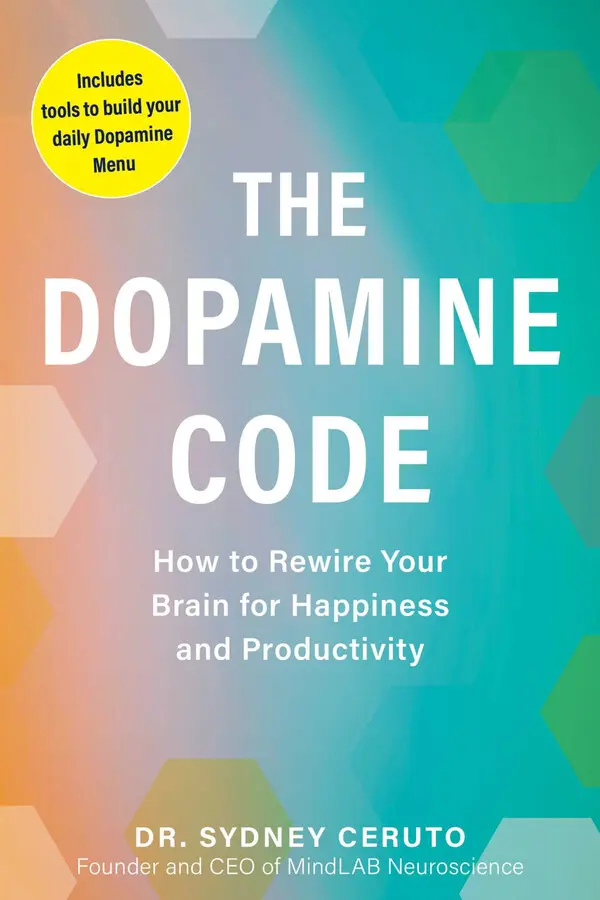
Dr. Ceruto holds a PhD in Behavioral & Cognitive Neuroscience from NYU and two Master’s degrees from Yale University. She lectures at the Wharton Executive Development Program at the University of Pennsylvania and has been an Executive Contributor to the Forbes Coaching Council since 2019. Dr. Ceruto is the author of The Dopamine Code (Simon & Schuster, June 2026). She founded MindLAB Neuroscience in 2000 and has spent over 26 years pioneering Real-Time Neuroplasticity™ — a methodology that permanently rewires the neural pathways driving behavior, decisions, and emotional responses.

References

Rangel, A., Camerer, C., & Montague, P. R. (2008). A framework for studying the neurobiology of value-based decision making. Nature Reviews Neuroscience, 9(7), 545–556. https://doi.org/10.1038/nrn2357

Miller, E. K., & Cohen, J. D. (2001). An integrative theory of prefrontal cortex function. Annual Review of Neuroscience, 24, 167–202. https://doi.org/10.1146/annurev.neuro.24.1.167

Kahneman, D., & Klein, G. (2009). Conditions for intuitive expertise: A failure to disagree. American Psychologist, 64(6), 515–526. https://doi.org/10.1037/a0016755

Hare, T. A., Camerer, C. F., & Rangel, A. (2009). Self-control in decision-making involves modulation of the vmPFC valuation system. Science, 324(5927), 646–648. https://doi.org/10.1126/science.1168450

Success Stories

“My communication was damaging every relationship in my professional life and I couldn't see it. Dr. Ceruto's neuroscience-based approach didn't just improve how I communicate — it rewired the stress response that was driving the pattern in the first place. The people around me noticed the change before I fully understood what had happened. That tells you everything.”

Bob H. — Managing Partner London, UK

“Every close relationship I had eventually hit the same wall — I'd flood emotionally and shut down or explode, and nothing I'd tried gave me real control over it. Dr. Ceruto identified that my autonomic nervous system was defaulting to fight-or-flight the moment real intimacy was on the line. She didn't give me coping tools. She restructured the default. The flooding stopped because the trigger architecture changed.”

Simone V. — Publicist New York, NY

“Dr. Ceruto is truly exceptional. I’ve always been skeptical about anyone being able to get through to me, but she has a unique way of bringing about profound changes. She is incredibly intuitive and often knows the answers to complex matters before you even get there. In just a couple of months, I noticed significant changes in how I live my life. Sydney is honest and direct, yet compassionate. She personally relates to you without judgment and demonstrates real investment in your success.”

Ash — Neurologist La Jolla, CA

“Outperforming every metric for years and feeling absolutely nothing — no satisfaction, no drive, just a compulsive need to keep going. Executive retreats, meditation protocols, none of it made a difference. Dr. Ceruto identified the dopamine downregulation that was driving the entire pattern. My reward system had essentially gone offline from overstimulation. She didn't teach me to reframe success — she restored the neurochemistry that lets me actually experience it.”

Mikhail D. — Family Office Principal Washington, DC

“Every metric was green and I felt nothing. Conventional approaches told me I was 'burned out' or needed gratitude practices — none of it touched the actual problem. Dr. Ceruto identified that my dopamine baseline had shifted so high from constant reward-chasing that normal achievement couldn't register anymore. She recalibrated the reward system itself. I didn't need more success. I needed my brain to actually experience the success I already had.”

Rafael G. — Screenwriter New York, NY

“I reached out to Dr. Ceruto for help with an ongoing issue I couldn’t resolve. Having discussed it with friends and family, I thought it would be challenging for her to offer a fresh perspective. I was absolutely wrong. She asked all the right questions that pushed me to articulate my thoughts differently than anyone else had. After eight weeks, she made the answer seem so clear. Dr. Ceruto is warm, objective, and open-minded — it leaves no doubt how much she genuinely cares.”

Claudia S. — Physician Wellesley, MA

Frequently Asked Questions About Strategy Consulting in Bergen County

How is neuroscience advisory different from executive advisory or business consulting?

Traditional strategy consulting addresses organizational architecture — market positioning, competitive dynamics, operational efficiency. MindLAB addresses the neural architecture of the individual decision-maker. The distinction is between optimizing the strategic frameworks presented to an executive and optimizing the prefrontal circuitry that must evaluate, synthesize, and decide upon those frameworks. MindLAB does not deliver strategy. It calibrates the biological machinery that determines whether any strategy is executed with full cognitive precision.

How does decision fatigue specifically affect executives in Miami's finance and real estate markets?

Finance and real estate professionals in Bergen County make dozens of consequential sequential decisions daily under incomplete information and time pressure. Research at the Paris Brain Institute demonstrated that sustained cognitive work accumulates glutamate in the lateral prefrontal cortex — the brain's executive control center —, impairing cognitive control and biasing decisions toward low-effort, conservative outcomes. A portfolio manager reviewing allocation decisions at four o'clock or a developer evaluating term sheets after a day of negotiations is operating with neurochemically degraded prefrontal function — regardless of their experience or motivation.

Can the prefrontal cortex be trained to make better strategic decisions under pressure?

Yes. The prefrontal cortex, the brain's executive control center, exhibits neuroplasticity, the capacity for structural change through targeted intervention. Dr. Ceruto's Real-Time Neuroplasticity™ methodology specifically targets the dorsolateral prefrontal cortex — the brain's planning center — and the default mode network competition that determines decision quality under load. The result is calibrated cognitive architecture that maintains strategic precision under the exact conditions where untrained executive function, including planning, focus, and task management, degrades.

What is Real-Time Neuroplasticity™ and how does it apply to strategic decision-making?

Real-Time Neuroplasticity, the brain's ability to rewire itself, is Dr. Ceruto's proprietary methodology that leverages the brain's capacity for structural change during active engagement. Applied to strategy, it means the specific prefrontal circuits governing cognitive flexibility — the ability to shift thinking between concepts —, working memory capacity, and executive attention are recalibrated during the intervention itself. The protocol addresses glutamate accumulation patterns, default mode network intrusion, and prefrontal-limbic imbalance, producing durable decision architecture rather than temporary behavioral adjustment.

Do you work with Latin American executives or offer advisory for bilingual decision-makers?

Yes. Latin American executives navigating dual-market complexity face structurally higher prefrontal demands than single-market decision-makers. The cognitive load, the total demand on mental processing capacity, of bilingual processing, bicultural strategic evaluation, and cross-market decision sequencing is measurable and addressable at the neural level. Dr. Ceruto works with Bergen County's Latin American business community on the specific prefrontal architecture challenges that conventional consulting practices, designed for single-cultural environments, do not address.

How long does it take to see measurable improvement in decision quality?

Real-Time Neuroplasticity, the brain's ability to rewire itself,™ produces neural-level shifts during active engagement. The specific timeline depends on which prefrontal circuits require recalibration and the complexity of the decision environment, which Dr. Ceruto assesses during the initial Strategy Call. Clients in sustained high-load decision environments typically engage through the NeuroConcierge™ model for comprehensive ongoing calibration, while professionals targeting specific decision-quality bottlenecks work through the NeuroSync™ program.

Is MindLAB's strategic advisory available virtually?

Yes. Dr. Ceruto works with decision-makers both in-person at MindLAB's North Bergen County Beach location and through secure virtual sessions. The neural assessment and protocol delivery are effective across both formats. Many Bergen County-based professionals maintain a hybrid engagement — particularly those whose schedules require flexibility between Brickell, Latin American travel, and virtual availability.

How does improving individual strategic neural capacity differ from providing strategic advisory services?

Strategic advisory services provide external analysis, frameworks, and recommendations — they add strategic input to the leader's decision process. This is valuable when the leader has the neural capacity to process and evaluate the input effectively. But when cognitive load, stress, or decision fatigue has degraded the prefrontal circuits responsible for strategic evaluation, even excellent advisory input is processed through compromised architecture.

Dr. Ceruto's approach optimizes the neural architecture that processes strategic input — ensuring the leader's brain evaluates analysis, weighs alternatives, and synthesizes recommendations with full cognitive capacity rather than the degraded processing that sustained organizational demand typically produces.

Can neuroscience-based strategy work improve an entire leadership team's strategic capacity?

Yes — and group strategic capacity often improves faster than individual capacity because of social cognition dynamics. When the 2-3 most influential members of a leadership team improve their strategic neural processing, their upgraded cognition influences the group through mirror neuron systems and social conformity circuits. The team's collective cognitive quality rises disproportionately to the number of individuals who received direct intervention.

Dr. Ceruto identifies the individuals whose neural states most powerfully influence group strategic dynamics and targets them for intervention. This produces the maximum improvement in collective strategic output with the minimum number of individual engagements.

What specific cognitive biases does this approach address that affect strategic decision-making?

Strategic decision-making is systematically distorted by several neural biases: loss aversion (overweighting potential losses by approximately 2:1 versus gains), status quo bias (assigning disproportionate risk to novel states), anchoring (over-relying on initial information), and sunk cost bias (continuing investment based on past spending rather than future value). These are not reasoning errors — they are features of neural architecture that evolved for survival, not strategic planning.

Dr. Ceruto addresses these biases at the circuit level — recalibrating the risk-assessment, valuation, and prediction systems that generate biased strategic processing. When the neural computation is more accurate, strategic decisions naturally improve without requiring the conscious bias-correction efforts that are cognitively expensive and frequently fail under pressure.

Also available in: Miami · Wall Street · Midtown Manhattan · Beverly Hills · Lisbon

The Prefrontal Architecture Behind Every Strategic Decision Made in Bergen County

From Brickell's hedge fund offices to Coral Gables' development firms, strategic judgment is a biological function — and it degrades predictably under load. Dr. Ceruto maps the architecture in one conversation.

Book a Strategy Call
MindLAB Neuroscience consultation room

The Dopamine Code

Decode Your Drive

Why Your Brain Rewards the Wrong Things

Your brain's reward system runs every decision, every craving, every crash — and it was never designed for the life you're living. The Dopamine Code is Dr. Ceruto's framework for understanding the architecture behind what drives you, drains you, and keeps you locked in patterns that willpower alone will never fix.

Published by Simon & Schuster, The Dopamine Code is Dr. Ceruto's framework for building your own Dopamine Menu — a personalized system for motivation, focus, and enduring life satisfaction.

Order Now

Ships June 9, 2026

The Dopamine Code by Dr. Sydney Ceruto — Decode Your Drive
Locations

The Intelligence Brief

Neuroscience-backed analysis on how your brain drives what you feel, what you choose, and what you can’t seem to change — direct from Dr. Ceruto.