Corporate Training in Bergen County

Most corporate training fails because it targets behavior while ignoring the neural architecture that generates it. MindLAB engineers the biological substrate — so the change actually holds.

Corporate training investments consistently underperform because the standard workshop model violates the neuroscience of memory consolidation — converting short-term memories to long-term —. MindLAB Neuroscience approaches workforce development at the level of neural circuitry, designing programs around the biological mechanisms that determine whether training produces lasting change or temporary compliance.

Book a Strategy Call
ForbesUSA TodayHuffPostNewsweekAssociated PressCosmopolitanBusiness InsiderForbesUSA TodayHuffPostNewsweekAssociated PressCosmopolitanBusiness Insider

Key Points

  1. Adult learning depends on neuroplasticity — the brain's capacity to form new connections — which requires specific conditions that most corporate training environments fail to create.
  2. The brain consolidates new skills during sleep and recovery periods, meaning compressed training schedules that eliminate processing time actively prevent the learning they intend to produce.
  3. Mirror neuron activation during observational learning is context-dependent — skills demonstrated in training environments may not transfer to operational contexts without neural bridging.
  4. Sustained attention degrades after approximately 20 minutes of continuous instruction, yet most corporate programs are designed around multi-hour presentation formats.
  5. Training ROI depends on whether new neural pathways are reinforced within critical consolidation windows — a biological timeline most programs ignore entirely.

Why Corporate Training Doesn’t Stick

“Organizations keep increasing the dosage of behavioral training when the real deficit is architectural. They are prescribing a stronger communication workshop to a team whose emotional regulation circuitry cannot sustain any communication framework under pressure.”

You have seen this cycle before. The offsite was well-designed. The facilitators were polished. The frameworks made sense in the room. People left energized, maybe even optimistic. Within three weeks, the behaviors were gone. Not because anyone lacked motivation — because the underlying neural architecture was never modified.

This is the central frustration of every HR director and L&D leader who has invested in corporate training programs in Miami. The budget goes out. The engagement scores tick up briefly. And then the organization reverts to exactly where it started. The communication frameworks get filed away. The leadership models collect dust. The team dynamics that triggered the investment in the first place reassert themselves with mechanical reliability.

The problem is not the content. It is not the delivery. It is a fundamental misunderstanding of what training actually requires at the biological level. A professional whose threat-detection system is chronically elevated, whose body-awareness signals are degraded from accumulated pressure, and whose self-monitoring circuits are undertrained will absorb the framework intellectually. They apply it for a handful of days, and revert. Not because they chose to revert — because the neural substrate that would sustain the new behavior was never touched.

What I see repeatedly in this work is that organizations keep increasing the dosage of behavioral training when the real deficit is architectural. They are prescribing a stronger communication workshop to a team whose emotional regulation, the ability to manage emotional responses, circuitry cannot sustain any communication framework under pressure. The solution is not more content. It is a fundamentally different level of intervention.

Miami’s corporate landscape compounds this challenge. The wave of corporate relocations between 2024 and 2025 has produced organizations building culture from zero in a city where the workforce spans divergent professional formation systems. A Venezuelan executive leading a US-trained team at a relocated fintech, a Brazilian developer managing a Miami construction workforce, a Cuban-American hotel general manager overseeing staff that is sixty-five percent foreign-born. Each of these contexts demands training that addresses not communication skills but the neural regulatory architecture that determines whether any skill holds under real-world pressure.

The Neuroscience of Lasting Workforce Development

The reason standard corporate training fails has been mechanistically documented. Research on the brain’s learning circuits has demonstrated that learning episodes produce markedly enhanced memory consolidation when spaced by sixty minutes or longer, but have minimal effect at intervals below thirty minutes. The brain’s encoding machinery requires a recovery window before additional learning can be consolidated. A two-day immersive workshop, however well-designed, produces massed training that directly violates this biological requirement.

Complementary research confirms that spaced training activates MAPK signaling pathways that peak approximately forty-five minutes post-trial — a delay mechanistically required for protein synthesis and stable memory consolidation. The standard corporate training format does not fail because of poor facilitation. It fails because the molecular machinery of memory consolidation imposes a temporal architecture that workshops structurally cannot respect.

The second layer involves emotion regulation. The most empirically validated model of how humans regulate emotional responses identifies five sequential intervention points along the emotion-generation timeline. Neuroimaging has demonstrated that cognitive reappraisal — reframing before emotional peaks — produces early regulatory brain responses within the first four and a half seconds. This is followed by decreased threat-center activation and reduced negative emotional experience. Expressive suppression produces late regulatory responses and critically increases threat-center and arousal activation even while behavioral output appears controlled.

Most corporate training programs teach suppression-equivalent strategies. These are neurologically expensive, consuming glucose and working memory capacity while leaving the limbic system fully activated. They are unstable under high-stakes pressure. And they are invisible to the professional themselves because the behavioral output looks regulated while the neural state remains dysregulated.

Interoception and the Body-Budget Foundation

The Theory of Constructed Emotion repositioned interoception — brain’s perception of internal signals — as the functional substrate of emotional experience itself. A study of 349 workers found that those with higher interoceptive accuracy showed significantly higher work performance. The association remained significant after controlling for psychological distress, workplace stress, workaholism, and pain variables. Interoceptive awareness predicted work performance independently of every behavioral and psychological variable tested.

Strategy consulting and organizational development — layered copper neural blueprint connecting operational tiers

Standard L&D programs train entirely in the cognitive and behavioral domains, ignoring this interoceptive layer. A professional whose body-budget is in chronic deficit from accumulated deadline pressure, sleep disruption, and high-stakes negotiations will underperform regardless of how many frameworks they have memorized. The signal-to-noise ratio in their interoceptive network is degraded, making accurate emotional signal reading impossible.

How Dr. Ceruto Approaches Corporate Training

Dr. Ceruto’s methodology begins where traditional training ends — at the neural architecture itself. Using Real-Time Neuroplasticity — targeted brain circuit modification — MindLAB maps the specific circuits that are limiting workforce performance before designing any intervention. The distinction is the difference between prescribing a communication workshop to a team whose threat-detection systems are in overdrive versus identifying the specific connectivity deficit. We identify the specific connectivity deficit between their regulatory and threat circuits and design a targeted protocol to address it.

Every MindLAB program is structured around the neuroscience of memory consolidation. This includes spaced intervals matched to long-term potentiation — synaptic strength enhancement — refractory periods, deliberate practice sequences that initiate myelination of target neural pathways, and retrieval-based reinforcement. This activates the consolidation mechanisms the spacing literature has identified. This is a fundamentally different program architecture from a workshop series.

The pattern that presents most often is organizations investing in increasingly sophisticated behavioral content while the neural substrate remains unchanged. MindLAB addresses the interoceptive layer as a performance variable, where body-budget management is not a wellness addition but the biochemical substrate of emotional regulation capacity. When the body budget is in deficit, early-stage regulation strategies become neurologically unavailable. Not because the professional forgot them, but because the prefrontal resources required to execute them have been redirected to physiological survival management.

For Miami’s cross-cultural workforce, this approach carries particular relevance. The neuroscience itself is culturally neutral — the prefrontal-amygdala regulatory architecture is identical across cultural backgrounds. What differs is the experiential data loaded into it. MindLAB builds metacognitive monitoring capacity at the structural level, so professionals can observe and regulate their own cognitive patterns across cultural contexts in real time rather than relying on culturally contingent behavioral scripts.

What to Expect

The engagement begins with a Strategy Call, a focused conversation where Dr. Ceruto assesses the specific neural patterns driving current workforce performance challenges. This is not a sales conversation. It is a strategy conversation that identifies which circuits are underperforming and whether MindLAB’s methodology is the appropriate intervention.

From there, Dr. Ceruto designs a structured protocol calibrated to the organization’s specific neural architecture. Programs follow the NeuroSync model for focused single-issue workforce development or the NeuroConcierge model for comprehensive embedded partnership across leadership teams navigating sustained organizational complexity.

Each protocol is built around spaced learning intervals, targeted deliberate practice, and progressive neural recalibration. Progress is measured through regulatory change, the shift in the neural systems generating behavior, not surface behavioral metrics. The result is workforce development that consolidates at the structural level, producing performance architecture that persists under the exact conditions where traditional training erodes.

References

Lynch, G., & Bhatt, D. (2012). Theta burst stimulation and hippocampal long-term potentiation: Spacing effects. Proceedings of the National Academy of Sciences, 109(2), 643–648.

Goldin, P. R., McRae, K., Ramel, W., & Gross, J. J. (2008). The neural bases of emotion regulation: Reappraisal and suppression of negative emotion. Biological Psychiatry, 63(6), 577–586. https://doi.org/10.1016/j.biopsych.2007.05.031

Barrett, L. F. (2017). The theory of constructed emotion: An active inference account of interoception and categorization. Social Cognitive and Affective Neuroscience, 12(1), 1–23. https://doi.org/10.1093/scan/nsw154

The Neural Architecture of Lasting Learning

The failure of corporate training to produce lasting behavioral change is one of the most reliably documented phenomena in organizational psychology. The explanation offered — that participants forget what they learned, that the work environment does not reinforce new behaviors, that the training content was not sufficiently practical — identifies contributing factors without identifying the mechanism. The mechanism is the neuroscience of memory consolidation, and it creates a structural problem for the standard training format that no amount of content improvement or delivery sophistication can resolve.

Neuroscience consultation — rosewood table with crystal brain sculpture and branded journal for strategy call preparation

Long-term potentiation — the synaptic strengthening process that underlies durable learning — requires spaced intervals between learning episodes. Research has documented that learning separated by sixty minutes or more produces markedly enhanced memory consolidation compared to learning that is massed within a continuous session. The molecular machinery of stable memory formation involves MAPK signaling pathways that peak approximately forty-five minutes after a learning trial, a delay that is mechanistically required for the protein synthesis that consolidates new neural pathways. A two-day intensive workshop, however expertly designed, violates these biological requirements at every interval — producing massed learning that the brain’s consolidation machinery cannot fully encode.

The emotion regulation layer compounds this. The prefrontal capacity required to sustain new behavioral patterns under workplace pressure is the same capacity depleted by the chronic elevated load of professional life. A professional who memorizes a communication framework during a training day and then enters a high-stakes conversation with an activated amygdala will find the framework neurologically inaccessible — not because they forgot it, but because the prefrontal resources required to implement it have been redirected to threat management. Training that does not address the regulatory architecture underlying behavioral implementation delivers knowledge without the neural infrastructure to apply it.

Why Traditional Approaches Fall Short

Corporate training is designed as if the brain’s primary limitation is insufficient information. Given better frameworks, clearer models, and more practical tools, professionals will behave differently. This assumption is incorrect at the biological level. The professionals who attend corporate training programs are not informationally deficient. They are neurologically constrained — by habit circuits that encode existing behavioral patterns more powerfully than any training day can override, by regulatory architectures that are depleted before the training begins, and by consolidation windows that massed training formats structurally cannot respect.

The consequence is the training transfer gap: the consistent finding that a small fraction of training content produces lasting behavioral change in the work environment. The gap is not a transfer failure. It is a prediction of what happens when training is designed without accounting for the neural mechanisms that determine whether learning consolidates into durable behavioral change.

The industry’s response has been to improve training design — to make content more engaging, delivery more interactive, scenarios more realistic, and reinforcement more structured. These improvements are meaningful at the margin. They do not address the foundational mismatch between the training format and the neuroscience of durable learning. Better content delivered in a massed format still violates consolidation requirements. Better scenarios still cannot recalibrate the regulatory architecture that determines whether new behaviors are available under pressure.

How Neural Corporate Training Works

My approach to corporate training begins with the neuroscience of durable learning and works backward to program design. The foundational principle is that learning is not a content delivery problem. It is a neural encoding problem. The design question is not what content should we deliver but what neural conditions will produce durable encoding of the targeted capabilities.

From this foundation, I design training programs structured around spaced learning intervals matched to long-term potentiation refractory periods. Learning episodes are separated by recovery windows that allow the MAPK signaling cascade to complete, producing the protein synthesis required for stable synaptic change. Retrieval-based reinforcement replaces passive review — the practice of actively recalling and applying learning activates consolidation mechanisms that re-reading or reviewing does not. Deliberate practice sequences target the specific neural pathways that need to be myelinated for the target capability to become automatic under operational conditions.

The regulatory architecture layer is addressed explicitly. I assess the specific emotional regulation capacities required for the target behaviors to be available under the pressure conditions of the actual work environment, and design training sequences that build those regulatory capacities alongside the behavioral content. A communication framework that can only be implemented in a calm, reflective state is not a professional-grade capability. One that remains available when the amygdala is activated is. Building the latter requires different training architecture than building the former.

What This Looks Like in Practice

Corporate training engagements begin with a neural assessment of the specific capability gaps the training is designed to address, the regulatory demands of the work environment in which those capabilities need to function, and the consolidation architecture that the training program will need to implement to produce durable behavioral change. This assessment shapes everything: the interval structure, the content sequencing, the practice design, and the reinforcement architecture.

For leadership teams working on a specific high-priority capability — executive communication, decision quality under pressure, cross-functional collaboration — the NeuroSync model delivers a focused program designed around the neural requirements of that specific capability in this specific context. For organizations investing in broad-based capability development across a professional population, the NeuroConcierge model provides the sustained partnership required to design and deliver a training architecture built for neural consolidation across multiple capability domains. The result is workforce development that persists at the behavioral level because it was built at the neural level first.


Marker Traditional Approach Neuroscience-Based Approach Why It Matters
Focus Skill development through workshops, e-learning modules, and competency certification Creating the precise neural conditions that enable lasting skill acquisition, consolidation, and cross-context transfer
Method Standardized training programs delivered to groups through presentations and exercises Neuroscience-grounded learning architecture that aligns with the brain's actual consolidation mechanisms and attention cycles
Duration of Change High initial engagement with rapid decay; studies show most training content is forgotten within 30 days Skill encoding that leverages neuroplasticity windows for permanent neural pathway formation and reliable operational transfer

Why Corporate Training Matters in Bergen County

Corporate Training in Bergen County, New Jersey

Corporate training for Bergen County-based organizations addresses the neural performance systems that determine team effectiveness under the specific conditions this corridor creates. The team whose members commute across the GW Bridge arrives at the office with varying depletion levels depending on that morning's traffic. The collective cognitive capacity of the team fluctuates based on the bridge conditions — a traffic day produces a different collective performance than a clear day. Training that addresses the neural systems governing individual and collective performance must account for this GW Bridge variable that uniquely affects Bergen County's commuter workforce.

My work in the corporate training domain addresses neural performance optimization for Bergen County's organizations — the cognitive, emotional, and regulatory systems that determine individual and collective performance, with specific attention to the GW Bridge corridor's impact on the workforce's daily neural capacity.

Dr. Sydney Ceruto, PhD — Founder, MindLAB Neuroscience

Dr. Sydney Ceruto, PhD — Founder & CEO, MindLAB Neuroscience

Dr. Ceruto holds a PhD in Behavioral & Cognitive Neuroscience from NYU and two Master’s degrees from Yale University. She lectures at the Wharton Executive Development Program at the University of Pennsylvania and has been an Executive Contributor to the Forbes Coaching Council since 2019. Dr. Ceruto is the author of The Dopamine Code (Simon & Schuster, June 2026). She founded MindLAB Neuroscience in 2000 and has spent over 26 years pioneering Real-Time Neuroplasticity™ — a methodology that permanently rewires the neural pathways driving behavior, decisions, and emotional responses.

References

Draganski, B., Gaser, C., Busch, V., Schuierer, G., Bogdahn, U., & May, A. (2004). Neuroplasticity: Changes in grey matter induced by training. Nature, 427(6972), 311–312. https://doi.org/10.1038/427311a

Rock, D. (2008). SCARF: A brain-based model for collaborating with and influencing others. NeuroLeadership Journal, 1(1), 44–52.

Lieberman, M. D. (2007). Social cognitive neuroscience: A review of core processes. Annual Review of Psychology, 58, 259–289. https://doi.org/10.1146/annurev.psych.58.110405.085654

Rizzolatti, G., & Craighero, L. (2004). The mirror-neuron system. Annual Review of Neuroscience, 27, 169–192. https://doi.org/10.1146/annurev.neuro.27.070203.144230

Success Stories

“My kids had been sleeping through the night for three years, but my brain hadn't caught up. I was still waking every ninety minutes like clockwork — no amount of sleep hygiene or supplements touched it. Dr. Ceruto identified the hypervigilance loop that had hardwired itself during those early years and dismantled it at the source. My brain finally learned the threat was over. I sleep through the night now without effort.”

Catherine L. — Board Director Greenwich, CT

“Working with Dr. Ceruto was one of the most transformative experiences of my life. I was stuck in a cycle of dissatisfaction, unsure of where I was headed or why I felt so unfulfilled. From the very first session, she helped me peel back the layers and uncover what truly mattered. Her ability to connect neuroscience with practical life strategies was incredible. She guided me to clarify my goals, break free from limiting beliefs, and align my actions with my values. I finally feel real purpose.”

Nichole P. — Wealth Advisor Sarasota, FL

“When I first started with Dr. Ceruto, I’d felt at a standstill for two years. Over several months, we worked through my cognitive distortions and I ultimately landed my dream job after years of rejections. She is both gentle and assertive — she tells it like it is, and you’re never second-guessing what she means. Most importantly, she takes a personal interest in my mental, emotional, and physical wellbeing. I have no doubt I’ll be in touch with Dr. Ceruto for years to come.”

Chelsea A. — Publicist Dublin, IE

“Willpower, accountability systems, cutting up cards — none of it worked because none of it addressed what was actually driving the behavior. Dr. Ceruto identified the reward prediction error that had been running my purchasing decisions for over a decade. Once the loop was visible, it lost its power. The compulsion didn't fade — it stopped.”

Priya N. — Fashion Executive New York, NY

“I struggled with debilitating anxiety for years, trying countless therapies and medications with little success. Finding Dr. Ceruto and her neuroscience-based approach was truly life-changing. From our very first session, her deep knowledge of brain science and how it applies to anxiety gave me real hope. What sets her apart is that perfect blend of expertise and compassion — she genuinely cared about my progress and responded quickly even outside of our scheduled sessions. I can now enjoy social situations and excel at work.”

Brian T. — Architect Chicago, IL

“It took years and many other professionals — not to mention tens of thousands of dollars — before I was recommended to Dr. Ceruto. I’d been suffering with chronic anxiety, OCD, and distorted thinking. After just two sessions, I started to see positive change. By the time my program ended, I had my sanity and my life back. Sydney creates a warm, supportive atmosphere where I found myself sharing things I’ve never told anyone. She is there for you anytime you need her.”

Nicholas M. — Private Equity Hong Kong

Frequently Asked Questions About Corporate Training in Bergen County

How does neuroscience-based corporate training differ from standard leadership development programs?

MindLAB's methodology operates at the level of neural circuitry — the biological systems that generate behavior — rather than teaching behavioral frameworks that the brain cannot sustain under pressure. Dr. Ceruto maps the specific circuits limiting workforce performance before designing any intervention. Programs are structured around the neuroscience of memory consolidation — converting short-term memories to long-term —, using spaced intervals and targeted practice sequences that produce structural neural change rather than temporary behavioral compliance.

Why does traditional corporate training lose effectiveness within weeks?

The molecular machinery of memory consolidation — converting short-term memories to long-term — requires specific spacing intervals between learning episodes for long-term potentiation — the strengthening of neural connections through use — to occur. Research published in PNAS demonstrated that neural potentiation is markedly enhanced when learning episodes are spaced by sixty minutes or longer but has minimal effect at shorter intervals. Standard two-day workshops produce massed training that violates this biological requirement, which is why behavioral changes degrade to baseline within weeks regardless of content quality.

How does MindLAB address the cross-cultural workforce challenges specific to Miami?

Bergen County's workforce spans multiple cultural formation systems with different regulatory architectures. MindLAB's neuroscience framework is culturally neutral — the prefrontal-amygdala — the brain's threat-detection center — regulatory architecture is identical across cultural backgrounds. What differs is the experiential data loaded into it. Dr. Ceruto builds metacognitive monitoring capacity at the structural level, enabling professionals to regulate their own cognitive patterns across cultural contexts in real time. This approach replaces reliance on behavioral scripts developed for a single cultural framework.

Is MindLAB's methodology appropriate for large hospitality or real estate workforces, or only for leadership teams?

MindLAB works across organizational levels, though the entry point is typically the leadership and supervisory layer whose neural regulatory state sets the performance ceiling for the entire workforce. In Bergen County's hospitality sector, where emotional regulation, the ability to manage emotional responses, under guest-service pressure and rapid team cohesion formation are operationally critical, addressing the neural architecture of the management layer produces measurable downstream effects. This optimization impacts team performance and service quality.

Our company recently relocated to Miami. What does our workforce need that our previous training vendor cannot provide?

Corporate relocation is a neural architecture challenge, not a logistics challenge. Your team is building culture, establishing trust, and sustaining performance in an environment the brain does not yet recognize as familiar. Bergen County's multicultural, multilingual professional context adds regulatory demands that training programs designed for homogeneous Northern city workforces do not address. MindLAB maps the specific neural regulatory states driving organizational behavior during relocation and designs intervention protocols calibrated to the actual biological reality.

Can MindLAB's corporate development programs be delivered virtually?

Yes. Dr. Ceruto works with organizations and individuals both in-person at MindLAB's North Bergen County Beach location and through secure virtual sessions. The neural assessment and protocol delivery are effective across both formats. Many Bergen County-based organizations use a hybrid model — initial assessment work in person followed by ongoing protocol sessions delivered virtually to accommodate demanding professional schedules.

What is Real-Time Neuroplasticity™ and how does it apply to corporate development?

Real-Time Neuroplasticity — the brain's ability to rewire itself —™ is Dr. Ceruto's proprietary methodology that leverages the brain's capacity for structural change during active engagement. This occurs through forward-calibrated neural architecture intervention, not retrospective processing. Applied to corporate development, it means that the specific circuits responsible for emotional regulation — managing emotional responses —, interoceptive signal reading, and metacognitive oversight are recalibrated during the intervention itself. This produces durable neural change rather than temporary behavioral adjustment.

Why does most corporate training fail to produce lasting behavioral change in participants?

Corporate training delivers information to the conscious mind, but behavioral change requires restructuring the neural circuits that generate behavior automatically. These circuits — encoded in the basal ganglia and reinforced through dopaminergic pathways — are largely inaccessible to information-based interventions. Participants understand the new material but continue generating the same behaviors because the underlying architecture has not changed.

Research on training retention confirms the pattern: most training content is forgotten within 30 days, and behavioral reversion to pre-training patterns is the norm rather than the exception. The gap is not in training quality — it is in the biological mechanism of lasting behavioral change.

How does neuroscience-informed organizational learning differ from conventional training approaches?

Neuroscience-informed learning aligns training design with the brain's actual learning mechanisms — attention cycles, consolidation windows, and the conditions that promote neuroplastic change. This means shorter, more intense learning segments, strategic spacing for memory consolidation, experiential learning that engages the neural systems being targeted, and environmental conditions that promote rather than inhibit encoding.

Dr. Ceruto advises on training architecture that respects biological constraints: the 20-minute attention limit, the critical role of sleep in consolidation, the requirement for emotional engagement to promote long-term encoding, and the necessity of context-matched practice for cross-situational transfer.

Can this approach be applied to specific teams or departments rather than the entire organization?

Yes — and targeted application to specific teams often produces more measurable results than organization-wide programs. Teams whose performance is most constrained by the neural capacity of their members — leadership teams, high-stakes decision groups, client-facing units — benefit most from neuroscience-informed approaches because the cognitive demands on these teams most directly expose the gap between conventional training and actual neural learning.

Dr. Ceruto frequently works with specific leadership teams or functional groups where the cognitive demands are highest and the return on neural optimization is most measurable. This focused approach produces clear before-and-after performance data that broader organizational programs cannot.

Also available in: Miami · Wall Street · Midtown Manhattan · Beverly Hills · Lisbon

The Neural Infrastructure Behind Every Workforce Decision Made in Bergen County

From Brickell's relocated headquarters to Wynwood's scaling startups, workforce performance is a biological architecture problem — and it has a biological architecture solution. Dr. Ceruto maps the circuit in one conversation.

Book a Strategy Call
MindLAB Neuroscience consultation room

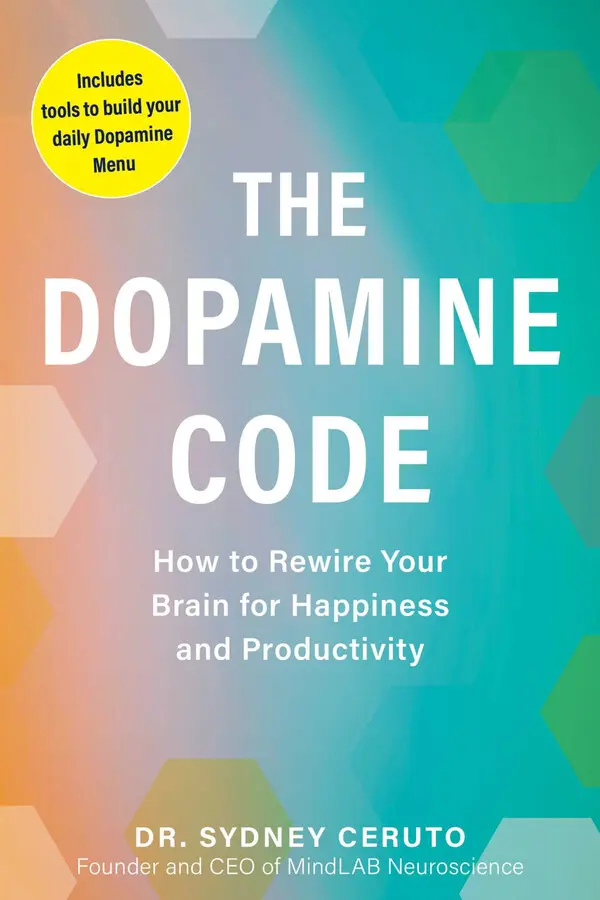
The Dopamine Code

Decode Your Drive

Why Your Brain Rewards the Wrong Things

Your brain's reward system runs every decision, every craving, every crash — and it was never designed for the life you're living. The Dopamine Code is Dr. Ceruto's framework for understanding the architecture behind what drives you, drains you, and keeps you locked in patterns that willpower alone will never fix.

Published by Simon & Schuster, The Dopamine Code is Dr. Ceruto's framework for building your own Dopamine Menu — a personalized system for motivation, focus, and enduring life satisfaction.

Order Now

Ships June 9, 2026

The Dopamine Code by Dr. Sydney Ceruto — Decode Your Drive
Locations

The Intelligence Brief

Neuroscience-backed analysis on how your brain drives what you feel, what you choose, and what you can’t seem to change — direct from Dr. Ceruto.