The Decision Fatigue Spiral
“The decisions you struggle with most are not the ones where you lack information. They are the ones where the brain's threat system, loss aversion, and identity circuits have hijacked the evaluation process, producing paralysis that strategic frameworks cannot resolve.”
You are not indecisive. You have built a career on making consequential choices under pressure, including capital allocations, partnership commitments, strategic pivots, and hiring decisions that reshape entire organizations. And yet there are moments, increasingly frequent, where the machinery stalls.
The deal that should take a day to evaluate stretches into a week of circular analysis. The strategic pivot you know is necessary sits untouched because every option feels equally weighted. The decision you would have made confidently three years ago now generates a low-grade dread that delays execution until the window closes. You are not less intelligent. You are not less experienced. Something has shifted in the system that produces decisions, and no amount of decision-making frameworks resolves it.
This pattern has a name in neuroscience: decision fatigue. But the popular understanding of decision fatigue dramatically understates what is actually happening in the brain. Decision fatigue is not a resource depletion problem. It is a circuit routing problem. The neural systems responsible for evaluating options, assigning value, and executing choices are physically rerouting how they process effort and reward under sustained cognitive load. The distortion is systematic, predictable, and critically invisible to the person experiencing it.
The professional who avoids the most important strategic decision at the end of a demanding day is not being lazy or avoidant. Their primary planning region and anterior insula are literally computing different value signals than they were computing at nine in the morning. The decision looks harder than it is. The effort feels disproportionate to the outcome. The brain is solving a different equation than reality presents and the person has no conscious access to the distortion. They simply experience it as reluctance, procrastination, or a vague sense that the decision needs more information before they can commit.
Conventional approaches to decision improvement, including frameworks, matrices, pros-and-cons methodologies, and strategic advisors, address the content of decisions. They never address the neural system producing the evaluation. When the system itself is degraded, better frameworks produce the same paralysis with more sophisticated rationalizations for delay. The professional who has tried every decision methodology and still finds themselves stuck is not failing at strategy. They are encountering the limits of approaches that operate above the biology.
The Neuroscience of Decision Architecture
Decision-making is not a single cognitive act. It is the coordinated output of multiple prefrontal and subcortical systems, each with distinct computational roles, distinct vulnerability profiles, and distinct failure modes under sustained demand.
Research demonstrates that the brain’s value-assessment region encodes both reward expectations and prior beliefs about which option is most likely to pay off. A second prefrontal region then merges those two streams into a single go/no-go signal. The critical finding: human choices deviate from the optimal decision approximately 80% of the time because the brain systematically over-weights how an option feels rather than what the data supports. Under uncertainty, the brain does not calculate the best option. It calculates the option that feels safest given its prior beliefs about risk and reward. For a professional who chronically second-guesses or who finds themselves selecting the conservative option when the aggressive option is clearly correct, this is not a thinking error they can reason through. It is a prefrontal computation bias that distorts every evaluation before conscious analysis begins.
The second major mechanism is cognitive flexibility and individual variability in its activity predicts how flexibly a person can pivot under changing conditions. Critically, cognitive flexibility follows an inverted-U developmental trajectory, peaking in the second to third decades of life and declining thereafter. This means that professionals in their peak earning and decision-making years face biologically increasing switching costs over time. What I observe consistently in this work is that professionals who describe themselves as stuck or unable to pivot are not lacking willpower or strategic vision. Their inferior frontal junction connectivity has degraded under sustained demand, a biological process that produces the subjective experience of mental rigidity without any corresponding loss of intelligence.
The third mechanism is the biological substrate of decision fatigue itself. Cognitive fatigue from repeated mental exertion significantly reduces willingness to engage in harder thinking for greater reward. The brain’s primary planning region shows increasing activation with repeated exertion and the highest subjective fatigue ratings.
Research has identified a shared optimal brain state anchored in the brain’s core executive control network that predicts decision-making performance across seven different cognitive tasks simultaneously. Weaker engagement of this network correlates with inattention symptoms, and critically, the state is stable within individuals across sessions. This is a trainable trait, not a momentary fluctuation. Strengthening this network produces cross-domain improvements in decision quality: not just better performance on a single task, but a fundamentally more capable decision architecture operating across every demand it encounters.

Computational modeling has further demonstrated that fatigue creates a gradually increasing aversion to effortful options that is not proportional to actual task difficulty. This occurs not from weakness, but from a frontostriatal effort-value computation that is systematically misfiring.
How Dr. Sydney Ceruto Approaches Decision Architecture
Dr. Ceruto’s methodology, Real-Time Neuroplasticity™, does not teach better decision-making frameworks. It restructures the neural systems that produce decisions.
The distinction matters because it explains why frameworks fail for the people who need them most. A decision matrix is a cognitive tool. It requires the prefrontal cortex to accurately evaluate options, assign weights, and execute the comparison. But when the prefrontal system itself is computing distorted belief weights, the matrix produces outputs that feel correct but are systematically biased. Better tools applied to a miscalibrated system produce more sophisticated versions of the same error.
Dr. Ceruto identifies which specific decision circuits are degraded and intervenes at the mechanism level. A value-assessment distortion requires different restructuring than a flexibility deficit, which requires different work than a fatigue-driven routing problem. Each of these has a distinct neural signature and distinct intervention requirements. The approach does not generalize across them: it targets each one with precision.
For a focused decision-making challenge, the NeuroSync™ program targets the most relevant circuits with precision. For professionals whose decision architecture needs comprehensive recalibration across the full range of personal and professional choices, the NeuroConcierge™ partnership provides embedded neural architecture work. This addresses the accumulated degradation of years of high-frequency demand and integrates into the ongoing demands and pressures of real life, where decisions are not hypothetical but consequential.
The result is not a better decision-making process. It is a brain that computes decisions accurately, assigning appropriate weights, maintaining cognitive flexibility under shifting conditions, and sustaining evaluation quality across the full span of a demanding day.
What to Expect
Every engagement opens with a Strategy Call, a strategy conversation where Dr. Ceruto assesses the presenting decision-making pattern. She identifies which neural systems are most likely involved and determines whether the engagement fits.
The protocol that follows maps your specific decision architecture. Dr. Ceruto does not assume every decision challenge has the same neural origin. She identifies whether the primary driver is prefrontal belief-weighting distortion, frontoparietal flexibility degradation, fatigue-mediated circuit rerouting, or a multi-system cascade, then builds the intervention to match.
Engagement is anchored in real conditions. The decisions you face, the environments you operate in, the specific contexts where quality degrades. No abstract exercises or simulated scenarios. Progress is measured against actual decision outcomes in your professional life. The recalibrated circuits do not revert when the engagement ends, and they do not require ongoing maintenance to sustain improved performance.
References
Rouault, M., Drugowitsch, J., & Koechlin, E. (2019). Prefrontal mechanisms combining rewards and beliefs in human decision-making. Nature Communications, 10, 301. https://doi.org/10.1038/s41467-018-08121-w
Uddin, L. Q. (2021). Cognitive and behavioural flexibility: Neural mechanisms and clinical considerations. Nature Reviews Neuroscience, 22, 167–179. https://doi.org/10.1038/s41583-021-00428-w
Steward, G., Looi, V., & Chib, V. S. (2025). Neural mechanisms of cognitive fatigue and effort-based decision-making. Journal of Neuroscience, 45(3), e1234242024. https://doi.org/10.1523/JNEUROSCI.1234-24.2024

The Neural Architecture of Decision Quality
Decision quality is a neural function, not a rational one. The executive who believes they make decisions through systematic analysis of available evidence is partially right: the prefrontal cortex does perform this function. But the prefrontal cortex does not make decisions in isolation. It makes decisions in constant interaction with the limbic system, the dopaminergic reward-prediction architecture, the somatic signal system that encodes accumulated bodily experience as intuition, and the habit circuits that generate automatic responses to familiar decision patterns before the analytical mind has finished reading the situation. The quality of any given decision depends on the relative contributions of these systems, the regulatory balance between them, and the specific neural state the decision-maker is in when the decision is made.
Predictive coding theory has produced a fundamental reconceptualization of how the brain makes decisions. The brain does not wait for information to arrive and then analyze it. It generates predictions about what information will arrive, what outcomes are probable, and what responses are appropriate, and then processes incoming information primarily as a signal about whether these predictions need updating. A decision-maker whose prior predictions are strongly encoded will effectively filter incoming evidence through those predictions, systematically underweighting information that challenges existing models and overweighting information that confirms them. This is not a cognitive bias. It is a neural architecture feature that served adaptive purposes in environments of limited information and now creates systematic decision distortions in environments of abundant, complex, and often contradictory data.
The somatic signal system, the body’s encoded record of the emotional consequences of previous decisions, is a parallel decision architecture that operates below the threshold of conscious awareness. Damasio’s somatic marker research demonstrated that individuals with damage to the neural circuits that process body-based emotional signals make consistently poor decisions despite intact analytical capability. The body’s decision history is neurologically essential to decision quality, and executives whose body-budget is chronically depleted by sustained high-load operations are making decisions with degraded access to this signal system.
Why Traditional Approaches Fall Short
Decision-support frameworks (decision trees, scenario analysis, structured deliberation processes, devil’s advocacy protocols, pre-mortem analysis) are valuable tools that address the cognitive architecture of decisions. They create conditions for more systematic information processing, more explicit consideration of alternatives, and more disciplined evaluation of outcomes. What they cannot address is the neural state of the decision-maker, the specific regulatory balance between prefrontal and limbic systems at the moment the decision is made, or the specific prediction architecture that is filtering which information is processed and how.
Executive coaching for decision quality operates at a similar cognitive level: examining the beliefs, heuristics, and behavioral patterns that shape decisions, and building awareness of their influence. This is genuinely useful and substantially better than nothing. But awareness of a cognitive pattern and neural recalibration of the pattern are different things. An executive who becomes aware that their decisions systematically underweight long-term risk is not thereby equipped to make decisions with better long-term risk calibration. The pattern is encoded in the prediction architecture. Awareness of it is encoded in the prefrontal cortex. These are different neural systems, and awareness does not automatically recalibrate the pattern.
The most significant gap in conventional decision-support is the failure to address the neural state as a decision variable. Decision quality under conditions of prefrontal depletion, limbic activation, or disrupted somatic signal processing is reliably degraded regardless of the quality of the decision framework being applied. The executive using a sophisticated decision analysis process while in a state of chronic sleep deprivation, elevated threat activation, and body-budget deficit is applying a precision instrument with a degraded instrument-operator.
How Neural Decision Support Works
My approach to decision-making support begins with the neural state and works outward to the decision architecture. Before examining any specific decision, I assess the regulatory balance, somatic signal access, and prediction architecture biases that will determine how decisions are made. This assessment reveals the specific neural conditions under which this individual’s decision quality is highest, and the specific conditions under which it is most vulnerable to systematic distortion.
From this assessment, I design a decision support protocol that addresses both the neural state and the decision process. For the neural state, the work targets the regulatory architecture: building the prefrontal-limbic balance that allows analytical processing to proceed without being overwhelmed by threat activation, and the somatic awareness that restores access to the body’s encoded decision history. For the decision process, I design protocols calibrated to the specific prediction architecture biases most powerfully shaping this individual’s decision patterns, creating deliberate friction around the exact points where the predictive coding system is most likely to filter out disconfirming evidence.
High-stakes decisions (capital allocation, strategic pivots, leadership selection, market entry) receive focused neural preparation before the decision process begins. This preparation addresses the neural state variables most likely to degrade decision quality for this specific decision context: the threat signals most likely to activate limbic override of analytical processing, the prediction biases most likely to filter the specific categories of information this decision requires, and the somatic signal quality available to inform the intuitive dimension of the judgment.
What This Looks Like in Practice
Decision-making support engagements begin with a Strategy Call in which I map the presenting decision challenge (its scope, timeline, stakes, and the specific neural factors most likely to determine decision quality) against the individual’s neural decision architecture. From that conversation, I determine whether the presenting need is for a focused, decision-specific intervention or for a sustained engagement that builds decision quality as a durable neural capacity rather than a situational support.
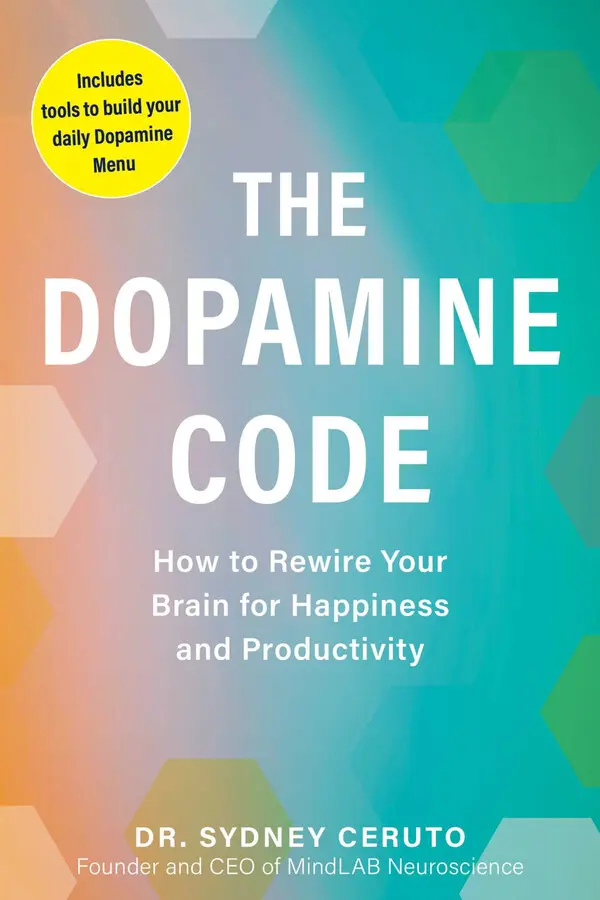
For executives navigating a specific high-stakes decision, the NeuroSync™ model provides targeted neural preparation and decision-process design calibrated to that decision context. For executives or leadership teams seeking to build durable decision quality across the full range of organizational challenges they face, the NeuroConcierge™ model provides the sustained partnership that systematic neural recalibration requires. The Dopamine Code explores the reward prediction architecture that underlies the most common decision quality failures I observe in this work, for those who want to understand the science behind what we are actually modifying.