





Key Points
- Major life transitions trigger a neural reorganization period where the brain is exceptionally receptive to durable structural change.
- Without guided intervention, the brain defaults to threat-based wiring that prioritizes survival over growth.
- Real-Time Neuroplasticity™ works during the live consolidation window, not after patterns have already hardened.
- Identity, decision-making capacity, and emotional regulation all restructure simultaneously during major transitions.
- Dr. Ceruto’s methodology produces durable architectural change, eliminating the need for ongoing maintenance or coping strategies.
| Marker | Traditional Approach | Neuroscience-Based Approach | Why It Matters |
|---|---|---|---|
| Approach | Conventional Support | Self-Directed Adaptation | Real-Time Neuroplasticity™ |
| Timing | After patterns solidify | Reactive, unstructured | During the neural consolidation window |
| Target | Emotional coping | Surface-level habit changes | Neural pathway architecture |
| Duration of results | Requires ongoing maintenance | Inconsistent, often temporary | Durable structural rewiring |
| Identity integration | Narrative processing only | Trial and error | Guided neural identity reconstruction |
| Personalization | Protocol-based frameworks | Generic advice and books | Mapped to your specific neural patterns |
Why Midtown Manhattan Amplifies Transition Pressure
Midtown Manhattan contains the highest density of corporate headquarters in the Western Hemisphere. From the Time Warner Center at Columbus Circle to the towers lining Park Avenue and the Hudson Yards development on the west side, every block houses organizations where professional identity is the primary currency. When a major life transition disrupts that identity, the environment offers no reprieve: every elevator ride, every lunch meeting reinforces what was lost or what remains uncertain.
The Midtown workforce includes over 750,000 daily professionals, many of whom operate in roles where transitions must remain invisible. A divorce, a health crisis, a forced career pivot, or the death of a parent cannot show up in quarterly performance reviews. The brain, however, does not compartmentalize on command. The prefrontal cortex cannot simultaneously manage grief processing and high-stakes negotiations without measurable performance degradation.
The publishing houses along Fifth Avenue, the media headquarters between Sixth and Seventh Avenues, and the consulting firms in the MetLife and Seagram buildings all house professionals whose identities are deeply embedded in organizational hierarchies. A transition that removes or disrupts that organizational anchor produces a neurological disorientation that the Midtown environment makes impossible to escape during working hours.
The Density Factor in Neural Overload
Midtown’s sensory intensity compounds every transition. Grand Central Terminal processes 750,000 travelers daily. The ambient noise, visual complexity, and social density of streets between 34th and 59th create an environment that demands constant neural filtering. For someone already navigating a major life change, this background processing load tips the brain into chronic overactivation.
The amygdala, the brain’s threat-detection center, cannot distinguish between genuine danger and the low-grade overwhelm of navigating dense urban environments during a vulnerable period. Cortisol rises. Sleep quality deteriorates. Decision-making narrows. These are not character flaws. They are predictable neurological responses to transition compounded by environmental load. Times Square’s sensory saturation, the crowds along 42nd Street, and the relentless pace of Penn Station all add inputs to a brain already running at capacity.
How Dr. Ceruto Addresses Transitions in Midtown
Dr. Ceruto’s Real-Time Neuroplasticity™ methodology intervenes during the consolidation window when the brain is actively forming new patterns. For Midtown professionals, this is critical because the environment accelerates pattern formation. Without guided intervention, the brain consolidates stress-based wiring quickly in high-stimulus contexts.
The work restructures the default mode network, the system governing self-narrative and identity continuity, so the transition produces a coherent new chapter rather than a fragmented survival response. Sessions are conducted primarily by phone, providing a structured counterweight to Midtown’s relentless external stimulation.

From the corporate towers of Hudson Yards to the media headquarters on Sixth Avenue to the law firms along Lexington, Midtown professionals face transitions that carry career, financial, and reputational consequences. Dr. Ceruto’s methodology addresses all of these simultaneously at the level of the neural architecture that governs them.

Dr. Sydney Ceruto, PhD, Neuroscientist & Author, MindLAB Neuroscience
Dr. Ceruto holds a PhD in Behavioral & Cognitive Neuroscience from NYU and Master’s degrees in Clinical Psychology and Business Psychology from Yale University. She lectures at the Wharton Executive Development Program at the University of Pennsylvania and has been an Executive Contributor to the Forbes Coaching Council since 2019. Dr. Ceruto is the author of The Dopamine Code (Simon & Schuster, June 2026). She founded MindLAB Neuroscience in 2000 and has spent over 26 years leading it, pioneering Real-Time Neuroplasticity™, a methodology that durably rewires the neural pathways driving behavior, decisions, and emotional responses.
Frequently Asked Questions About Life Transition Navigation
What qualifies as a major life transition?
Any event that fundamentally disrupts your established patterns, identity, or sense of direction. Career changes, relationship endings, relocations, health events, family restructuring, or the loss of someone central to your life. The defining characteristic is that your brain’s existing wiring no longer matches your current reality.
I am going through a transition but still performing well at work. Do I need this?
High-functioning during a transition is common in Midtown: the professional environment demands it. But the brain is compensating at a cost. Cognitive resources that should go toward strategic thinking, creativity, and relationship quality are being diverted to manage the transition. The work restores full capacity rather than waiting for the cost to become visible.
How does the density of Midtown Manhattan affect transitions?
The brain processes environmental complexity constantly. Midtown’s sensory load (crowds, noise, visual density) forces the nervous system to filter more aggressively. During a transition, when the brain is already under reorganization stress, this additional load accelerates threat-based pattern formation. Dr. Ceruto’s methodology accounts for environmental factors as part of the neuroplastic intervention.
How does Real-Time Neuroplasticity™ work during a transition?
Dr. Ceruto identifies the neural patterns consolidating during your transition and intervenes while they are still forming. The methodology works in the live window when the brain is most receptive to structural change, ensuring new pathways support clarity and forward movement rather than survival defaults.
What does the Strategy Call involve?
A focused phone conversation with Dr. Ceruto. She maps the specific neural mechanisms driving your current experience and determines whether her methodology is the right fit. The call is conducted by phone, a deliberate preference that keeps the focus on the conversation rather than the camera.
How long does the process take?
Duration depends on the scope of the transition. Single-domain changes often show measurable shifts within weeks. More complex layered transitions may require longer engagement. Program structure and investment details are discussed during the Strategy Call.
Is this confidential?
Completely. No information about clients or the nature of their engagement is ever disclosed. The phone-based format provides additional privacy for professionals in high-visibility roles. Discretion is a structural feature of the practice, not an afterthought.
Can this help if my transition happened a long time ago?
Yes. The brain does not automatically resolve unstructured transitions. If the patterns that formed during the upheaval were never properly guided, they persist. Dr. Ceruto’s methodology intervenes at any stage. Earlier engagement accelerates results, but the work is effective regardless of timeline.
How is this different from conventional approaches?
Conventional approaches process transitions after the fact, focusing on emotional coping and narrative work. Dr. Ceruto’s methodology intervenes at the level of neural architecture during the consolidation window. The result is durable structural change, not strategies that require ongoing maintenance.
Do I need to be located in Midtown to work with Dr. Ceruto?
No. Sessions are conducted primarily by phone. MindLAB Neuroscience serves clients globally. The Midtown-specific content on this page reflects the pressures unique to this area, but the methodology applies regardless of geography.
Also available in: Miami · Wall Street · Beverly Hills · Lisbon
Take the First Step
One hour with Dr. Sydney Ceruto. You leave knowing which neural pattern is actually driving this, and what to do about it.
Book a Strategy Call
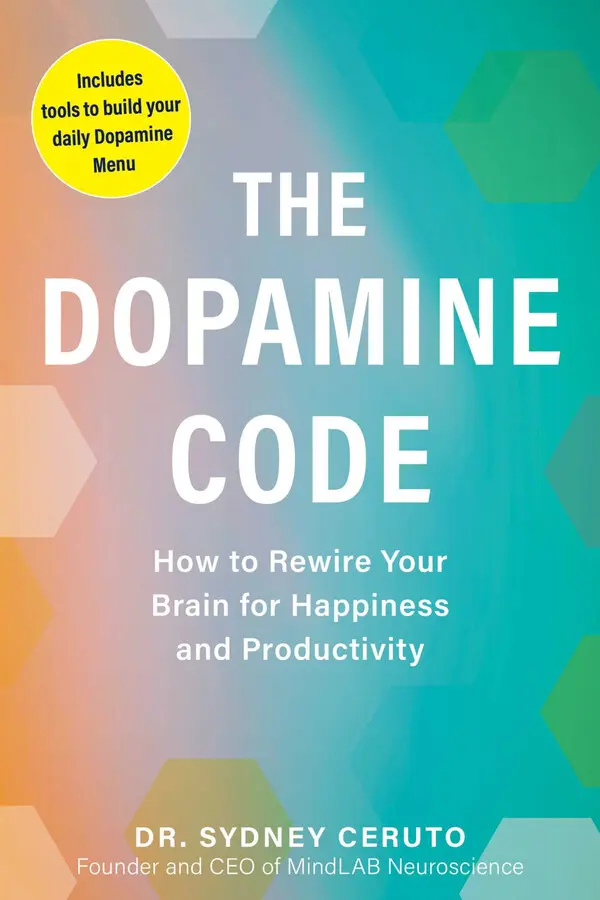
The Dopamine Code
Decode Your Drive
Why Your Brain Rewards the Wrong Things
Your brain's reward system runs every decision, every craving, every crash, and it was never designed for the life you're living. The Dopamine Code is Dr. Ceruto's framework for understanding the architecture behind what drives you, drains you, and keeps you locked in patterns that willpower alone will never fix.
Published by Simon & Schuster, The Dopamine Code is Dr. Ceruto's framework for building your own Dopamine Menu, a personalized system for motivation, focus, and enduring life satisfaction.
Order Now!Available now