Key Points
- Major life transitions trigger a neural reorganization period where the brain is exceptionally receptive to durable structural change.
- Without guided intervention, the brain defaults to threat-based wiring that prioritizes survival over growth.
- Real-Time Neuroplasticity™ works during the live consolidation window, not after patterns have already hardened.
- Identity, decision-making capacity, and emotional regulation all restructure simultaneously during major transitions.
- Dr. Ceruto’s methodology produces durable architectural change, eliminating the need for ongoing maintenance or coping strategies.
| Marker | Traditional Approach | Neuroscience-Based Approach | Why It Matters |
|---|---|---|---|
| Approach | Conventional Support | Self-Directed Adaptation | Real-Time Neuroplasticity™ |
| Timing | After patterns solidify | Reactive, unstructured | During the neural consolidation window |
| Target | Emotional coping | Surface-level habit changes | Neural pathway architecture |
| Duration of results | Requires ongoing maintenance | Inconsistent, often temporary | Durable structural rewiring |
| Identity integration | Narrative processing only | Trial and error | Guided neural identity reconstruction |
| Personalization | Protocol-based frameworks | Generic advice and books | Mapped to your specific neural patterns |
Why Life Transition Navigation Matters in Greenwich, CT
Why Greenwich Creates a Unique Transition Environment
Greenwich, Connecticut ranks among the wealthiest communities in the United States, with a median household income exceeding $150,000. Its concentration of hedge fund managers, private equity principals, and senior corporate executives rivals any zip code in the country. The town’s identity is built on achievement, stability, and discretion. When a major life transition disrupts any of those pillars, the community environment amplifies the neurological impact.
The backcountry estates, the downtown shopping district along Greenwich Avenue, and the waterfront properties of Belle Haven each carry social codes that assume continuity. A divorce, a fund closure, a forced retirement, or a family crisis introduces uncertainty into an environment that was designed to eliminate it. The brain reads this mismatch between personal reality and environmental expectation as a persistent low-grade threat.
The hedge fund offices along Steamboat Road and the private equity firms near the train station employ professionals whose compensation and professional reputation are visible markers of identity. When a transition disrupts these markers (a fund wind-down, a partnership dissolution, a career pivot) the community environment offers no anonymous space to process the change. Every encounter at the Greenwich YMCA, every school pickup at Brunswick or Sacred Heart, reinforces the gap between the old identity and the emerging one.
The Achievement-Identity Trap
Greenwich professionals disproportionately build identity architectures around achievement metrics: portfolio performance, deal flow, compensation, property value, children’s school placements. These metrics provide the brain with constant self-concept validation. When a transition disrupts any input stream, the default mode network, the system governing self-narrative, cannot maintain coherence.
The result is not depression in the clinical sense. It is a neurological identity vacuum. The brain had a formula for who you are. The transition invalidated part of that formula, and the remaining variables cannot generate a stable answer. This pattern is specific to environments where identity metrics are both clearly defined and socially reinforced, which is precisely what Greenwich is. The country clubs, the benefit galas, and the social circles organized around shared professional tiers all function as mirrors that reflect an identity the brain can no longer maintain.
How Dr. Ceruto Addresses Greenwich Transitions
Dr. Ceruto’s Real-Time Neuroplasticity™ methodology works during the consolidation window when the brain is forming new patterns. For Greenwich residents, this timing is critical because the social environment accelerates pattern formation: the brain consolidates identity architecture rapidly when surrounded by consistent external signals about who you should be.
The work is conducted primarily by phone, providing absolute confidentiality in a community where reputation carries financial consequences. Dr. Ceruto restructures the neural architecture driving identity, decision-making, and emotional regulation simultaneously: the same systems that Greenwich’s achievement culture originally built.

From the Round Hill Road estates to the offices along Steamboat Road to the neighborhoods of Riverside and Old Greenwich, transitions here carry stakes that extend across reputation, family dynamics, and financial architecture. Dr. Ceruto’s methodology addresses all of these at the level where they originate: the neural pathways that determine how you process change and who you become on the other side of it.

Dr. Sydney Ceruto, PhD, Neuroscientist & Author, MindLAB Neuroscience
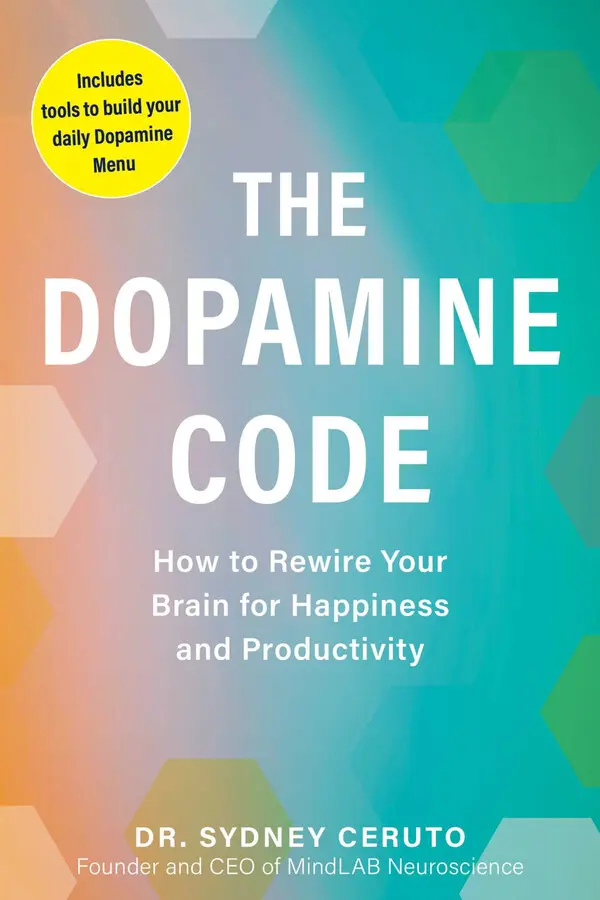
Dr. Ceruto holds a PhD in Behavioral & Cognitive Neuroscience from NYU and Master’s degrees in Clinical Psychology and Business Psychology from Yale University. She lectures at the Wharton Executive Development Program at the University of Pennsylvania and has been an Executive Contributor to the Forbes Coaching Council since 2019. Dr. Ceruto is the author of The Dopamine Code (Simon & Schuster, June 2026). She founded MindLAB Neuroscience in 2000 and has spent over 26 years leading it, pioneering Real-Time Neuroplasticity™, a methodology that durably rewires the neural pathways driving behavior, decisions, and emotional responses.
Frequently Asked Questions About Life Transition Navigation
What qualifies as a major life transition?
Any event that fundamentally disrupts your established patterns, identity, or sense of direction. Fund closures, career exits, divorce, family restructuring, empty nest, loss of a spouse or parent, health events, or any shift that invalidates the brain’s existing operating model.
Why does a transition feel disproportionately destabilizing in a place like Greenwich?
Because Greenwich’s social environment provides unusually strong identity reinforcement through achievement metrics. When a transition disrupts those inputs, the brain loses the validation signals it has relied on for years. The community’s emphasis on stability and discretion also prevents authentic processing, forcing the brain to perform composure while attempting to reorganize internally.
How does Real-Time Neuroplasticity™ work during a transition?
Dr. Ceruto identifies the neural patterns consolidating during your transition and intervenes while they are still forming. The methodology works during the live window when the brain is most receptive to durable structural change, ensuring new architecture supports clarity rather than threat-based defaults.
What does the Strategy Call involve?
A focused phone conversation with Dr. Ceruto. She maps the neural mechanisms driving your current experience and determines whether her methodology is the right fit. The call uses a phone-only format, a deliberate preference that keeps the focus on the conversation rather than the camera.
How confidential is this?
Completely. No client information is ever disclosed. Sessions are conducted primarily by phone: no office visits, no visible appointments, no encounters in shared spaces. In Greenwich, where personal and professional reputation are deeply interconnected, this structural privacy is essential.
How long does the process take?
Duration depends on the transition’s scope. Focused single-domain changes often show measurable shifts within weeks. Complex multi-layered transitions may require longer engagement. Program structure and investment details are discussed during the Strategy Call.
Can this help with a transition I have been navigating for years?
Yes. The brain does not auto-resolve unstructured transitions. If the patterns that formed during the original upheaval were never properly guided, they persist regardless of time elapsed. Dr. Ceruto’s methodology intervenes at any stage and restructures the architecture that keeps the transition unresolved.
Is this relevant for a spouse navigating their partner’s career transition?
Absolutely. When one partner’s professional identity shifts, the other’s brain also reorganizes, particularly in communities where household identity is jointly constructed. The neural impact on a spouse is not secondary. It is a parallel transition with its own architectural demands.
How is this different from conventional approaches?
Conventional approaches process transitions after patterns have already formed, focusing on coping and narrative work. Dr. Ceruto’s methodology works during the consolidation window at the level of neural architecture. The result is durable structural change, not ongoing maintenance.
Do I need to be located in Greenwich?
No. Sessions are conducted primarily by phone. MindLAB Neuroscience serves clients globally. The Greenwich content reflects the specific community dynamics that amplify transitions in this area, but the methodology applies regardless of geography.
Also available in: Miami · Wall Street · Midtown Manhattan · Beverly Hills · Lisbon
Take the First Step
One hour with Dr. Sydney Ceruto. You leave knowing which neural pattern is actually driving this, and what to do about it.
Book a Strategy Call
The Dopamine Code
Decode Your Drive
Why Your Brain Rewards the Wrong Things
Your brain's reward system runs every decision, every craving, every crash, and it was never designed for the life you're living. The Dopamine Code is Dr. Ceruto's framework for understanding the architecture behind what drives you, drains you, and keeps you locked in patterns that willpower alone will never fix.
Published by Simon & Schuster, The Dopamine Code is Dr. Ceruto's framework for building your own Dopamine Menu, a personalized system for motivation, focus, and enduring life satisfaction.
Order Now!Available now