Personal Identity Reconstruction in Lisbon

You left one life to build another. The new one is beautiful on the surface but something essential has not arrived yet. The person you were dissolved in the departure.

Relocation does not just change your address. It removes the environmental scaffolding that maintained your sense of self. The professional network, the daily rhythms, the social context that reflected your identity back to you — all of it dissolves in the move. What remains is an internal model running without reinforcement. MindLAB Neuroscience works at the level where identity is actually encoded, rebuilding the self-referencing circuits that determine how you see yourself in a new context.

Book a Strategy Call
ForbesUSA TodayHuffPostNewsweekAssociated PressCosmopolitanBusiness InsiderForbesUSA TodayHuffPostNewsweekAssociated PressCosmopolitanBusiness Insider
Marker Traditional Approach Neuroscience-Based Approach Why It Matters

Why Personal Identity Reconstruction Matters in Lisbon

Lisbon and the Expat Identity Gap: When Reinvention Stalls Between Two Selves

Lisbon attracts people who are leaving something behind. That is part of the city’s appeal and part of the neural challenge it presents. The American tech professional who relocated for quality of life. The British creative who was priced out of London. The digital nomad who arrived for three months and stayed for three years. Each arrived with a story about starting fresh. What many did not anticipate is that starting fresh requires the brain to build an entirely new identity architecture — and that process has a timeline the excitement of arrival can mask for months.

The initial period in Lisbon produces a neurochemical environment that mimics identity stability. Novelty drives dopamine. New routines feel intentional rather than automatic. The aesthetic beauty of Alfama’s cobblestones and the Tagus River light creates a sensory environment that the brain reads as meaningful. But novelty is not identity. It is the neurochemical signature of exploration, not belonging. When the novelty normalizes — usually around the six-to-twelve-month mark — what surfaces is the gap. The previous identity has dissolved. The new one has not yet consolidated. The person is living in Lisbon but does not yet feel like a person who lives in Lisbon.

Language is one of the most underestimated identity disruptors for the expat community. Portuguese is not simply a communication tool. It is the social infrastructure of belonging. The expat who cannot follow a conversation at a cafe in Principe Real defaults to English along Rua Augusta and avoids situations where Portuguese is expected. That person’s brain is processing a sustained signal of social exclusion. Not deliberate exclusion. Structural exclusion. The self-referencing system that once maintained an identity as articulate, socially competent, and culturally fluent now receives daily evidence of inadequacy in all three domains.

The digital nomad population in Lisbon faces a version of identity suspension that is specific to location-independent work. When your professional identity is portable — carried in a laptop, connected to clients and collaborators across time zones — the work itself provides no local identity anchoring. The person working from a Chiado coworking space has the same professional self-concept they had in Brooklyn or Berlin. But the personal identity that was maintained by the previous city’s social and cultural environment has no equivalent in Lisbon. The result is a split: professional identity intact, personal identity in freefall.

The Web Summit community and Lisbon’s growing startup ecosystem have introduced a population navigating identity reconstruction through the lens of professional reinvention. The founder who relocated to Lisbon to build something new often discovers a gap. The identity of “founder” was maintained by a specific ecosystem was maintained by a specific ecosystem that does not replicate in Lisbon’s different rhythm. The ambition remains. The identity architecture that the previous environment maintained around that ambition does not transfer automatically.

Lisbon’s saudade — the cultural orientation toward bittersweet longing — creates an emotional environment that can resonate uncomfortably with identity-in-transition. The city’s aesthetic is organized around beauty and loss simultaneously. For someone whose brain is already processing the dissolution of a previous self, this ambient emotional tone can amplify the grief dimension of identity reconstruction rather than the building dimension. The city mirrors the internal state back, which can feel validating but can also slow the consolidation of something new.

Dr. Ceruto works with expats and relocated professionals across Lisbon who recognize that the reinvention they came for has stalled somewhere between the departure and the arrival. Real-Time Neuroplasticity™ targets the self-referencing circuits directly, enabling the brain to complete the identity transition that natural environmental recalibration has not produced. A Strategy Call is a phone conversation — $250 — scheduled to your timezone. The starting point for understanding what dissolved, what has not yet formed, and what building the bridge looks like at the neural level.

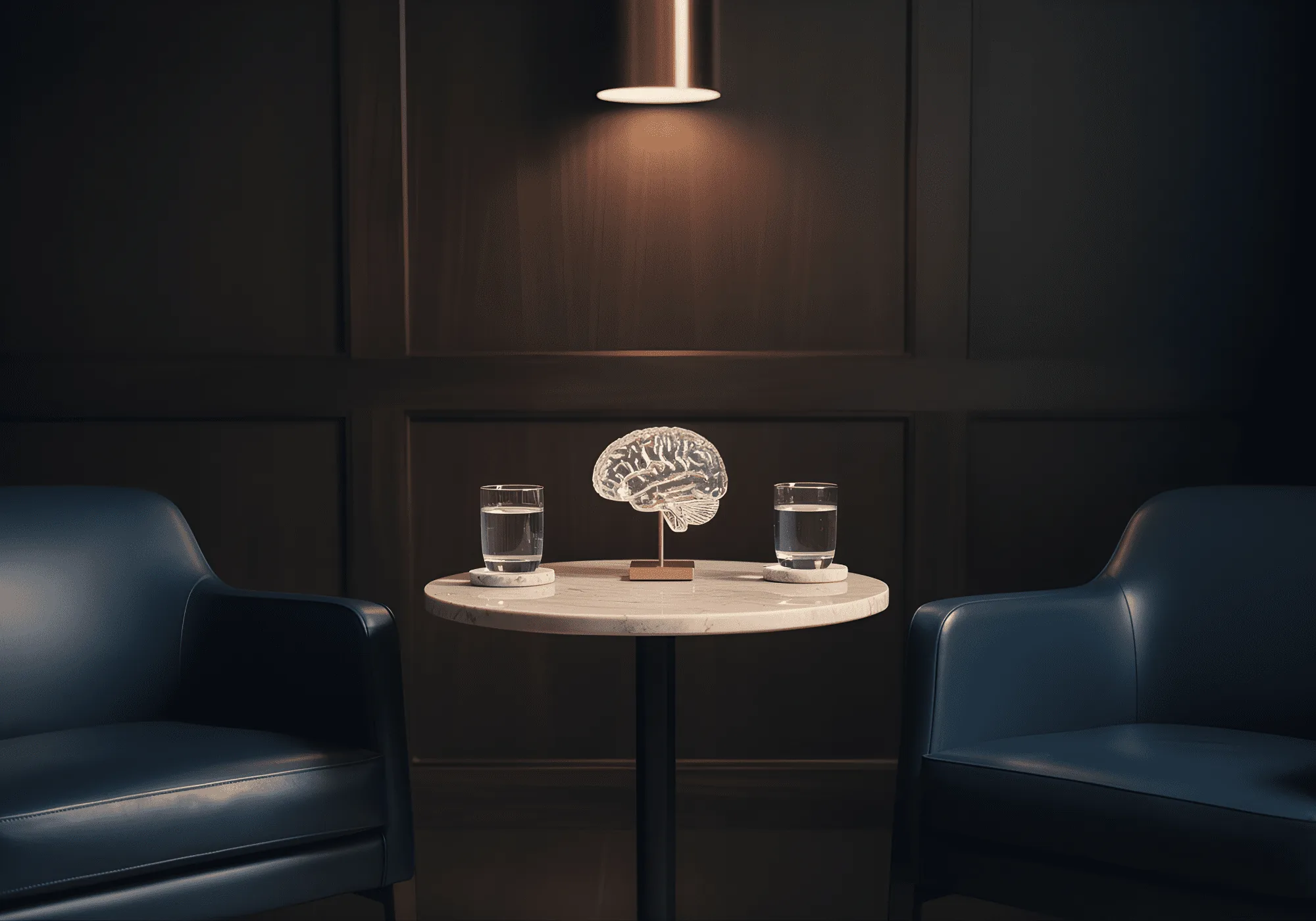
Antique rosewood desk with crystal brain sculpture and MindLAB journal in warm amber Lisbon afternoon light with historic European wood paneling
Dr. Sydney Ceruto, PhD — Founder, MindLAB Neuroscience

Dr. Sydney Ceruto, PhD — Founder & CEO, MindLAB Neuroscience

Dr. Ceruto holds a PhD in Behavioral & Cognitive Neuroscience from NYU and two Master’s degrees from Yale University. She lectures at the Wharton Executive Development Program at the University of Pennsylvania and has been an Executive Contributor to the Forbes Coaching Council since 2019. Dr. Ceruto is the author of The Dopamine Code (Simon & Schuster, June 2026). She founded MindLAB Neuroscience in 2000 and has spent over 26 years pioneering Real-Time Neuroplasticity™ — a methodology that permanently rewires the neural pathways driving behavior, decisions, and emotional responses.

Success Stories

“Dr. Ceruto's methodology sharpened my negotiation instincts and built a level of mental resilience I didn't know I was missing. The difference showed up in how my team responds to me — trust, respect, and a willingness to follow that I'd been trying to manufacture for years. I stopped trying to project authority and started operating from it. That's the difference.”

Victoria W. — Trial Attorney New York, NY

“After the concussion, my processing speed collapsed — I couldn't hold complex information the way I used to, and no one could explain why the fog wasn't lifting. Dr. Ceruto mapped the damaged pathways and built compensatory networks around them. My brain doesn't work the way it did before the injury. It works differently — and in some ways, more efficiently than it ever did.”

Owen P. — Orthopedic Surgeon Scottsdale, AZ

“Nothing was wrong — and that's exactly why no one could help me. I wasn't struggling. I wanted to know what my brain was actually capable of if its resting-state architecture was optimized. Dr. Ceruto mapped my default mode network and restructured how it allocates resources between focused and diffuse processing. The cognitive clarity I operate with now isn't something I'd ever experienced before — and I had no idea it was available.”

Nathan S. — Biotech Founder Singapore

“Slower processing, foggier recall, decisions that used to be instant taking longer than they should — I'd been accepting it all as inevitable decline for two years. Dr. Ceruto identified the prefrontal efficiency pattern that was degrading and restructured it at the neurological level. The sharpness didn't just come back. It came back faster and more precise than it was a decade ago. Nothing I'd tried before even addressed the right problem.”

Elliott W. — Wealth Advisor Atherton, CA

“My kids had been sleeping through the night for three years, but my brain hadn't caught up. I was still waking every ninety minutes like clockwork — no amount of sleep hygiene or supplements touched it. Dr. Ceruto identified the hypervigilance loop that had hardwired itself during those early years and dismantled it at the source. My brain finally learned the threat was over. I sleep through the night now without effort.”

Catherine L. — Board Director Greenwich, CT

“I'd optimized everything — diet, fitness, sleep — but my cognitive sharpness was quietly declining and no one could explain why. Dr. Ceruto identified the synaptic density patterns that were thinning and built a protocol to reverse the trajectory. This wasn't prevention in theory. My neuroplasticity reserve is measurably stronger now than it was three years ago. Nothing I'd tried before even addressed the right problem.”

Henrique L. — University Dean Lisbon, PT

Frequently Asked Questions About Personal Identity Reconstruction in Lisbon

Also available in: Miami · Wall Street · Midtown Manhattan · Beverly Hills

Take the First Step

The Strategy Call is a focused conversation with Dr. Ceruto that maps the specific neural mechanisms driving your concerns and determines the right path forward.

Book a Strategy Call
MindLAB Neuroscience consultation room

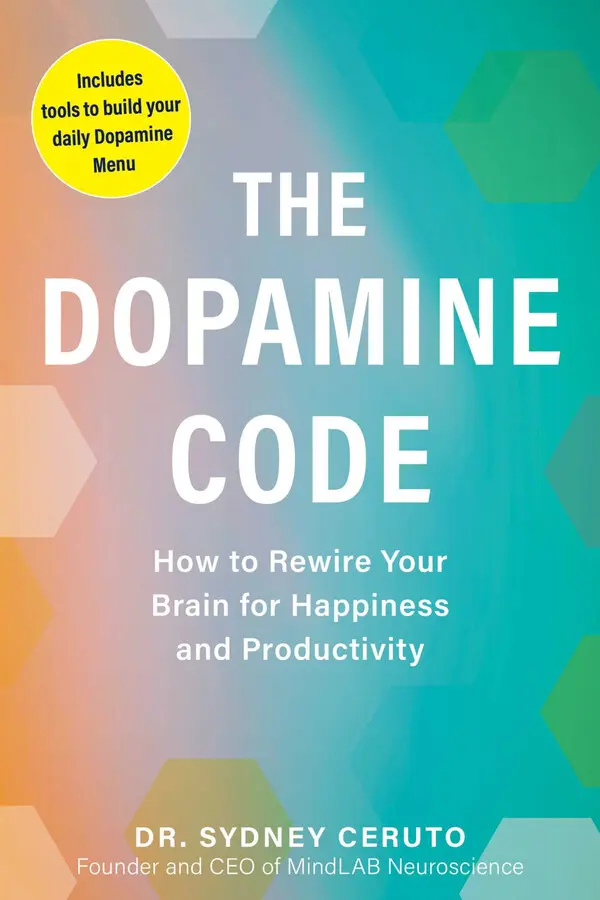
The Dopamine Code

Decode Your Drive

Why Your Brain Rewards the Wrong Things

Your brain's reward system runs every decision, every craving, every crash — and it was never designed for the life you're living. The Dopamine Code is Dr. Ceruto's framework for understanding the architecture behind what drives you, drains you, and keeps you locked in patterns that willpower alone will never fix.

Published by Simon & Schuster, The Dopamine Code is Dr. Ceruto's framework for building your own Dopamine Menu — a personalized system for motivation, focus, and enduring life satisfaction.

Order Now

Ships June 9, 2026

The Dopamine Code by Dr. Sydney Ceruto — Decode Your Drive
Locations

The Intelligence Brief

Neuroscience-backed analysis on how your brain drives what you feel, what you choose, and what you can’t seem to change — direct from Dr. Ceruto.