





| Marker | Traditional Approach | Neuroscience-Based Approach | Why It Matters |
|---|---|---|---|
Why Personal Identity Reconstruction Matters in Nassau County
Identity on Long Island: When Stability Becomes the Thing You Disappear Into
Nassau County is built on a specific promise: stability, family, community, roots. Garden City’s tree-lined streets, Great Neck’s academic pressure, Manhasset’s quiet affluence, the North Shore’s sense of established belonging: all of it communicates permanence. And permanence is exactly the condition under which certain kinds of identity disruption become invisible. The structure holds. The person inside it quietly dissolves.
The most common identity disruption in Nassau County is the one that happens in plain sight. The parent in Roslyn Heights who built two decades of daily life around children and school schedules reaches the empty-nest transition. The identity organized around that role has no independent foundation. The children leave. The schedule empties. The social connections that were maintained through shared parenting thin out. What remains is not freedom. It is the sudden absence of the framework that was answering the question of who you are every single day.
The professional who built a career in Manhattan and commutes daily from Manhasset or Garden City on the Long Island Rail Road lives in a sustained identity split. The train ride is not just transit. It is a daily crossing between two self-concepts. The office version (decisive, ambitious, competitive) and the home version (present, measured, community-oriented) operate on different neural circuits. Neither receives full-time reinforcement. The brain cannot consolidate either one completely because the daily oscillation prevents the sustained environmental input that stable identity requires.
The Great Neck and North Shore communities carry a specific identity pressure organized around achievement and appearance. The expectation to maintain visible success (the house, the car, the children’s school placements, the professional trajectory) creates a self-referencing system that is externally calibrated. The brain builds identity around what the community expects and rewards rather than what the person internally values. This architecture is efficient and functional until the internal and external signals diverge. A child’s struggle, a career plateau, a financial stress, a marriage under pressure: any of these can expose the gap between the performed identity and the actual one.
The divorce population in Nassau County encounters identity reconstruction in a community context that amplifies the disruption. When social life is organized around couples and families, the end of a partnership does not just remove a relationship. The dinner parties in Manhasset, the school events in Jericho, the weekend rhythms of the Five Towns: all of it was structured around a unit that no longer exists. It removes the social framework that maintained a significant portion of the identity. The person is still in the same community, but the community now relates to them differently. The external reflection has changed, and the brain’s self-referencing system has to recalibrate against a social environment that no longer confirms who they thought they were.
Nassau County’s generational families face a version of identity disruption that is organized around legacy and expectation. The adult child who was expected to enter the family business, maintain the family home, or continue the family’s social position in the community carries an identity architecture that was partially built by other people. When the inherited identity no longer fits, the reconstruction involves building from the ground up. A career that was chosen for them. A life structure designed by the generation before. None of it was the person’s own construction. Not rebuilding. Building.
Dr. Sydney Ceruto works with people across Nassau County who are navigating this gap: the sense that the stable life they built has become something they disappear into rather than something they inhabit. Real-Time Neuroplasticity™ targets the self-referencing circuits directly, building identity architecture that reflects who the person actually is rather than who the environment expects them to be. A Strategy Call is a phone conversation: the starting point for understanding what the brain built, what stopped working, and what genuine reconstruction looks like.


Dr. Sydney Ceruto, PhD, Neuroscientist & Author, MindLAB Neuroscience
Dr. Ceruto holds a PhD in Behavioral & Cognitive Neuroscience from NYU and Master’s degrees in Clinical Psychology and Business Psychology from Yale University. She lectures at the Wharton Executive Development Program at the University of Pennsylvania and has been an Executive Contributor to the Forbes Coaching Council since 2019. Dr. Ceruto is the author of The Dopamine Code (Simon & Schuster, June 2026). She founded MindLAB Neuroscience in 2000 and has spent over 26 years leading it, pioneering Real-Time Neuroplasticity™, a methodology that durably rewires the neural pathways driving behavior, decisions, and emotional responses.
Frequently Asked Questions About Personal Identity Reconstruction in Nassau County
Also available in: Miami · Wall Street · Midtown Manhattan · Beverly Hills · Lisbon
Take the First Step
One hour with Dr. Sydney Ceruto. You leave knowing which neural pattern is actually driving this, and what to do about it.
Book a Strategy Call
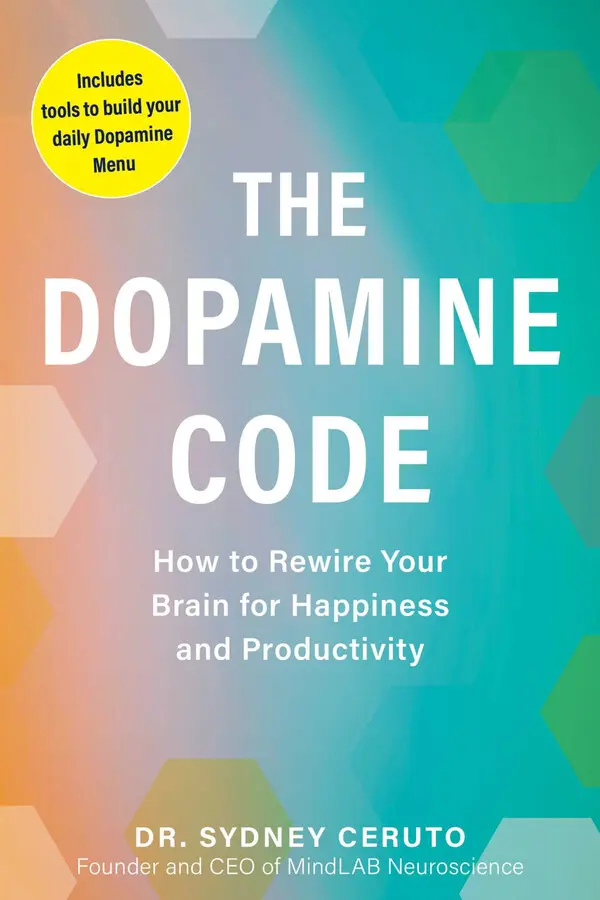
The Dopamine Code
Decode Your Drive
Why Your Brain Rewards the Wrong Things
Your brain's reward system runs every decision, every craving, every crash, and it was never designed for the life you're living. The Dopamine Code is Dr. Ceruto's framework for understanding the architecture behind what drives you, drains you, and keeps you locked in patterns that willpower alone will never fix.
Published by Simon & Schuster, The Dopamine Code is Dr. Ceruto's framework for building your own Dopamine Menu, a personalized system for motivation, focus, and enduring life satisfaction.
Order Now!Available now