Key Points
- Midtown's corporate density creates a perception-pressure environment where strategic decisions are filtered through neural circuits monitoring external judgment.
- Talent circulation between firms spreads identical neural decision architecture across competitors, producing strategic homogeneity invisible to traditional analysis.
- Leaders from different industries carry fundamentally different neural frameworks for risk, which collide in boardrooms and produce strategies shaped by dominance rather than data.
- Real-Time Neuroplasticity™ rewires the circuits that create strategic drift, producing execution consistency that conventional consulting cannot achieve.
- Strategic conservatism in Midtown often disguises itself as boldness because the neural circuits shaped by high-visibility environments prioritize perception over execution.
| Marker | Traditional Approach | Neuroscience-Based Approach | Why It Matters |
|---|---|---|---|
| Foundation | Behavioral Strategy Development | Traditional Strategy Consulting | Leadership Development |
| Focus | Neural decision architecture | Market positioning and financials | Individual competency building |
| Method | Real-Time Neuroplasticity™ | Analysis and recommendations | Workshops and assessments |
| Durability | Durable circuit-level change | Requires ongoing engagement | Decays without reinforcement |
| Scope | Individual and organizational | Organizational structure only | Individual competencies only |
| Execution Alignment | Strategy matches neural reality | Assumes rational execution | Does not address strategy |
How Midtown’s Corporate Ecosystem Shapes Strategic Behavior
Midtown Manhattan concentrates the headquarters of industries that define global commerce. From the media conglomerates along Sixth Avenue to the law firms stacked through the East 40s and 50s, the professional talent density here creates an environment where strategic decisions ripple across entire sectors. This concentration also creates a specific behavioral ecology. Leaders in Midtown operate inside organizations where every decision is observed by peers, competitors, and boards who maintain offices within walking distance. The neural circuits shaped by this level of scrutiny produce a particular kind of strategic conservatism that masks itself as boldness. Executives announce ambitious initiatives in boardrooms on Park Avenue and then execute them through a filter of risk-avoidance circuits that were built by decades of operating where failure is visible to everyone who matters.
The industry diversity within Midtown creates another layer of behavioral complexity. A technology executive at a firm near Bryant Park processes strategic risk through fundamentally different neural architecture than a private equity partner three blocks east on Madison Avenue. When these leaders sit on the same board, advise the same portfolio company, or negotiate the same acquisition, they bring competing neural frameworks for evaluating opportunity and threat. The resulting strategic decisions are not compromises in the rational sense. They are the product of whichever neural architecture asserts dominance in the room. In the towers between Times Square and Grand Central, strategic direction is shaped as much by the neural collision of different professional cultures as by the data those cultures are analyzing.
Why Traditional Strategy Fails in High-Density Corporate Environments
Midtown’s proximity to media, investors, and industry analysts creates a strategic environment where perception pressure warps decision-making. A CEO whose offices sit above Rockefeller Center knows that every strategic move will be dissected by journalists, analysts, and competitors before the quarter closes. This awareness embeds itself in the neural architecture governing strategic choices. Over time, the circuits that evaluate a strategic option against its merits become inseparable from the circuits calculating how that option will be perceived. The strategy that gets executed is not the one with the highest expected value. It is the one that satisfies the neural system monitoring external judgment. This dynamic operates beneath conscious awareness and no traditional strategic planning process accounts for it.
The talent market in Midtown amplifies these patterns. Organizations compete for the same senior leaders, creating a revolving door that spreads neural defaults across firms. When a chief strategy officer moves from a media company on Seventh Avenue to a consulting firm on Third Avenue, they carry their decision architecture with them. The new organization inherits not just the executive’s skills but their neural framework for processing ambiguity, risk, and conflict. Over successive hiring cycles, Midtown firms converge on similar strategic behaviors because they are literally sharing the same neural circuits through talent circulation. The resulting industry-wide strategic homogeneity is invisible to traditional analysis but obvious when viewed through the lens of organizational neuroscience.
Real-Time Neuroplasticity™ gives Midtown organizations a strategic advantage that cannot be replicated through conventional means. Dr. Sydney Ceruto maps the neural architecture driving your leadership team’s actual decision patterns and rewires the circuits that create drift between strategic intent and execution. For organizations operating in Midtown’s high-visibility, high-pressure environment, this produces strategic consistency that compounds across quarters and creates genuine differentiation in a landscape where competitors are executing from nearly identical neural blueprints.


Dr. Sydney Ceruto, PhD, Neuroscientist & Author, MindLAB Neuroscience
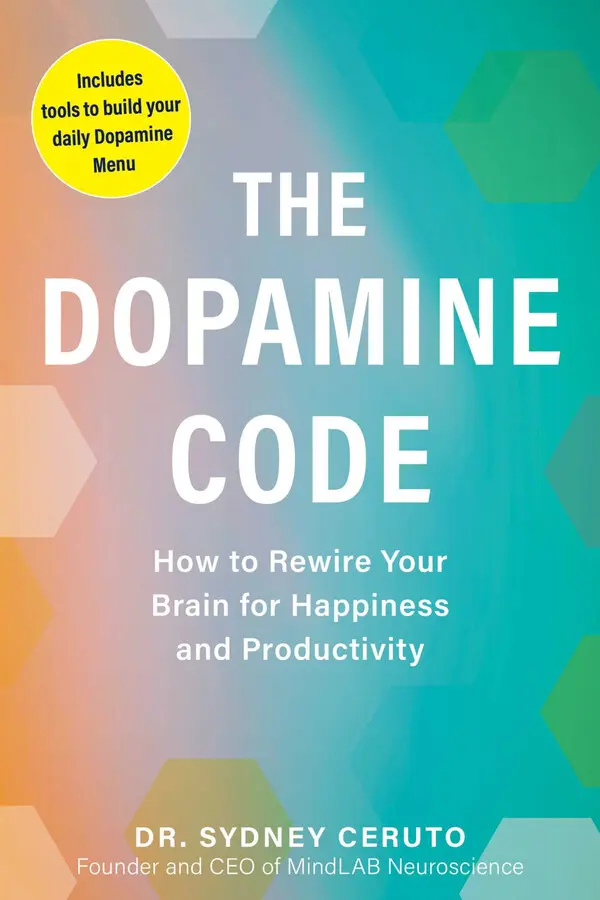
Dr. Ceruto holds a PhD in Behavioral & Cognitive Neuroscience from NYU and Master’s degrees in Clinical Psychology and Business Psychology from Yale University. She lectures at the Wharton Executive Development Program at the University of Pennsylvania and has been an Executive Contributor to the Forbes Coaching Council since 2019. Dr. Ceruto is the author of The Dopamine Code (Simon & Schuster, June 2026). She founded MindLAB Neuroscience in 2000 and has spent over 26 years leading it, pioneering Real-Time Neuroplasticity™, a methodology that durably rewires the neural pathways driving behavior, decisions, and emotional responses.
Frequently Asked Questions About Behavioral Strategy Development
What is Behavioral Strategy Development?
Behavioral Strategy Development maps the neural circuits that drive how leaders and teams make decisions, then builds strategic frameworks aligned with that architecture. It designs strategy around how the brain actually operates rather than assuming rational, consistent execution.
Why does Midtown Manhattan's environment make this especially relevant?
Midtown concentrates corporate headquarters, media scrutiny, and board-level oversight in extraordinary density. The neural circuits shaped by operating under this visibility produce specific strategic patterns, including perception-driven decision-making that traditional consulting never addresses.
How does talent circulation between Midtown firms affect strategy?
When senior leaders move between firms, they carry their decision architecture with them. Over successive hiring cycles, competing organizations converge on similar strategic behaviors because they are literally sharing neural circuitry through talent mobility. This creates blind spots no external analysis can detect.
Can this work for organizations across different industries?
Yes. The neural principles driving strategic decision-making are consistent across industries. What changes is the specific pressure profile each sector presents. Dr. Ceruto calibrates the approach to the regulatory, competitive, and cultural conditions your organization actually faces in Midtown.
How does media proximity affect strategic decision-making?
Operating near major media outlets embeds perception-monitoring circuits into strategic thinking. Over time, leaders cannot separate evaluating a strategy on its merits from calculating how it will be perceived externally. This distortion operates beneath awareness and shapes every major decision.
What does the initial engagement look like?
It begins with a Strategy Call where Dr. Ceruto maps the behavioral dynamics at play. She then identifies the specific circuits creating strategic drift and designs a protocol calibrated to the pressures and visibility that define operating in Midtown Manhattan.
How long before we see changes in strategic execution?
Most leadership teams notice measurable shifts within the first several weeks. Real-Time Neuroplasticity™ works at the circuit level, producing faster change than leadership development programs or strategic offsites that address behavior without changing the underlying architecture.
Does this replace our existing strategy team or consulting firm?
No. Behavioral Strategy Development makes existing strategic resources dramatically more effective by ensuring the leadership team's neural architecture can actually execute what those resources recommend. It complements rather than replaces market analysis and financial planning.
Can board-level dynamics be addressed through this approach?
Absolutely. Boards bring together leaders with diverse neural architectures for processing risk, time horizons, and competitive threats. Mapping these dynamics reveals why certain strategic initiatives consistently stall at the board level despite strong management support.
How is Dr. Ceruto qualified for this work?
Dr. Ceruto holds a PhD in Behavioral and Cognitive Neuroscience from NYU and two Master's degrees from Yale. She lectures at the Wharton Executive Development Program at the University of Pennsylvania and has spent over 26 years applying Real-Time Neuroplasticity™ to individual and organizational performance.
Also available in: Miami · Wall Street · Beverly Hills · Lisbon
Take the First Step
One hour with Dr. Sydney Ceruto. You leave knowing which neural pattern is actually driving this, and what to do about it.
Book a Strategy Call
The Dopamine Code
Decode Your Drive
Why Your Brain Rewards the Wrong Things
Your brain's reward system runs every decision, every craving, every crash, and it was never designed for the life you're living. The Dopamine Code is Dr. Ceruto's framework for understanding the architecture behind what drives you, drains you, and keeps you locked in patterns that willpower alone will never fix.
Published by Simon & Schuster, The Dopamine Code is Dr. Ceruto's framework for building your own Dopamine Menu, a personalized system for motivation, focus, and enduring life satisfaction.
Order Now!Available now