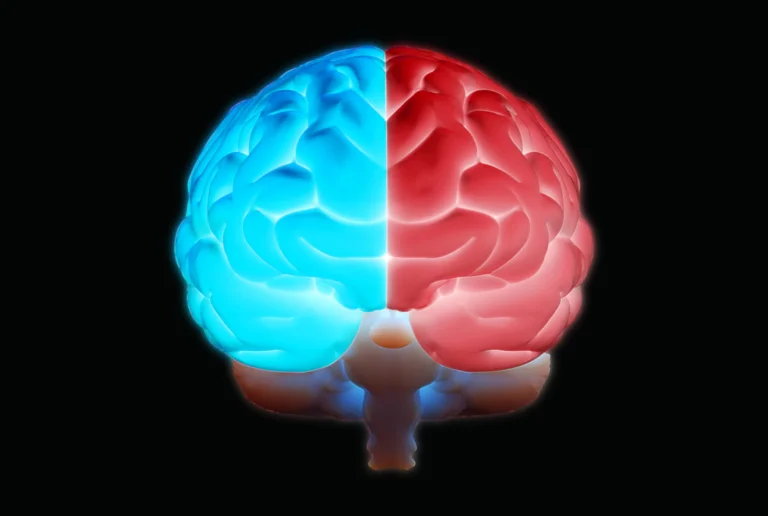
The Neuroscience of Strategic Thinking: Why High-Stakes Judgment Degrades and What the Brain Is Actually Doing
The business leaders and founders who arrive at my practice with strategic dysfunction almost never describe it as a thinking problem. They describe it as a stamina problem, or a clarity problem, or, most often, a frustration that the quality of their judgment at 9 a.m. bears no resemblance to the quality of their judgment at 6 p.m. They are making the same kinds of decisions they have made for years. The demands are arriving with the same urgency they always have. What has changed is that the cognitive machinery required to think multiple horizons ahead, to hold competing variables in suspension while weighing second and third-order consequences, now feels like running uphill. They still perform. But strategic thinking (the kind that generates genuine business advantage) has been replaced by something shallower: rapid pattern-matching, tactical reactivity, and an increasing reliance on what worked last time.
This is not a wisdom problem, an experience deficit, or a failure of motivation. It is a neurobiological problem with a specific architecture. The prefrontal-parietal network that supports strategic reasoning (the dorsolateral prefrontal cortex, the inferior parietal lobule, the frontoparietal association areas) is among the most metabolically expensive tissue in the human brain. It requires sustained glucose delivery, adequate sleep-dependent consolidation, and a cortisol environment that keeps the hypothalamic-pituitary-adrenal axis within the range where long-horizon thinking remains accessible. When any of these inputs degrades (through overload, chronic stress, or the sustained overperformance that defines most leadership careers), strategic capacity does not decline gradually and uniformly. It collapses in a predictable sequence, from the most complex cognitive operations inward, until what remains is functional but shallow: the brain doing its best tactical impression of strategic thought.
The individuals who seek me out are strategic thinkers whose neural infrastructure has been depleted faster than it can regenerate. The depletion is not permanent and the architecture is not damaged, but it cannot be restored by working harder or by adding a productivity framework on top of a system already running at its ceiling. What is required is a targeted intervention at the level where the degradation is actually occurring. A strategic mindset depends on neural conditions that no management course, workshop, or strategy retreat can address directly.
The Prefrontal-Parietal Network: How the Brain Constructs Strategic Thought
The Neural Architecture of Multi-Horizon Reasoning
Strategic thinking (in the neuroscientific sense, not the business school sense) is the brain’s capacity to construct, maintain, and manipulate representations of future states while holding present constraints and past precedents in working memory simultaneously. This is not a single faculty. It is an emergent property of coordinated activity across a distributed network. The dorsolateral prefrontal cortex (dlPFC) serves as the hub: it governs working memory capacity, maintains goal representations against interference, and applies inhibitory control to suppress impulsive or habitual responses when deliberate analysis is required. The inferior parietal lobule and precuneus provide spatial-temporal scaffolding: the neural substrate for mentally projecting into future scenarios and rotating complex problem spaces to examine them from multiple angles. The anterior cingulate cortex monitors for conflict between competing response options and allocates attentional capacity accordingly.
Earl Miller’s foundational work at MIT on prefrontal-parietal coordination established that high-level cognition depends not on the firing rate of individual neurons within these regions but on the synchronization between them, specifically the coordination of neural oscillations across the beta and gamma frequency bands. When this oscillatory coupling is intact, information can be routed efficiently between working memory storage, long-term knowledge retrieval, and goal maintenance. The result is the cognitive state that strategic thinkers recognize as “clear”: the ability to hold a complex problem space in mind, examine it from multiple temporal horizons simultaneously, and generate genuinely novel solutions rather than recombinations of existing ones. When this coupling degrades (under fatigue, chronic stress, or overload), the regions continue to function individually, but their coordination fails. The person can still retrieve facts, still apply analytical frameworks, still produce outputs. What they cannot do is sustain the integrated multi-region coordination that generates original strategic insight.
Working memory capacity constraining strategic reasoning is more significant than most business leaders appreciate, and more limited than the demands placed on it. The dorsolateral prefrontal cortex can maintain approximately four independent informational chunks in active working memory at any given moment, a ceiling established by Cowan (2001) in foundational research that has held across subsequent decades of replication. In practice, each “chunk” in a strategic problem is not a single data point but a compressed relational structure: a competitive dynamic, a capital allocation constraint, a stakeholder position, a second-order consequence. A genuinely complex strategic challenge requires holding eight to twelve such structures simultaneously, relating them to each other, and tracking how modifications to one propagate through the others. The arithmetic is not favorable. The prefrontal cortex is being asked to do more than its architecture can hold, which means leaders are perpetually trading off what they can hold in working memory against what they are forced to simplify, discard, or defer.
Why Strategic Reasoning Collapses Inward Under Load
The degradation sequence under cognitive load follows a predictable neural logic. Multi-horizon strategic reasoning (thinking simultaneously across immediate, intermediate, and long-range consequences) is the most demanding operation in the prefrontal-parietal network’s repertoire. It requires the highest level of oscillatory coordination, the greatest working memory load, and the most sustained attentional allocation. When these inputs deplete, this is precisely the capacity that fails first. The brain does not shut down equally across cognitive domains. It protects lower-level operations at the expense of higher-level ones. Tactical reasoning (responding to immediate problems with established patterns) requires far less prefrontal coordination and correspondingly far less metabolic investment. The brain shifts toward it not because it is preferred but because it is sustainable under conditions of depletion.
What I observe in my practice is that this shift is rarely consciously registered. The business leader continues to believe they are thinking strategically, generating outputs that reference competitive dynamics and longer time horizons. But the underlying mechanism has changed. They are applying past frameworks rather than constructing novel ones, exactly the cognitive flexibility that adaptive strategy requires. They are collapsing multi-variable problems into single-variable problems and optimizing for closure rather than quality. The tactical brain mimics strategic reasoning, and mimicry is sufficient for many situations, but it fails in exactly the situations where genuine strategic thinking matters most: novel competitive environments, strategic choices under uncertainty, and capital allocation where the correct answer is not knowable from historical precedent.
The Process of Building Strategic Skills Across Organizations
Organizations that intentionally invest in building strategic thinking skills across their management teams gain a measurable advantage in long-term planning, goal attainment, and the pursuit of goals that extend beyond quarterly cycles. The work of cultivating strategic capability is not about adding more analytical frameworks; it is about ensuring the neural architecture that supports multi-horizon reasoning can sustain its designed operation under the conditions of modern business. When leaders at every level develop these skills, the organization’s capacity to make decisions that align with its long-term vision compounds across every planning cycle and operational review.
Strategic planning, in particular, is a critical skill that depends on prefrontal-parietal coordination at a level most management training never addresses. The goals that drive business success (market expansion, talent strategy, competitive repositioning) require the same sustained neural operation that chronic stress and overload systematically degrade. Organizations that treat strategic thinking as a learnable skill without addressing its neurobiological substrate are building on a foundation that erodes under exactly the conditions where it matters most.
The Cascade from Deliberation to Automaticity: How the Brain Shifts Under Load
What the Dorsolateral Prefrontal Cortex Actually Loses
The phenomenon most business professionals call “burnout” is, at the neural level, a specific and measurable degradation of dorsolateral prefrontal cortex function. The common framing (that making many choices depletes “willpower” or “mental energy”) captures the subjective experience but misidentifies the mechanism. What depletes is not some general-purpose cognitive supply. What depletes is the specific capacity of the dlPFC to sustain deliberative, effortful cognition against the competing pull of habitual, automatic responses. This is the mechanism that separates genuine strategists from those running on autopilot, and it is the leadership capacity most vulnerable to erosion.
Shai Danziger’s research on judicial sentencing (tracking over 1,100 parole rulings across a full judicial calendar) documented that favorable outcomes dropped from approximately 65% at the start of each session to near zero by the end, before resetting after breaks. The implication that attracted attention was that judges made systematically different rulings as a function of when in the day they were judging, independent of case characteristics. The neural implication is more precise: deliberative evaluation (holding case-specific factors in working memory, weighing them against multiple criteria, and generating a context-sensitive outcome) was progressively replaced by default responses. The default response in the judicial context was denial. The default response in business contexts is whatever the organization has done before: the established preference, the existing playbook, the path of least cognitive resistance.
The metabolic substrate is specific. The dlPFC relies on glucose metabolism at significantly higher rates than surrounding cortical tissue during deliberative tasks, and the accumulation of adenosine and other metabolic byproducts signals the brain to reallocate attention away from costly deliberative computation. The effect is not subjectively experienced as exhaustion. Most leaders report they feel capable of continued output. What they have lost is the quality threshold that would allow them to recognize when a strategic challenge requires more deliberation than they are currently capable of providing. In a business environment where strategy depends on sustained deliberative capacity, this silent degradation carries outsized consequences.
How Habit Circuits Capture Strategic Judgment
The neurological transition from deliberative to automatic control involves a specific and consequential redistribution of neural control. Deliberative cognition is predominantly governed by the prefrontal cortex in conjunction with the hippocampus, which provides episodic context, and the anterior cingulate cortex, which monitors conflict. Automatic responding is governed by the basal ganglia (specifically the dorsal striatum), which encodes stimulus-response associations and executes them at high speed with low metabolic cost. These two systems operate in parallel at all times, but prefrontal inhibitory control normally prevents the basal ganglia’s faster, cheaper, habit-based responses from capturing behavior when the situation warrants deliberation.
As deliberative capacity depletes, prefrontal inhibitory control weakens and the basal ganglia’s habit-based outputs are progressively less suppressed. A strategic business opportunity encountered in the morning is evaluated on its specific merits; the same type of opportunity later in the day is routed through the nearest categorical script, whichever the basal ganglia has most strongly encoded from prior experience. The analysis looks the same. The underlying mechanism is categorically different. The management skills required to recognize this shift and intervene deliberately (the very skills that sustain leadership effectiveness) are themselves prefrontal functions that degrade under the same conditions.
For leaders whose competitive differentiation depends on judgment quality in novel situations, this is a significant liability. The decisions that determine organizational trajectories (capital allocation under uncertainty, talent bets, competitive moves requiring asymmetric thinking) are precisely those requiring the deliberative capacity that fatigue depletes. And because the degradation is not subjectively registered, these high-stakes decisions are frequently made in the depleted state without awareness that the mechanism has shifted from deliberation to automaticity. The goals that require sustained prefrontal engagement (long-range strategy, competitive positioning, organizational vision) are precisely those the depleted brain can no longer service adequately.
The Default Mode Network and the Neuroscience of Strategic Insight
Why the Wandering Mind Is Working
The most counterintuitive finding in the neuroscience of strategic cognition is that the brain’s periods of apparent inactivity (the moments when the leader steps away from the problem, stares out the window, lets attention drift) are not interruptions to strategic thinking. They are essential components of it. The default mode network (DMN), long characterized as the brain’s “resting state” circuit, is now understood to be one of the most metabolically active networks in the brain during what appears to be rest. During internally directed cognition (mind-wandering, future projection, autobiographical memory retrieval, mental simulation of hypothetical scenarios), the DMN is generating the integrative activity that conscious, externally focused analysis cannot.
Mary Helen Immordino-Yang’s research on DMN function established that this network is specifically engaged during the construction of coherent narratives from complex information: the cognitive operation of extracting meaning from disparate data points by connecting them to prior experience, values, and long-range goals. This is precisely the operation that strategic insight requires. A competitive opportunity does not announce itself as such. It is recognized as an opportunity because a strategic thinker can connect current market conditions to historical patterns, to business capabilities, to a future state that does not yet exist, and detect a non-obvious alignment that would be invisible to someone missing any of those connections. That integration does not happen through focused analysis. It happens through the DMN’s unconstrained associative activity: the neural operation that occurs when the prefrontal cortex releases its top-down attentional control and allows the brain’s distributed knowledge network to self-organize.
The problem for high-performing business leaders is structural: their environments have been optimized to eliminate DMN access. Calendar saturation, ambient notification streams, the cultural equation of busyness with productivity. These conditions maintain the brain in a state of continuous external attentional demand, which systematically suppresses DMN activation. The focused-attention network (FAN) and the DMN operate in a competitive, anti-correlated relationship: when one is active, the other is inhibited. A leader whose attention is continuously captured by external demands is a leader whose default mode network has been effectively shut off, not by dysfunction but by design. The strategic insight that would arise from integrative DMN activity cannot be generated because the network generating it is never given the conditions to activate.
Incubation, Integration, and the Architecture of Non-Obvious Solutions
Research on incubation effects provides the neurobiological account of what happens when DMN access is restored. The emergence of insight after stepping away from a problem is not spontaneous; it is the output of continued unconscious computation, mediated by the DMN, during which the brain relates problem elements to a broader associative network in ways that bypass the constraints of conscious analysis. Deliberative analysis is serial and biased toward factors that are salient, quantifiable, and proximate in time. DMN cognition is associative and parallel; it holds multiple elements in relation simultaneously, weights them against long-term values and experiential patterns, and generates connections across domains that deliberative analysis would never traverse.
The insight that arrives in the shower or at the moment of waking is not accidental. It is the product of neural activity that could not occur while the leader’s attention was captured by the next meeting or the next task in the queue. The leader who cannot remember the last time they generated a genuinely original reframing is almost invariably one whose DMN has been chronically suppressed by attentional overload. The neural infrastructure for non-obvious pattern detection has been operationally decommissioned, and with it the capacity for the kind of strategic thinking and leadership vision that separates transformative strategy from competent management.
Stress, the Amygdala-Striatum Axis, and the Collapse of Strategic Range
How Chronic Stress Rewires the Judgment Hierarchy
Stress does not impair strategic thinking uniformly or gradually. It rewires it, specifically by shifting the balance of neural control from the prefrontal cortex to the amygdala and striatum. This shift is not a maladaptive response. Under acute threat, it is the brain’s most adaptive reconfiguration: rapid, subcortically-driven responses are faster, less costly, and sufficient for managing immediate danger. The problem for strategic leaders is not that this system exists. The problem is that chronic stress (the sustained low-to-moderate activation that characterizes most high-demand business environments) maintains this shift in neural control architecture long after any specific threat has passed.
Amy Arnsten’s research on stress-induced prefrontal impairment established the molecular cascade with precision. Acute uncontrollable stress triggers norepinephrine and dopamine release in the prefrontal cortex at concentrations that overwhelm the postsynaptic receptors responsible for sustaining working memory representations. The dlPFC’s ability to maintain goal-relevant information in the face of interference (the specific capacity required for multi-horizon strategic reasoning) degrades rapidly under these neurochemical conditions. Simultaneously, stress hormones potentiate amygdala activation and strengthen the amygdala’s projections to the striatum, which encodes habitual stimulus-response associations. The brain does not simply lose strategic capacity. It actively redistributes control toward a system optimized for rapid, habit-based responding.
What I identify as strategic range compression is the observable signature. Tactical responsiveness remains high, often improving under moderate stress, because the amygdala-striatum axis is efficient at executing established patterns. What contracts is the temporal range of strategic thinking: from quarters and years to weeks, from weeks to days, from days to the immediate situation. Decisions that would ordinarily be evaluated against five-year goals are evaluated against next quarter’s metrics. Long-horizon thinking requires prefrontal inhibition of the striatum’s short-range bias; under chronic stress, that inhibitory control is attenuated. The leader acts shorter than they think, and often cannot understand why their planning and goal-setting have contracted.
The Tactical Competence Trap
This creates a specific pattern I have documented across hundreds of engagements: chronic stress does not reduce a leader’s output. It shifts their competence profile toward the tactical domain while depleting the strategic domain in ways that are nearly invisible, even to the individual. They are still making decisions faster than their peers. What they are no longer doing is generating the non-consensus investment, the architectural restructuring, the competitive repositioning that requires tolerating ambiguity before it resolves into advantage. The trap is that business systems optimized for quarterly accountability reward precisely this tactical responsiveness, reinforcing the shift while the strategic range continues to compress.
High-demand careers generate chronically elevated cortisol baselines, whose amplified catecholamine signaling maintains the prefrontal-to-striatum control shift, which produces the tactical loop that sustains the career while degrading the strategic capacity it ultimately depends on. Management teams that rely on their leadership to set direction find the direction increasingly convergent with industry consensus: the safe, pattern-matched strategy that the striatum generates efficiently but that never produces the asymmetric success that genuine strategic thinking delivers. The goals become incremental. The planning becomes reactive. And the organizations wonder why their approach looks like everyone else’s.
What Recalibration of Strategic Capacity Looks Like
The Point of Intervention Is Not the Output, It Is the Architecture
The business education industry has produced an enormous quantity of strategic frameworks, heuristics, and analytical tools for improving strategic thinking. Most of them address the output level of strategic cognition; they provide better templates for the analysis that the prefrontal-parietal network is supposed to perform. None of them address the network’s capacity to perform the analysis. A better matrix does not restore the dorsolateral prefrontal cortex’s working memory bandwidth. A structured strategic planning exercise does not recalibrate the hypothalamic-pituitary-adrenal axis. A mindfulness protocol that takes 20 minutes during a 14-hour workday does not create the sustained DMN access that integrative strategic insight requires. Courses in management strategy address the cognitive surface while the neural substrate (and with it, actual performance under pressure) continues to erode.
The methodology I have developed over 26 years addresses the neural architecture of strategic capacity directly. Real-Time Neuroplasticity™ works at the level of the specific circuits involved: intervening not in scheduled sessions removed from the context in which strategic thinking actually operates, but in the live cognitive environments where the degradation is occurring. When the dlPFC’s working memory is being overwhelmed by volume, the relevant neural event is not happening in a scheduled session. It is happening at the conference table, in front of the spreadsheet, in the moment of the high-stakes conversation where the pressure to choose is colliding with the brain’s depleted deliberative capacity. That is where the intervention needs to reach.
The recalibration of the HPA axis (the restoration of a cortisol baseline that permits sustained prefrontal engagement) requires sustained input to the neural circuits that regulate HPA tone. The prefrontal cortex itself is one of the primary cortical regulators of HPA activity, exercising top-down inhibitory control over subcortical stress circuitry. When prefrontal function is intact and the person’s attentional system is not perpetually captured by acute stress cues, prefrontal-HPA regulation restores a cortisol baseline compatible with strategic thinking. This is not a relaxation effect. It is a structural recalibration of the neurochemical environment in which the prefrontal-parietal strategic network operates: the pathway through which leaders regain access to the full scope of their goals and skills.
Restoring DMN Access and the Conditions for Strategic Insight
Restoring default mode network access requires more than scheduling white space on the calendar. The DMN is suppressed not only by external attentional demands but by the anxiety-driven internal attentional capture that chronic stress produces. Even when a leader is not in a meeting or handling email, the stress-sensitized amygdala maintains a low-level threat-monitoring state that prevents attentional release. The DMN’s integrative function requires not just the absence of external demands but the presence of an internal attentional state characterized by safety and open-ended exploration, what researchers call “prospective cognition.”
The Cognitive Performance Protocol™ I apply alongside Real-Time Neuroplasticity™ specifically targets this internal attentional state: training the attentional system’s capacity to release top-down control in conditions where the amygdala would otherwise maintain vigilance. The business leader who can release deliberative control in the moment of a complex strategic problem gains access to the integrative connections that deliberative analysis alone cannot generate. The insight that arrives from this release is the predictable output of a neural network performing the operation it was architected to perform when the conditions finally permit it.
What I observe in leaders who undergo this recalibration is a gradual restoration of strategic range: the temporal horizon of their reasoning expands, the capacity to tolerate ambiguity returns, and they begin generating the non-obvious move again. The internal compass that distinguishes what is genuinely important from what is merely urgent begins functioning at its designed resolution. These are not psychological improvements. They are the signatures of restored prefrontal-parietal coordination, a recalibrated HPA axis, and a default mode network finally permitted to do its work. The goals sharpen, the planning extends, and the success that follows is the natural product of a strategic mind operating at full capacity.
Building a Decision-Making Framework That Accounts for Neural Architecture
Effective leadership in complex business environments requires more than a decision-making framework built on logic alone. The strategic thinker who understands the neuroscience of their own cognitive architecture (the conditions under which their prefrontal-parietal network performs optimally, the signals that indicate a shift toward habitual responding, the practices that restore DMN access) possesses a qualitatively different kind of strategic advantage. This is not about logically evaluating information more carefully. It is about ensuring the neural infrastructure that makes strategic evaluation possible is operating at the level the situation demands, a prerequisite for the goals and skills that define sustained competitive advantage.
The decision-making process for high-stakes strategic choices should account for the neurobiological realities this hub examines: working memory limits, fatigue cascades, stress-induced range compression, and the essential role of incubation in generating non-obvious solutions. Organizations that build these insights into their planning rhythms, their management practices, and their leadership development programs create structural advantages that compound over every strategic cycle. A decision tree is only as good as the neural architecture evaluating it, and that architecture requires conditions that most business environments have been inadvertently designed to undermine.
The 10 Articles in This Hub: What They Examine
The articles within this hub investigate the specific mechanisms, patterns, and intervention points relevant to strategic thinking at the leadership level. They cover the neuroscience of prefrontal-parietal coordination under load, the architecture of cognitive fatigue as a distinct neurological phenomenon, the default mode network’s role in generating the strategic insights that deliberative analysis cannot reach, and the specific mechanisms by which chronic stress compresses strategic range. Several articles examine how the basal ganglia’s habit-execution architecture captures judgment from prefrontal deliberation, and the conditions under which prefrontal control can be restored.
The hub addresses topics including working memory constraints as a structural limit on strategic complexity, why tactical competence persists while strategic capacity degrades, the cognitive environments that support versus suppress original strategic thinking, and how the stress-induced shift from PFC-driven deliberation to habitual responding plays out in business strategy and management contexts. Articles examine cognitive bias as a prefrontal allocation phenomenon, the neural basis of risk tolerance under chronic stress, and the conditions within organizations that systematically deplete the strategy capacity of leaders most responsible for exercising it.
What connects every article in this hub is a single architecturally precise premise: strategic thinking is not a cognitive style or a learned skill that can be applied more consistently through better habits. It is the emergent property of a specific neural network configuration that requires particular neurochemical conditions to operate at the level that genuine competitive advantage demands. Those conditions are degraded by the same high-demand environments that demand strategic excellence most urgently. What was degraded by environmental conditions can be restored through targeted neural recalibration, not by adding strategic frameworks on top of a depleted system, but by restoring the underlying architecture to the operational state that makes those frameworks meaningful again.
This is Pillar 2 content, Peak Performance Systems™, and the work in this hub addresses the strategic capacity gap at its neural origin, not its surface. The articles connect directly to the peak performance architecture examined in Peak Performance & Flow States, where sustained attentional command and the suppression of self-referential cognition intersect with strategic execution at its highest level.
How Strategic Thinking Skills Connect to Business Success
The relationship between strategic thinking skills and business success is not metaphorical; it is architectural. Every strategic decision, every planning cycle, every goal-setting cycle depends on the same prefrontal-parietal network whose degradation this hub documents. When that network operates at full capacity, leaders make strategic decisions that create asymmetric advantage. When it operates in a depleted state, those same leaders produce strategy that converges with industry consensus and generates average outcomes. The difference between transformative strategy and competent management is, at the neural level, a matter of network integrity.
For teams and organizations seeking to develop strategic thinking as a core competency, the implication is clear: skills training that does not address the neurobiological substrate of strategic cognition is building on sand. The planning, the goals, the management frameworks: all of these are necessary. None of them are sufficient without the neural conditions that make genuine strategic thinking possible. This hub provides the scientific foundation for understanding what those conditions are, how they degrade, and what targeted recalibration can restore.
Schedule a Strategy Call with Dr. Ceruto
If what this hub describes maps onto your experience (the progressive narrowing of your strategic horizon, the increasing reliance on established playbooks over original moves, the sense that the quality of your judgment has become a function of where you are in the day rather than the nature of the challenge), the problem is not analytical and the solution is not methodological. It is a neural architecture issue operating below the level that any strategic framework can reach.
Strategic Cognition Across Neural Domains
Strategic thinking draws on a distributed network of cognitive systems. Cognitive flexibility enables the perspective shifts that strategic analysis demands: the capacity to evaluate a situation from multiple angles before committing to a course of action. Pattern recognition provides the rapid assessment layer that allows experienced strategists to detect opportunities and threats before they become obvious. The quality of strategic output depends on working memory and mental clarity to hold complex models in active processing, and executive leadership is where strategic thinking translates from analysis into organizational action. The regional mechanisms behind the judgment distortions described throughout this hub are examined in the neuroscience of brain regions and cognitive biases.
Schedule a strategy call with Dr. Ceruto to examine how the specific mechanisms described in this hub apply to your business environment and what targeted recalibration of your strategic capacity would look like.
About Dr. Sydney Ceruto
Founder & CEO of MindLAB Neuroscience, Dr. Sydney Ceruto is the pioneer of Real-Time Neuroplasticity™, a proprietary methodology that durably rewires the neural pathways driving behavior, decisions, and emotional responses. Dr. Ceruto holds a PhD in Behavioral & Cognitive Neuroscience (NYU) and Master’s degrees in Clinical Psychology and Business Psychology (Yale University). Lecturer, Wharton Executive Development Program, University of Pennsylvania.
References
- Miller, E. K., & Cohen, J. D. (2001). An integrative theory of prefrontal cortex function. Annual Review of Neuroscience, 24, 167–202. https://doi.org/10.1146/annurev.neuro.24.1.167
- Cowan, N. (2001). The magical number 4 in short-term memory: A reconsideration of mental storage capacity. Behavioral and Brain Sciences, 24(1), 87–114. https://doi.org/10.1017/S0140525X01003922
- Danziger, S., Levav, J., & Avnaim-Pesso, L. (2011). Extraneous factors in judicial decisions. Proceedings of the National Academy of Sciences, 108(17), 6889–6892. https://doi.org/10.1073/pnas.1018033108
- Arnsten, A. F. T. (2009). Stress signalling pathways that impair prefrontal cortex structure and function. Nature Reviews Neuroscience, 10(6), 410–422. https://doi.org/10.1038/nrn2648
- Immordino-Yang, M. H., Christodoulou, J. A., & Singh, V. (2012). Rest is not idleness: Implications of the brain’s default mode network for human development and education. Perspectives on Psychological Science, 7(4), 352–364. https://doi.org/10.1177/1745691612447308
This article examines the neuroscience underlying strategic thinking and high-stakes judgment. For personalized neurological assessment and intervention, contact MindLAB Neuroscience directly.
FAQs: Strategic Thinking & Business Management Skills
Why has my strategic thinking become shallower even though my experience and knowledge have grown?
Because strategic reasoning is not a knowledge problem; it is a neural architecture problem. The prefrontal-parietal network that supports multi-horizon reasoning is among the most metabolically expensive tissue in the brain, requiring sustained oscillatory coordination across the dorsolateral prefrontal cortex, inferior parietal lobule, and anterior cingulate. Chronic stress maintains elevated catecholamine levels that specifically degrade this coordination, shifting neural control from prefrontal deliberation to striatal habit-based responding. The result is what I identify as strategic range compression: your temporal horizon contracts from years to quarters to weeks, and established playbooks replace original strategic insight. My practice uses Real-Time Neuroplasticity™ to recalibrate the HPA axis and restore the neurochemical environment that genuine strategic cognition requires.
Is cognitive fatigue a real neurological phenomenon or just tiredness?
It is a specific and measurable degradation of dorsolateral prefrontal cortex function, distinct from general fatigue. Each deliberative choice depletes the prefrontal glucose metabolism and accumulates adenosine and metabolic byproducts that progressively weaken the inhibitory control keeping habit-based basal ganglia responses from capturing behavior. Danziger’s judicial sentencing research documented the effect precisely: judgment quality collapsed systematically across the day independent of case characteristics. For business leaders, this means the capital allocation choices and competitive moves requiring genuine deliberation are frequently routed through habitual pattern-matching without conscious awareness that the underlying mechanism has shifted from strategic to tactical. The management of cognitive resources is itself among the most critical skills for sustained success.
Can strategic cognitive capacity be restored or is it permanently diminished by years of stress?
It can be restored. The prefrontal-parietal network is not damaged by chronic stress; it is operating under neurochemical conditions that suppress its designed capacity. Arnsten’s research demonstrated the specific molecular cascade: excessive norepinephrine and dopamine at supraoptimal concentrations degrade the sustained firing patterns that working memory and strategic reasoning depend on. Recalibrating the HPA axis restores a cortisol baseline compatible with full prefrontal engagement. Real-Time Neuroplasticity™ intervenes during the live cognitive environments where degradation occurs, and the Cognitive Performance Protocol™ restores default mode network access: the integrative cognition that generates non-obvious strategic insight. The architecture is intact; what is required is restoring its operating conditions. Goals, planning, and strategic ambition return to their full scope when the neural substrate is recalibrated. This content is for educational purposes and does not constitute medical advice.