Brain Fog & Cognitive Clarity in Bergen County

Brain fog is not a vague complaint — it is a measurable disruption in the neural circuits that govern working memory, processing speed, and executive function. Dr. Ceruto provides neuroscience-based assessment to identify its biological drivers.

Brain fog isn't vagueness or laziness — it's a measurable disruption in the prefrontal cortex's ability to filter, prioritize, and execute. At MindLAB Neuroscience, we identify the specific neural and metabolic drivers behind your cognitive cloudiness and build targeted protocols to restore the clarity your brain is capable of producing.
Book a Strategy Call
ForbesUSA TodayHuffPostNewsweekAssociated PressCosmopolitanBusiness InsiderForbesUSA TodayHuffPostNewsweekAssociated PressCosmopolitanBusiness Insider

Key Points

  1. Brain fog arises from identifiable disruptions across interconnected neural systems including neuroinflammation, HPA axis dysregulation, blood-brain barrier compromise, and circadian misalignment.
  2. Microglial priming explains why cognitive impairment persists long after the original trigger resolves — the brain's immune cells remain hypersensitive to inflammatory stimuli.
  3. Circadian misalignment produces performance deficits of twelve to fifteen percent in sustained attention and processing speed through mechanisms distinct from simple sleep deprivation.
  4. Post-viral neurological impact can trigger sustained brain immune activation and alter structural wiring for months or years after acute infection resolves.
  5. Brain fog is a symptom cluster requiring precise differentiation of which biological systems are compromised — generic interventions produce generic results.
  6. The same factors driving brain fog actively suppress neuroplasticity, requiring a dual strategy: removing suppressors while activating restoration pathways.
  7. Effective resolution requires identifying root mechanisms across stress physiology, sleep architecture, inflammatory markers, and metabolic factors — not symptom management.

The experience is unmistakable. A decision that once took seconds now requires minutes of deliberation. Words that were readily available disappear mid-sentence. The mental sharpness that defined professional performance begins to feel unreliable — persistently diminished, like cognition operating through resistance.

This is brain fog, and it is far more than a subjective feeling. Large-scale research involving nearly 26,000 participants has demonstrated that individuals reporting brain fog show measurably lower cognitive scores on tests of inhibitory control. This represents the ability to suppress irrelevant information and maintain focus under competing demands. That deficit, even at modest levels, compounds across every decision, conversation, and strategic judgment made throughout a working day.

The Neurobiology of Cognitive Obscuration

“The mental sharpness that defined your professional performance begins to feel unreliable — persistently diminished, like cognition operating through resistance. This is brain fog, and it is far more than a subjective feeling.”

Brain fog arises from identifiable disruptions across several interconnected neural systems. Understanding which system is compromised in a given individual is the difference between effective intervention and years of frustration.
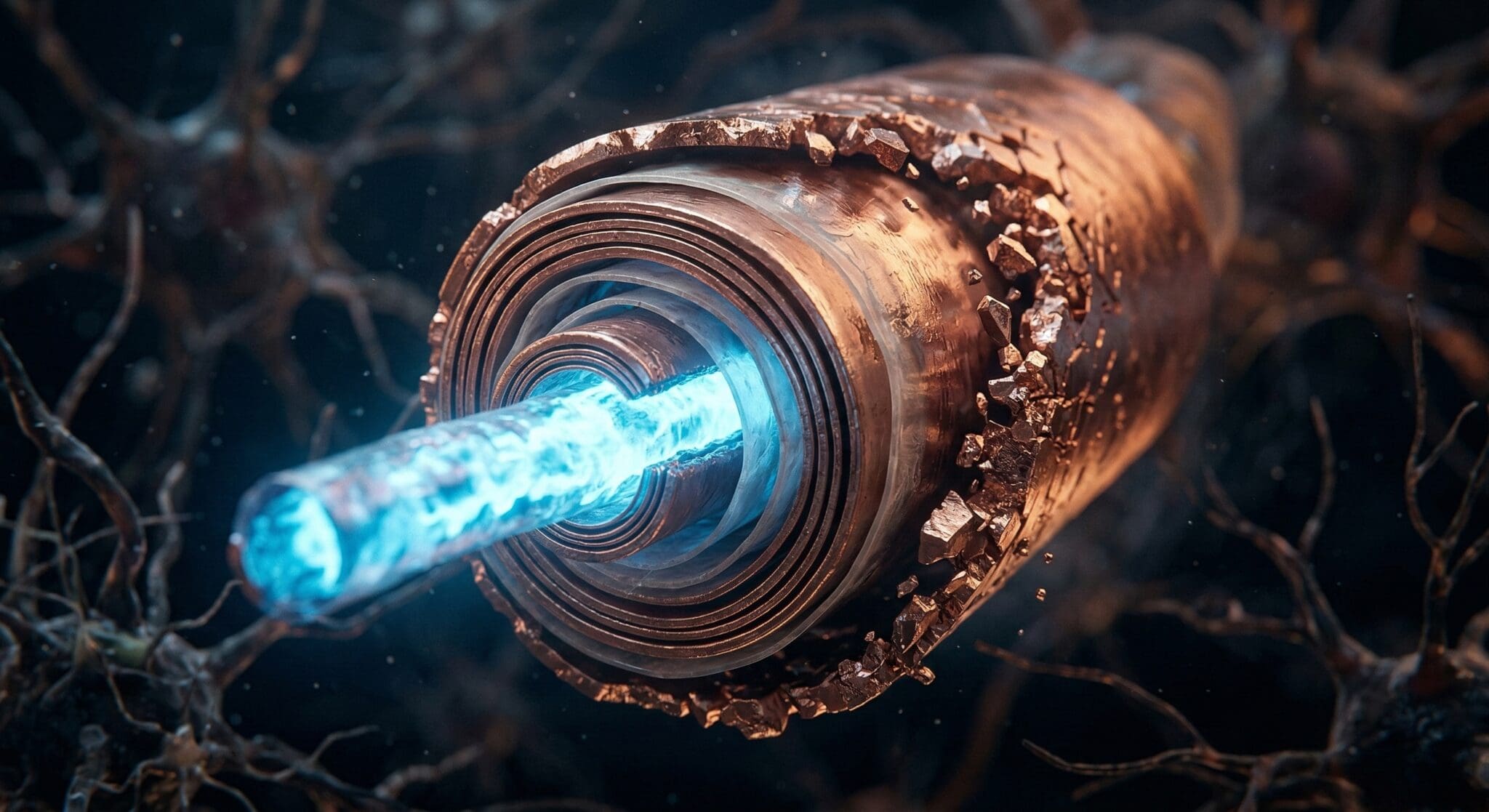
Macro cross-section of neural pathway with copper sheathing forming around blue signal core depicting active brain optimization

Neuroinflammation sits at the center of most brain fog presentations. The brain’s resident immune cells normally perform essential maintenance the brain’s memory hub. The regions responsible for working memory, error-monitoring, and sustained attention are disproportionately affected, which is why brain fog targets these functions rather than motor control or sensory processing.

A second major driver involves the HPA axis — the brain’s stress response system. Within as little as one week: neurons retract their connections, connection density drops, and the brain’s ability to exert top-down control over attention and behavior weakens. Simultaneously, excess cortisol suppresses the growth factors that the brain’s memory center depends on for consolidation and flexible thinking.

The blood-brain barrier represents another critical vulnerability. When compromised by chronic stress, poor sleep, or metabolic imbalance, this barrier becomes permeable, allowing inflammation from the body to enter and amplify inflammation already present in the brain. Increased barrier permeability has been prospectively linked to cognitive decline progression.

Circadian misalignment adds a fourth dimension. When behavioral patterns fall out of synchrony with the brain’s internal clock, measurable cognitive deterioration follows through mechanisms distinct from simple sleep deprivation. Controlled research has documented performance deficits of twelve to fifteen percent in sustained attention, processing speed, and cognitive throughput during circadian misalignment. These deficits did not improve with consecutive days of exposure.

Why Brain Fog Persists

One of the most clinically significant concepts in brain fog neuroscience is microglial priming — heightened sensitivity to inflammatory triggers. A viral infection, prolonged period of sleep deprivation, or sustained psychological stress can prime microglia to mount exaggerated inflammatory responses to stimuli that would normally be benign. This explains why cognitive impairment can persist long after the original trigger has resolved, and why individuals with complex stress histories often experience brain fog that seems disproportionate to their current circumstances.

Post-Viral Cognitive Impairment

One of the most significant contributors to brain fog in the current era is post-viral neurological impact. Viral infections — most notably but not exclusively SARS-CoV-2 — can trigger sustained activation of brain immune cells. They compromise the blood-brain barrier and alter structural wiring in ways that persist for months or years after acute infection resolves. Analysis of spinal fluid in individuals with post-viral cognitive impairment has revealed elevated inflammatory markers and altered immune profiles within the brain itself, confirming that the cognitive impact is neurological rather than psychological. The economic consequences are substantial: long-term cognitive impairment reduces workplace productivity, increases error rates, and degrades the quality of complex decision-making across entire professional populations.

The Assessment Imperative

Brain fog is a symptom cluster, not a diagnosis. Its resolution requires identifying which biological systems are compromised in each individual case. Neuroinflammation, HPA axis dysregulation, blood-brain barrier compromise, circadian disruption, hormonal transitions, and gut-brain axis dysfunction can all produce overlapping cognitive symptoms. Without precise differentiation, interventions are generic rather than targeted — and generic approaches produce generic results.

Neuroscience consultation — rosewood table with crystal brain sculpture and branded journal for strategy call preparation

Dr. Ceruto’s approach begins with understanding the full biological landscape driving cognitive impairment. This includes evaluating stress physiology, sleep architecture, inflammatory markers, hormonal status, and the metabolic factors that influence neural function. The goal is not symptom management but identification and resolution of root mechanisms — restoring optimal neural conditions.

Neuroplasticity as the Path Forward

The brain’s capacity for structural and functional reorganization does not disappear when fog sets in. Neuroplasticity remains available throughout adulthood. The challenge is that the same factors driving brain fog actively suppress neuroplastic capacity. Inflammation reduces BDNF expression, cortisol impairs hippocampal neurogenesis — new brain cell creation —, and circadian disruption corrupts the protein synthesis required for memory consolidation during sleep.

Effective brain fog resolution therefore requires a dual strategy: removing the suppressors of neuroplasticity while simultaneously activating the biological pathways that restore it. This is precision neuroscience, not wellness programming.


Marker What You Experience What's Happening Neurologically What We Restructure
Mental sluggishness Decisions that once took seconds now require minutes of deliberation Neuroinflammation — the brain's immune cells have shifted from maintenance to chronic activation, impairing working memory and attention circuits The inflammatory cascade driving sustained microglial activation and its suppression of cognitive function
Word retrieval failure Words that were readily available disappear mid-sentence Excess cortisol is suppressing growth factors the brain's memory center depends on for consolidation and flexible thinking HPA axis regulation to restore cortisol rhythm and protect hippocampal function
Persistent cognitive haze Fog that seems disproportionate to current circumstances, lingering long after the original stressor resolved Microglial priming — prior stress or illness has left immune cells hypersensitive, mounting exaggerated inflammatory responses to normal stimuli The priming threshold so the brain's immune system returns to proportionate, adaptive responses
Post-viral impairment Cognitive difficulties persisting months after illness, with reduced productivity and increased error rates Viral infections triggered sustained activation of brain immune cells and compromised the blood-brain barrier, allowing systemic inflammation into the brain Blood-brain barrier integrity and the neuroinflammatory markers maintaining the post-viral cognitive state
Circadian fog Performance deficits that do not improve with extra sleep or consecutive days of adjustment Behavioral patterns have fallen out of sync with the brain's internal clock, producing cognitive deterioration through mechanisms distinct from sleep deprivation Circadian alignment — synchronizing the molecular clock with behavioral patterns to restore optimal neural timing

Why Brain Fog & Cognitive Clarity Matters in Bergen County

Brain Fog and Cognitive Clarity in Bergen County, New Jersey

Brain fog in Bergen County's commuter population has a specific contributing factor that rail commuter populations do not carry: the cognitive cost of active bridge driving. The GW Bridge crossing requires sustained attention, spatial processing, rapid decision-making, and vigilance — cognitive functions that passive transit riders preserve for professional and personal demands. The Bergen County commuter's brain fog reflects a system operating on a reduced cognitive budget because the bridge has already consumed a significant portion of the day's resources before the professional demands engage.

The fog architecture compounds across the week: Monday's commute depletion carries into Tuesday when sleep did not fully restore the deficit, and by Friday the accumulated cognitive budget shortfall produces the mental fog that the individual attributes to the week's demands generally rather than to the commute's specific cognitive cost. The weekend's partial recovery is insufficient to fully clear the deficit before Monday's crossing reinitiates the cycle.

My work addresses brain fog at the systems level — the specific conditions producing the cognitive degradation in this commuter population, the GW Bridge's particular contribution to cognitive depletion, and the interventions that restore clear cognition within the constraints of the bridge corridor lifestyle.

Dr. Sydney Ceruto, PhD — Founder, MindLAB Neuroscience

Dr. Sydney Ceruto, PhD — Founder & CEO, MindLAB Neuroscience

Dr. Ceruto holds a PhD in Behavioral & Cognitive Neuroscience from NYU and two Master’s degrees from Yale University. She lectures at the Wharton Executive Development Program at the University of Pennsylvania and has been an Executive Contributor to the Forbes Coaching Council since 2019. Dr. Ceruto is the author of The Dopamine Code (Simon & Schuster, June 2026). She founded MindLAB Neuroscience in 2000 and has spent over 26 years pioneering Real-Time Neuroplasticity™ — a methodology that permanently rewires the neural pathways driving behavior, decisions, and emotional responses.

References

Girotti, M., Bulin, S. E., & Carreno, F. R. (2024). Effects of chronic stress on cognitive function — From neurobiology to intervention. Neurobiology of Stress, 22, 100670. https://doi.org/10.1016/j.ynstr.2024.100670

Lin, A., et al. (2024). Subjective brain fog: A four-dimensional characterization in 25,796 participants. Frontiers in Human Neuroscience, 18, 1409250. https://doi.org/10.3389/fnhum.2024.1409250

Chellappa, S. L., Morris, C. J., & Scheer, F. A. J. L. (2018). Daily circadian misalignment impairs human cognitive performance task-dependently. Scientific Reports, 8, 3082. https://doi.org/10.1038/s41598-018-20707-4

Montagne, A., et al. (2022). Blood-brain barrier link to human cognitive impairment and Alzheimer’s disease. Nature Cardiovascular Research, 1, 108-115. https://doi.org/10.1038/s44161-021-00014-4

Success Stories

“Nothing was wrong — and that's exactly why no one could help me. I wasn't struggling. I wanted to know what my brain was actually capable of if its resting-state architecture was optimized. Dr. Ceruto mapped my default mode network and restructured how it allocates resources between focused and diffuse processing. The cognitive clarity I operate with now isn't something I'd ever experienced before — and I had no idea it was available.”

Nathan S. — Biotech Founder Singapore

“I'd optimized everything — diet, fitness, sleep — but my cognitive sharpness was quietly declining and no one could explain why. Dr. Ceruto identified the synaptic density patterns that were thinning and built a protocol to reverse the trajectory. This wasn't prevention in theory. My neuroplasticity reserve is measurably stronger now than it was three years ago. Nothing I'd tried before even addressed the right problem.”

Henrique L. — University Dean Lisbon, PT

“After the concussion, my processing speed collapsed — I couldn't hold complex information the way I used to, and no one could explain why the fog wasn't lifting. Dr. Ceruto mapped the damaged pathways and built compensatory networks around them. My brain doesn't work the way it did before the injury. It works differently — and in some ways, more efficiently than it ever did.”

Owen P. — Orthopedic Surgeon Scottsdale, AZ

“Slower processing, foggier recall, decisions that used to be instant taking longer than they should — I'd been accepting it all as inevitable decline for two years. Dr. Ceruto identified the prefrontal efficiency pattern that was degrading and restructured it at the neurological level. The sharpness didn't just come back. It came back faster and more precise than it was a decade ago. Nothing I'd tried before even addressed the right problem.”

Elliott W. — Wealth Advisor Atherton, CA

“Every system, every supplement, every productivity method I tried collapsed within weeks — and nothing held because nothing addressed why my attention kept fragmenting. Dr. Ceruto identified the dopamine regulation pattern that was hijacking my prefrontal cortex every time I needed sustained focus. She didn't give me another workaround. She restructured the architecture underneath. My brain holds now. That's not something I ever thought I'd be able to say.”

Derek S. — Film Producer Beverly Hills, CA

“What sets Dr. Ceruto’s dopamine work apart is the deep dive into how dopamine actually affects motivation and focus — not surface-level advice, but real science applied to your specific brain. The assessments were spot-on, and the strategies were tailored to my individual dopamine profile rather than a generic template. I noticed real improvements in my drive and mental clarity within weeks, not months. This is a must for anyone wanting to optimize their brain with real science rather than guesswork or generic programs.”

Maria P. — University Dean Monaco

Frequently Asked Questions About Brain Fog & Cognitive Clarity in Bergen County

What does a brain fog assessment look like at MindLAB Neuroscience?

Dr. Ceruto conducts a comprehensive evaluation of the biological systems most commonly implicated in cognitive impairment — including stress physiology, sleep architecture, inflammatory burden, hormonal status, and metabolic function. The goal is to identify which specific mechanisms are driving fog in each individual, rather than applying a one-size-fits-all approach.

What makes brain fog a neurological issue rather than just stress or tiredness?

Brain fog involves measurable changes in neural function. Chronic activation of the brain's immune cells releases inflammatory molecules that directly impair the cellular mechanisms of learning and memory. Sustained cortisol elevation causes structural changes in the prefrontal cortex — responsible for working memory and executive function — including dendritic retraction and reduced synaptic density. These are biological events, not subjective impressions.

Who typically seeks help for brain fog at MindLAB?

Individuals who notice that their cognitive performance has shifted — decisions take longer, verbal fluency feels unreliable, focus deteriorates under pressure that previously felt manageable. This includes professionals navigating demanding careers, people recovering from viral illness or prolonged stress, and individuals in hormonal transitions who experience cognitive changes alongside other symptoms.

How does the process begin?

Everything begins with a Strategy Call — a phone-only conversation with a $250 fee. This call is not a sales conversation; it is a focused assessment of the individual’s cognitive concerns, health history, and goals to determine whether Dr. Ceruto’s neuroscience-based approach is the right fit. Program structure and investment details are discussed during the Strategy Call.

How long does it take to see cognitive improvement?

Timeline varies depending on which biological systems are involved and how long they have been compromised. Some individuals notice improvements in mental clarity within the first several weeks as inflammatory and stress-related drivers begin to resolve. Structural neuroplastic changes — the deeper recalibration of neural circuits — unfold over months of consistent protocol adherence. Dr. Ceruto sets realistic expectations based on each individual’s assessment findings.

Also available in: Miami · Wall Street · Midtown Manhattan · Beverly Hills · Lisbon

Take the First Step Toward Cognitive Clarity

The Strategy Call is a focused conversation with Dr. Ceruto that maps the specific neural mechanisms driving your concerns and determines the right path forward.

Book a Strategy Call
MindLAB Neuroscience consultation room

The Dopamine Code

Decode Your Drive

Why Your Brain Rewards the Wrong Things

Your brain's reward system runs every decision, every craving, every crash — and it was never designed for the life you're living. The Dopamine Code is Dr. Ceruto's framework for understanding the architecture behind what drives you, drains you, and keeps you locked in patterns that willpower alone will never fix.

Published by Simon & Schuster, The Dopamine Code is Dr. Ceruto's framework for building your own Dopamine Menu — a personalized system for motivation, focus, and enduring life satisfaction.

Order Now

Ships June 9, 2026

The Dopamine Code by Dr. Sydney Ceruto — Decode Your Drive
Locations

The Intelligence Brief

Neuroscience-backed analysis on how your brain drives what you feel, what you choose, and what you can’t seem to change — direct from Dr. Ceruto.