Hormones, the Brain & Cognitive Performance in Bergen County

Hormones do not merely influence mood — they regulate synaptic plasticity, prefrontal function, and the speed of neural processing. Dr. Ceruto provides neuroscience-based education on how hormonal shifts reshape cognitive performance.

Hormonal shifts don't just affect the body — they directly alter how the brain processes information, regulates emotion, and sustains focus under pressure. At MindLAB Neuroscience, we examine the intersection of your hormonal landscape and your neural performance, building targeted strategies to protect cognitive capacity through the fluctuations that derail it.
Book a Strategy Call
ForbesUSA TodayHuffPostNewsweekAssociated PressCosmopolitanBusiness InsiderForbesUSA TodayHuffPostNewsweekAssociated PressCosmopolitanBusiness Insider

Key Points

  1. Estrogen triggers rapid growth of new synaptic connections in the hippocampus within minutes to hours — its withdrawal removes the mechanism that encodes and retrieves information.
  2. Sixty percent of perimenopausal women report cognitive difficulties, and these reports align with observable changes in the brain regions governing the affected functions.
  3. Testosterone decline in men begins around age thirty and is accelerated by chronic stress, sleep disruption, and metabolic dysfunction — cognitive effects are often misattributed to aging.
  4. The brain produces estrogen locally inside neurons even after ovarian estrogen declines, but local production cannot fully compensate for the loss of systemic supply.
  5. The ratio of cortisol to DHEA serves as a functional marker of the balance between stress-driven neural wear and the brain's built-in protective mechanisms.
  6. Even subtle thyroid dysfunction produces measurable cognitive differences in processing speed, memory, and executive function.
  7. A neuroscientist provides the cognitive context connecting hormonal status to brain outcomes, complementing the clinical hormone management provided by endocrinologists.

The relationship between hormones and cognition is not peripheral. Hormones shape how the brain builds connections, processes information, and retrieves memories. They cross into the brain, bind to receptors in the cortex and hippocampus — memory center — and influence learning, memory, and executive function in real time.

Understanding these mechanisms — how hormonal transitions reshape function — is the foundation of neuroscience-informed cognitive optimization during the life stages when hormonal shifts are most consequential.

Estrogen and Synaptic Plasticity

“Memory lapses, word-finding difficulty, attention instability, and mood dysregulation all appearing at once — this is not aging. It is the simultaneous disruption of neurotransmitter systems when hormonal support withdraws.”

Estrogen reaches the brain through two routes. Circulating estrogen from the ovaries crosses directly into the brain. A second supply is produced locally inside neurons, acting right at the connection points between cells. This dual supply means that even after ovarian estrogen declines, the brain retains some capacity for local regulation.

However, local production cannot fully compensate for the loss of ovarian output. The gap between what the brain produces internally and what it previously received from the ovaries creates a measurable deficit in neural function.

Inside the hippocampus, estrogen triggers the rapid growth of new connections between neurons. This happens within minutes to hours — rapid structural change. These new synaptic connections encode and retrieve information.
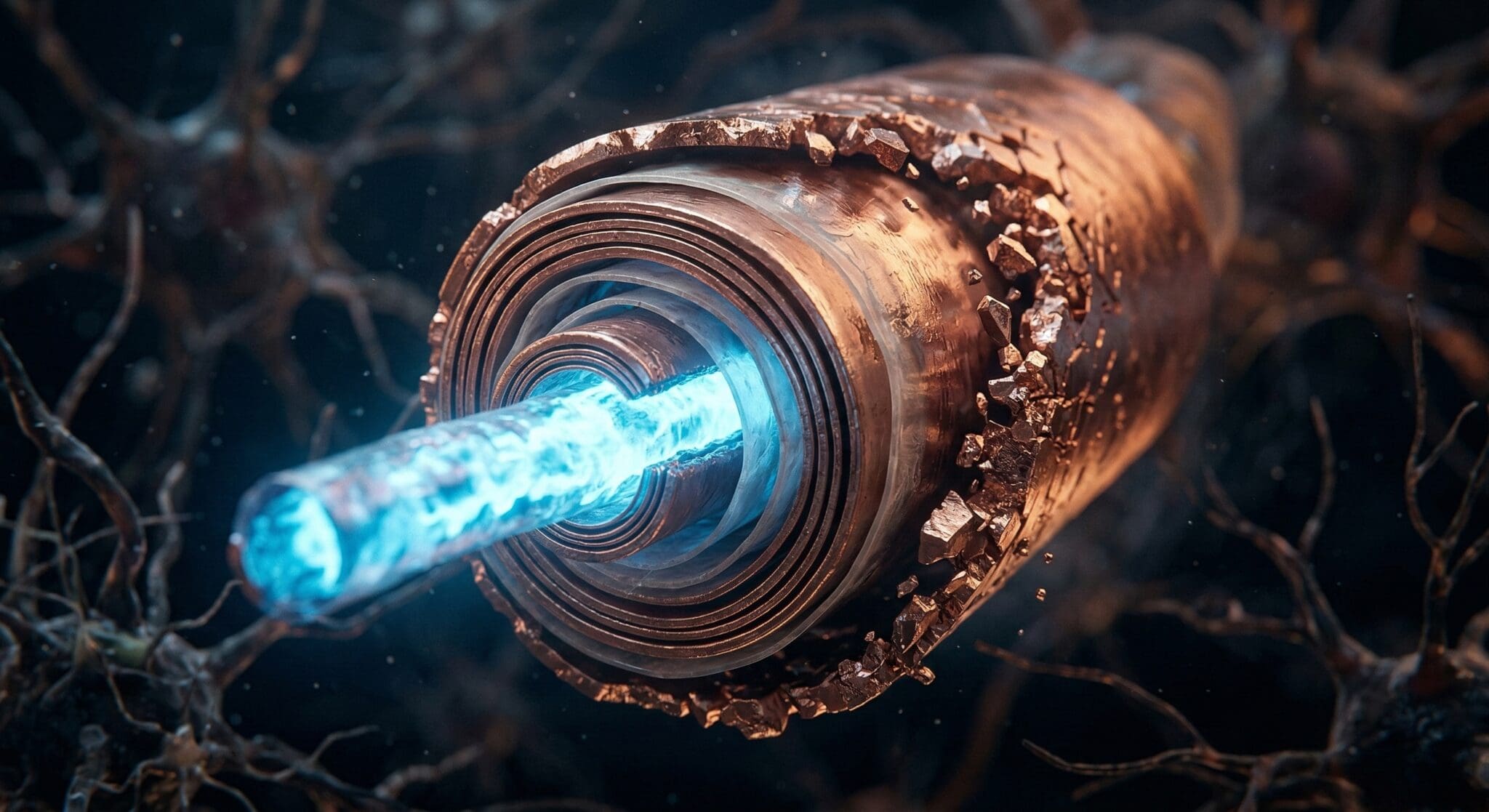
Macro cross-section of neural pathway with copper sheathing forming around blue signal core depicting active brain optimization

Estrogen also regulates neurotransmitter systems including acetylcholine and serotonin. When estrogen withdraws during perimenopause, these systems are disrupted simultaneously. That is why symptoms cluster together: memory lapses, word-finding difficulty, attention instability, and mood dysregulation all appearing at once.

Testosterone and Prefrontal Executive Function

Testosterone’s cognitive effects center on the prefrontal cortex. Testosterone strengthens the brain’s capacity to regulate emotional reactions, supporting measured decision-making under pressure. When testosterone levels are adequate, the prefrontal cortex maintains stronger control over the amygdala — threat detection center — keeping emotional responses proportionate to the actual situation.

Testosterone receptors are densely concentrated in the hippocampus and prefrontal cortex. Testosterone influences both structural and functional outcomes in these regions. The brain’s reward and motivation system is responsive to testosterone levels, with the hormone affecting dopamine signaling in ways that directly shape executive drive and cognitive stamina.

Testosterone decline in men begins gradually around age thirty. Chronic stress, sleep disruption, and metabolic dysfunction accelerate the rate. The cognitive effects emerge slowly and are often misattributed to aging itself rather than recognized as the downstream effects of a specific hormonal shift. Research consistently links lower available testosterone to worse cognitive performance in men, with the relationship strongest for spatial reasoning and verbal memory.

The Perimenopause Transition

Perimenopause represents the most significant hormonal transition affecting brain function in adult women. The cognitive consequences are not imagined, and they are not simply a reflection of mood changes or sleep disruption. Research during the perimenopause transition reveals altered brain activity patterns that correlate with circulating estrogen levels.

Long-term data confirm that the perimenopause transition itself — not aging — drives measurable declines in verbal memory, processing speed, and attention. Sixty percent of perimenopausal women report cognitive difficulties. These reports align with observable changes in the brain regions governing the functions affected.

The University of Miami Miller School of Medicine launched a Menopause Clinical Program in 2024 that attracted over two hundred referred patients within its first months. That demand signal confirmed that clinical need far exceeds existing supply. Yet the neuroscience layer remains absent from most hormone health practices. Most providers do not explain how estrogen regulates the hippocampus’s ability to rewire, how testosterone decline impairs prefrontal executive function, or how stress-system dysregulation suppresses available hormones simultaneously.

Neuroscience consultation — rosewood table with crystal brain sculpture and branded journal for strategy call preparation

Beyond Estrogen and Testosterone

Thyroid hormones regulate the brain’s metabolic rate and the speed of neural processing. Even subtle thyroid dysfunction produces measurable cognitive differences in processing speed, memory, and executive function.

Progesterone’s brain-active byproduct, allopregnanolone — modulates inhibitory signaling — influences anxiety and cognitive function through mechanisms entirely separate from progesterone’s reproductive role.

DHEA and DHEA-sulfate — declining adrenal hormones — serve as neuroprotective agents. They shield hippocampal neurons against damage and modulate emotional processing. The ratio of cortisol to DHEA serves as a functional marker of the balance between stress-driven neural wear and the brain’s built-in protective mechanisms.

The Neuroscience Perspective

Dr. Ceruto’s role in hormonal cognitive health is precise and clearly defined. A neuroscientist educates on the brain side: how hormonal changes reshape the architecture of neural connections, alter neurotransmitter balance, and modify how cognitive circuits function. Endocrinologists and medical providers manage hormone levels, replacement decisions, and clinical interventions.

Dr. Ceruto provides the cognitive neuroscience context that connects hormonal status to the brain outcomes that matter most — clarity, memory, and executive performance. She builds the neural optimization framework that complements medical hormonal management.


Marker What You Experience What's Happening Neurologically What We Restructure
Memory lapses during perimenopause Forgetting names, losing trains of thought, struggling with recall that was once effortless Declining estrogen is halting the rapid growth of new synaptic connections in the hippocampus — connections that encode and retrieve information The neural optimization framework that compensates for hormonal shifts by activating the brain's local estrogen production and complementary plasticity pathways
Executive function decline Difficulty maintaining focus under pressure, reduced capacity to regulate emotional reactions in professional settings Testosterone decline has weakened prefrontal control over the amygdala, allowing emotional responses to become disproportionate to actual situations The prefrontal-amygdala regulatory balance that testosterone supports, restoring measured decision-making under pressure
Motivational flattening Drive and cognitive stamina declining gradually, often misattributed to aging or burnout Testosterone affects dopamine signaling in the brain's reward and motivation system — declining levels directly suppress executive drive The dopamine signaling pathways that testosterone modulates, distinguishing hormonal effects from other causes of motivational decline
Processing speed reduction Thinking feels slower, mental calculations that were once automatic now require deliberate effort Subtle thyroid dysfunction is reducing the brain's metabolic rate and the speed of neural processing The metabolic and hormonal factors affecting neural processing speed, providing the cognitive neuroscience context that connects hormonal status to brain performance
Clustered cognitive symptoms Multiple cognitive difficulties appearing simultaneously rather than one isolated change Estrogen withdrawal disrupts acetylcholine, serotonin, and the brain's local hormone production all at once — creating system-wide rather than single-symptom impact The full hormonal-cognitive landscape, identifying which systems are most affected and building targeted neural optimization alongside medical management

Why Hormones, the Brain & Cognitive Performance Matters in Bergen County

Hormones, Brain, and Cognitive Performance in Bergen County, New Jersey

Hormonal optimization for Bergen County's commuter population addresses the specific endocrine disruptions the GW Bridge lifestyle produces. The chronic stress generates sustained cortisol elevation that degrades hippocampal function and prefrontal efficiency. The sleep deprivation disrupts growth hormone release and testosterone production. The circadian misalignment from variable wake times disturbs the hormonal cycling that cognitive maintenance requires. Age-related hormonal transitions — perimenopause, testosterone decline, DHEA reduction — interact with these lifestyle-generated disruptions to produce compound effects that neither the aging nor the lifestyle alone would produce.

My work addresses hormonal and cognitive optimization at the neuroendocrine level — the specific hormonal disruptions the GW Bridge lifestyle has produced, the age-related transitions that compound them, and the targeted interventions that restore the hormonal environment required for the cognitive performance that Bergen County's professional and domestic demands expect.

Dr. Sydney Ceruto, PhD — Founder, MindLAB Neuroscience

Dr. Sydney Ceruto, PhD — Founder & CEO, MindLAB Neuroscience

Dr. Ceruto holds a PhD in Behavioral & Cognitive Neuroscience from NYU and two Master’s degrees from Yale University. She lectures at the Wharton Executive Development Program at the University of Pennsylvania and has been an Executive Contributor to the Forbes Coaching Council since 2019. Dr. Ceruto is the author of The Dopamine Code (Simon & Schuster, June 2026). She founded MindLAB Neuroscience in 2000 and has spent over 26 years pioneering Real-Time Neuroplasticity™ — a methodology that permanently rewires the neural pathways driving behavior, decisions, and emotional responses.

References

Hara, Y., Waters, E. M., McEwen, B. S., & Morrison, J. H. (2015). Estrogen effects on cognitive and synaptic health over the lifecourse. Physiological Reviews, 95(3), 785-807. https://doi.org/10.1152/physrev.00036.2014

Shanmugan, S., & Epperson, C. N. (2014). Estrogen and the prefrontal cortex: Towards a new understanding of estrogen’s effects on executive functions in the menopause transition. Human Brain Mapping, 35(3), 847-865. https://doi.org/10.1002/hbm.22218

Tobiansky, D. J., et al. (2018). Androgen regulation of the mesocorticolimbic system and executive function. Frontiers in Endocrinology, 9, 279. https://doi.org/10.3389/fendo.2018.00279

Yeap, B. B., & Flicker, L. (2022). Testosterone, cognitive decline and dementia in ageing men. Reviews in Endocrine and Metabolic Disorders, 23(6), 1073-1090. https://doi.org/10.1007/s11154-022-09728-7

Success Stories

“I'd optimized everything — diet, fitness, sleep — but my cognitive sharpness was quietly declining and no one could explain why. Dr. Ceruto identified the synaptic density patterns that were thinning and built a protocol to reverse the trajectory. This wasn't prevention in theory. My neuroplasticity reserve is measurably stronger now than it was three years ago. Nothing I'd tried before even addressed the right problem.”

Henrique L. — University Dean Lisbon, PT

“After the concussion, my processing speed collapsed — I couldn't hold complex information the way I used to, and no one could explain why the fog wasn't lifting. Dr. Ceruto mapped the damaged pathways and built compensatory networks around them. My brain doesn't work the way it did before the injury. It works differently — and in some ways, more efficiently than it ever did.”

Owen P. — Orthopedic Surgeon Scottsdale, AZ

“Nothing was wrong — and that's exactly why no one could help me. I wasn't struggling. I wanted to know what my brain was actually capable of if its resting-state architecture was optimized. Dr. Ceruto mapped my default mode network and restructured how it allocates resources between focused and diffuse processing. The cognitive clarity I operate with now isn't something I'd ever experienced before — and I had no idea it was available.”

Nathan S. — Biotech Founder Singapore

“Slower processing, foggier recall, decisions that used to be instant taking longer than they should — I'd been accepting it all as inevitable decline for two years. Dr. Ceruto identified the prefrontal efficiency pattern that was degrading and restructured it at the neurological level. The sharpness didn't just come back. It came back faster and more precise than it was a decade ago. Nothing I'd tried before even addressed the right problem.”

Elliott W. — Wealth Advisor Atherton, CA

“After years of burnout, the dopamine optimization work helped me finally understand and balance my dopamine levels in a way nothing else had. The personalized plan made all the difference — I’m now motivated, focused, and performing at my best without the crashes that used to follow every productive stretch. The science behind this approach is real and the results are measurable. It gave me a daily framework I still rely on to stay consistent, sharp, and fully in control of my energy.”

Larz D. — Tech Founder Palo Alto, CA

“My communication was damaging every relationship in my professional life and I couldn't see it. Dr. Ceruto's neuroscience-based approach didn't just improve how I communicate — it rewired the stress response that was driving the pattern in the first place. The people around me noticed the change before I fully understood what had happened. That tells you everything.”

Bob H. — Managing Partner London, UK

Frequently Asked Questions About Hormones, the Brain & Cognitive Performance in Bergen County

What does Dr. Ceruto's approach to hormones and brain health involve?

Dr. Ceruto provides neuroscience-based education on how hormonal status affects brain architecture, neurotransmitter — chemical messenger between brain cells — balance, and cognitive function. This includes assessing how specific hormonal transitions affect cognitive performance. These transitions include perimenopause, andropause, thyroid fluctuations, and adrenal shifts. Dr. Ceruto builds a neural optimization framework that works alongside medical hormonal management. Dr. Ceruto does not manage hormone levels or make replacement decisions. Endocrinologists handle clinical hormonal interventions.

How do hormones actually change brain function?

Hormones cross the blood-brain barrier and bind receptors throughout the cortex and hippocampus, directly modulating synaptic plasticity, neurotransmitter — a chemical messenger between brain cells — synthesis, and neural connectivity. Estrogen drives rapid dendritic spine formation in the hippocampus, affecting memory encoding. Testosterone modulates prefrontal function and amygdala reactivity, affecting emotional regulation — the ability to manage emotional responses — and decision-making. Thyroid hormones regulate cerebral metabolic rate and processing speed. These are not indirect mood effects — they are direct structural and functional changes in neural architecture.

Who benefits from this neuroscience-based approach?

Individuals experiencing cognitive changes during hormonal transitions — perimenopausal women noticing word-finding difficulty, attentional instability, or working memory — short-term mental workspace — decline. This includes men in their forties or fifties experiencing reduced mental sharpness, diminished drive, or slower processing speed; anyone whose cognitive performance has shifted alongside other hormonal symptoms. Also individuals already working with hormone optimization providers who want the neuroscience context connecting their hormonal management to cognitive outcomes.

How does someone get started?

The process begins with a Strategy Call — a phone-only conversation with a $250 fee. Dr. Ceruto uses this call to understand the individual’s cognitive concerns, hormonal history, and current medical management to determine whether neuroscience-based hormonal cognitive assessment is the appropriate next step. Program structure and investment details are discussed during the Strategy Call.

What timeline should someone expect for cognitive improvement?

The timeline depends on which hormonal mechanisms are involved and whether the individual is simultaneously receiving medical hormonal management. Cognitive improvements related to stress-hormone normalization and sleep architecture restoration can emerge within weeks. The neural adaptations that follow hormonal stabilization — including synaptic remodeling and functional connectivity changes — unfold over months. Dr. Ceruto tracks cognitive and neurophysiological markers to ensure that the neuroscience protocol is producing measurable brain-level results alongside any medical hormonal interventions.

Also available in: Miami · Wall Street · Midtown Manhattan · Beverly Hills · Lisbon

Take the First Step Toward Sharper Cognitive Performance

The Strategy Call is a focused conversation with Dr. Ceruto that maps the specific neural mechanisms driving your concerns and determines the right path forward.

Book a Strategy Call
MindLAB Neuroscience consultation room

The Dopamine Code

Decode Your Drive

Why Your Brain Rewards the Wrong Things

Your brain's reward system runs every decision, every craving, every crash — and it was never designed for the life you're living. The Dopamine Code is Dr. Ceruto's framework for understanding the architecture behind what drives you, drains you, and keeps you locked in patterns that willpower alone will never fix.

Published by Simon & Schuster, The Dopamine Code is Dr. Ceruto's framework for building your own Dopamine Menu — a personalized system for motivation, focus, and enduring life satisfaction.

Order Now

Ships June 9, 2026

The Dopamine Code by Dr. Sydney Ceruto — Decode Your Drive
Locations

The Intelligence Brief

Neuroscience-backed analysis on how your brain drives what you feel, what you choose, and what you can’t seem to change — direct from Dr. Ceruto.