Performance Improvement Consulting in Bergen County

Performance plateaus are not motivational failures. They are dopaminergic circuit calibrations — measurable, diagnosable, and permanently addressable at the neural level.

When high-capacity professionals plateau despite objective skill and preparation, the problem is not effort or strategy. It is the biological architecture governing motivation, self-efficacy, and error processing. MindLAB Neuroscience diagnoses the specific neural circuits limiting performance and recalibrates them at the source.

Book a Strategy Call
ForbesUSA TodayHuffPostNewsweekAssociated PressCosmopolitanBusiness InsiderForbesUSA TodayHuffPostNewsweekAssociated PressCosmopolitanBusiness Insider

Key Points

  1. Performance gaps in organizations trace to cognitive bottlenecks in key decision-makers whose prefrontal function determines the quality of everything downstream.
  2. Process optimization reaches a ceiling when the people executing the process operate with neural architecture that limits their capacity for precision, speed, or adaptability.
  3. The brain automates repeated tasks through basal ganglia encoding — improving performance requires intervening before automation locks suboptimal patterns into permanent neural circuitry.
  4. Cognitive fatigue compounds predictably across organizations, meaning performance degradation follows biological patterns that process redesign alone cannot address.
  5. Sustainable performance improvement requires matching organizational demands to the actual neural capacity of the people expected to meet those demands.

The Performance Plateau That Nothing Resolves

“You still perform at a level that looks competent from the outside, but internally the machinery feels different — slower, less certain, more effortful where it used to be fluid. That shift is not motivational. It is biological.”

You know what peak performance feels like. You have been there — the clarity, the drive, the precision under pressure that made you effective in the first place. But something shifted. The drive flattened. The confidence that once felt automatic now requires effort to summon. You still perform at a level that looks competent from the outside, but internally the machinery feels different. Slower. Less certain. More effortful where it used to be fluid.

You have tried to solve it. Perhaps you restructured your schedule, hired advisors, read the literature on performance optimization. None of it addressed the actual problem, because the actual problem is not strategic, not behavioral, and not motivational. It is biological.

Performance plateaus in high-capacity professionals follow a specific neural pattern. The dopaminergic circuits that once fired with anticipatory energy, driving you toward ambitious targets with genuine enthusiasm, have been recalibrated by experience. Repeated encounters with worse-than-expected outcomes have trained your reward prediction circuitry to suppress anticipatory firing. The system that once generated drive now generates caution. Not as a conscious decision, but as a circuit-level calibration that operates below awareness.

This is compounded by what happens to the error-processing system under sustained pressure. High-achievers who begin interpreting setbacks as evidence of fixed limitation rather than as calibration signals show a specific neural signature. The brain has shifted from learning mode to self-protection mode. And no amount of motivational reframing can override a circuit-level shift.

The pattern that presents most often is professionals who have exhausted every behavioral approach available. They have done the goal-setting exercises, the accountability structures, the strategic planning sessions. None of it reached the level where the actual problem lives — the dopaminergic prediction circuitry, the self-efficacy architecture, the neural mechanisms that determine whether you approach a challenge with drive or avoidance.

The Neuroscience of Performance

Self-efficacy is not a psychological attitude. It is a biological state encoded across distributed neural structures. Neuroimaging has mapped its biological substrate. A large-scale study of over 1,200 participants identified that higher self-efficacy scores correlate with greater neural density in the brain’s action-planning structures. These circuits connect the planning brain to the execution brain but have been calibrated to predict failure. Recalibrating that circuit requires structured mastery experiences and targeted neural exposure protocols, not motivational conversation.

The brain’s primary reward pathway provides the motivational substrate. The dopamine neurons that run this circuit are strongly activated by rewards and are critical to positive motivational control. These neurons are not passive reward sensors but are prediction and anticipation engines whose firing increases during anticipation of reward-associated stimuli. A professional’s capacity to initiate high-effort tasks, sustain focus through friction, and pursue ambitious goals is directly governed by this circuit’s functional architecture.

The Reward Prediction Error — the gap between expected and actual outcomes — Learning Engine

The reward prediction error is the fundamental teaching signal of the dopaminergic system. Dopamine neurons fire when outcomes exceed predictions, remain at baseline when outcomes match predictions, and reduce firing when outcomes fall short. The strength of the brain’s prediction error signal correlates directly with adaptive problem-solving capacity. A professional who avoids ambitious targets is not pessimistic by personality. Their dopamine system has been trained through repeated experience to suppress anticipatory firing. Recalibrating the prediction error signal requires structured exposure to progressively better-than-expected positive outcomes through a protocol architecture, not a mindset shift.

Growth-oriented individuals show enhanced amplitude of the error positivity component it activates threat circuitry where adaptive processing would activate learning circuitry.

How Dr. Ceruto Approaches Performance Improvement

Dr. Ceruto’s methodology targets the biological systems governing performance output. Real-Time Neuroplasticity identifies which specific neural mechanism is producing the performance limitation. The diagnosis is mechanistic and precise.
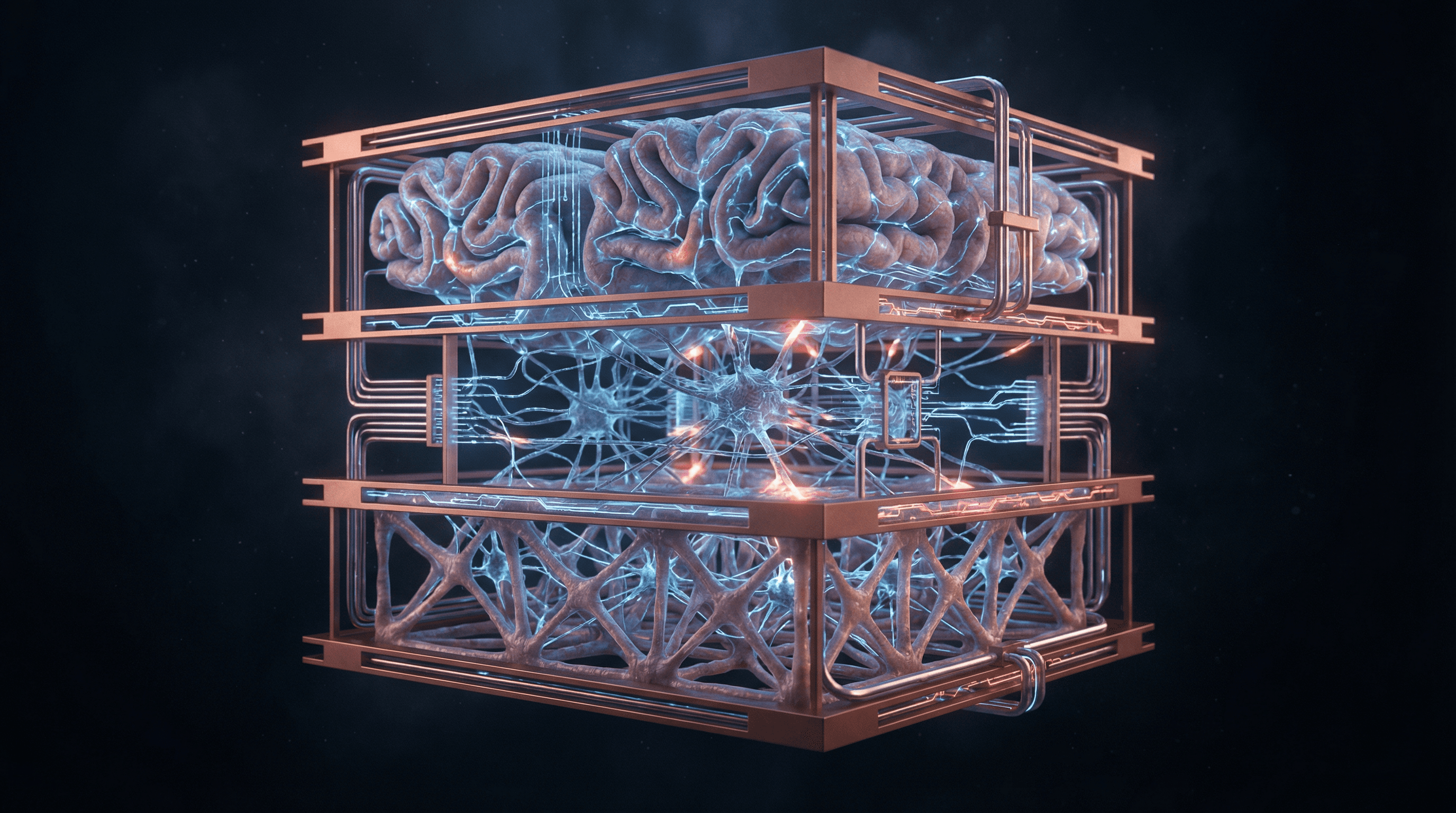
Strategy consulting and organizational development — layered copper neural blueprint connecting operational tiers

In my practice, I consistently observe that high-capacity professionals arrive having already optimized everything above the neural layer. Their strategies are sound. Their habits are disciplined. Their knowledge base is extensive. The deficit is architectural, as the circuits that would translate all of that capability into consistent output under pressure have been recalibrated by experience in ways that behavioral intervention cannot reach.

MindLAB recalibrates at the source. For professionals whose dopaminergic reward circuits have been trained by repeated negative prediction errors, the protocol systematically restructures the prediction architecture through calibrated exposure sequences. For those whose error-processing system has shifted from learning mode to self-protection mode, the work targets the error positivity circuit directly — rebuilding the neural signature that processes setbacks as information rather than identity threats.

The NeuroSync program addresses specific performance deficits with focused precision managing deal flow while maintaining personal drive, sustaining precision under seasonal intensity while protecting the intrinsic motivation that makes the work meaningful.

What to Expect

The engagement begins with a Strategy Call, a focused strategy conversation where Dr. Ceruto assesses which neural performance mechanisms are limiting your output. This is not a general performance review. It is a precision assessment of the specific circuits involved.

From the assessment, Dr. Ceruto designs a structured protocol targeting the identified architecture. The work follows a clear progression: neural mechanism assessment, identification of the specific performance-limiting circuits, targeted recalibration through Real-Time Neuroplasticity, and measurable verification of performance output change.

Each session produces neural-level recalibration under the conditions, pressure, uncertainty, high stakes, where previous approaches eroded.

References

Bromberg-Martin, E. S., Matsumoto, M., & Hikosaka, O. (2010). Dopamine in motivational control: Rewarding, aversive, and alerting. Neuron, 68(5), 815–834. https://pmc.ncbi.nlm.nih.gov/articles/PMC3032992/

Schultz, W. (2016). Dopamine reward prediction error signalling: A two-component response. Dialogues in Clinical Neuroscience, 18(3), 265–272. https://pmc.ncbi.nlm.nih.gov/articles/PMC4826767/

Moser, J. S., Schroder, H. S., Heeter, C., Moran, T. P., & Lee, Y. H. (2011). Mind your errors: Evidence for a neural mechanism linking growth mind-set to adaptive posterror adjustments. Psychological Science, 22(12), 1484–1489. https://doi.org/10.1177/0956797611419520

The Neural Architecture of Performance

Performance is not a behavior. It is a state — a specific configuration of neural systems that determines what you are capable of producing at any given moment. Most performance improvement efforts treat the output without touching the state that generates it, which is why the improvements they produce are temporary and context-dependent.

At the neurological level, sustained high performance depends on the coordinated function of three systems: the prefrontal executive network, which governs goal maintenance and impulse regulation; the dopaminergic motivation circuit, which drives the effort required to close the gap between current state and desired outcome; and the default mode network, which is responsible for the mental simulation and self-referential processing that allow you to learn from experience and project into future scenarios. When these three systems are aligned and adequately resourced, performance appears almost automatic. When any one of them is depleted, dysregulated, or operating at cross-purposes with the others, the output degrades in ways that are immediately visible but whose causes are rarely obvious from the outside.

The prefrontal network is particularly sensitive to chronic cognitive load. High-performing individuals carry enormous amounts of unresolved decision weight — open loops, deferred choices, unprocessed outcomes — that occupy working memory bandwidth without producing any useful output. This load does not feel like a problem in the moment. It feels like being busy. But the cumulative effect is a measurable narrowing of attentional flexibility, reduced capacity for creative problem-solving, and a gradual shift toward reactive rather than proactive behavior. The person is still performing. They are simply performing below their actual ceiling, and they have been doing it long enough that they have forgotten the ceiling exists.

Neuroscience consultation — rosewood table with crystal brain sculpture and branded journal for strategy call preparation

The dopaminergic circuit introduces a different set of constraints. Motivation at the neural level is prediction-based: the system fires in response to expected reward signals, not actual ones. When the gap between effort and visible progress becomes too large — when results feel uncoupled from action — the motivation circuit begins to disengage. This is not weakness. It is the brain operating exactly as designed, conserving resources in response to a perceived low-return environment. Correcting it requires changing the prediction model, not exhorting yourself to try harder.

Why Traditional Performance Improvement Falls Short

Conventional performance improvement consulting tends to operate in one of two registers: behavioral and systemic. Behavioral approaches focus on habits, routines, and disciplines — the visible actions that high performers take. Systemic approaches focus on structures, incentive alignment, and process design. Both have genuine value. Neither addresses the neural substrate that determines whether the behaviors will actually be executed, whether the structures will be used as designed, or whether the person at the center of the system will have the cognitive and motivational resources required to perform at the level the system assumes.

The result is a familiar pattern: the consulting engagement produces a well-designed plan, the client implements it with genuine commitment, and within three to six months the improvements have eroded. Not because the plan was wrong. Not because the client lacked discipline. But because the brain that was supposed to execute the plan was operating under the same constraints that produced the performance gap in the first place, and no one addressed those constraints directly.

Performance improvement that does not reach the neural level is renovation without structural repair. You can resurface the floor, repaint the walls, and replace the fixtures — but if the foundation has shifted, the renovation does not hold.

How Neural-Level Performance Restructuring Works

My approach begins with a precise diagnostic of the specific neural systems that are limiting performance for this individual, in this context, at this moment. Performance gaps are not generic. A CEO whose output is constrained by prefrontal overload presents differently from one whose dopaminergic motivation circuit has been blunted by a sequence of misaligned incentives, and both present differently from the individual whose performance is limited by a default mode network that generates catastrophic simulations in the absence of sufficient positive feedback. The intervention must be calibrated to the actual constraint.

For prefrontal load, the work involves systematic reduction of open cognitive loops — not through time management techniques, but through protocols that allow the brain’s executive system to release working memory resources by achieving genuine closure on pending decisions, rather than merely deferring them. For motivational circuit recalibration, the work involves restructuring the relationship between effort and feedback so that the prediction model the brain uses to allocate energy is receiving accurate, high-resolution information about the progress that is actually occurring. For default mode dysregulation, the work involves directed neuroplasticity practices that reshape the content and valence of the self-referential simulations the brain runs automatically in the background of every waking hour.

Each protocol is applied within the specific professional context of the individual — the actual decisions they face, the actual pressures they navigate, the actual performance domains where the gap is visible. This is not generic coaching. It is precision restructuring calibrated to a specific human nervous system in a specific operational environment.

What This Looks Like in Practice

Clients typically notice two categories of change. The first is a reduction in friction — the sense that things that used to require significant effort now come more readily. Decisions that previously consumed extended deliberation resolve more cleanly. Creative output that required sustained forcing now arrives with less resistance. The experience is not of working harder, but of the work matching the effort invested in a way it had not been doing before.

The second category is a shift in ceiling. When the neural systems that govern performance are operating at higher baseline function, the absolute upper limit of what the person can produce in their best moments increases. This is what separates performance improvement at the neural level from performance improvement at the behavioral level: behavioral improvements raise the floor; neural restructuring raises the ceiling.

We begin with a strategy call — one hour of precise strategy conversation that maps the specific constraints on your current performance and identifies the restructuring pathway that will produce the most significant and durable change. No generic frameworks. No borrowed best practices. A precise protocol built around the actual architecture of your performance system.


Marker Traditional Approach Neuroscience-Based Approach Why It Matters
Focus Process analysis, gap assessment, and performance metric optimization Expanding the neural capacity of key individuals whose cognitive function determines organizational performance ceilings
Method Performance consulting with root cause analysis, benchmarking, and implementation support Targeted intervention in the prefrontal and executive function circuits of individuals at critical performance bottleneck positions
Duration of Change Process-dependent; improvements plateau when human cognitive limitations reassert as the binding constraint Permanent expansion of individual neural capacity that raises the biological ceiling on organizational performance

Why Performance Improvement Consulting Matters in Bergen County

Performance Improvement in Bergen County, New Jersey

Performance improvement for Bergen County's professionals targets the neural systems that the GW Bridge corridor specifically degrades. The individual has the strategy, the knowledge, and the experience. The performance ceiling is neural — the decision quality under stress, the creative capacity for novel solutions, the sustained attention during complex problems — all of which are degraded by the daily bridge crossing's autonomic and cognitive cost. Addressing these neural systems directly produces performance improvements that strategy and knowledge refinement cannot match because the bottleneck is in the brain's operating conditions, not in the individual's competence.

My work addresses performance improvement at the neural systems level — identifying the specific cognitive, emotional, and regulatory bottlenecks the GW Bridge lifestyle has created, implementing targeted interventions, and measuring the improvement through the professional metrics that Bergen County's career environment provides.

Dr. Sydney Ceruto, PhD — Founder, MindLAB Neuroscience

Dr. Sydney Ceruto, PhD — Founder & CEO, MindLAB Neuroscience

Dr. Ceruto holds a PhD in Behavioral & Cognitive Neuroscience from NYU and two Master’s degrees from Yale University. She lectures at the Wharton Executive Development Program at the University of Pennsylvania and has been an Executive Contributor to the Forbes Coaching Council since 2019. Dr. Ceruto is the author of The Dopamine Code (Simon & Schuster, June 2026). She founded MindLAB Neuroscience in 2000 and has spent over 26 years pioneering Real-Time Neuroplasticity™ — a methodology that permanently rewires the neural pathways driving behavior, decisions, and emotional responses.

References

Yerkes, R. M., & Dodson, J. D. (1908). The relation of strength of stimulus to rapidity of habit-formation. Journal of Comparative Neurology and Psychology, 18(5), 459–482. https://doi.org/10.1002/cne.920180503

Sapolsky, R. M. (2015). Stress and the brain: Individual variability and the inverted-U. Nature Neuroscience, 18(10), 1344–1346. https://doi.org/10.1038/nn.4109

Schultz, W. (2016). Dopamine reward prediction-error signalling: A two-component response. Nature Reviews Neuroscience, 17(3), 183–195. https://doi.org/10.1038/nrn.2015.26

Miller, E. K., & Cohen, J. D. (2001). An integrative theory of prefrontal cortex function. Annual Review of Neuroscience, 24, 167–202. https://doi.org/10.1146/annurev.neuro.24.1.167

Success Stories

“I found Dr. Ceruto at a time when I needed to change my thinking patterns to live a happier, healthier life, after trying multiple forms of therapy that weren’t resonating. She goes above and beyond to personalize your experience and wastes no time addressing core issues. Sessions aren’t limited to conventional one-hour weekly time slots — they’re completely centered around your specific needs. She’s always available for anything that comes up between sessions, and for me, that was huge. The progress came faster than I expected.”

Palak M. — Clinical Researcher Toronto, ON

“The way I was processing decisions under pressure had a cost I couldn't see — until Dr. Ceruto mapped it. She identified the neural pattern driving my reactivity in high-stakes situations and restructured it at the root. I don't just perform better under pressure now. I think differently under pressure. That's not something any executive coach or performance program ever came close to delivering.”

Rob W. — Portfolio Manager Manhattan, NY

“The divorce wasn't destroying me emotionally — it was destroying me neurologically. My amygdala was treating every interaction with my ex, every legal update, every quiet evening as a survival-level threat. Years of talk-based approaches hadn't touched it. Dr. Ceruto identified the attachment disruption driving the response and restructured it at the root. The threat response stopped. Not because I learned to tolerate it — because the pattern was no longer running.”

Daniela M. — Attorney North Miami Beach, FL

“Three months. That's how long it took to go from debilitating panic to leading with clarity. Years of conventional approaches hadn't moved the needle — Dr. Ceruto identified the root neural pattern and eliminated it. She didn't teach me to manage the panic. She made it unnecessary. I didn't know that was possible.”

Ella E. — Media Executive Manhattan, NY

“I'd relocated internationally before, but this time my nervous system wouldn't settle. Everything unfamiliar registered as danger — new people, new routines, even the sound of a different language outside my window. Pushing through it only deepened the pattern. Dr. Ceruto identified that my nervous system was coding unfamiliarity itself as threat and restructured the response at its source. The world stopped feeling hostile. I stopped bracing.”

Katarina L. — Gallerist Zurich, CH

“Dr. Ceruto's methodology took me from a founder on the verge of quitting to a leader capable of building the team and culture that drove Liquid IV's success. Her ability to restructure how I make decisions and lead under pressure changed the trajectory of the entire company. I don't say that lightly. The company I built after working with her was fundamentally different from the company I was building before — because I was fundamentally different.”

Brandin C. — Tech Founder Los Angeles, CA

Frequently Asked Questions About Performance Improvement Consulting in Bergen County

What is the difference between a neuroscience advisor and a performance strategist?

A performance strategist works at the behavioral layer, optimizing habits, frameworks, and accountability structures. Dr. Ceruto works at the neural architecture layer — diagnosing which specific biological circuits are limiting performance and recalibrating them through Real-Time Neuroplasticity, the brain's ability to rewire itself™. The distinction is between improving the strategy applied to a problem and repairing the cognitive hardware that must execute any strategy. MindLAB addresses the substrate that determines whether behavioral strategies can actually produce sustained results.

Why do I still plateau even though I know what to do and have the skills to do it?

Performance plateaus in high-capacity professionals typically originate in dopaminergic circuit recalibration (related to the brain's dopamine system). Repeated encounters with worse-than-expected outcomes train the brain's reward prediction system to suppress anticipatory firing — reducing drive and confidence at the circuit level regardless of intellectual capability. This is compounded by error-processing shifts where setbacks activate threat circuitry rather than learning circuitry. These are biological conditions that cannot be resolved through behavioral intervention because they operate below the behavioral layer.

How does neuroscience-based performance consulting work for finance professionals in Miami?

Finance professionals operate in environments of extreme sequential decision-making under incomplete information. The dopaminergic prediction circuitry (related to the brain's dopamine system), prefrontal executive control, and self-efficacy, belief in one's ability to succeed at specific tasks, architecture face specific degradation patterns in these conditions. Dr. Ceruto maps the precise neural mechanisms contributing to performance gaps, whether glutamate accumulation from sustained cognitive load, prediction error recalibration from drawdown experiences, or fixed-mindset activation under competitive pressure, and designs protocols that address the specific circuit involved.

Can neuroscience advisory address performance pressure in Miami's competitive real estate market?

Yes. Real estate professionals managing concurrent high-value transactions across multiple submarkets carry cognitive and dopaminergic loads (related to the brain's dopamine system) that create specific, identifiable performance degradation patterns. The sustained decision-making intensity accumulates neural metabolic costs that manifest as deal hesitation, risk aversion, or inconsistent judgment quality — all of which originate in prefrontal and dopaminergic circuit architecture that MindLAB can diagnose and recalibrate.

Does Dr. Ceruto work with athletes and entertainers as well as business professionals?

Yes. The neural mechanisms governing performance — self-efficacy and reward circuitry — are identical across professional domains. Bergen County's professional athletes and entertainers face the same circuit-level performance challenges as the city's financial and business professionals. The assessment and recalibration methodology applies equally to a hedge fund portfolio manager and an elite athlete.

What does a performance improvement engagement with MindLAB look like?

The engagement begins with a Strategy Call — a strategy conversation where Dr. Ceruto identifies which specific neural mechanisms are limiting performance. From there, a structured protocol targets the identified circuits through Real-Time Neuroplasticity™. Sessions produce neural-level recalibration rather than behavioral advice. Progress is measured through the shift in the biological systems generating performance output. The specific engagement model — NeuroSync™ or NeuroConcierge™ — depends on the complexity of the performance challenge.

Is MindLAB's performance consulting available virtually?

Yes. Dr. Ceruto delivers performance consulting both in-person at MindLAB's North Bergen County Beach location and through secure virtual sessions. The neural assessment and recalibration protocols are effective across both formats. Many Bergen County-based clients use a hybrid model — particularly professionals whose schedules require flexibility between in-person and virtual engagement.

Why do performance improvement initiatives often produce initial gains that plateau or reverse?

Initial performance gains from process improvement, training, and structural changes reflect the easiest optimizations — removing obvious bottlenecks and implementing straightforward efficiencies. The plateau occurs when the binding constraint shifts from process to people: the cognitive capacity, decision quality, and adaptive capability of the individuals operating the improved processes become the new ceiling.

This is the biological wall that conventional performance improvement cannot breach. No further process optimization will overcome the prefrontal function limitations of the people executing those processes. Sustainable improvement beyond this point requires expanding the neural capacity of the individuals at the bottleneck positions.

How does Dr. Ceruto's approach measure performance improvement at the neural level?

Neural performance improvement manifests in observable behavioral metrics: decision speed and quality, performance consistency across the day and week, recovery time after demanding periods, error rates under cognitive load, and the capacity to maintain strategic thinking alongside operational demands.

Dr. Ceruto tracks these observable outputs as proxies for underlying neural changes. When prefrontal function improves, decision quality measurably increases. When stress-response architecture is recalibrated, performance consistency improves. When cognitive resource allocation is optimized, the individual sustains higher output quality for longer periods. These are measurable and attributable changes, not subjective assessments.

Which organizational roles benefit most from neural-level performance intervention?

Roles where cognitive capacity directly determines output quality benefit most: strategic decision-makers, client-facing professionals whose interpersonal processing drives results, complex problem-solvers whose work resists automation, and leaders whose neural states propagate through their teams via social cognition circuits.

Dr. Ceruto prioritizes roles where the gap between current neural capacity and role demands is largest and where improvement produces the most measurable organizational return. These are typically senior leadership positions, but can include any role where cognitive, emotional, or social processing capacity is the binding constraint on organizational performance.

Also available in: Miami · Wall Street · Midtown Manhattan · Beverly Hills · Lisbon

The Dopaminergic Architecture Behind Every Performance Decision Made in Bergen County

From Brickell's trading floors to Coral Gables' development offices, performance is a biological system — and biological systems can be precisely recalibrated. Dr. Ceruto maps the circuit in one conversation.

Book a Strategy Call
MindLAB Neuroscience consultation room

The Dopamine Code

Decode Your Drive

Why Your Brain Rewards the Wrong Things

Your brain's reward system runs every decision, every craving, every crash — and it was never designed for the life you're living. The Dopamine Code is Dr. Ceruto's framework for understanding the architecture behind what drives you, drains you, and keeps you locked in patterns that willpower alone will never fix.

Published by Simon & Schuster, The Dopamine Code is Dr. Ceruto's framework for building your own Dopamine Menu — a personalized system for motivation, focus, and enduring life satisfaction.

Order Now

Ships June 9, 2026

The Dopamine Code by Dr. Sydney Ceruto — Decode Your Drive
Locations

The Intelligence Brief

Neuroscience-backed analysis on how your brain drives what you feel, what you choose, and what you can’t seem to change — direct from Dr. Ceruto.