Key Points
- Bergen County's overlapping community networks concentrate relationship patterns into unavoidable visibility across family, school, religious, and social contexts.
- Cultural diversity creates competing neural demands around intimacy, hierarchy, and emotional expression that surface as relational inconsistency under pressure.
- When parenting becomes the primary relational arena, the neural architecture for marital intimacy weakens from disuse, shifting the partnership into a management structure.
- Relational architecture builds through developmental observation, not genetics. Patterns inherited from parents can be permanently remapped through neuroplasticity.
- Real-Time Neuroplasticity™ rewires the foundational circuits governing all relational contexts, shifting marriage, parenting, and community dynamics simultaneously.
| Marker | Traditional Approach | Neuroscience-Based Approach | Why It Matters |
|---|---|---|---|
| Primary Focus | Relationship Pattern Analysis | Family Counseling | Cultural Mediation |
| Target | Neural circuits driving relational repetition | Dynamics between family members | Cross-cultural communication gaps |
| Methodology | Real-Time Neuroplasticity™ | Facilitated family conversations | Cultural competency frameworks |
| Durability of Change | Permanent neural rewiring | Requires ongoing family participation | Knowledge-based, situation-dependent |
| Scope | All relational contexts simultaneously | Household dynamics | Specific cultural friction points |
| Speed of Results | Shifts within weeks | Months of joint sessions | Gradual understanding over time |
Why Relationship Pattern Analysis Matters in Bergen County
How Bergen County’s Community Fabric Exposes Relationship Patterns
Bergen County creates a relational environment with almost no blind spots. In Tenafly, Englewood, Alpine, and Demarest, families navigate school systems, religious communities, and social networks that overlap extensively. The person whose neural architecture produces conflict avoidance at home encounters the same pattern at the synagogue, at the PTA gathering, and during dinner with the couples they have known since their children started kindergarten together. The pattern is the same in every setting because the same circuitry produces it. The community’s closeness means that relational dynamics observed in one context become common knowledge across all contexts, creating pressure that makes the patterns feel more urgent but does not change the architecture producing them.
The cultural diversity of Bergen County adds specific architectural complexity that other suburban communities do not face. In towns like Fort Lee, Palisades Park, and Closter, families navigate relational expectations shaped by Korean, Japanese, South Asian, and other cultural frameworks alongside American social norms. These competing neural demands around hierarchy, emotional expression, and family obligation create internal conflicts that surface as relational inconsistency. Someone who was raised with one framework for loyalty and intimacy but lives within another develops architecture that contradicts itself under pressure. The spouse experiences this as unpredictability. The person living it experiences confusion about their own responses because two architectural systems are firing simultaneously with opposing instructions about what the moment requires.
For families in Ridgewood, Glen Rock, and Wyckoff, the emphasis on academic achievement and structured activities creates an environment where parenting becomes the primary relational arena to the exclusion of the marital partnership. The neural architecture governing how these families manage expectations, process disappointment, and express affection becomes the most exercised circuitry in the household. Marital patterns that might receive attention in other contexts are subordinated to the demands of scheduling, performing, and producing results through the children. Over years, the relationship between the partners shifts from a partnership to a logistics operation. The circuits for romantic connection and emotional intimacy weaken from disuse while the project-management architecture governing family operations strengthens relentlessly.
Bergen County’s multigenerational family structures, particularly in communities with strong cultural cohesion, create relational patterns that span decades and involve extended family architectures. In towns like Paramus, Fair Lawn, and Hackensack, the influence of parents and in-laws on a marriage is not an occasional holiday dynamic but a continuous relational force. Someone whose neural architecture around obligation and approval was built in response to demanding parents activates that same circuitry with in-laws, with their own spouse, and eventually with their children. The pattern radiates outward from its origin point because the architecture does not distinguish between family members. It simply fires whenever the relational context matches its activation criteria.
Real-Time Neuroplasticity™ addresses the foundational circuits driving all of these dynamics simultaneously. Dr. Ceruto maps the specific architecture governing your relational responses and rewires it permanently. Because the same circuitry operates across every context, changing it at the source shifts your marriage, parenting, friendships, extended family dynamics, and community interactions all at once. The process does not require addressing each relationship individually because the architecture producing all of them is the same architecture.


Dr. Sydney Ceruto, PhD — Founder & CEO, MindLAB Neuroscience
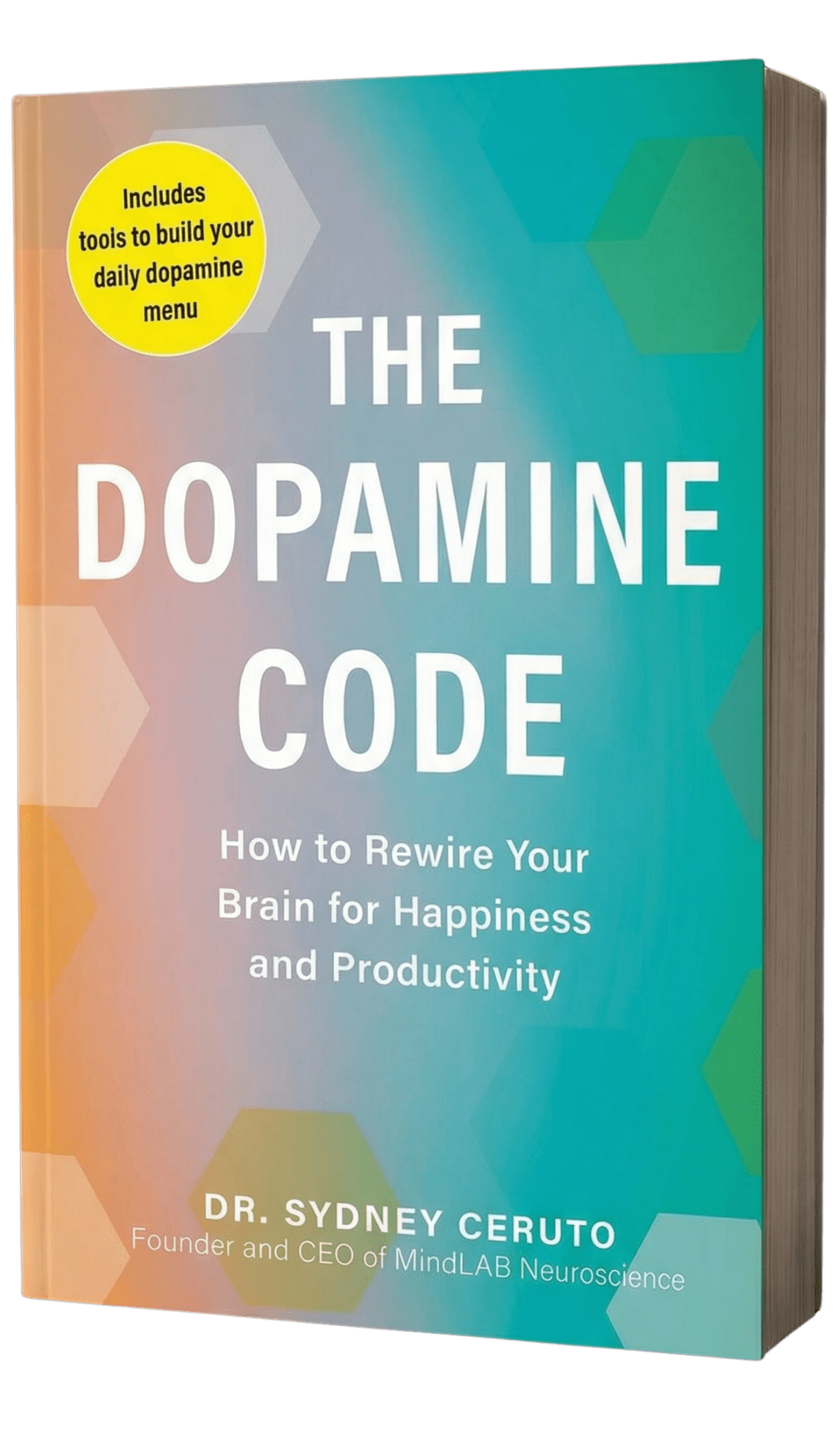
Dr. Ceruto holds a PhD in Behavioral & Cognitive Neuroscience from NYU and two Master’s degrees from Yale University. She lectures at the Wharton Executive Development Program at the University of Pennsylvania and has been an Executive Contributor to the Forbes Coaching Council since 2019. Dr. Ceruto is the author of The Dopamine Code (Simon & Schuster, June 2026). She founded MindLAB Neuroscience in 2000 and has spent over 26 years pioneering Real-Time Neuroplasticity™ — a methodology that permanently rewires the neural pathways driving behavior, decisions, and emotional responses.
Success Stories
“My communication was damaging every relationship in my professional life and I couldn't see it. Dr. Ceruto's neuroscience-based approach didn't just improve how I communicate — it rewired the stress response that was driving the pattern in the first place. The people around me noticed the change before I fully understood what had happened. That tells you everything.”

Identifying details withheld to protect client confidentiality.
All outcomes represent genuine engagements with Dr. Ceruto.
Frequently Asked Questions About Relationship Pattern Analysis
What is Relationship Pattern Analysis?
It identifies the recurring neural circuits that produce the same relational dynamics across every connection and context in your life. The process maps the architecture sustaining these patterns and rewires it permanently through Real-Time Neuroplasticity™.
Why do relationship patterns feel more intense in Bergen County?
Bergen County's overlapping community networks reduce compartmentalization. The same neural architecture activates in family, school, religious, and social contexts simultaneously. Patterns that larger cities allow you to distribute across separate spheres become concentrated and unavoidable.
Do cultural backgrounds affect relationship patterns?
Significantly. Growing up between cultural frameworks, as many Bergen County families do, creates competing neural demands around intimacy, hierarchy, and emotional expression. These competing circuits produce relational responses that feel inconsistent or contradictory under pressure.
What happens during the Strategy Call?
The Strategy Call is a focused phone conversation with Dr. Ceruto. She maps the neural mechanisms behind your specific relationship patterns and determines whether this approach is the right fit for your situation.
Can the focus on children's achievement actually damage marital patterns?
Yes. When parenting becomes the primary relational arena, the neural circuits governing the marriage receive less reinforcement and may weaken over time. The relationship shifts from a partnership to a project management structure, and the architecture for emotional intimacy between partners atrophies from disuse.
How is this different from family counseling?
Family counseling addresses dynamics between multiple members. Relationship Pattern Analysis rewires the neural architecture one person brings to every connection. Changing your circuitry changes how you function in the family system and in every other relational context.
My parents had the same relationship problems I have. Is that inherited?
Relational architecture builds primarily through observation during development, not genetics. Growing up watching specific dynamics between parents wires those patterns into your own neural circuitry. The good news is that observed architecture can be remapped through neuroplasticity.
How long does the process take?
Initial shifts in automatic relational responses typically emerge within the first several weeks. Bergen County's frequent social interactions provide natural contexts for reinforcing new circuitry, which can accelerate the consolidation of change.
We moved to Bergen County for a better life. Why are things harder here?
Better schools and stronger communities do not change neural architecture. The structured, high-expectation environment of Bergen County actually amplifies existing relational patterns by creating more contexts where those patterns activate and more observers who notice them.
What are Dr. Ceruto's qualifications?
Dr. Ceruto holds a PhD in Behavioral and Cognitive Neuroscience from NYU, two Master's degrees from Yale, and over 26 years of experience pioneering Real-Time Neuroplasticity™. She works extensively with culturally diverse families navigating complex community dynamics.
Also available in: Miami · Wall Street · Midtown Manhattan · Beverly Hills · Lisbon
Take the First Step
The Strategy Call is a focused conversation with Dr. Ceruto that maps the specific neural mechanisms driving your concerns and determines the right path forward.
Book a Strategy Call
The Dopamine Code
Decode Your Drive
Why Your Brain Rewards the Wrong Things
Your brain's reward system runs every decision, every craving, every crash — and it was never designed for the life you're living. The Dopamine Code is Dr. Ceruto's framework for understanding the architecture behind what drives you, drains you, and keeps you locked in patterns that willpower alone will never fix.
Published by Simon & Schuster, The Dopamine Code is Dr. Ceruto's framework for building your own Dopamine Menu — a personalized system for motivation, focus, and enduring life satisfaction.
Order NowShips June 9, 2026