Analysis Paralysis in Beverly Hills

Analysis paralysis is not indecisiveness. It is a neural value-signal collapse — the brain's decision architecture overloaded beyond its capacity to differentiate between options.

Analysis paralysis is not indecisiveness. It is a neural value-signal collapse — the brain’s decision architecture overloaded beyond its capacity to differentiate between options.

Book a Strategy Call

When the Mind Cannot Choose

The inability to make a decision despite adequate information is one of the most frustrating cognitive experiences a person can have. Analysis paralysis is widely misattributed to personality, anxiety, or insufficient preparation. The neuroscience reveals something more specific: it is a breakdown in the brain’s value-computation and comparison architecture, a dysfunctional decision system.

How the Brain Processes Choices

Every decision begins in the ventromedial prefrontal cortex. One option feels meaningfully better than another, and the decision proceeds. In analysis paralysis, this differentiation fails. When options are too numerous or too similar in perceived value, this region cannot generate a clean signal. The downstream decision machinery stalls because it has nothing clear to act on.

The dorsolateral prefrontal cortex — the brain’s executive comparator — receives these value signals and holds them in working memory for comparison. Working memory has a hard biological ceiling of approximately four items. When the number of options or variables per option exceeds this capacity, high-fidelity representations degrade. Attention-dependent value signals weaken for unattended options, producing a noisy, unstable comparison landscape — a race with no frontrunner.

The neural signature of choice overload has been captured directly. When subjects chose from sets of six, twelve, or twenty-four items, activity in the dorsal striatum and the anterior cingulate cortex followed an inverted-U curve. Activity peaked at twelve options and collapsed at twenty-four. The brain’s reward circuitry simply stopped differentiating between options when the set became too large. The value signals that should have guided the decision dissolved into indistinguishable neural activity.

Dense luminous neural threads condensing into single focused copper beam of clarity in deep navy void

Why Thinking Becomes the Problem

The anterior cingulate cortex — the brain’s conflict-monitoring hub — escalates the problem. When two or more options carry approximately equal value, this region enters a state of heightened conflict detection. It broadcasts distress signals and demands additional cognitive control resources to resolve the impasse. Research demonstrates that this decision-specific conflict is subjectively experienced as aversive. The conflict signal functions as an avoidance motivator, creating an implicit drive to escape the decision entirely.

The amygdala introduces a further distortion through loss aversion, the brain’s asymmetric sensitivity to potential losses versus equivalent gains. This structure processes potential losses with significantly greater neural intensity than equivalent gains. In high-stakes decision environments, every option carries the shadow of what might be lost by choosing it. This loss-aversion signal compounds the conflict signal, transforming an already difficult comparison into an emotionally threatening one.

The Research Loop That Never Ends

The information-seeking loop that characterizes analysis paralysis has its own neural reinforcement mechanism. Midbrain dopamine neurons fire not only for rewards themselves but for advance information about upcoming rewards. Gathering more information about a decision produces a genuine dopaminergic reward, independent of whether that information improves the decision. The brain is chemically reinforced for researching rather than choosing. This creates a cycle in which more analysis feels productive while the decision remains unmade.

How Patterns Get Stuck

A lateral inhibition mechanism in the ventromedial prefrontal cortex explains why similar options are uniquely paralyzing. Value-guided choice depends on the excitation-inhibition balance: high-value options must suppress low-value options through mutual inhibition. When multiple options carry similar subjective value, this inhibition is insufficient — no decisive neural winner emerges.

The paralysis is further maintained by the anterior cingulate cortex’s capacity to respond to anticipated likelihood of error. This means the conflict signal can escalate before a decision is even attempted. For individuals who have experienced consequences of difficult choices, the anticipatory conflict signal grows stronger with each episode. This creates a progressive sensitization that makes future decisions harder, not easier.

Walnut desk with marble inlay crystal brain sculpture and MindLAB journal in warm California afternoon light in Beverly Hills private study

Restoring Your Ability to Choose

Dr. Ceruto’s approach to analysis paralysis addresses the specific neural mechanisms maintaining the pattern. The methodology identifies whether the primary driver is value-signal noise or working memory overload in prefrontal regions. It also evaluates conflict escalation, loss-aversion amplification from the amygdala, or dopaminergic reinforcement of information-seeking. The approach designs interventions to restore the brain’s capacity to generate clear value signals. It helps clients tolerate uncertainty and execute decisions within a functional timeframe.

Why Analysis Paralysis Matters in Beverly Hills

Beverly Hills concentrates the exact decision environments that overwhelm the brain’s value-comparison architecture. The entertainment industry, private equity, luxury real estate, and aesthetic medicine sectors that define this community share a common structural feature: high-stakes choices made under conditions of permanent information asymmetry. Outcomes are fundamentally unpredictable and every commitment forecloses other options.

The talent agency ecosystem illustrates the problem precisely. WME, UTA, and CAA collectively represent thousands of careers, each one shaped by project selection decisions where a wrong bet is career-defining and a right bet may not come again. Script selection, deal timing, collaboration choices, and career-trajectory pivots all involve options whose outcomes cannot be known in advance and whose opportunity costs are invisible but psychologically present. Century City’s concentration of entertainment law and private equity places financial and legal decision-making directly adjacent to creative deal-making, each domain generating its own paralysis vectors.

The luxury real estate market adds a transactional layer of decision pathology. Beverly Hills’s median listed price for single-family homes exceeds $9 million, with negotiations involving sellers who are frequently celebrities, executives, or estate trusts. These are precisely the conditions under which the anterior cingulate cortex — the brain’s error-detection center —’s conflict-monitoring system enters chronic escalation.

Beverly Hills entrepreneurs and independent operators face analysis paralysis in its most acute form. Without corporate infrastructure to diffuse decisions, without committee processes or default options, founders across entertainment, aesthetics, wellness, and real estate verticals absorb a constant stream of choices. They are the final word on everything from strategy to vendor selection. Research consistently documents that the accumulation of even small decisions depletes the same prefrontal resources required for strategic thinking — and in Beverly Hills, the decisions are rarely small.

Dr. Sydney Ceruto, PhD — Founder, MindLAB Neuroscience

Dr. Sydney Ceruto, PhD — Founder & CEO, MindLAB Neuroscience

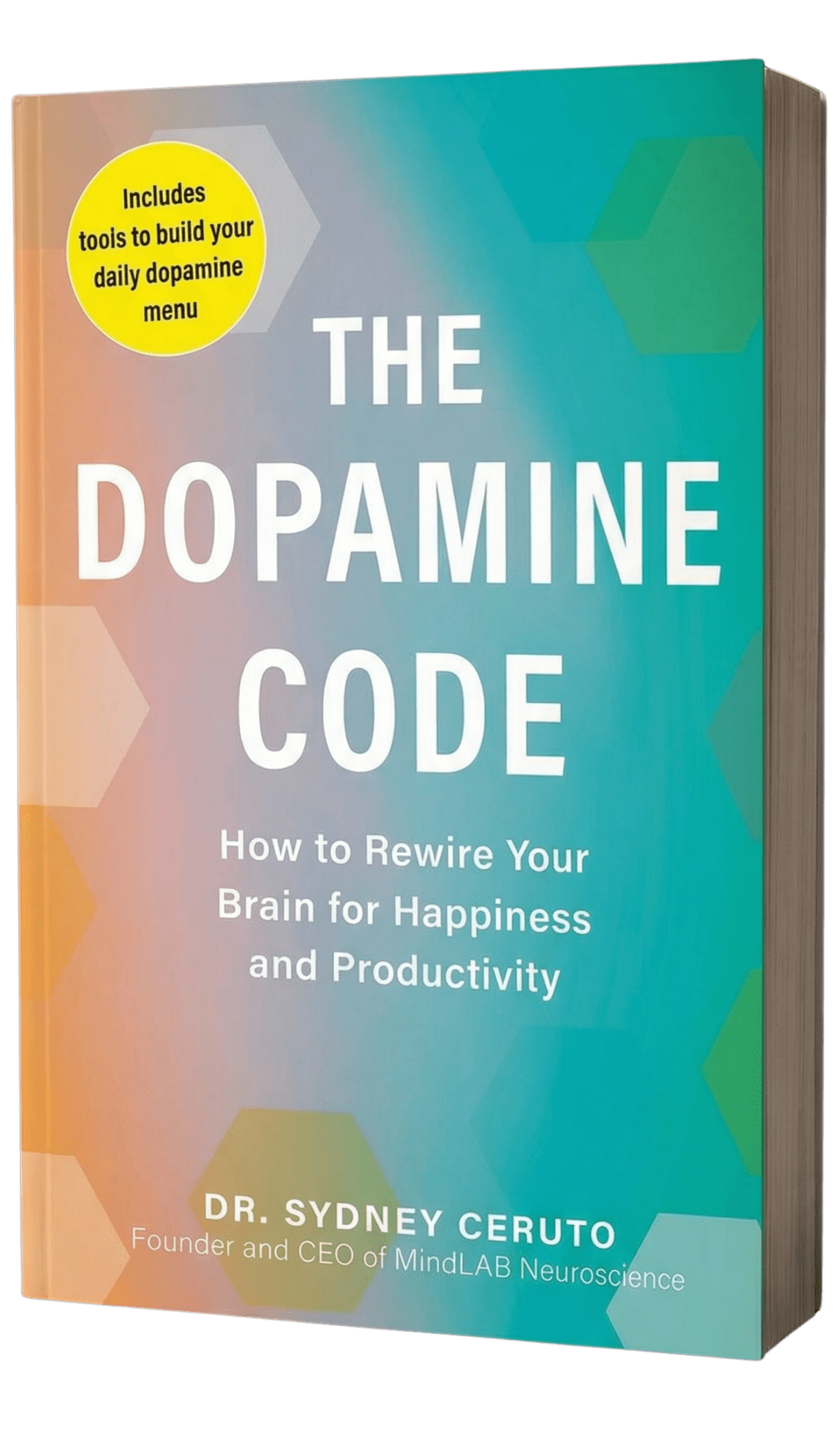
Dr. Ceruto holds a PhD in Behavioral & Cognitive Neuroscience from NYU and two Master’s degrees from Yale University. She lectures at the Wharton Executive Development Program at the University of Pennsylvania and has been an Executive Contributor to the Forbes Coaching Council since 2019. Dr. Ceruto is the author of The Dopamine Code (Simon & Schuster, June 2026). She founded MindLAB Neuroscience in 2000 and has spent over 26 years pioneering Real-Time Neuroplasticity™ — a methodology that permanently rewires the neural pathways driving behavior, decisions, and emotional responses.

References

Reutskaja, E., Lindner, A., Nagel, R., Rangel, A., & Camerer, C. F. (2018). Choice overload reduces neural signatures of choice set value in dorsal striatum and anterior cingulate cortex. Nature Human Behaviour, 2(12), 925–935. https://doi.org/10.1038/s41562-018-0440-2

Tom, S. M., Fox, C. R., Trepel, C., & Poldrack, R. A. (2007). The neural basis of loss aversion in decision-making under risk. Science, 315(5811), 515–518. https://doi.org/10.1126/science.1134239

Hare, T. A., Camerer, C. F., & Rangel, A. (2009). Self-control in decision-making involves modulation of the vmPFC valuation system. Science, 324(5927), 646–648. https://doi.org/10.1126/science.1168450

Success Stories

“When the inheritance came, it didn't feel like a gift — it felt like a grenade in every family relationship I had. I couldn't make a single financial decision without a flood of guilt and second-guessing. Years of talking through it hadn't changed anything. Dr. Ceruto identified the neural loop connecting money to fear of family rejection and dismantled it. The paralysis didn't fade — it stopped.”

Vivienne R., CFO Family Office Palm Beach, FL

“After the concussion, my processing speed collapsed — I couldn't hold complex information the way I used to, and no one could explain why the fog wasn't lifting. Dr. Ceruto mapped the damaged pathways and built compensatory networks around them. My brain doesn't work the way it did before the injury. It works differently — and in some ways, more efficiently than it ever did.”

Owen P., Founder & CEO Sports Performance Scottsdale, AZ

“My phone was the first thing I touched in the morning and the last thing I put down at night — and every app blocker, digital detox protocol, and willpower-based system I tried lasted less than a week. Dr. Ceruto identified the variable-ratio reinforcement loop that had hijacked my attention circuits and dismantled it at the neurological level. My phone is still in my pocket. The compulsion to reach for it isn't. That's a fundamentally different kind of fix.”

Tomás R., COO Logistics & Supply Chain Lisbon, PT

“Color-coded calendars, alarms, accountability partners — I'd built an entire scaffolding system just to stay functional, and none of it addressed why my brain couldn't sequence and prioritize on its own. Dr. Ceruto identified the specific prefrontal pattern that was misfiring and restructured it. I don't need the scaffolding anymore. My brain actually does what I need it to do.”

Jordan K., VP of Product Enterprise SaaS San Francisco, CA

“I'd optimized everything — diet, fitness, sleep — but my cognitive sharpness was quietly declining and no one could explain why. Dr. Ceruto identified the synaptic density patterns that were thinning and built a protocol to reverse the trajectory. This wasn't prevention in theory. My neuroplasticity reserve is measurably stronger now than it was three years ago. Nothing I'd tried before even addressed the right problem.”

Henrique L., Head of Strategic Planning Galp Lisbon, PT

“The way I was processing decisions under pressure had a cost I couldn't see — until Dr. Ceruto mapped it. She identified the neural pattern driving my reactivity in high-stakes situations and restructured it at the root. I don't just perform better under pressure now. I think differently under pressure. That's not something any executive coach or performance program ever came close to delivering.”

Rob Winston, Chief Operating Officer Goldman Sachs Manhattan, NY

Frequently Asked Questions About Analysis Paralysis in Beverly Hills

What is analysis paralysis from a neuroscience perspective?

Analysis paralysis occurs when the brain's value-computation system, centered in the ventromedial prefrontal cortex, cannot generate sufficiently differentiated signals to distinguish among options. The anterior cingulate cortex — the brain's error-detection center — detects this unresolved conflict and escalates cognitive control demands. Meanwhile, the amygdala amplifies the perceived cost of choosing wrong. The result is a neural feedback loop where more analysis increases noise rather than clarity, and the decision stalls.

Why does gathering more information often make the decision harder?

Midbrain dopamine neurons fire for advance information about outcomes, independent of whether that information improves the decision. This creates a genuine neurochemical reward for researching rather than choosing. Simultaneously, each additional variable exceeds the dorsolateral prefrontal cortex — the brain's planning and reasoning center —’s working memory capacity of approximately four items, degrading the quality of comparison rather than improving it. More information enters a system already at capacity, producing noise rather than signal.

Who experiences analysis paralysis most severely?

Analysis paralysis is most pronounced in individuals who face high-stakes decisions with incomplete information, multiple options of similar perceived value, and irreversible consequences. Professionals navigating complex deal environments, founders making unstructured strategic choices, and individuals managing substantial assets are particularly vulnerable. This is not because of personal weakness, but because the decision architecture of their environments systematically exceeds the brain's comparison capacity.

What happens during the initial engagement?

The process begins with a Strategy Call — a phone-based conversation with Dr. Ceruto — to map the specific decision patterns, contexts, and likely neural mechanisms driving the paralysis. This call determines whether the primary driver is value-signal noise, working memory overload, conflict escalation, loss-aversion amplification, or compulsive information-seeking, and shapes the design of a targeted program. The $250 Strategy Call fee applies. Program structure and investment details are discussed during that conversation.

How quickly can decision-making capacity improve?

Improvement timelines depend on the complexity and duration of the pattern. Individuals whose paralysis is primarily situational — tied to specific high-stakes decisions — often experience meaningful shifts in decision clarity within the first several weeks. Those with deeply entrenched patterns involving multiple neural mechanisms may require a longer restructuring period. Dr. Ceruto designs programs with concrete benchmarks, tracking changes in decision latency, confidence, and the brain's capacity to tolerate the uncertainty inherent in complex choices.

Take the First Step Beyond Analysis Paralysis

The Strategy Call is a focused conversation with Dr. Ceruto that maps the specific neural mechanisms driving your concerns and determines the right path forward.

Book a Strategy Call
MindLAB Neuroscience consultation room
Locations

The Intelligence Brief

Neuroscience-backed analysis on how your brain drives what you feel, what you choose, and what you can’t seem to change — direct from Dr. Ceruto.