Career Guidance Service in Beverly Hills

For Beverly Hills professionals navigating career disruption or the gap between external success and internal stagnation — neuroscience provides the clarity that conventional career advice cannot.

Beverly Hills' career landscape is undergoing a structural transformation that no previous generation of professionals has faced. The entertainment industry has contracted by tens of thousands of jobs since 2022, AI is accelerating displacement across creative and legal sectors, and Silicon Beach founders face compressed fundraising timelines that turn career decisions into existential ones. In this market, conventional career guidance — personality inventories, resume optimization, networking strategies — fails because it addresses the surface while ignoring the neural architecture where career decisions, identity, and motivation are actually encoded. Dr. Sydney Ceruto brings a fundamentally different methodology to career guidance: one grounded in how the brain forms career identity, processes transition stress, and computes the value of professional choices.
Schedule a Strategy Call

Career Counseling

Career dissatisfaction in Beverly Hills rarely presents as a straightforward vocational mismatch. It presents as a senior entertainment executive who cannot articulate why a role that once energized her now produces dread, or a Century City attorney who intellectually understands he should pivot but cannot bring himself to act. Ishikawa and colleagues (2024) demonstrated using near-infrared spectroscopy that meaningful occupations activate the orbitofrontal cortex — the brain’s reward-valuation hub — with statistically significant increases in oxygenated hemoglobin (p<0.05). The OFC is part of the dopaminergic reward network that governs motivation and career decision-making. When career alignment is off, the neural reward signal is absent — and no amount of advice compensates for a brain that is not receiving the signal to engage. I identify where the reward circuitry has disconnected from the professional path and intervene at the neural level where career motivation actually originates.

Learn more about Career Counseling in Beverly Hills →

Career Assessment

Standard career assessments measure self-reported preferences and aptitudes. They do not measure what matters most: the neural systems that govern how an individual computes career value, processes professional identity, and translates cognitive capacity into vocational direction. Levorsen and colleagues (2023) in the Journal of Neuroscience found that the medial prefrontal cortex encodes the personal importance of identity attributes — not merely their descriptiveness — establishing mPFC as the neural locus of career-relevant self-concept. Wards and Ehrhardt (2024) in Cerebral Cortex demonstrated that prefrontal engagement during assessment tasks produces better transfer of learned skills to novel challenges. I conduct career assessment at the neural level — mapping how the brain actually represents professional identity and where the disconnects lie — rather than relying on self-report instruments that capture what clients think they want but not what their brains are organized to pursue.

Learn more about Career Assessment in Beverly Hills →

Career Transition Planning

Career transitions activate the brain’s stress response system in predictable and damaging ways. A 2024 review published via PubMed Central confirmed that chronic stress exposure causes HPA axis dysregulation, reducing glucocorticoid receptor expression and elevating CRH, which impairs prefrontal cortex and hippocampal function — precisely the cognitive systems required to plan an effective career transition. Yale researchers (2025) demonstrated that cortisol not only strengthens emotional memories but changes dynamic brain networks associated with both memory and emotion, meaning career setbacks leave neurologically encoded emotional traces that bias future decisions. In Beverly Hills’ entertainment industry — where motion picture and sound recording jobs dropped from approximately 142,000 in 2022 to roughly 100,000 by late 2024 — career transition is not optional. It is structural. I address the neurobiological effects of transition stress directly, working with cortisol-driven emotional memory reconsolidation and prefrontal restoration to enable forward planning that is not hijacked by the neural residue of past disruption.

Learn more about Career Transition Planning in Beverly Hills →

Executive Career Coaching

Executive career development is not a softer version of career counseling. It engages distinct prefrontal systems governing cognitive control, goal-directed behavior, and strategic flexibility. Robbins and Friedman (2021) in Neuropsychopharmacology established that the dorsolateral prefrontal cortex mediates working memory updating, interference resistance, and mental set shifting — the neurological substrate of executive-level career navigation. Valesi and colleagues (2023) in Behavioral Sciences demonstrated using EEG and skin conductance that positive-emotional-attractor style engagement activates the nucleus accumbens, left lateral prefrontal cortex, and parasympathetic stress-reduction networks during sessions. Smith (2025) in Nursing Administration Quarterly confirmed that executive-level work supports neuroplasticity, strengthens emotional regulation, and contributes to durable career adaptability. I engage these specific neural systems through Real-Time Neuroplasticity™, producing executive career outcomes that are neurologically encoded — not dependent on continued external accountability.

Learn more about Executive Career Coaching in Beverly Hills →

Personal Branding

Personal branding is the externalization of self-concept, and self-concept has a specific neural address. Levorsen and colleagues (2023) demonstrated that the medial prefrontal cortex encodes not just what you believe about yourself but how important each piece of self-knowledge is to your identity. A 2022 study in Brain Sciences found that the vmPFC associates emotional value with autobiographical memories, forming the foundation of personal narrative — and that disrupting this region reduces self-enhancement tendency and lowers mood. In Beverly Hills, where personal brand carries measurable financial weight — from talent negotiation leverage to investor perception to luxury real estate deal flow — branding that does not engage the neural self-system produces messaging that cannot be sustained under pressure. I build personal brands from the mPFC outward: first establishing neural alignment between self-concept and professional narrative, then translating that alignment into public-facing communication that holds because it is neurologically authentic.

Learn more about Personal Branding in Beverly Hills →

Salary Negotiation Coaching

Salary negotiation is a neural event governed by three distinct brain systems: anchoring bias (dorsolateral prefrontal cortex), fairness processing (ventromedial PFC and anterior insula), and stress-impaired cognitive control. Mulay and colleagues (2025) in Cognitive, Affective & Behavioral Neuroscience used fMRI to demonstrate that decisions made immediately after stress exposure are associated with significantly lower activation in the right fronto-opercular cortex and left anterior dlPFC — reducing cognitive control and producing less deliberate decision-making. For Beverly Hills professionals negotiating first-look streaming deals, partnership equity structures, or Series B term sheets, stress-induced dlPFC suppression causes systematic under-negotiation. Executives accept lower outcomes than their market value justifies because the neural infrastructure for strategic evaluation has been temporarily compromised by the stress of the negotiation itself. I address this mechanism directly, building dlPFC activation capacity and anchoring-resistance before high-stakes negotiations — so the brain performing the negotiation is operating at full prefrontal capacity.

Learn more about Salary Negotiation Coaching in Beverly Hills →

Beverly Hills is experiencing a convergence of career disruption forces unlike anything in its history, and each of the city’s dominant professional sectors is generating distinct neurological pressure on the individuals navigating them.

The entertainment industry contraction is the most visible driver. Motion picture and sound recording jobs in Los Angeles dropped from approximately 142,000 in 2022 to roughly 100,000 by late 2024 — a loss of over 40,000 positions driven by streaming disruption, the WGA and SAG-AFTRA strikes, and structural studio restructuring. On-location shoot days in Los Angeles declined 53% between Q4 2019 and Q4 2024, per the Milken Institute’s 2025 report. AI is accelerating this displacement: a study of 300 entertainment industry leaders found that three-quarters reported AI tools led to elimination, reduction, or consolidation of jobs, with projections suggesting approximately 204,000 positions adversely affected over the next three years. These are not entry-level job losses. Entertainment executives — showrunners, agency partners, studio division heads, IP attorneys — face career identity crises compounded by the public visibility that Beverly Hills’ professional culture imposes.

Century City’s legal and financial district amplifies the pressure through different mechanisms. Entertainment law firms like Wilson Sonsini, Paul Hastings, and Sidley Austin serve clients navigating the same industry upheaval, and the attorneys themselves face career trajectory uncertainty as AI disrupts legal discovery and billable-hour economics. Associates at the partner-transition threshold and lateraling attorneys represent a high-value segment for neuroscience-based career guidance because the decision complexity exceeds what conventional career advisors can address.

Silicon Beach’s startup ecosystem generates its own career pressure: compressed fundraising timelines, founder-to-executive transitions, exit anxiety, and the identity complexity of creative professionals pivoting into technology business. Los Angeles ranked fourth globally in the 2024 Global Startup Ecosystem Report, and the entertainment-to-tech crossover is unique to this market — creators building tech-enabled IP businesses face cognitive tensions between creative identity and business scaling that no standard career framework addresses.

Beverly Hills proper, with a median age of 47.9 and over 52% of households earning above $100,000, is an established professional market where career guidance clients are not early-career job seekers but mid-career and senior professionals whose identities are deeply intertwined with their professional roles. The therapy-saturated market means most have already tried conventional approaches. They arrive at MindLAB ready for something that works at the level of the brain.

Dr. Sydney Ceruto, PhD — Founder, MindLAB Neuroscience

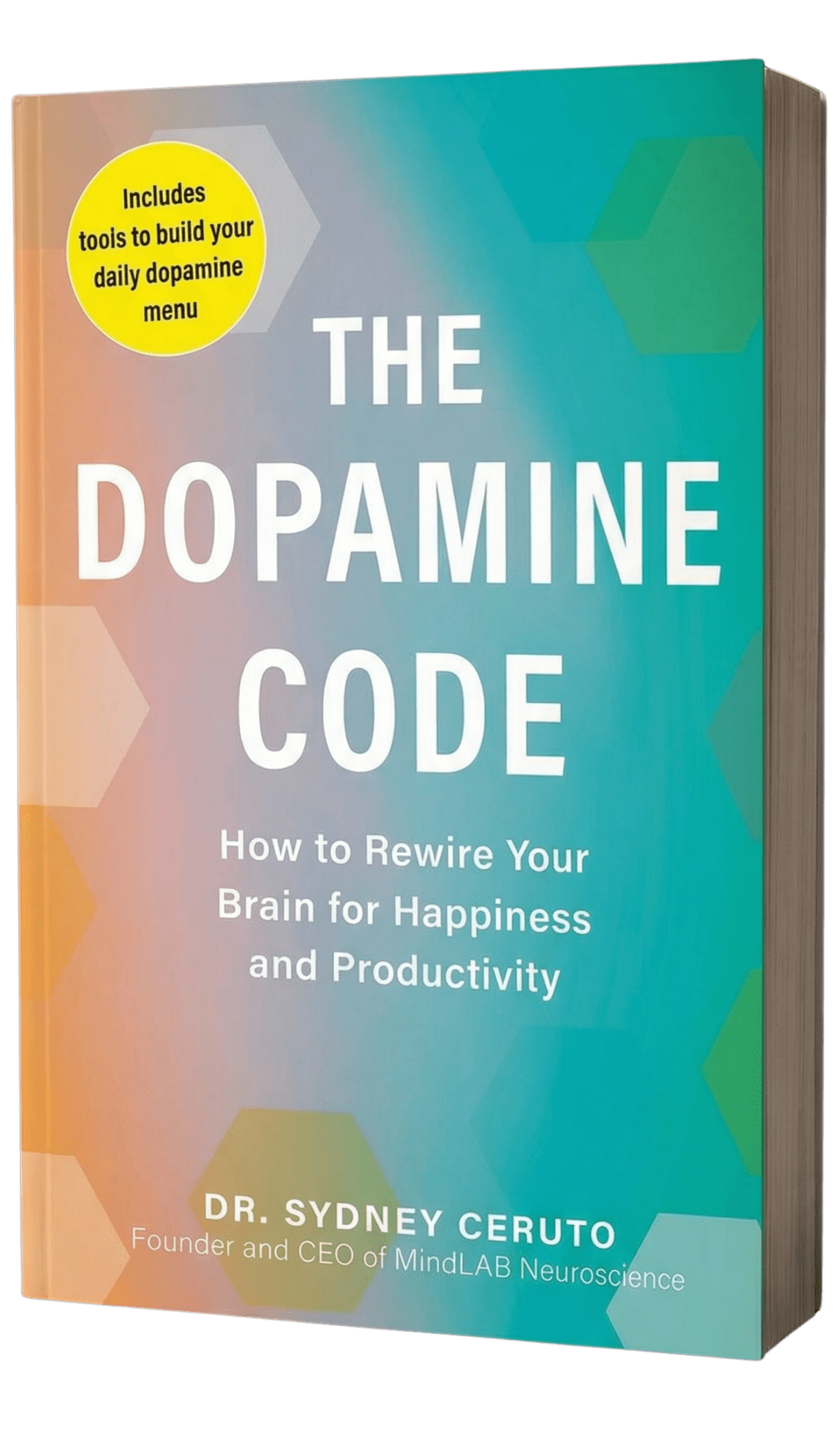
Dr. Sydney Ceruto holds a PhD in Behavioral & Cognitive Neuroscience from NYU and Master’s degrees in Clinical Psychology and Business Psychology from Yale University. She is a Lecturer in the Wharton Executive Development Program at the University of Pennsylvania, an Executive Contributor to Forbes Coaching Council, and an inductee in Marquis Who’s Who in America. Dr. Ceruto founded MindLAB Neuroscience in 2000 and has spent more than 26 years developing and refining her proprietary methodology, Real-Time Neuroplasticity™. She is the author of The Dopamine Code (Simon & Schuster, June 2026).

Frequently Asked Questions

I'm a senior studio executive and AI has eliminated half my team. I'm not sure whether to fight for my position or pivot. How is neuroscience-based career guidance different from what my studio's HR referred me to?
HR-referred career services operate within institutional frameworks designed to manage transitions, not to rebuild the neural architecture that governs how you process career identity under threat. I work with the prefrontal and limbic systems that are actively shaping your decision-making during this period of uncertainty — addressing the cortisol-driven emotional memory formation and impaired cognitive flexibility — the ability to shift thinking between concepts — that chronic career stress produces. The methodology is designed for the complexity of your situation, not the convenience of the institution.
I've worked with two career coaches in Beverly Hills already and nothing actually changed. Why would a neuroscience-based approach produce different results?
I work at the level of the brain itself, where career decisions are actually computed. If the neural patterns driving your career decisions remain unchanged, no amount of new strategy resolves the stagnation. I use Real-Time Neuroplasticity — the brain's ability to rewire itself —™, using Real-Time Neuroplasticity™ to restructure the circuits where career motivation, identity, and decision-making are encoded. Different mechanism, different outcome.
I'm a Century City entertainment lawyer thinking about leaving law for a studio business role. What does a neuroscience-based career assessment tell me that a standard skills inventory doesn't?
Standard inventories measure self-reported preferences. My assessment maps how your brain actually represents professional identity — specifically, what the medial prefrontal cortex — the brain's executive control center — encodes as important to your self-concept versus what you intellectually believe you want. Research shows these can diverge significantly, and the divergence explains why people make career moves that look right on paper but feel wrong immediately. I identify the actual neural alignment before you commit to a transition.
I'm negotiating a first-look deal with a streaming platform. I've left money on the table before because I accept too quickly under pressure. Is there a brain-based explanation?
Yes. fMRI research shows that stress-induced suppression of the dorsolateral prefrontal cortex — the brain's planning and reasoning center — reduces cognitive control during decisions — producing less deliberate, more reactive choices. High-stakes negotiations are inherently stressful contexts, and the brain performing the negotiation is operating at reduced prefrontal capacity precisely when it needs to be sharpest. I build dlPFC activation capacity before high-stakes negotiations so the neural infrastructure for strategic evaluation is fully functional when it matters most.
How long does neuroscience-based career guidance take to produce results?
Neuroplastic change (related to the brain's ability to rewire itself) is detectable within weeks under sustained, targeted engagement. My NeuroSync™ 90-day program is designed around the neuroscience of consolidation — the timeline required for new neural pathways to stabilize. For urgent situations like entertainment industry pivots or time-sensitive negotiations, I calibrate the engagement intensity to the decision timeline while respecting the biological requirements of durable neural restructuring.
My career is going well by external measures but I feel disconnected from my work. Is that burnout, identity drift, or something neurological?
It is neurological. The orbitofrontal cortex — your brain's reward-valuation center — activates when occupational engagement is subjectively meaningful. When that activation diminishes despite external success, it signals a misalignment between your neural reward circuitry and your current professional path. This is not a motivation problem or a gratitude deficit. It is a measurable neural state, and I address it at the level of the reward system itself.
I value my privacy. Can this work be done virtually?
Yes. My practice is virtual-first by design. Real-Time Neuroplasticity — the brain's ability to rewire itself —™ operates through the quality and timing of cognitive engagement, not geographic proximity. For Beverly Hills professionals in entertainment, law, and finance — where discretion is a professional requirement — the virtual model provides both full effectiveness and complete privacy.

Ready to Perform at Your Highest Level?

In Beverly Hills, career identity and professional reputation are inseparable from personal worth — and the stakes of every transition are amplified by LA's high-visibility professional culture. The most important career decision you can make is investing in the neural architecture that drives every decision after it.

Schedule a Strategy Call
MindLAB Neuroscience consultation room
Locations

The Intelligence Brief

Neuroscience-backed analysis on how your brain drives what you feel, what you choose, and what you can’t seem to change — direct from Dr. Ceruto.