Change Management Coaching in Beverly Hills

Resistance to change is not a character flaw. It is the amygdala detecting a threat the prefrontal cortex cannot yet resolve — and that circuit can be directly restructured.

When the environment shifts faster than the brain can recalibrate, the result is not weakness. It is a conflict between the brain's executive control system and its threat-detection system. This conflict consumes cognitive resources and generates sustained anxiety disproportionate to objective circumstances. MindLAB Neuroscience targets the neural change-detection system directly, converting the brain's alarm response into productive recalibration.

Book a Strategy Call

Key Points

  1. Resistance to change is neurologically hardwired — the brain's threat-detection system activates when established patterns are disrupted, regardless of intent.
  2. The anterior cingulate cortex flags discrepancies between current reality and expectations, generating anxiety that conventional reassurance cannot resolve.
  3. Successful transition requires rewiring the brain's prediction models so the new state registers as safe rather than threatening.
  4. Emotional regulation during change depends on prefrontal-amygdala connectivity — a measurable circuit that determines whether uncertainty triggers paralysis or adaptation.
  5. The neural cost of sustained uncertainty depletes the same cognitive resources needed for effective decision-making during critical transitions.

When Change Becomes a Threat Your Brain Cannot Resolve

“The brain that made you successful in the phase you are leaving physically reorganized itself around those demands. Asking it to operate differently without restructuring the circuits is like asking a sprinter's legs to run a marathon — the architecture does not support the demand.”

The restructuring was announced. The market shifted. The industry you built your career within reorganized its fundamental economics. Or perhaps it was more personal — clinging to familiar processes, avoiding the very decisions that would move you forward, and experiencing a background tension that no amount of rational analysis can dissolve.

This is not a failure of mindset. It is not a deficit of resilience or adaptability. What you are experiencing has a precise neurobiological signature. It explains why intelligent, capable people become functionally paralyzed during periods of significant change while simultaneously maintaining the appearance of composed leadership.

You may have sought support for this. Reflective work may have helped you understand your relationship to change. Strategic advisory may have clarified the path forward. Neither dissolved the visceral resistance, because that resistance lives in a circuit that operates below the reach of both insight and strategy. The amygdala does not negotiate with the prefrontal cortex’s logical conclusions. It responds to its own threat calculus, and until that calculus is directly addressed, the resistance persists.

The pattern is particularly acute in Beverly Hills, where professional change rarely arrives in isolation. In a city defined by entertainment industry disruption cycles, venture-backed pivots, and luxury real estate market volatility, the professionals who need change management support are not navigating a single transition. They are managing compounding uncertainties across multiple domains simultaneously — career, financial, relational, and reputational — while maintaining the performance standards their industries demand. Each domain of uncertainty amplifies the neural burden of the others.

The Neuroscience of Change Resistance

The brain’s response to significant change has been documented with increasing specificity across multiple peer-reviewed studies. The picture that emerges is both clarifying and actionable.

Neurons in the prefrontal cortex respond when environmental conditions become volatile. The brain shifts from — near-negligible monitoring — to rapid recalibration — selectively amplifying task-relevant signals while suppressing irrelevant ones. The prefrontal cortex functions as a dynamic change-detection and value-recalibration system.

This finding reveals something counterintuitive about the change experience. During change, the brain is not shutting down. It is attempting to dramatically increase its learning rate. The prefrontal cortex is working harder, not less. The problem is that this — upregulation — is effortful, anxiety-inducing, and unsupported without structured guidance.

The brain is trying to recalibrate but lacks the organized input it needs to do so efficiently. The subjective experience of overwhelm is the felt consequence of a prefrontal cortex running at maximum capacity without sufficient signal clarity.

The emotional dimension is governed by a separate but interacting mechanism. The brain distinguishes between two fundamentally different categories of uncertainty. Expected uncertainty represents normal variation within a stable system. Unexpected uncertainty signals that the rules themselves have changed.

The amygdala plays a critical role in detecting unexpected environmental changes and signaling the prefrontal cortex to increase its learning rate. The underlying mechanism is — metaplasticity — the brain’s ability to adjust its own rate of change. The brain registers that the environment has shifted at a structural level. All prior predictions about how the world operates may need revision. The emotional flooding that accompanies major change is the amygdala mobilizing the entire learning system in response.
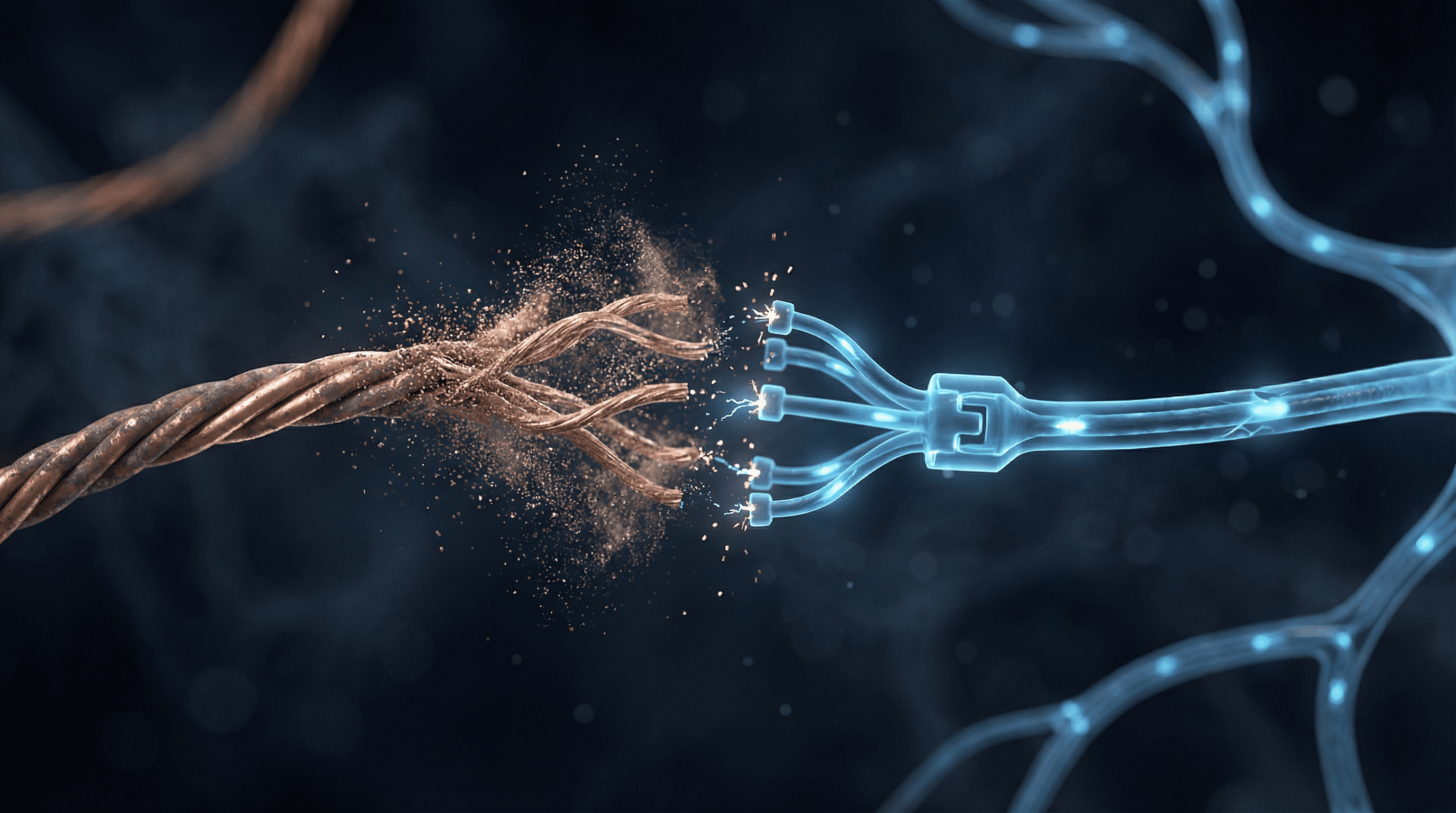
Life coaching and personal development — neural pathway restructuring with copper fragments dissolving as new connections form

Without intervention at this circuit level, the mobilization remains unanchored — particularly when the threat is unpredictable rather than absent or reliably signaled. Elevated prefrontal activation during ambiguity is driven by intolerance of uncertainty as a distinct neural processing pattern, separate from general anxiety. The brain of someone struggling with ambiguous change is essentially overthinking uncertainty at a neural level.

How Dr. Ceruto Approaches Change Resistance

Dr. Ceruto’s methodology works at the intersection of the three systems described above. It addresses the prefrontal change-detection system, the amygdala’s unexpected-uncertainty signal, and the brain’s capacity to rewire itself under new conditions.

The methodology does not ask clients to cognitively reframe their experience of change. Reframing operates at the declarative level. The constraint operates at the circuit level, and the two do not communicate efficiently. Dr. Ceruto’s approach works directly with the architecture generating the resistance.

Research has identified a specific neural dynamic that distinguishes resilient responders from those who remain stuck. The pattern is an initial suppression of activity followed by dynamic recovery. This is termed — neuroflexibility — the brain’s capacity to bounce back from stress-driven suppression. Greater neuroflexibility during stress correlates strongly with active adaptive responses and predicts fewer negative outcomes including emotional dysregulation and interpersonal conflict.

In over two decades of clinical neuroscience practice, this dynamic pattern is precisely what Dr. Ceruto’s clients develop. The precipitating event may be a career transition, an organizational restructuring, or a market pivot. The work builds neuroflexibility and recalibrates the amygdala’s threat threshold to distinguish genuine danger from manageable volatility. It also provides the high-signal input that the prefrontal cortex requires to update its decision-making under volatile conditions.

The process is designed to produce the neural recalibration that change requires — not to help clients tolerate ongoing discomfort, but to permanently restructure the circuits that generate that discomfort. The distinction matters. Tolerance is a management strategy. Recalibration is a neuroplastic event. They are not the same intervention, and they do not produce the same outcomes.

References

Juyoen Hur*, Jason F. Smith*, Kathryn A. DeYoung*, Allegra S. Anderson, Jinyi Kuang, Hyung Cho Kim, Rachael M. Tillman, Manuel Kuhn, Andrew S. Fox, Alexander J. Shackman. Uncertain Threat Anticipation and the Extended Amygdala-Frontocortical Circuit. Journal of Neuroscience. https://doi.org/10.1523/JNEUROSCI.0704-20.2020

Cristina Orsini, David Conversi, Paolo Campus, Simona Cabib, Stefano Puglisi-Allegra. Functional and Dysfunctional Neuroplasticity in Learning to Cope with Stress. Brain Sciences. https://doi.org/10.3390/brainsci10020127

Oriel FeldmanHall, Paul Glimcher, Augustus L. Baker, Elizabeth A. Phelps. The Amygdala and Prefrontal Cortex as Separate Systems Under Uncertainty. Journal of Cognitive Neuroscience. https://doi.org/10.1162/jocn_a_01443

Rajita Sinha, Cheryl M. Lacadie, R. Todd Constable, Dongju Seo (2016). VmPFC Neuroflexibility Signals Resilient Coping Under Sustained Stress. Proceedings of the National Academy of Sciences. https://doi.org/10.1073/pnas.1600965113

The Neural Architecture of Change Resistance

Every organization that has attempted significant change has encountered the same phenomenon: intelligent, capable, well-intentioned professionals who understand the rationale for the change, agree with the strategic logic, and still fail to sustain the new behaviors required. This is described, usually with frustration, as change resistance. It is more precisely described as neural architecture doing exactly what it is designed to do.

The brain’s pattern-recognition and habit systems are among the most powerful optimization mechanisms in nature. They encode repeated behaviors into low-energy, automatic routines precisely because this is metabolically efficient and operationally reliable. The prefrontal cortex is the expensive part of the brain — conscious, deliberate, energy-intensive. The habit system is cheap, fast, and deeply reinforced. When organizational change asks professionals to replace automated, deeply encoded working patterns with new behaviors that require sustained prefrontal engagement, it is asking the expensive system to consistently override the cheap system. Under normal conditions, this fails. Under elevated stress — and major organizational change reliably produces elevated stress — it fails with near certainty.

The social neural dimension amplifies this. The brain’s threat-detection systems monitor social belonging and status continuously. Organizational change that restructures roles, reporting relationships, or professional identities activates threat responses that are neurologically equivalent to physical danger. A professional who consciously supports the transformation can simultaneously have a limbic system that is generating sustained threat signals about what the change means for their belonging, status, and professional identity. These signals do not yield to rational argument. They yield to neural recalibration — a fundamentally different kind of intervention than the change communication and training that conventional change management delivers.

Why Traditional Approaches Fall Short

Conventional change management is built on models developed before modern neuroscience had mapped the specific mechanisms of habit, threat response, and social neural regulation that determine whether change succeeds or fails. Kotter’s eight steps, Prosci’s ADKAR model, and their equivalents are sophisticated behavioral frameworks that address the stages individuals move through in change adoption. They do not address the neural architecture that determines the pace and success of that movement.

The practical result is that change management programs deliver their communication campaigns, their training interventions, their sponsor activation strategies, and their reinforcement plans — and still produce adoption curves that plateau well short of the target. The people in the middle of the adoption curve are not resisting consciously. Their limbic systems are responding to threat signals that have not been addressed, their habit circuits are reasserting deeply encoded patterns, and their prefrontal capacity for sustained behavioral change is being depleted by the cognitive load of operating in an environment of elevated uncertainty.

Coaching as an adjunct to change management is often more effective than training, because the coaching relationship can address the individual’s specific neural response to the change rather than delivering generic change frameworks. But conventional coaching in this context still operates primarily at the cognitive and behavioral level — examining beliefs, identifying behavioral patterns, setting commitments — without reaching the limbic and dopaminergic circuits that are actually governing the response to change.

Walnut desk with marble inlay crystal brain sculpture and MindLAB journal in warm California afternoon light in Beverly Hills private study

How Neural Change Management Coaching Works

My approach to change management coaching begins with a neural audit of the individual’s or team’s specific response pattern to the organizational change. What are the specific threat signals the change is generating? Which neural circuits are most activated — role-identity threat, status threat, belonging threat, or uncertainty overload in the predictive coding system? What is the habit architecture that is most powerfully reasserting itself, and what is the specific neural competition between the new and old behavioral patterns?

From this assessment, I design a coaching protocol that operates at the neural level. For leaders responsible for driving change, this means recalibrating the prefrontal-limbic regulatory balance to sustain strategic clarity and change commitment under the elevated stress of transformation. For individuals navigating role changes, it means targeted work on identity circuit recoding — building new neural associations with the emerging role before the old ones are asked to simply disappear. For teams experiencing social threat responses to structural reorganization, it means designing experiences that rebuild the neural signals of belonging and psychological safety within the new organizational configuration.

The neuroscience of successful change is clear on one point: the speed of change is constrained by the speed of neural recoding, not by the speed of rational adoption. Organizations that design change timelines around logical comprehension consistently outpace their organizations’ actual neural change capacity and produce reversion. Those that design around neural consolidation timelines produce changes that hold. My engagement calendar is calibrated to neural change pace, not project management pace.

What This Looks Like in Practice

Change management coaching engagements begin with a Strategy Call that maps the specific change context — its scope, timeline, and the specific professional population navigating it — against the neural mechanisms most likely to determine success. From that conversation, I design an engagement that directly addresses those mechanisms.

For individual executives navigating personal leadership transformation within an organizational change context, the NeuroSync model provides focused, intensive work on the specific neural patterns most limiting their change leadership effectiveness. For leadership teams navigating the sustained complexity of multi-year transformation, the NeuroConcierge model provides embedded coaching partnership across the transformation timeline — recalibrating and adjusting as the organizational system evolves and new neural challenges emerge. The engagement is not a supplement to the change management plan. It is the neural infrastructure that determines whether the change management plan succeeds.

For deeper context, explore common time management mistakes in change.

Marker Traditional Approach Neuroscience-Based Approach Why It Matters
Focus Managing emotional reactions and building resilience through mindset shifts Restructuring the brain's threat-prediction models so change registers as opportunity rather than danger
Method Coaching frameworks, journaling, and cognitive reframing exercises Direct intervention in the neural circuits governing threat detection, prediction, and emotional regulation
Duration of Change Dependent on ongoing practice; old patterns resurface under pressure Permanent recalibration of how the brain processes uncertainty and novel situations

Why Change Management Coaching Matters in Beverly Hills

Beverly Hills operates at the intersection of three industries that are each undergoing structural disruption simultaneously — creating a concentration of change management needs unlike any other market in the country.

The entertainment industry is navigating its most structurally disruptive period since the invention of television. Streaming has dismantled the traditional studio model. The 2023 writers’ and actors’ strikes restructured the labor economy. AI is displacing creative roles that were considered insulated from automation. The professionals populating the Century City entertainment law corridors, the talent agencies on Wilshire Boulevard, and the production companies throughout Bel Air and Beverly Hills are not managing a temporary setback. They are processing a permanent change in the rules of their industry — precisely the unexpected uncertainty condition that the neuroscience identifies as most activating for the brain’s threat-detection system.

Silicon Beach — the Santa Monica corridor — has produced a generation of tech founders and venture-backed professionals who cycle through pivots, acquisitions, post-exit identity transitions, and forced leadership changes at a velocity that keeps the prefrontal change-detection system in a state of sustained activation. These professionals live in Beverly Hills and Brentwood while managing the psychological volatility of startup economics. The specific challenge is not a single change event but a continuous volatility that never resolves — the neural equivalent of an alarm that never turns off.

The luxury real estate market adds a third dimension of compounding uncertainty. Among the most volatile high-end markets in the world, Beverly Hills real estate operates on cycles driven by interest rate shifts, international capital flows, and environmental disruptions. As the January 2025 Palisades fires demonstrated — environmental crises — simultaneously affect personal and professional stability. Real estate professionals in this market experience change management as a permanent condition rather than an episodic event.

The clinical density along the Wilshire corridor means that many Beverly Hills professionals have already engaged with reflective and behavioral approaches to their change-related anxiety. What they have not encountered is an intervention that targets the neural circuits generating that anxiety with the specificity that the neuroscience research makes possible and that this particular market demands.

Array

The entertainment industry’s structural transformation — streaming disruption, studio consolidation, AI integration into production — has produced a change landscape in Beverly Hills where established career architectures are being dismantled faster than new ones can form. Agents, producers, and studio executives whose neural identity circuits were built around relationships with specific networks, distribution models, and creative workflows now face the challenge of restructuring professional identity while the industry’s own destination remains unclear.

Beverly Hills’ wealth management community faces its own change challenge: the generational wealth transfer now underway requires family office principals and wealth advisors to navigate relationship transitions with inheriting generations whose investment philosophies, risk tolerances, and communication preferences differ fundamentally from the founding generation. These are not just business transitions — they activate the brain’s attachment and social hierarchy circuits in ways that purely organizational change does not. Dr. Ceruto’s understanding of both the neural mechanics of change and the interpersonal complexity of wealth-adjacent transitions is particularly relevant in this context.

Dr. Sydney Ceruto, PhD — Founder, MindLAB Neuroscience

Dr. Sydney Ceruto, PhD — Founder & CEO, MindLAB Neuroscience

Dr. Ceruto holds a PhD in Behavioral & Cognitive Neuroscience from NYU and two Master’s degrees from Yale University. She lectures at the Wharton Executive Development Program at the University of Pennsylvania and has been an Executive Contributor to the Forbes Coaching Council since 2019. Dr. Ceruto is the author of The Dopamine Code (Simon & Schuster, June 2026). She founded MindLAB Neuroscience in 2000 and has spent over 26 years pioneering Real-Time Neuroplasticity™ — a methodology that permanently rewires the neural pathways driving behavior, decisions, and emotional responses.

References

Rock, D., & Schwartz, J. (2006). The neuroscience of leadership. Strategy+Business, 43, 1–10.

Hazy, J. K., & Uhl-Bien, M. (2015). Towards operationalizing complexity leadership: How generative, administrative and community-building leadership practices enact organizational outcomes. Leadership, 11(1), 79–104. https://doi.org/10.1177/1742715013511483

Ochsner, K. N., & Gross, J. J. (2005). The cognitive control of emotion. Trends in Cognitive Sciences, 9(5), 242–249. https://doi.org/10.1016/j.tics.2005.03.010

McEwen, B. S. (1998). Stress, adaptation, and disease: Allostasis and allostatic load. Annals of the New York Academy of Sciences, 840(1), 33–44. https://doi.org/10.1111/j.1749-6632.1998.tb09546.x

Success Stories

“It took years and many other professionals — not to mention tens of thousands of dollars — before I was recommended to Dr. Ceruto. I’d been suffering with chronic anxiety, OCD, and distorted thinking. After just two sessions, I started to see positive change. By the time my program ended, I had my sanity and my life back. Sydney creates a warm, supportive atmosphere where I found myself sharing things I’ve never told anyone. She is there for you anytime you need her.”

Nicholas M. — Private Equity Hong Kong

“Three months. That's how long it took to go from debilitating panic to leading with clarity. Years of conventional approaches hadn't moved the needle — Dr. Ceruto identified the root neural pattern and eliminated it. She didn't teach me to manage the panic. She made it unnecessary. I didn't know that was possible.”

Ella E. — Media Executive Manhattan, NY

“I'd optimized everything — diet, fitness, sleep — but my cognitive sharpness was quietly declining and no one could explain why. Dr. Ceruto identified the synaptic density patterns that were thinning and built a protocol to reverse the trajectory. This wasn't prevention in theory. My neuroplasticity reserve is measurably stronger now than it was three years ago. Nothing I'd tried before even addressed the right problem.”

Henrique L. — University Dean Lisbon, PT

“Dr. Ceruto delivers results. I’ve worked with her at two different points in my career. By the end of the introductory consultation, I knew I’d found the right person. She pointed out the behaviors and thought distortions holding me back, then guided me through the transformation with direct, practical recommendations I could apply immediately. She supplemented our sessions with valuable reading materials and was available whenever I needed her. I am a better leader and a better person because of our work together.”

Leeza F. — Serial Entrepreneur Austin, TX

“The dopamine optimization program is unlike anything I’ve tried before. The personalized assessments revealed insights about my brain I’d never considered, and the custom dopamine menu gave me practical, science-backed strategies that actually worked. My motivation and focus have never been higher — and what surprised me most is how sustainable it is, not just a temporary boost you lose after a few weeks. If you’ve tried other approaches and hit a wall, this is the one that finally delivers real, lasting results.”

Gloria F. — Physician Sydney, AU

“My body had simply stopped knowing when to sleep. Crossing time zones weekly for over two years had broken something fundamental, and every protocol, supplement, and device I tried couldn't hold longer than a few days. Dr. Ceruto identified the disruption at the level of my suprachiasmatic nucleus and recalibrated the signaling pattern driving the dysfunction. Within weeks, my circadian rhythm locked back in. I sleep now. Consistently. Regardless of where I land.”

Jonathan K. — Diplomat Geneva, CH

Frequently Asked Questions About Change Management Coaching in Beverly Hills

Why does organizational change feel so threatening even when I understand it intellectually?

The brain distinguishes between expected uncertainty and unexpected uncertainty, which signals that the rules have fundamentally changed. The amygdala detects unexpected environmental changes and mobilizes the entire learning system in response. The emotional flooding that accompanies major change is this mobilization in action. Your intellectual understanding operates in the prefrontal cortex. The threat response operates in the amygdala. These are different systems, which is why one does not override the other.

How is neuroscience-based change management work different from standard executive support?

Standard approaches work at the cognitive and behavioral level — reframing perspectives, building strategic plans, developing management techniques. MindLAB Neuroscience works at the neural circuit level. Dr. Ceruto's methodology targets the specific prefrontal-amygdala — the brain's threat-detection center — architecture that generates change resistance, builds vmPFC neuroflexibility that predicts resilient adaptive responses, and recalibrates the brain's change-detection system to process volatility without cognitive overload. The distinction is between managing symptoms and restructuring the circuits that produce them.

I am managing changes across multiple areas of my life simultaneously. Does the approach account for that?

The brain does not process overlapping changes in separate compartments. Each domain of uncertainty — professional, financial, relational, reputational — compounds the amygdala's threat signal and amplifies the prefrontal cortex's cognitive load — the total demand on mental processing capacity —. Dr. Ceruto's NeuroConcierge program addresses this full architecture, working across the interacting neural mechanisms rather than isolating a single dimension. This comprehensive approach is frequently required for Beverly Hills professionals navigating industry disruption alongside personal and financial transitions simultaneously.

Can change management work be conducted virtually?

Yes. MindLAB Neuroscience operates a virtual-first model, and all change management work is fully available remotely. This is essential for Beverly Hills clients whose professional commitments require travel between Los Angeles, New York, and international locations. The methodology targets neural circuits through structured intervention — it does not require physical co-location or specialized equipment.

What happens during the initial Strategy Call?

The Strategy Call is a focused strategy conversation in which Dr. Ceruto assesses the nature of the change you are navigating and identifies which neural mechanisms are driving your current response. The assessment examines several distinct patterns: prefrontal change-detection overload, an unresolved threat response originating in the amygdala — the brain's threat-detection center — intolerance-of-uncertainty processing patterns, and compounding multi-domain uncertainty. Each pattern reflects a different underlying mechanism and requires a tailored approach. This assessment determines the entire intervention architecture.

How long does change management work typically take?

Duration depends on the scope and complexity of the neural recalibration required. A single-domain change — one career transition, one organizational restructuring — may respond to a focused NeuroSync engagement. Compounding changes across multiple life domains require the more comprehensive NeuroConcierge framework. Dr. Ceruto determines the appropriate architecture during the initial assessment. The goal is not indefinite support but permanent neural recalibration — restructuring the circuits so that they process change adaptively rather than defensively.

The entertainment industry feels like it is in permanent disruption. Can this approach help when the change never stops?

Continuous volatility is a specific neural condition — distinct from single disruptive events. Research published in Neuron demonstrates that during volatile conditions, the prefrontal cortex dramatically increases its learning rate and signal-processing activity. The problem is not that the brain cannot adapt to continuous change. The problem is that this sustained upregulation is cognitively exhausting without structured support. Dr. Ceruto's methodology builds the neural architecture for efficient recalibration under sustained volatility — capacity to process change without overload that leads to paralysis or burnout.

How long does it typically take for the brain to stop treating a life change as a threat?

The timeline depends on how deeply the brain's prediction models are invested in the prior state. A career change after two decades activates different threat intensities than a relocation after five years. What determines speed is not the objective magnitude of the change but how central the disrupted pattern is to the brain's model of identity and safety.

With targeted neural intervention, most individuals experience a measurable shift in how they process the change — from threat-dominant to opportunity-oriented — within weeks rather than the months or years that unassisted adaptation typically requires.

What specific aspects of change does Dr. Ceruto's approach address that conventional support does not?

Conventional change support focuses on mindset, planning, and emotional management — all of which operate at the conscious level. The neural resistance to change operates below conscious awareness, in prediction circuits that flag novel states as dangerous regardless of your rational assessment.

Dr. Ceruto's methodology targets the specific circuits that generate threat responses to uncertainty, the prediction models that assign disproportionate risk to unfamiliar states, and the identity architecture that makes the prior state feel safer than the desired one. This is the layer where change actually stalls — and where it can actually be resolved.

Can this work help with changes I did not choose — such as divorce, job loss, or health challenges?

Yes. Involuntary transitions activate the brain's threat-detection system even more intensely than chosen changes because the element of control — which the prefrontal cortex uses to modulate fear responses — is absent. Loss of agency amplifies the amygdala's threat classification of every aspect of the new situation.

The neuroscience is the same regardless of whether the change was chosen: the brain's prediction models need updating, the threat classification needs recalibrating, and the identity architecture needs restructuring to accommodate the new reality. Dr. Ceruto's approach addresses these neural mechanisms directly, whether the transition was voluntary or imposed.

Also available in: Miami · Wall Street · Midtown Manhattan · Lisbon

The Circuit Running Every Reaction to Every Disruption in Your World

From entertainment industry restructuring to Silicon Beach pivots to Bel Air market volatility, Beverly Hills professionals are managing compounding change across every domain. Dr. Ceruto maps the neural architecture driving your response in one conversation.

Book a Strategy Call
MindLAB Neuroscience consultation room

The Dopamine Code

Decode Your Drive

Why Your Brain Rewards the Wrong Things

Your brain's reward system runs every decision, every craving, every crash — and it was never designed for the life you're living. The Dopamine Code is Dr. Ceruto's framework for understanding the architecture behind what drives you, drains you, and keeps you locked in patterns that willpower alone will never fix.

Published by Simon & Schuster, The Dopamine Code is Dr. Ceruto's framework for building your own Dopamine Menu — a personalized system for motivation, focus, and enduring life satisfaction.

Order Now

Ships June 9, 2026

The Dopamine Code by Dr. Sydney Ceruto — Decode Your Drive
Locations

The Intelligence Brief

Neuroscience-backed analysis on how your brain drives what you feel, what you choose, and what you can’t seem to change — direct from Dr. Ceruto.