Hormones, the Brain & Cognitive Performance in Beverly Hills

Dr. Sydney Ceruto provides neuroscience-grounded education on how hormonal fluctuations alter brain architecture and cognitive function, helping Beverly Hills professionals understand the neurobiological mechanisms behind their cognitive changes.

(empty)

Book a Strategy Call

Hormones do not merely influence mood. They directly regulate the brain’s wiring, the efficiency of neurotransmitter signaling, and the speed at which information flows between neural networks. When hormonal levels shift through natural transitions, chronic stress, or age-related decline, the cognitive consequences are not psychological in origin. They are structural and measurable, rooted in changes to the very circuitry that makes complex thinking possible.

Estrogen and the Brain’s Synaptic Architecture

Estrogen, principally its most active form estradiol, is among the most potent modulators of brain plasticity in human neuroscience. Estrogen receptors are concentrated in the hippocampus and prefrontal cortex, the two brain regions most critical for memory consolidation and executive function. Estradiol reaches the brain through two routes: circulating estrogen that crosses into the brain from the bloodstream, and locally produced estradiol manufactured on-demand within neurons themselves.

The cognitive effects are rapid and structurally significant. Estradiol triggers changes that remodel dendritic spines — tiny connection points between neurons — within minutes to hours. This increases both the number and strength of synaptic contacts. In the hippocampus, this translates directly to enhanced memory encoding and retrieval. In the prefrontal cortex, it supports the working memory and cognitive flexibility that complex decision-making demands.

During perimenopause, the transitional years before menopause, estrogen levels do not simply decline. They fluctuate erratically, with surges and drops that destabilize the very neural circuits they normally support. Verbal learning, verbal memory, processing speed, attention, and working memory all show measurable declines during this transition. Research has demonstrated reduced brain energy metabolism during perimenopause, along with structural changes that correlate with the cognitive, emotional, and physiological symptoms women experience. These are not stress responses or signs of overwork. They are the direct neurobiological consequences of hormonal signaling changes in the brain itself.

Macro cross-section of neural pathway with copper sheathing forming around blue signal core depicting active brain optimization

Testosterone and Cognitive Endurance

Testosterone modulates the brain through mechanisms distinct from but complementary to estrogen. Its primary cognitive influence operates through the dopamine pathway governing motivation, reward processing, and sustained executive effort. Testosterone levels also shape how the brain balances reactive and reflective decision-making, whether you respond impulsively to a provocation or pause to evaluate it.

In men, testosterone follows both a daily rhythm, peaking in the morning and declining through the afternoon. It also follows a longer-term age-related trajectory that begins declining roughly one to two percent per year after age thirty. This decline is accelerated by chronic stress. Sustained activation of the body’s stress-response system suppresses testosterone production directly. For a professional in their forties carrying years of accumulated stress, the resulting testosterone decline produces professionally significant but often invisible cognitive symptoms. Reduced mental stamina, decision fatigue, and diminished capacity for sustained executive effort develop so gradually they feel like normal aging rather than a correctable hormonal shift.

Thyroid Hormones and Processing Speed

Thyroid hormones regulate the brain’s metabolic rate at the cellular level. They govern myelination — insulation of nerve fibers for faster signaling — that determines how quickly information travels between brain regions. Even subclinical thyroid dysfunction has been associated with measurable cognitive changes. These include reduced processing speed, impaired attention, and deficits in verbal memory.

The brain regions most dependent on adequate thyroid signaling are the hippocampus and prefrontal cortex, the same regions sensitive to estrogen and testosterone. This convergence means that hormonal shifts in one system amplify the effects of shifts in another. A perimenopausal woman with borderline thyroid function and elevated cortisol from chronic stress faces a compounding assault on the neural infrastructure supporting her cognitive performance. Each contributing factor is invisible without the neuroscience framework to identify it.

The Cortisol-Hormone Interaction

Chronic stress does not exist in a hormonal vacuum. Sustained cortisol elevation directly suppresses testosterone production in men and amplifies the cognitive impact of estrogen fluctuation in perimenopausal women. Cortisol also competes with thyroid hormone at the receptor level and suppresses thyroid-stimulating hormone secretion. The result is a cascade in which stress hormones simultaneously degrade the other hormonal systems supporting cognitive function. This creates a multi-system disruption that single-system approaches cannot adequately address.

DHEA, the most abundant circulating steroid hormone, serves as a neuroprotective counterbalance to cortisol. DHEA protects memory-center neurons and enhances emotional regulation. It also modulates how the brain stores emotional memories. The cortisol-to-DHEA ratio shifts unfavorably with chronic stress and aging. This ratio provides a reliable index of the brain’s shifting vulnerability to stress-driven cognitive decline.

The Scope of Neuroscience Education

Understanding how hormones affect the brain is fundamentally different from managing hormone levels. Dr. Ceruto’s approach provides the neuroscience education that connects the individual’s lived cognitive experience to its precise neurobiological mechanisms. A neuroscientist educates on the brain side of hormonal transitions. Endocrinologists manage hormone levels. These are complementary, not competing, functions. A person who understands the neuroscience of their hormonal transition can engage more productively with their endocrinologist and ask more precise questions. That understanding also enables neuroplasticity — the brain’s ability to rewire itself — strategies that support cognitive function through hormonal change.

Walnut desk with marble inlay crystal brain sculpture and MindLAB journal in warm California afternoon light in Beverly Hills private study

The neuroscience framework also provides practical cognitive strategies. These include timing high-demand cognitive work to hormonal rhythms and using stronger memory encoding strategies during periods when verbal memory is reduced. It also includes optimizing sleep architecture to support the memory consolidation processes most vulnerable to hormonal disruption. It also clarifies when cognitive changes warrant medical evaluation versus when they represent a normal neurobiological transition that can be navigated with the right knowledge.

Why Hormones, the Brain & Cognitive Performance Matters in Beverly Hills

Beverly Hills and the Westside professional community have one of the highest concentrations of women in influential leadership roles in any American city, alongside a parallel concentration of men in high-stress executive positions. This makes this geography a natural priority for neuroscience-grounded education on how hormonal changes affect the brain.

The entertainment industry’s historic shift in female representation adds particular urgency. Research found that 2024 marked the first year of gender equality on screen, with more than half of the top-grossing films featuring a female lead or co-lead. The women driving this shift are frequently in their late thirties to mid-fifties. This is the perimenopause window during which hormonal fluctuations most directly impair the cognitive functions that define their professional identity. For a woman whose authority depends on verbal precision, rapid recall, and executive decision-making under pressure, the neuroscience of perimenopause is not academic. It is operationally critical.

Beverly Hills is well-served by hormone optimization providers. Multiple practices along Robertson Boulevard and in the Beverly Hills–West Hollywood corridor offer bioidentical hormone replacement, comprehensive hormone panels, and pellet therapy protocols. Beverly Hills Rejuvenation Center integrates hormone panels into longevity programs. However, all of these providers address hormones through the lens of symptoms and systemic health, not through the neuroscience of how hormonal fluctuations alter brain architecture and cognitive performance. Dr. Ceruto provides the brain-centered interpretation that connects the experience of cognitive slippage to its precise neurobiological mechanism. Hormone-related cognitive changes are framed not as vague symptoms but as specific, explainable neural events.

The male dimension is equally relevant. High-stress male executives experience testosterone decline through the stress-mediated suppression of reproductive hormone production. The concentration of male executives in Century City, Beverly Hills, and Culver City creates a substantial population whose testosterone-related cognitive changes go unaddressed. These changes include reduced mental stamina, decision fatigue, and diminished risk tolerance. No local provider approaches these symptoms from a neuroscience framework. Dr. Ceruto’s positioning as a brain health practice gives this work both scientific differentiation and the credibility to engage this demographic without the associations that often accompany anti-aging or hormone clinic branding.

Dr. Sydney Ceruto, PhD — Founder, MindLAB Neuroscience

Dr. Sydney Ceruto, PhD — Founder & CEO, MindLAB Neuroscience

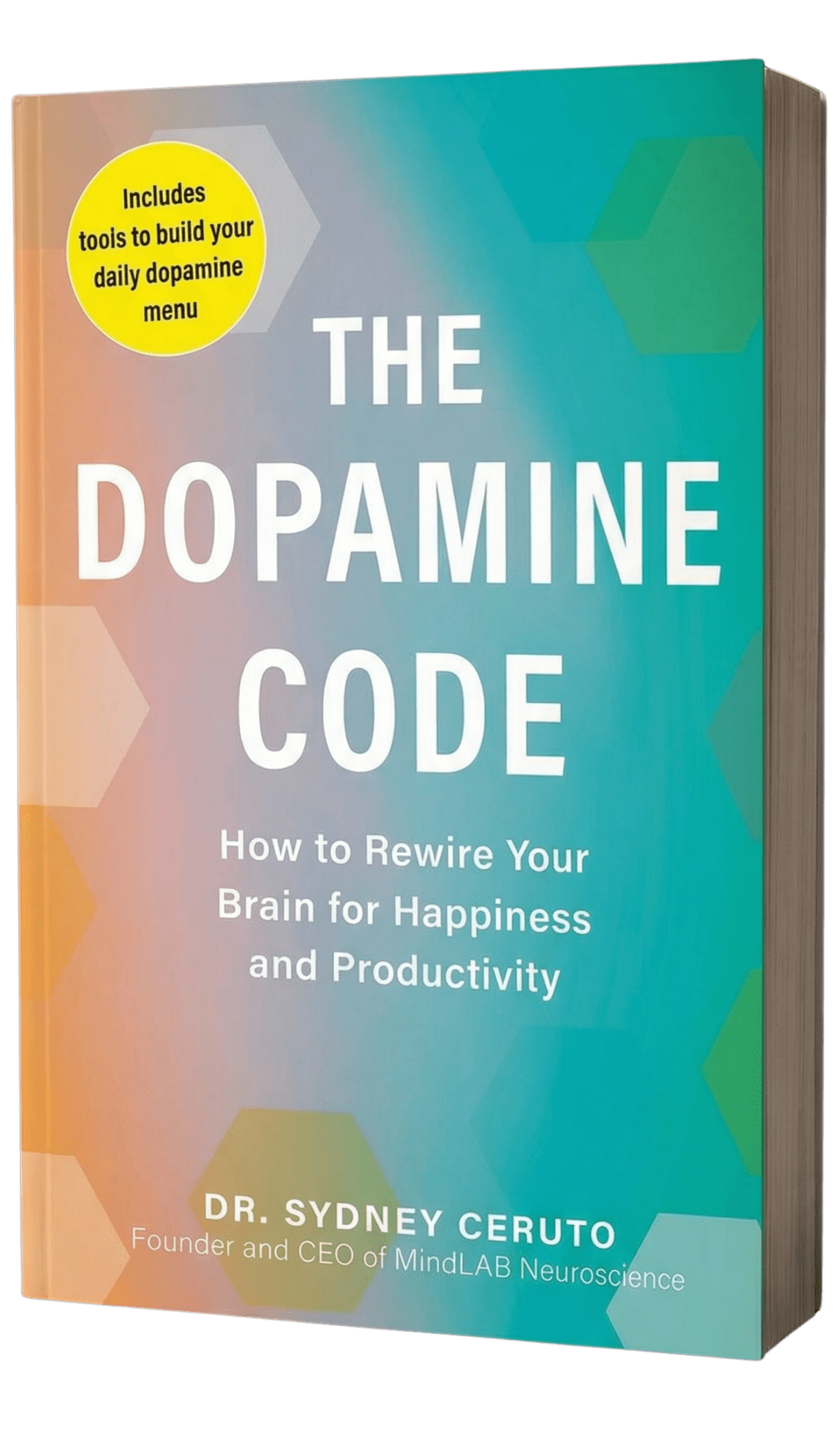
Dr. Ceruto holds a PhD in Behavioral & Cognitive Neuroscience from NYU and two Master’s degrees from Yale University. She lectures at the Wharton Executive Development Program at the University of Pennsylvania and has been an Executive Contributor to the Forbes Coaching Council since 2019. Dr. Ceruto is the author of The Dopamine Code (Simon & Schuster, June 2026). She founded MindLAB Neuroscience in 2000 and has spent over 26 years pioneering Real-Time Neuroplasticity™ — a methodology that permanently rewires the neural pathways driving behavior, decisions, and emotional responses.

References

Hara, Y., Waters, E. M., McEwen, B. S., & Morrison, J. H. (2015). Estrogen effects on cognitive and synaptic health over the lifecourse. Physiological Reviews, 95(3), 785-807. https://doi.org/10.1152/physrev.00036.2014

Novick, A. M., Page, C. E., Metcalf, C. A., & Duffy, K. A. (2023). Cognitive problems in perimenopause: A review of recent evidence. Current Psychiatry Reports, 25(12), 873-887. https://doi.org/10.1007/s11920-023-01447-3

Tobiansky, D. J., Wallin-Miller, K. G., Floresco, S. B., Wood, R. I., & Soma, K. K. (2018). Androgen regulation of the mesocorticolimbic system and executive function. Frontiers in Endocrinology, 9, 279. https://doi.org/10.3389/fendo.2018.00279

Success Stories

“Slower processing, foggier recall, decisions that used to be instant taking longer than they should — I'd been accepting it all as inevitable decline for two years. Dr. Ceruto identified the prefrontal efficiency pattern that was degrading and restructured it at the neurological level. The sharpness didn't just come back. It came back faster and more precise than it was a decade ago. Nothing I'd tried before even addressed the right problem.”

Elliott W., General Partner Andreessen Horowitz

“I'd optimized everything — diet, fitness, sleep — but my cognitive sharpness was quietly declining and no one could explain why. Dr. Ceruto identified the synaptic density patterns that were thinning and built a protocol to reverse the trajectory. This wasn't prevention in theory. My neuroplasticity reserve is measurably stronger now than it was three years ago. Nothing I'd tried before even addressed the right problem.”

Henrique L., Head of Strategic Planning Galp Lisbon, PT

“After the concussion, my processing speed collapsed — I couldn't hold complex information the way I used to, and no one could explain why the fog wasn't lifting. Dr. Ceruto mapped the damaged pathways and built compensatory networks around them. My brain doesn't work the way it did before the injury. It works differently — and in some ways, more efficiently than it ever did.”

Owen P., Founder & CEO Sports Performance Scottsdale, AZ

“Nothing was wrong — and that's exactly why no one could help me. I wasn't struggling. I wanted to know what my brain was actually capable of if its resting-state architecture was optimized. Dr. Ceruto mapped my default mode network and restructured how it allocates resources between focused and diffuse processing. The cognitive clarity I operate with now isn't something I'd ever experienced before — and I had no idea it was available.”

Nathan S., Senior Investment Strategist Bridgewater Associates

“The way I was processing decisions under pressure had a cost I couldn't see — until Dr. Ceruto mapped it. She identified the neural pattern driving my reactivity in high-stakes situations and restructured it at the root. I don't just perform better under pressure now. I think differently under pressure. That's not something any executive coach or performance program ever came close to delivering.”

Rob Winston, Chief Operating Officer Goldman Sachs Manhattan, NY

“When my youngest left for college, I didn't just feel sad — I felt erased. My entire sense of self had been wired to caregiving for two decades, and I didn't know who I was without it. Years of talk-based approaches hadn't touched it. Dr. Ceruto mapped the identity circuitry that had fused with the role and restructured it. I didn't find a new purpose — I found the one that had been underneath the whole time.”

Diane L., Senior Partner Management Consulting Chicago, IL

Frequently Asked Questions About Hormones, the Brain & Cognitive Performance in Beverly Hills

What does hormone-brain work look like at MindLAB Neuroscience?

Dr. Ceruto provides neuroscience-based education on how hormonal changes alter brain function and cognitive performance. Whether through perimenopause, testosterone decline, thyroid shifts, or chronic stress, hormonal transitions create specific changes in brain architecture. The approach maps the connections between your hormonal transition and cognitive experience. You receive neuroplasticity-based strategies for maintaining cognitive performance through hormonal change. This is neuroscience education, not hormone management.

How do hormones actually change brain function?

Estrogen modulates synaptic density in the hippocampus — the brain's memory-formation center — and prefrontal cortex, directly affecting memory and executive function — planning, focus, and task management —. Testosterone regulates the mesocorticolimbic dopamine system governing motivation and sustained cognitive effort. Thyroid hormones control myelination — the insulation of nerve fibers for faster signaling — and processing speed. Cortisol, when chronically elevated, suppresses all three of these systems simultaneously. When any of these hormones shift, the brain's structural capacity for the cognitive functions that depend on them shifts as well – not as a psychological response but as a neurobiological event.

Who benefits from understanding the hormone-brain connection?

Women navigating perimenopause or menopause who notice changes in verbal memory, word retrieval, processing speed, or cognitive consistency. Men in their forties and fifties experiencing reduced mental stamina, decision fatigue, or diminished cognitive endurance under pressure. Anyone whose cognitive changes correlate with a life stage that involves hormonal transition and who wants to understand the neuroscience rather than dismiss the experience as stress or normal aging.

How does someone begin this work with Dr. Ceruto?

The process starts with a Strategy Call – a phone-only conversation with Dr. Ceruto costing $250. The call explores the individual’s cognitive experience, hormonal context, and lifestyle factors to assess whether neuroscience-based hormone-brain education is the right focus. Program structure and investment details are discussed during the Strategy Call.

Does Dr. Ceruto provide hormone replacement or manage hormone levels?

No. Dr. Ceruto provides neuroscience education on how hormonal changes affect the brain – not hormonal assessment or management. Endocrinologists and gynecologists manage hormone levels. The neuroscientist's role is to provide the brain-centered understanding that makes medical care more effective: understanding why specific cognitive changes are occurring. This includes which neuroplasticity — the brain's ability to rewire itself —-based strategies can support cognitive function through the transition, and when a referral for medical evaluation is warranted. Education and clinical care are synergistic.

Take the First Step Toward Sharper Cognitive Performance

The Strategy Call is a focused conversation with Dr. Ceruto that maps the specific neural mechanisms driving your concerns and determines the right path forward.

Book a Strategy Call
MindLAB Neuroscience consultation room
Locations

The Intelligence Brief

Neuroscience-backed analysis on how your brain drives what you feel, what you choose, and what you can’t seem to change — direct from Dr. Ceruto.