Life Coach in Beverly Hills

Beverly Hills' most accomplished individuals are discovering that neuroscience — not conventional advice — is what finally changes the patterns holding them back.

Beverly Hills is one of the most coach-saturated and therapy-dense markets in the United States, yet many of the area's highest-performing professionals remain stuck in the same behavioral loops they entered those offices to resolve. What distinguishes Dr. Sydney Ceruto's methodology from the crowded field of West LA practitioners is the foundation: peer-reviewed neuroscience applied in real time, not retrospective talk-based frameworks. In my practice, I consistently observe that the individuals who arrive at MindLAB Neuroscience have already invested in conventional approaches — and they are ready for something that works at the level of the brain itself.
Schedule a Strategy Call

Personal Development Coaching

Most people who seek personal development have already read the books and attended the workshops. The pattern that persists is not a knowledge gap — it is a neural one. Research published in PNAS by Wilson-Mendenhall, Dahl, and Davidson (2020) identified four core dimensions of psychological well-being — awareness, connection, insight, and purpose — that demonstrate measurable neural plasticity under intentional training. The brain does not change because you understand a concept. It changes because the right circuits are activated under the right conditions, repeatedly, until new architecture forms. My methodology, Real-Time Neuroplasticity™, targets these specific circuits during live, high-stakes moments rather than simulated exercises. The result is durable structural change — not motivational momentum that fades within weeks. Personal development becomes a neurological event, not an aspirational one.

Learn more about Personal Development Coaching in Beverly Hills →

Career Coaching

Career stagnation in Beverly Hills rarely looks like unemployment. It looks like a senior entertainment executive who keeps accepting roles that replicate the same dissatisfaction, or a Silicon Beach founder who cannot articulate what comes after the exit. A 2023 pilot study by Fici and colleagues, published in Behavioral Sciences, used EEG and skin conductance recordings during career-focused sessions and found measurable neurophysiological differences across session phases — the first empirical demonstration that structured career work produces objective, trackable brain changes. Career navigation is mediated by the prefrontal cortex’s goal-directed systems and the orbitofrontal cortex’s reward-valuation circuitry. When these systems are compromised by chronic stress or identity drift, no amount of career advice resolves the problem. I work at the neural level where career decisions are actually formed.

Learn more about Career Coaching in Beverly Hills →

Confidence Coaching

Confidence is not a personality trait. It is a computationally specific neural process. Research by Bang, Daw, Moran, and Fleming (2022), published in Nature Communications, used fMRI and computational modeling to identify the brain regions governing confidence computation — the lateral intraparietal area, temporoparietal junction, and dorsomedial prefrontal cortex. Self-confidence involves both internal self-assessment and social comparison processes operating through overlapping neural circuits. In Beverly Hills, where perception is currency and public scrutiny is constant, confidence deficits are not character flaws — they are miscalibrated neural signals. I address confidence at this computational level, recalibrating the brain’s own assessment machinery rather than layering affirmations over an unchanged neural architecture.

Learn more about Confidence Coaching in Beverly Hills →

Mindset Coaching

A 2025 scoping review by Zeng in Brain Sciences synthesized ERP studies showing that individuals with a growth mindset exhibit enhanced error positivity — a brain signal reflecting heightened attention to and awareness of mistakes. This is not metaphorical. The brain literally processes errors differently depending on mindset architecture. De los Angeles and colleagues (2022) in npj Science of Learning demonstrated that cognitive training produced measurable changes in cortico-striatal circuit plasticity that preceded and predicted mindset shifts. The neural substrate changed first; the mindset followed. This is the inverse of what conventional approaches assume, and it is precisely why I begin with the brain rather than with beliefs.

Learn more about Mindset Coaching in Beverly Hills →

Stress Management Coaching

Chronic psychosocial stress dysregulates the hypothalamic-pituitary-adrenal axis, elevating cortisol in patterns that impair hippocampal function, working memory, and decision-making. A 2023 review by Stromin and colleagues in Frontiers in Endocrinology confirmed that cortisol-driven hippocampal degradation is reversible through targeted behavioral interventions. In Beverly Hills, where the professional culture demands sustained performance under relentless scrutiny — from entertainment deal cycles to Century City litigation timelines — stress is not an occasional inconvenience. It is a chronic neurological condition with measurable biomarkers. I address stress at the HPA axis level, restoring prefrontal connectivity and hippocampal function rather than teaching surface-level coping techniques that leave the underlying neurobiology untouched.

Learn more about Stress Management Coaching in Beverly Hills →

Leadership Coaching

Friedman and Robbins (2021), in Neuropsychopharmacology, mapped three core components of executive control — general cognitive control, mental set shifting, and working memory updating — to prefrontal cortical circuitry. These are the neural substrates of leadership. When a studio head must pivot strategy mid-quarter or a Silicon Beach CEO must restructure during a funding contraction, the demand is on these specific circuits. A 2024 study by Rowold and colleagues used fMRI with leadership dyads and identified distinct brain activation patterns for individual-focused versus group-focused transformational leadership dimensions. Leadership is neurologically complex and multi-circuit. I develop each circuit with precision rather than applying generic leadership frameworks that ignore the brain entirely.

Learn more about Leadership Coaching in Beverly Hills →

Executive Life Coaching

The executive brain operates under sustained cognitive load that compounds across professional and personal domains simultaneously. What emerges across engagements is that when individuals at this level seek support, the presenting issue — whether it is a stalled negotiation, a family conflict, or chronic indecision — rarely reflects the actual neural bottleneck. EEG research by Fici and colleagues (2023) demonstrated that productive executive-level engagement correlates with specific neurophysiological activation states in the prefrontal cortex and parasympathetic nervous system. This work validated what I see daily: the right neural conditions must be established before meaningful change can occur. My embedded partnership model enters the full complexity of a client’s life — professional and personal — because the brain does not compartmentalize the way calendars do.

Learn more about Executive Life Coaching in Beverly Hills →

Resilience Coaching

Resilience is not the absence of difficulty. It is an active neurobiological process. Alonso-Orozco and colleagues (2025) in the International Journal of Molecular Sciences confirmed that resilience operates through identifiable neuroplasticity mechanisms — neurogenesis, synaptic plasticity, and epigenetic modifications — that can be cultivated through deliberate intervention. In Beverly Hills’ entertainment and tech corridors, where career volatility is structural and public failure is amplified by media exposure, resilience determines whether a setback becomes a spiral or a pivot. I build resilience at the level of neural architecture — strengthening the specific circuits that govern adaptive stress response — rather than prescribing resilience as a mindset choice.

Learn more about Resilience Coaching in Beverly Hills →

Decision Making Support

A 2024 study by Hoy and colleagues, published in PNAS, used chronic intracranial recordings to demonstrate that beta oscillations in the basal ganglia encode both effort cost and prior reward history during decisions. The brain computes cost-benefit trade-offs through specific oscillatory patterns in the prefrontal cortex and basal ganglia. Norbury and colleagues (2025), also in PNAS, showed that day-to-day motivational fluctuations modulate fundamental reward sensitivity — meaning decision quality is not stable but state-dependent. For Beverly Hills professionals where every decision carries reputational and financial weight — from talent deal structures to venture term sheets — I stabilize the neural systems that govern decision computation, producing consistent judgment rather than reactive choices.

Learn more about Decision Making Support in Beverly Hills →

Emotional Intelligence Coaching

Emotional intelligence is not a soft skill. Research consistently demonstrates that neurons in both the amygdala and prefrontal cortex encode entangled emotional and cognitive variables. The integration of limbic and prefrontal circuits — the neural substrate of emotional intelligence — is trainable, measurable, and directly predictive of professional effectiveness. In a market where relationships determine deal flow and reputation is an asset class, the ability to read, regulate, and respond to emotional signals is a competitive advantage with biological roots. I develop this capacity at the circuit level, strengthening the amygdala-prefrontal connectivity that governs emotional perception, regulation, and social responsiveness.

Learn more about Emotional Intelligence Coaching in Beverly Hills →

Work Performance Coaching

Sustained high performance depends on the nucleus accumbens, prefrontal cortex, and mesolimbic dopamine system — the core circuits governing motivation and output. Weinstein (2023) in Frontiers in Behavioral Neuroscience reviewed two decades of brain imaging studies confirming that targeted interventions enhancing dopaminergic signaling in these circuits produce measurable improvements in work output and sustained effort. For the Beverly Hills professional class — where performance expectations are relentless and the margin for decline is unforgiving — I address the neurochemical architecture of performance directly. The difference between a productive quarter and a devastating one often traces to dopamine regulation, not discipline.

Learn more about Work Performance Coaching in Beverly Hills →

Burnout Prevention Coaching

Burnout is a neurobiological state, not a motivational failure. Roberts and Karatsoreos (2021) identified chronic HPA axis dysregulation, amygdala structural changes, and prefrontal atrophy as the neural signatures of burnout. Knezevic and colleagues (2023) in Cells confirmed that abnormal cortisol patterns from sustained occupational stress impair immune function and accelerate neurodegeneration. Richer and colleagues (2025) in Frontiers in Psychology demonstrated that a structured 6-week prevention program reduced basal cortisol levels with gains maintained at 3-month follow-up. Beverly Hills professionals — from agency partners managing hundred-million-dollar client rosters to luxury real estate principals closing under constant deadline pressure — face burnout conditions as a structural feature of their work. I intervene at the cortisol level before the neurological damage compounds.

Learn more about Burnout Prevention Coaching in Beverly Hills →

Communication Skills Coaching

Effective communication is neurologically distinct from simply speaking well. Research has demonstrated that the brain prepares differently for dialogue with a known conversational partner versus monologue — specific cortical regions represent information about partner awareness during speech preparation. In Beverly Hills’ professional culture, where every conversation carries implicit negotiation value — whether with a streaming platform executive, an agency partner, or a potential investor — communication is a neural skill that engages prefrontal regulation of social anxiety circuits and real-time cognitive modeling of the listener. I develop these neural systems directly, producing communication that is not just articulate but neurologically calibrated to the context.

Learn more about Communication Skills Coaching in Beverly Hills →

Change Management Coaching

The brain resists change not because people lack willpower but because prefrontal circuits default to established patterns under cognitive load. Klintsova, Smith, and Milbocker (2023) in Brain Plasticity documented that the brain’s capacity to restructure functional connectivity in response to new environments and learning demands is retained throughout adulthood — but requires deliberate activation. Adaptation to organizational or personal change demands the same neuroplastic mechanisms that underlie all lasting behavioral modification. In an entertainment industry undergoing structural upheaval and a tech ecosystem cycling through rapid-fire pivots, I build the neural flexibility that allows individuals to navigate change without defaulting to the habitual responses that served a different reality.

Learn more about Change Management Coaching in Beverly Hills →

Public Speaking Confidence

Public speaking anxiety has a precise neural signature. fMRI research by Niles and colleagues demonstrated that speech anticipation activates an altered amygdala response in anxious individuals — heightened threat detection that triggers before a single word is spoken. Månsson and colleagues showed that targeted behavioral interventions produce structural neuroplasticity changes in the amygdala itself, reducing both gray matter volume and functional reactivity. García-Monge and colleagues (2023) in Frontiers in Human Neuroscience confirmed that structured embodied programs significantly reduce speaking anxiety through somatic-neural pathways. For entertainment executives delivering keynotes, tech founders presenting to investors, or luxury brand leaders speaking at industry events, I rewire the anticipatory threat response at the amygdala level — producing confidence that holds under pressure because the neural architecture has been rebuilt.

Learn more about Public Speaking Confidence in Beverly Hills →

Breakthrough Sessions

The “breakthrough” phenomenon has a neurobiological basis. Wilson-Mendenhall, Dahl, and Davidson (2020) in PNAS identified insight — the sudden reframing of identity and values — as a dimension of psychological well-being that shows neural plasticity under intentional training. Norbury and colleagues (2025), also in PNAS, demonstrated that the brain’s reward valuation system can shift rapidly based on motivational state, resetting subjective value calculations and enabling entirely new decision patterns. A breakthrough session is not an emotional catharsis. It is a targeted intervention that leverages the brain’s capacity for rapid recalibration when the right conditions converge — conditions I engineer through Real-Time Neuroplasticity™ during the live moment of maximum cognitive openness.

Learn more about Breakthrough Sessions in Beverly Hills →

Beverly Hills sits at the intersection of three of the most demanding professional ecosystems in the United States — entertainment, technology, and ultra-high-net-worth finance — and each generates its own distinct category of neural pressure.

The entertainment industry corridor stretching from Beverly Hills through Century City and into West Hollywood houses the executive infrastructure of global media: the talent agencies along Wilshire Boulevard, the entertainment law firms in Century City towers, the studio executive suites that drive billion-dollar content decisions. This industry is in structural upheaval. Sound stage occupancy in Los Angeles dropped to 63% in 2024, down from historical norms above 90%, according to the Milken Institute’s 2025 report on Hollywood’s reset. Studios are restructuring C-suites, renegotiating talent relationships, and pivoting from growth to profitability models. The executives navigating this transition face simultaneous identity crises and strategic pivots — a combination that overwhelms conventional approaches because it demands change at the neurological level.

The Silicon Beach corridor — Santa Monica, Venice, Playa Vista — hosts over 500 technology companies and one of the densest startup ecosystems outside the Bay Area. Venture capital investment in Los Angeles reached $3.1 billion across 144 deals in Q1 2025 alone. Snap, TikTok’s U.S. operations, and Google’s LA offices anchor a community of founders and tech executives who are sophisticated, evidence-demanding, and deeply skeptical of approaches that lack scientific rigor. These individuals respond to neuroscience because they evaluate everything through a data-informed lens.

Century City’s legal and financial concentration — Latham & Watkins, Paul Hastings, Sidley Austin alongside private equity firms and family offices — produces chronically high-performing professionals operating in environments defined by adversarial pressure, billable-hour economics, and zero tolerance for cognitive imprecision. The surrounding residential enclaves of Bel Air and Beverly Hills proper contain among the highest concentrations of ultra-high-net-worth individuals in the country, where image management is existential and perception carries measurable financial consequences.

Beverly Hills is notoriously therapy-saturated. The 90210, 90211, and 90212 ZIP codes have among the highest ratios of practitioners per capita of any American market. The result is a population that has been conditioned to conflate personal development with talk-based modalities — and a growing cohort that has exhausted those modalities without lasting change. MindLAB Neuroscience exists for that cohort: individuals who are ready for an approach grounded in peer-reviewed science, delivered by a PhD neuroscientist, and calibrated to produce the kind of durable neural restructuring that conventional practitioners in this market simply are not equipped to offer.

Dr. Sydney Ceruto, PhD — Founder, MindLAB Neuroscience

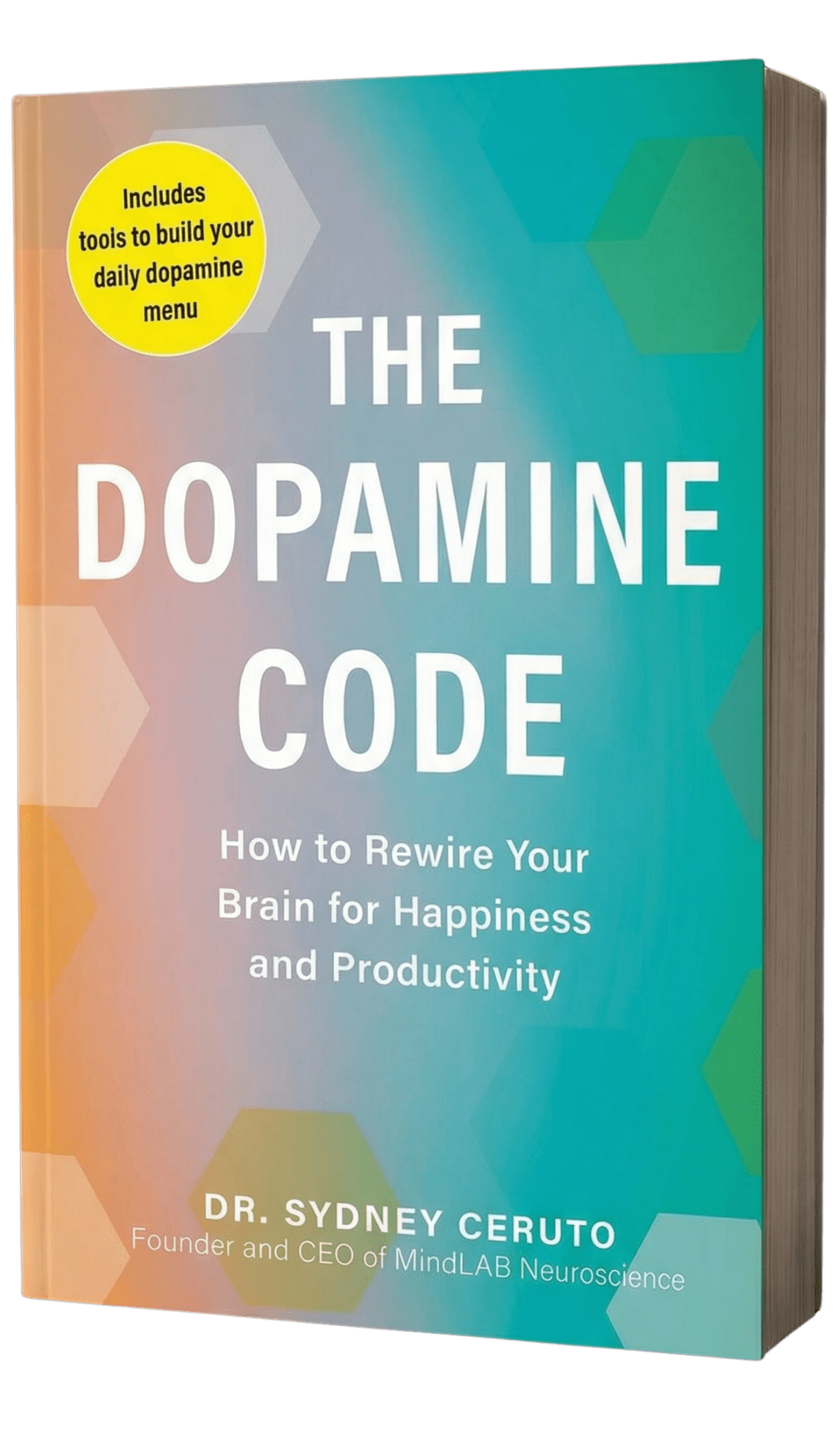
Dr. Sydney Ceruto holds a PhD in Behavioral & Cognitive Neuroscience from NYU and Master’s degrees in Clinical Psychology and Business Psychology from Yale University. She is a Lecturer in the Wharton Executive Development Program at the University of Pennsylvania, an Executive Contributor to Forbes Coaching Council, and an inductee in Marquis Who’s Who in America. Dr. Ceruto founded MindLAB Neuroscience in 2000 and has spent more than 26 years developing and refining her proprietary methodology, Real-Time Neuroplasticity™. She is the author of The Dopamine Code (Simon & Schuster, June 2026).

Frequently Asked Questions

I've been in therapy for years and feel like I'm treading water. What's the difference between seeing a life coach in Beverly Hills and what Dr. Ceruto offers?
My approach operates in real time, during the live moments when neural patterns are actually firing and therefore most amenable to restructuring. Real-Time Neuroplasticity — the brain's ability to rewire itself —™ targets the specific brain circuits that drive behavior, using peer-reviewed neuroscience rather than talk-based frameworks. The difference is not philosophical — it is neurobiological.
Beverly Hills has more practitioners per block than almost anywhere in the country. Why would neuroscience-based work produce different results?
My methodology applies findings from Nature Communications, PNAS, and Frontiers in Neuroscience to restructure the prefrontal and limbic circuits where behavioral patterns are encoded. Different mechanism, different results.
What does Real-Time Neuroplasticity™ actually mean in practice?
It means I intervene during the live moment when a problematic neural pattern is active — not days later in a scheduled appointment. The brain is most plastic when circuits are firing. My embedded partnership model allows me to work with clients during actual high-stakes decisions, conversations, and emotional responses, leveraging the window of neuroplasticity — the brain's ability to rewire itself — that only opens in the real moment. The science creates the results. The relationship creates the trust that makes the science work.
I'm a tech founder who built and sold a company in Silicon Beach and now I have no idea what I want to do next. Is this the right starting point?
Post-exit identity confusion is one of the most common patterns I observe in Silicon Beach founders. The brain's reward circuitry — particularly the orbitofrontal cortex and ventral striatum — becomes calibrated to the specific dopaminergic patterns of building and selling. When that structure disappears, the neural systems governing motivation and purpose require deliberate recalibration. This is precisely the kind of neurological work I specialize in.
I can afford the best. What separates a premium neuroscience engagement from a conventional practitioner?
The separation is methodological, not cosmetic. My approach is built on 26 years of applying peer-reviewed neuroscience to behavioral change, backed by a PhD in Behavioral & Cognitive Neuroscience from NYU. The investment reflects the depth of the partnership — an embedded model that enters the full complexity of your life across every domain — and the durability of the results, which are structural neural changes rather than temporary behavioral shifts.
How long does it take to see measurable results?
Neuroplastic change (related to the brain's ability to rewire itself) is detectable within weeks under the right conditions — but durable restructuring of entrenched patterns typically requires the sustained engagement of a 90-day program. My NeuroSync™ program is designed around the neuroscience of consolidation: the timeline it takes for new neural pathways to stabilize and outcompete older patterns. The pace depends on the individual's neural architecture and the complexity of the presenting pattern.
I live in Bel Air and value my privacy. Can I get the same results virtually?
Yes. My practice is virtual-first by design, and the methodology does not require physical presence. Real-Time Neuroplasticity — the brain's ability to rewire itself —™ operates through the quality of cognitive engagement, not geographic proximity. For Beverly Hills clients who prioritize discretion — particularly in entertainment and public-facing industries — the virtual model provides both effectiveness and privacy.

Ready to Perform at Your Highest Level?

Beverly Hills operates on a margin where perception carries financial consequences and cognitive imprecision is career-ending. The question is not whether you can afford to invest in your neural architecture — it is whether you can afford not to.

Schedule a Strategy Call
MindLAB Neuroscience consultation room
Locations

The Intelligence Brief

Neuroscience-backed analysis on how your brain drives what you feel, what you choose, and what you can’t seem to change — direct from Dr. Ceruto.