Neuroinflammation & Brain Health in Beverly Hills

Dr. Sydney Ceruto provides neuroscience-grounded education on the mechanisms of neuroinflammation, helping Beverly Hills professionals understand and address the silent immune processes degrading their cognitive function.

Book a Strategy Call

Neuroinflammation is among the most consequential and least visible threats to sustained cognitive performance. Unlike a headache or a fever, neuroinflammation produces no obvious signal. It operates below the threshold of conscious awareness, quietly degrading the synaptic architecture, neurotransmitter — a chemical messenger between brain cells — systems, and white matter connectivity that support sharp, flexible thinking. By the time its effects become noticeable as brain fog, reduced mental stamina, or emotional flatness, the underlying process has typically been active for months or years.

What Neuroinflammation Actually Is

Microglia – the brain’s resident immune cells, constituting approximately ten to fifteen percent of all cells in the central nervous system – serve as the brain’s surveillance and maintenance crew. In their homeostatic state, they continuously survey the neural microenvironment, maintain synaptic integrity, support neurogenesis — the creation of new brain cells —, and clear cellular debris. This is essential, beneficial activity.

The problem begins when microglia shift from their homeostatic surveillance role into a chronically activated state. This activation spectrum ranges from protective acute responses – clearing infections, responding to injury – to the sustained, low-grade inflammatory state that drives cognitive decline. When chronically activated, microglia release pro-inflammatory cytokines including TNF-alpha, interleukin-1-beta, and interleukin-6, generate reactive oxygen species, and begin aggressively pruning synapses through complement cascade activation. The same cells that maintain the brain’s infrastructure begin dismantling it.
The Cognitive Consequences

The downstream effects of chronic neuroinflammation on cognition are specific and well-documented. Pro-inflammatory cytokines directly suppress long-term potentiation — the strengthening of neural connections through use — – the cellular mechanism of learning and memory formation. Interleukin-1-beta at elevated concentrations inhibits hippocampal synaptic plasticity — the ability of brain connections to strengthen or weaken —, while TNF-alpha disrupts the glutamatergic signaling essential for working memory and executive function — the brain’s ability to plan, focus, and manage tasks —. Longitudinal studies following thousands of participants have demonstrated that individuals in the highest tertile of circulating interleukin-6 show cognitive function equivalent to being two to three additional years older, with an eighty-one percent increased risk of clinically meaningful cognitive decline over five years.

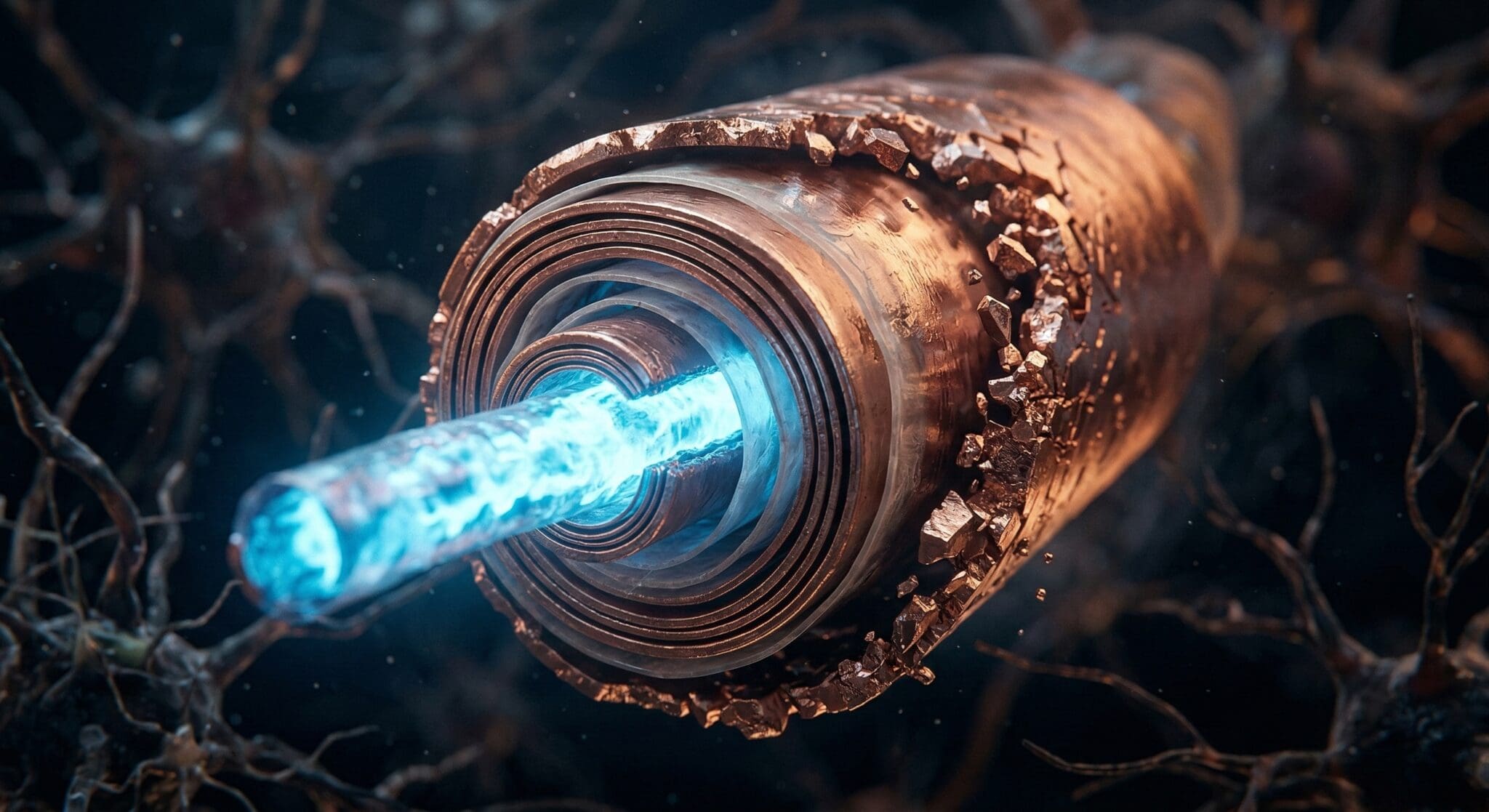
Macro cross-section of neural pathway with copper sheathing forming around blue signal core depicting active brain optimization

Beyond synaptic disruption, neuroinflammation degrades the blood-brain barrier – the selective membrane that protects the brain from peripheral immune signals and toxins. As barrier integrity decreases, peripheral inflammatory molecules that would normally be excluded gain access to the central nervous system, amplifying the inflammatory cascade. White matter integrity — the health of brain wiring connections — deteriorates as inflammatory processes damage the myelin sheaths that insulate neural connections, reducing processing speed and the efficiency of communication between brain regions.

The Triggers Relevant to Modern Professional Life

Chronic psychological stress is one of the most potent activators of neuroinflammatory pathways. Sustained HPA axis — the body’s central stress-response system — activation produces glucocorticoid resistance in microglia, paradoxically making them more – not less – reactive to inflammatory signals. Research has demonstrated that chronic psychosocial stress triggers microglial activation that leads to neuronal dysfunction, with stressed microglial phenotypes accumulating preferentially in the hippocampus and prefrontal cortex — the brain’s executive control center — – the brain regions most critical for professional cognitive performance.

Sleep deprivation is a direct neuroinflammatory trigger. Six weeks of chronic sleep restriction produces approximately a two-fold increase in amyloid-beta plaque deposition through a mechanism dependent on microglial activation. Glymphatic clearance – the brain’s waste removal system, operational primarily during deep sleep – follows circadian rhythms (relating to the body’s 24-hour biological clock), with clearance rates thirty-seven percent higher during the rest phase. When sleep is compromised, this clearance system underperforms, and neuroinflammatory metabolites accumulate.

Post-viral neuroinflammation remains a significant burden. Approximately seven percent of U.S. adults report ongoing effects from prior viral illness, with close to half experiencing persistent cognitive symptoms. The mechanism involves microglial reactivity, reduced white matter connectivity, and inflammatory marker elevation in the cerebrospinal fluid – a neuroinflammatory profile that can persist for months or years after the initial infection resolves.

Air pollution represents a chronic, dose-dependent neuroinflammatory exposure. Fine particulate matter reaches the brain through the olfactory nerve and systemic circulation, crosses the blood-brain barrier, and activates microglia. Research has established that each incremental increase in long-term fine particulate exposure is associated with significantly increased dementia risk, with the mechanism operating through direct microglial activation and neuroinflammatory cytokine release.

The Vagal Anti-Inflammatory Pathway

The body possesses an endogenous neural anti-inflammatory system: the cholinergic anti-inflammatory pathway (related to memory and attention signaling), mediated by the vagus nerve. Vagal efferent fibers release acetylcholine — a chemical messenger for memory and attention — that binds receptors on tissue macrophages and microglia, inhibiting the nuclear transcription factor that drives pro-inflammatory cytokine gene expression. This means that vagal tone – the functional activity of the parasympathetic nervous system — the body’s brake for rest and recovery — – directly modulates neuroinflammatory status. Higher heart rate variability, reflecting stronger vagal function, correlates with lower inflammatory cytokine levels and reduced neuroinflammatory markers.

What Dr. Ceruto’s Approach Provides

Dr. Ceruto’s neuroinflammation work does not duplicate what a neurologist provides. It addresses the preclinical zone: understanding the behavioral and environmental inputs that drive neuroinflammatory load, identifying which inputs are most active in each individual’s life, and applying neuroscience-based strategies to shift the balance. The approach integrates circadian optimization for sleep-dependent glymphatic clearance, vagal tone training to activate the endogenous anti-inflammatory pathway, stress physiology recalibration to reduce glucocorticoid-driven microglial priming, and education on the lifestyle factors that either amplify or suppress neuroinflammatory cascades.

Walnut desk with marble inlay crystal brain sculpture and MindLAB journal in warm California afternoon light in Beverly Hills private study

This is not about eliminating inflammation – acute inflammatory responses are essential and protective. It is about understanding the distinction between beneficial immune surveillance and the chronic, low-grade neuroinflammatory state that silently erodes cognitive capacity, and having the neuroscience framework to act on that understanding.

Why Neuroinflammation & Brain Health Matters in Beverly Hills

Beverly Hills and the Westside professional community face a convergence of neuroinflammatory inputs unlike any other geography. Wildfire smoke, chronic traffic pollution, post-COVID inflammatory burden, elevated chronic stress, sleep deprivation, and the social intensity of a performance-driven professional culture combine to create a neuroinflammatory load that compounds across multiple pathways simultaneously.

Los Angeles County is among the most polluted counties in the United States by number of unhealthy air quality days, logging one hundred thirty-three unhealthy or hazardous air quality days in 2024. The January 2025 Palisades and Eaton wildfires – burning over 37,000 acres and destroying more than 18,000 structures – produced hazardous fine particulate levels at monitoring stations within miles of MindLAB’s office. Critically, standard air quality measurements understate the neurological risk: the particles from structure fires contain lead, asbestos, copper, and plastics that are demonstrably more neurotoxic than typical atmospheric pollution. Data from 1.2 million members of a large Southern California health system showed that each incremental increase in long-term wildfire fine particulate exposure was associated with an eighteen percent increase in dementia risk.

Chronic traffic pollution constitutes a second, ongoing neuroinflammatory exposure. Beverly Hills and the Westside are bisected by two of the nation’s busiest freeways. Residents of Bel Air, Brentwood, and Century City live within blocks of the 405 – one of the highest-traffic corridors in the country. Ambient traffic-related air pollution, particularly black carbon and ultrafine particulate matter from diesel exhaust, is associated with decreased cognitive function, with the effect amplified by systemic inflammation from other sources.

Post-COVID neuroinflammation remains unresolved across the professional community. Research has found that living through the pandemic accelerated brain aging even in those who never contracted the virus, with infection adding additional inflammatory and vascular mechanisms. In a community where cognitive precision is the primary economic asset, the combination of wildfire smoke, traffic pollution, pandemic-era neuroinflammation, chronic stress, and sleep deprivation creates a compounding vulnerability. Cedars-Sinai conducts active research on the precise mechanisms involved – but operates in the clinical sphere for diagnosed disease. Dr. Ceruto addresses the preclinical zone, helping high-capacity professionals understand and reduce their neuroinflammatory load before pathology develops.

Dr. Sydney Ceruto, PhD — Founder, MindLAB Neuroscience

Dr. Sydney Ceruto, PhD — Founder & CEO, MindLAB Neuroscience

Dr. Ceruto holds a PhD in Behavioral & Cognitive Neuroscience from NYU and two Master’s degrees from Yale University. She lectures at the Wharton Executive Development Program at the University of Pennsylvania and has been an Executive Contributor to the Forbes Coaching Council since 2019. Dr. Ceruto is the author of The Dopamine Code (Simon & Schuster, June 2026). She founded MindLAB Neuroscience in 2000 and has spent over 26 years pioneering Real-Time Neuroplasticity™ — a methodology that permanently rewires the neural pathways driving behavior, decisions, and emotional responses.

References

Hablitz, L. M., Vinitsky, H. S., Sun, Q., Staeger, F. F., Bhatt, D. K., Eide, P. K., … & Bhatt, D. K. (2020). Circadian control of brain glymphatic and lymphatic fluid flow. Nature Communications, 11(1), 4411. https://doi.org/10.1038/s41467-020-18115-2

Singh-Manoux, A., Dugravot, A., Brunner, E., Kumari, M., Shipley, M., Elbaz, A., & Kivimaki, M. (2014). Interleukin-6 and C-reactive protein as predictors of cognitive decline in late midlife. Neurology, 83(6), 486-493. https://doi.org/10.1212/WNL.0000000000000665

Bisht, K., Sharma, K., & Tremblay, M. E. (2018). Chronic stress as a risk factor for Alzheimer’s disease: Roles of microglia-mediated synaptic remodeling, inflammation, and oxidative stress. Neurobiology of Stress, 9, 9-21. https://doi.org/10.1016/j.ynstr.2018.05.003

Success Stories

“After the concussion, my processing speed collapsed — I couldn't hold complex information the way I used to, and no one could explain why the fog wasn't lifting. Dr. Ceruto mapped the damaged pathways and built compensatory networks around them. My brain doesn't work the way it did before the injury. It works differently — and in some ways, more efficiently than it ever did.”

Owen P., Founder & CEO Sports Performance Scottsdale, AZ

“Slower processing, foggier recall, decisions that used to be instant taking longer than they should — I'd been accepting it all as inevitable decline for two years. Dr. Ceruto identified the prefrontal efficiency pattern that was degrading and restructured it at the neurological level. The sharpness didn't just come back. It came back faster and more precise than it was a decade ago. Nothing I'd tried before even addressed the right problem.”

Elliott W., General Partner Andreessen Horowitz

“Nothing was wrong — and that's exactly why no one could help me. I wasn't struggling. I wanted to know what my brain was actually capable of if its resting-state architecture was optimized. Dr. Ceruto mapped my default mode network and restructured how it allocates resources between focused and diffuse processing. The cognitive clarity I operate with now isn't something I'd ever experienced before — and I had no idea it was available.”

Nathan S., Senior Investment Strategist Bridgewater Associates

“I'd optimized everything — diet, fitness, sleep — but my cognitive sharpness was quietly declining and no one could explain why. Dr. Ceruto identified the synaptic density patterns that were thinning and built a protocol to reverse the trajectory. This wasn't prevention in theory. My neuroplasticity reserve is measurably stronger now than it was three years ago. Nothing I'd tried before even addressed the right problem.”

Henrique L., Head of Strategic Planning Galp Lisbon, PT

“The moment two priorities competed for bandwidth, my attention collapsed — and I'd convinced myself my brain was fundamentally broken. Dr. Ceruto identified the specific attentional pattern that was causing the collapse and restructured it. My prefrontal cortex wasn't broken. It was misfiring under competing demands. Once that pattern changed, everything I was trying to hold together stopped requiring so much effort.”

Rachel M., Managing Director Boutique Consulting Boston, MA

“I could perform at the highest level professionally and still feel hijacked emotionally in my closest relationships — and no conventional approach had ever explained why those two realities coexisted. Dr. Ceruto identified the limbic imprint — an amygdala encoding from childhood that was running every intimate interaction I had. She didn't help me understand it better. She dismantled it. The reactivity isn't something I regulate anymore. The pattern that generated it is gone.”

Natasha K., Chief of Staff Venture Capital Beverly Hills, CA

Frequently Asked Questions About Neuroinflammation & Brain Health in Beverly Hills

What is neuroinflammation work at MindLAB Neuroscience?

Dr. Ceruto provides neuroscience-based education on the immune processes operating within the brain that, when chronically activated, degrade cognitive function. The approach identifies the specific inputs driving neuroinflammatory load in each individual’s life – stress, sleep disruption, environmental exposures, circadian (relating to the body's 24-hour biological clock) misalignment – and applies evidence-based strategies to shift the balance toward the brain’s homeostatic, neuroprotective state.

How does neuroinflammation affect thinking and performance?

Chronic neuroinflammation suppresses the synaptic plasticity — the ability of brain connections to strengthen or weaken — mechanisms that underlie learning and memory, degrades white matter integrity — the health of brain wiring connections — that determines processing speed, compromises the blood-brain barrier that protects the brain from peripheral inflammatory signals, and disrupts neurotransmitter — a chemical messenger between brain cells — systems governing mood and executive function. Longitudinal research shows that individuals with elevated inflammatory markers experience cognitive decline equivalent to two to three additional years of aging.

Who is at risk for neuroinflammation-driven cognitive changes?

Individuals carrying sustained psychological stress, those with chronically disrupted sleep, people living in high-pollution environments, anyone with a history of viral illness that produced lingering cognitive symptoms, and those whose lifestyle patterns create multiple simultaneous neuroinflammatory inputs. The risk is compounded when several of these factors operate together – a pattern common among professionals carrying heavy cognitive loads in urban environments.

How does someone start this work with Dr. Ceruto?

The first step is a Strategy Call – a phone-only conversation with Dr. Ceruto costing $250. The call assesses the individual’s neuroinflammatory risk profile, explores relevant neuroscience, and determines whether this approach is the right fit. Program structure and investment details are discussed during the Strategy Call.

What kind of results can someone expect and over what timeframe?

Sleep optimization and vagal tone — a measure of the body's ability to calm itself — training can begin shifting neuroinflammatory markers within the first few weeks. Circadian recalibration (relating to the body's 24-hour biological clock) and stress physiology changes typically produce noticeable improvements in cognitive clarity and mental stamina over one to three months. The long-term neuroprotective benefits of sustained neuroinflammatory load reduction accumulate over months and years, with the greatest value coming from consistent practice rather than short-term interventions.

Take the First Step Toward Better Brain Health

The Strategy Call is a focused conversation with Dr. Ceruto that maps the specific neural mechanisms driving your concerns and determines the right path forward.

Book a Strategy Call
MindLAB Neuroscience consultation room
Locations

The Intelligence Brief

Neuroscience-backed analysis on how your brain drives what you feel, what you choose, and what you can’t seem to change — direct from Dr. Ceruto.