Performance Management in Beverly Hills

Sustained performance is not a discipline problem. It is a circuit problem — governed by dopaminergic reward pathways and prefrontal regulatory systems that determine whether you maintain output or quietly erode under pressure.

When performance declines despite ability, knowledge, and motivation, the breakdown is neurological — not motivational. MindLAB Neuroscience addresses the specific brain circuits that govern sustained output, goal persistence, and performance under high-stakes conditions.

Book a Strategy Call

Key Points

  1. Performance plateaus reflect neural efficiency — the brain automates successful patterns until they become rigid, making adaptation to new demands increasingly difficult.
  2. The reward prediction system adjusts expectations based on past performance, meaning sustained success can paradoxically reduce the dopaminergic drive needed for continued improvement.
  3. Cognitive load management determines performance ceilings — the brain's executive function operates within finite resource constraints that most performance systems ignore.
  4. Under evaluation pressure, the prefrontal cortex shifts resources from creative problem-solving to self-monitoring — the neurological basis of choking under scrutiny.
  5. Sustainable peak performance requires optimizing the neural conditions that support prefrontal function, not extracting more output from circuits already at capacity.

The Performance Erosion Pattern

“The drive that once felt automatic now requires conscious effort. Goals that excited you six months ago feel abstract, emptied of the urgency they once carried. This is not a motivation problem — it is what happens when the dopaminergic circuits that generate drive have been recalibrated by experience.”

You have achieved at the highest levels. The track record is real. Not quite burnout, not quite disengagement, but a persistent gap between what you are capable of and what you are actually producing.

This pattern is immediately recognizable to high performers. It is deeply frustrating because it resists the solutions that work for everything else. You have tried restructuring your schedule. You have tried accountability systems, productivity frameworks, and strategic advisors. Some produced short-term improvements. None of them held. None addressed the biological machinery running underneath every decision, every motivation, and every sustained effort you make.

The professionals who arrive at this point share a specific profile: they know exactly what they should be doing, and they are not doing it consistently. This is not a knowledge gap. It is not a willpower deficit. It is the behavioral signature of a brain whose performance architecture has been altered by years of sustained high-stakes operation. When those circuits are disrupted, output declines regardless of how much the individual wants to succeed.

Research has identified the precise mechanism by which high-stakes pressure either supports or destroys performance. The ventromedial prefrontal cortex — brain’s value-assessment region — normally dampens excessive arousal at the moment of execution. It converts high-stakes situations into performance-ready states.

When this dampening function fails, the reward system overreacts to the magnitude of the stakes. Arousal responses flood executive function at exactly the moment it is most needed. Research confirms that the strength of this regulatory mechanism is a major driver of individual performance differences. It explains the decline that paradoxically strikes during the highest-stakes moments. It is also why baseline output gradually erodes despite unchanged ability and unchanged ambition.

A separate line of research established that behavioral resilience under sustained stress is encoded in specific dopamine activity patterns within the brain’s reward center. Resilient individuals show greater dopamine activity oriented toward engagement and approach. In those who struggle, the reward system reorients from approach to avoidance. This is a causal relationship — not merely a correlation. Stimulating reward-center dopamine during stress promotes resilience and reorganizes behavior toward sustained engagement.

My clients describe this as the moment they stopped being excited by their work and started being relieved when a project ended. That shift reflects a measurable reorientation of the neural circuits governing whether you sustain output, maintain goal commitment, and perform under pressure. Real-Time Neuroplasticity — brain’s ability to rewire — is not a performance framework. It is a direct intervention in the brain architecture that governs performance.

The approach targets three interconnected systems. First, the prefrontal regulatory pathway that determines whether high-stakes situations produce peak performance or collapse. Second, the reward-encoding circuits that control whether anticipation of a payoff fuels execution or generates disruptive arousal. Third, the dopamine orientation patterns that determine whether sustained pressure produces engagement or gradual withdrawal.

The challenge may involve sustaining output during a critical period, performing under specific high-stakes conditions, or reversing a measurable decline in a defined area. Whatever the domain — organizational leadership, creative output, relationship management, or strategic execution — the process begins by mapping which circuits are underperforming and under what conditions. Research confirms that structured goal engagement produces measurable neuroplastic change in the frontal pole cortex — region governing long-range planning.
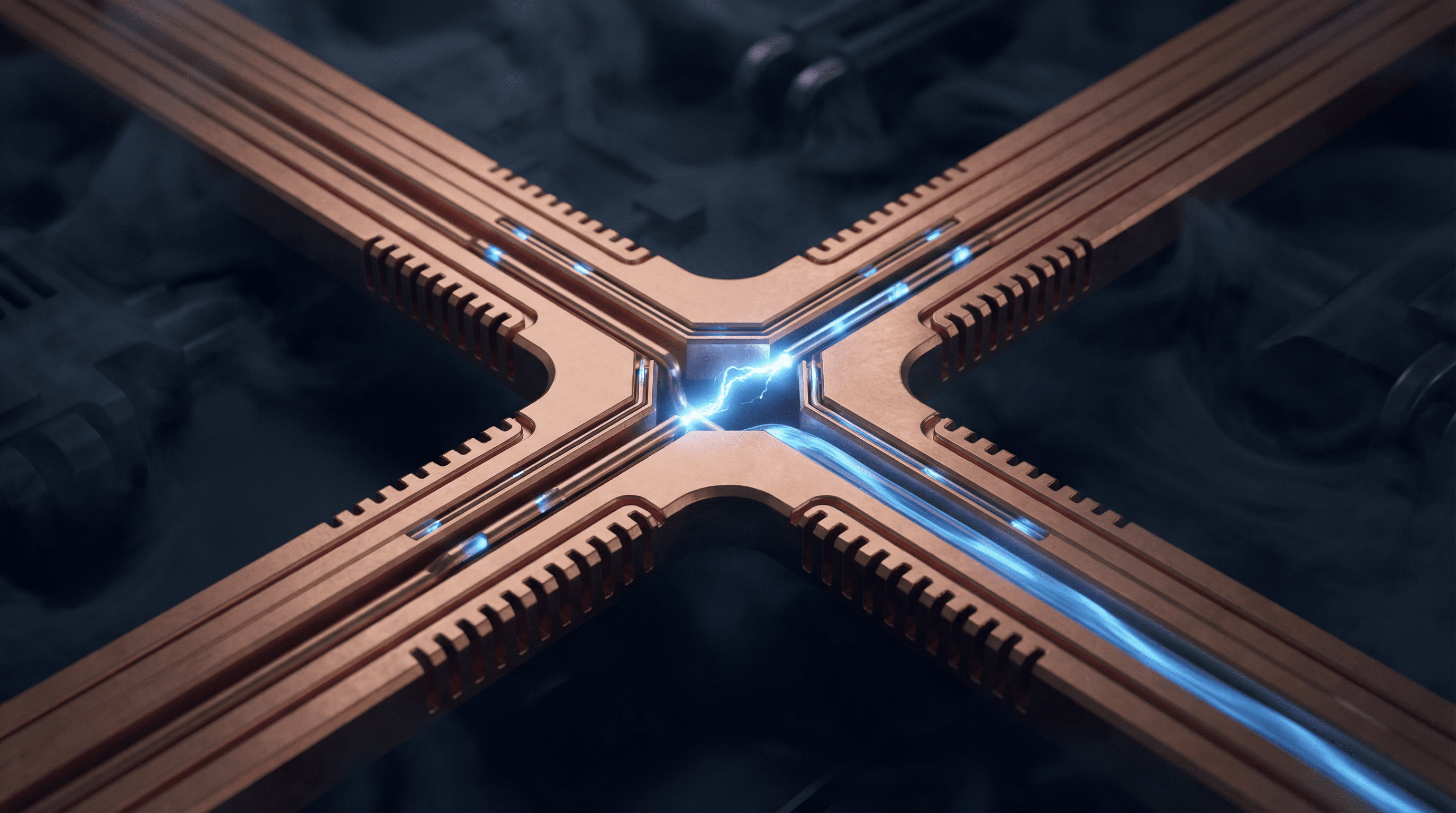
Executive coaching and leadership development — precision copper neural switching junction directing strategic decision pathways

Dr. Ceruto then designs a structured protocol targeting your specific neural profile. Sessions progress through documented phases: establishing your neural baseline, restructuring the circuits governing performance under pressure, rebuilding dopamine orientation toward sustained engagement, and consolidating these changes into permanent architecture.

Each phase builds on measurable neural change, not subjective experience. The goal is not to teach you new strategies for performing better. It is to permanently reorganize the brain systems that determine whether you perform at your actual capacity — consistently and under pressure — across the full duration of your professional demands.

References

Chihiro Hosoda, Satoshi Tsujimoto, Masaru Tatekawa, Manabu Honda, Rieko Osu, Takashi Hanakawa. Frontal Pole Cortex Neuroplasticity and Goal-Directed Persistence. *Communications Biology*. [https://doi.org/10.1038/s42003-020-0930-4](https://doi.org/10.1038/s42003-020-0930-4)

Lindsay Willmore, Courtney Cameron, John Yang, Ilana B. Witten, Annegret L. Falkner. Dopaminergic Signatures of Resilience: NAc DA Differentiates Sustained Performers from Non-Performers. *Nature*. [https://doi.org/10.1038/s41586-022-05328-2](https://doi.org/10.1038/s41586-022-05328-2)

Andrew Westbrook, Michael J. Frank, Roshan Cools. Dopamine and the Cognitive Effort Cost-Benefit System: Striatal Control of Performance Willingness. *Trends in Cognitive Sciences*. [https://doi.org/10.1016/j.tics.2021.04.007](https://doi.org/10.1016/j.tics.2021.04.007)

Andrew Westbrook, Todd S. Braver (2016). Dopamine Does Double Duty: The Cognitive Motivation Mechanism. *Neuron*. [https://doi.org/10.1016/j.neuron.2015.12.029](https://doi.org/10.1016/j.neuron.2015.12.029)

The Neural Architecture of Sustained High Performance

Performance is not a fixed capacity. It is the dynamic output of neural systems whose effectiveness fluctuates based on measurable biological variables — and understanding those variables transforms performance management from a behavioral discipline into a neuroscience-grounded practice.

The prefrontal cortex is the primary performance architecture. Working memory capacity, cognitive flexibility, and inhibitory control — the three core components of executive function — collectively determine the quality of strategic thinking, decision-making, and adaptive behavior that a professional can produce at any given moment. These capacities are not static. They fluctuate throughout the day based on cortisol levels, sleep quality, cumulative cognitive load, emotional processing demands, and the depletion pattern of neurotransmitter systems — particularly dopamine and norepinephrine — that modulate prefrontal engagement.

The dopamine system is central to performance architecture in ways that extend far beyond motivation. Dopamine modulates the signal-to-noise ratio in the prefrontal cortex — the precision with which the brain distinguishes relevant information from irrelevant information during complex cognitive tasks. When dopamine levels are optimally calibrated, the prefrontal cortex operates with high signal clarity: strategic priorities are sharp, distractions are suppressed, and working memory holds the right variables with the right emphasis. When dopamine is depleted or dysregulated, the signal-to-noise ratio degrades: everything seems equally important or equally unimportant, strategic priorities blur, and the professional experiences the muddy thinking that characterizes the afternoon slump or the post-crisis cognitive fog.

The locus coeruleus-norepinephrine system provides the arousal modulation that determines whether the brain is operating in focused mode, scanning mode, or disengaged mode. Performance requires the right arousal state for the task at hand: high focus for analytical work, broader scanning for creative and strategic tasks, and the ability to shift between states as the professional’s role demands throughout the day. When this system is dysregulated — by chronic stress, sleep disruption, or sustained cognitive demand — the transitions between states become sluggish, and the professional gets stuck in one mode: hyperalert and unable to think broadly, or diffuse and unable to concentrate, or oscillating unpredictably between states that do not match the cognitive demand of the current task.

The interaction between these systems creates the performance profile that each professional operates within. Understanding that profile — which systems are strong, which are limiting, how they interact under the specific conditions of the professional’s role — is the foundation of performance optimization that produces lasting rather than temporary results.

Why Traditional Performance Coaching Hits Diminishing Returns

Standard performance coaching optimizes behavior: habits, routines, time management, energy management, goal-setting, accountability. For professionals operating well within their neural capacity, behavioral optimization produces significant gains. But for professionals already operating near their biological ceiling — which describes most of the high-performers who seek coaching — behavioral approaches hit diminishing returns because the ceiling is not behavioral. It is architectural.

The professional who has already optimized their schedule, built strong habits, maintained physical fitness, and developed effective routines has extracted most of the available behavioral performance gains. The inconsistency that remains — the days when performance drops despite identical preparation, the cognitive fog that arrives without clear cause, the inability to sustain peak function through extended high-stakes periods — reflects the limitations of the neural architecture itself, not the behavioral strategies layered on top of it.

Peak performance frameworks face a specific limitation. They identify the conditions under which the professional performs best and attempt to replicate those conditions consistently. But the conditions that produce peak performance are partly biological: optimal dopamine levels, well-calibrated norepinephrine arousal, rested prefrontal architecture, resolved cortisol from the previous day’s stress. These biological conditions cannot be fully controlled through behavioral means. The professional can optimize sleep, nutrition, and exercise — all of which support the biological conditions — but cannot directly control the dopaminergic signal-to-noise ratio or the norepinephrine arousal curve through behavioral strategies alone. The biological foundation of peak performance requires intervention at the biological level.

How Neural Performance Architecture Is Optimized

My methodology targets the neural systems that determine performance capacity directly, building the biological infrastructure from which consistent high performance emerges. The work does not replace behavioral optimization — it builds the neural foundation that behavioral optimization alone cannot reach.

Walnut desk with marble inlay crystal brain sculpture and MindLAB journal in warm California afternoon light in Beverly Hills private study

The prefrontal cortex’s engagement capacity is developed through targeted cognitive demands that progressively build the circuits’ tolerance for sustained high-level operation. Research on prefrontal plasticity demonstrates that the neural changes produced by targeted cognitive engagement are task-transferable — the circuits that strengthen during focused work carry over into completely unrelated tasks. This transferability is the neural mechanism underlying the core promise of performance optimization: that targeted work on the specific prefrontal circuits limiting your performance produces gains that generalize across the diverse demands of your role.

The dopamine system’s signal-to-noise modulation is recalibrated through interventions that target the prefrontal dopaminergic pathways. The goal is not to increase dopamine — pharmaceutical approaches that simply elevate dopamine produce temporary performance gains followed by downregulation and dependency. The goal is to optimize the dopamine system’s precision: the accuracy with which it enhances relevant signals and suppresses irrelevant ones in the prefrontal cortex. When precision is restored, the subjective experience is clarity — the sense that strategic priorities are sharp and cognitive resources are flowing toward the right targets without conscious effort.

The locus coeruleus-norepinephrine system’s arousal modulation is developed through targeted engagement that builds the system’s flexibility — the speed and accuracy with which it can shift the brain between focused, scanning, and recovery states as the professional’s role demands. Many high performers have locked their arousal system in a chronic high-alert state that produces sustained focused performance at the cost of strategic breadth, creative thinking, and recovery capacity. Restoring arousal flexibility builds a performance architecture that can access the full range of cognitive states rather than being trapped in one mode.

What This Looks Like in Practice

The Strategy Call maps your specific performance architecture: which neural systems are limiting your current ceiling, how they interact under the demands of your role, and where the optimization priorities lie. The assessment is precise because performance limitations have specific neural signatures. The professional whose performance degrades under sustained load has a different architectural pattern than the one who performs inconsistently across contexts or the one who cannot recover peak function after disruption.

The work engages the identified systems under conditions calibrated to your specific performance demands. Progress manifests as measurable changes in the consistency, sustainability, and ceiling of your cognitive performance. The days when everything clicks and the days when nothing does begin to converge, not because the bad days improve through effort but because the neural architecture supporting your performance operates at a higher and more consistent baseline. The ceiling rises not through working harder but through operating from a more efficient biological foundation — which is the only performance gain that does not eventually extract a compensatory cost.

For deeper context, explore common mistakes in performance management.

Marker Traditional Approach Neuroscience-Based Approach Why It Matters
Focus KPI frameworks, performance reviews, and competency-based development plans Optimizing the neural systems governing cognitive resource allocation, reward processing, and sustained executive function
Method Performance management coaching, goal cascading, and behavioral incentive structures Targeted intervention in the prefrontal and dopaminergic circuits that determine performance capacity and consistency
Duration of Change System-dependent; gains plateau or regress when management attention or incentives shift Permanent optimization of the neural architecture supporting performance capacity under sustained professional demands

Why Performance Management Matters in Beverly Hills

Beverly Hills operates on a single metric: output. Along the Wilshire Boulevard corridor and through Century City’s professional towers, the culture does not reward effort, process, or intention. It rewards results. These are the currencies that determine professional standing in this market.

This results-oriented culture creates a specific neurological environment. Professionals here have been running their brains at maximum output for years or decades, and the neural cost accumulates invisibly. The entertainment industry’s post-2023 restructuring concentrated decision authority into fewer senior roles while destabilizing the performance metrics those decisions are measured against. The gap between what these roles demand and what the brain can sustain without recalibration has widened structurally.

The Silicon Beach corridor adds a distinct population: founders and technology executives who understand performance optimization intuitively but have never applied the same rigor to their own cognitive architecture. They track every metric their company generates while running the most important variable in the organization on factory defaults.

Across Bel Air, Brentwood, and West Hollywood, professionals in luxury real estate, entertainment law, and talent management operate in long-cycle, high-visibility environments. Sustained performance over months and years matters more than any single moment. The neural demands of maintaining output quality across these extended cycles require performance architecture that most conventional approaches cannot address.

Array

Performance management in Beverly Hills’ entertainment ecosystem operates under a constraint unique to creative industries: the relationship between effort and outcome is profoundly nonlinear. An agent who works twice as hard does not book twice as many clients. A producer who prepares twice as thoroughly does not produce twice as many hits. The brain’s performance evaluation circuits, which evolved to process linear effort-reward relationships, generate frustration, self-doubt, and strategy abandonment when applied to creative and entertainment outcomes that follow power-law rather than linear distributions.

The wealth management performance context in Beverly Hills involves managing client expectations across market cycles — sustaining confidence and relational trust during drawdowns while maintaining appropriate risk management during bull markets. The neural architecture supporting this requires sustained emotional regulation under conditions where the client’s emotional state directly opposes the advisor’s professional judgment. Performance in this context is measured not by returns alone but by the advisory relationship’s survival through conditions that test it — a neural performance variable that no quantitative metric captures.

Dr. Sydney Ceruto, PhD — Founder, MindLAB Neuroscience

Dr. Sydney Ceruto, PhD — Founder & CEO, MindLAB Neuroscience

Dr. Ceruto holds a PhD in Behavioral & Cognitive Neuroscience from NYU and two Master’s degrees from Yale University. She lectures at the Wharton Executive Development Program at the University of Pennsylvania and has been an Executive Contributor to the Forbes Coaching Council since 2019. Dr. Ceruto is the author of The Dopamine Code (Simon & Schuster, June 2026). She founded MindLAB Neuroscience in 2000 and has spent over 26 years pioneering Real-Time Neuroplasticity™ — a methodology that permanently rewires the neural pathways driving behavior, decisions, and emotional responses.

References

Yerkes, R. M., & Dodson, J. D. (1908). The relation of strength of stimulus to rapidity of habit-formation. Journal of Comparative Neurology and Psychology, 18(5), 459–482. https://doi.org/10.1002/cne.920180503

Arnsten, A. F. T. (2009). Stress signalling pathways that impair prefrontal cortex structure and function. Nature Reviews Neuroscience, 10(6), 410–422. https://doi.org/10.1038/nrn2648

Schultz, W. (1998). Predictive reward signal of dopamine neurons. Journal of Neurophysiology, 80(1), 1–27. https://doi.org/10.1152/jn.1998.80.1.1

Mobbs, D., Hassabis, D., Seymour, B., Marchant, J. L., Weiskopf, N., Dolan, R. J., & Frith, C. D. (2009). Choking on the money: Reward-based performance decrements are associated with midbrain activity. Psychological Science, 20(8), 955–962. https://doi.org/10.1111/j.1467-9280.2009.02399.x

Success Stories

“My body had simply stopped knowing when to sleep. Crossing time zones weekly for over two years had broken something fundamental, and every protocol, supplement, and device I tried couldn't hold longer than a few days. Dr. Ceruto identified the disruption at the level of my suprachiasmatic nucleus and recalibrated the signaling pattern driving the dysfunction. Within weeks, my circadian rhythm locked back in. I sleep now. Consistently. Regardless of where I land.”

Jonathan K. — Diplomat Geneva, CH

“After the concussion, my processing speed collapsed — I couldn't hold complex information the way I used to, and no one could explain why the fog wasn't lifting. Dr. Ceruto mapped the damaged pathways and built compensatory networks around them. My brain doesn't work the way it did before the injury. It works differently — and in some ways, more efficiently than it ever did.”

Owen P. — Orthopedic Surgeon Scottsdale, AZ

“After years of burnout, the dopamine optimization work helped me finally understand and balance my dopamine levels in a way nothing else had. The personalized plan made all the difference — I’m now motivated, focused, and performing at my best without the crashes that used to follow every productive stretch. The science behind this approach is real and the results are measurable. It gave me a daily framework I still rely on to stay consistent, sharp, and fully in control of my energy.”

Larz D. — Tech Founder Palo Alto, CA

“Dr. Ceruto's methodology took me from a founder on the verge of quitting to a leader capable of building the team and culture that drove Liquid IV's success. Her ability to restructure how I make decisions and lead under pressure changed the trajectory of the entire company. I don't say that lightly. The company I built after working with her was fundamentally different from the company I was building before — because I was fundamentally different.”

Brandin C. — Tech Founder Los Angeles, CA

“I struggled with anxiety since I was 13. I simply could not control my thoughts, and no medication or therapy was helping. Since working with Sydney, I’ve gained a whole new perspective on what anxiety actually is and — most importantly — how to control it. Her approach is unlike anything I’ve ever experienced, a must for anyone who wants to understand what drives their actions and emotions. At 28, I’m finally in a happy place with solid emotional management and real coping skills.”

Lydia G. — Gallerist Paris, FR

“I struggled with debilitating anxiety for years, trying countless therapies and medications with little success. Finding Dr. Ceruto and her neuroscience-based approach was truly life-changing. From our very first session, her deep knowledge of brain science and how it applies to anxiety gave me real hope. What sets her apart is that perfect blend of expertise and compassion — she genuinely cared about my progress and responded quickly even outside of our scheduled sessions. I can now enjoy social situations and excel at work.”

Brian T. — Architect Chicago, IL

Frequently Asked Questions About Performance Management in Beverly Hills

Why does my performance decline even though my ability and motivation haven't changed?

Sustained high-stakes operation alters the neural circuits that govern performance. Your dopamine system shifts from an engagement pattern to a relief pattern. The prefrontal cortex — your brain's executive control center — begins prioritizing escape over approach. This produces gradual output erosion despite unchanged knowledge and ambition.

What is the neuroscience behind choking under pressure?

Research published in NeuroImage demonstrated that the ventromedial prefrontal cortex — the brain's value-assessment region — suppresses reward-driven arousal during performance execution. When this vmPFC-to-amygdala — the brain's threat-detection center — pathway fails, the brain's reward system over-amplifies the stakes while arousal responses disrupt executive function — the brain's planning and focus ability —. This single connectivity pathway explains over 57 percent of individual performance variance. It is a circuit calibration problem, not a confidence problem.

How is neuroscience-based performance management different from working with a performance strategist?

Performance strategists work at the level of behavior, process, and accountability — all of which engage the prefrontal cortex — the brain's executive control center —'s deliberate systems. MindLAB addresses the neural circuits underneath those systems: the dopaminergic (related to the brain's dopamine system) pathways governing sustained motivation, the vmPFC regulatory circuits controlling performance under pressure, and the frontal pole architecture that determines goal persistence. Dr. Ceruto restructures the hardware that all behavioral strategies run on.

Is this program available virtually?

Yes. Dr. Ceruto works with professionals nationwide and internationally through virtual sessions. The neural circuits governing performance — reward pathways, regulatory systems, goal-persistence architecture — respond to Real-Time Neuroplasticity — brain's ability to rewire itself — protocols regardless of physical location. Many Beverly Hills-based professionals conduct sessions virtually given the demands of their schedules.

What does the Strategy Call involve?

The Strategy Call is a precision assessment of your performance patterns and the specific neural circuits driving the gap between your capacity and your output. Dr. Ceruto evaluates which brain systems are underperforming, under what conditions they degrade, and what a structured protocol would target. It is a strategy conversation about your neural architecture, not a sales call.

Can sustained peak performance actually be built, or does everyone eventually decline?

Research published in Communications Biology demonstrated that structured interventions produce measurable neuroplasticity in the frontal pole cortex — the brain region governing goal persistence — converting 86 percent of predicted non-achievers into achievers. This occurs through documented increases in grey matter volume — the amount of brain processing tissue — and white matter connectivity. Performance decline is not inevitable. It is the result of specific neural circuit degradation that can be identified and reversed.

How long does it take to see measurable changes in performance?

Neural reorganization follows biological timelines that depend on the specific circuits being restructured and the complexity of the patterns involved. Dr. Ceruto does not promise results within a fixed timeframe. What the research demonstrates is that targeted neuroplastic (related to the brain's ability to rewire itself) interventions produce durable structural changes in the brain — changes that are permanent because the architecture itself has been rebuilt, not because a behavioral habit has been temporarily reinforced.

Why do high performers sometimes experience sudden and unexplained performance drops?

Sudden performance drops in high performers typically reflect one of two neural mechanisms: accumulated allostatic load reaching a threshold where prefrontal function degrades nonlinearly, or the brain's reward prediction system recalibrating expectations based on sustained success — reducing the dopaminergic drive that previously fueled high output.

Both mechanisms produce the same puzzling pattern: nothing externally has changed, yet performance has dropped. The individual has not lost skill, motivation, or commitment. The neural infrastructure supporting their performance has shifted — either through depletion or recalibration — and the output reflects the changed architecture.

How does this approach help sustain peak performance over years rather than cycles?

Sustained peak performance requires neural architecture that supports recovery, not just output. Most high performers optimize for maximum production without attending to the biological systems that maintain production capacity — sleep architecture, stress-response calibration, and prefrontal resource management.

Dr. Ceruto's approach optimizes both dimensions: the circuits that produce peak performance and the circuits that maintain the capacity for peak performance over time. This produces sustainable high performance rather than the boom-bust cycles that characterize individuals whose output exceeds their neural recovery capacity.

Can this approach help me raise my performance ceiling, not just maintain current levels?

Yes. Every individual has a performance ceiling set by their current neural architecture — the capacity of prefrontal circuits, the efficiency of cognitive resource allocation, and the accuracy of reward and risk processing. These are biological parameters, not fixed traits.

Dr. Ceruto's methodology identifies the specific neural constraints setting your current ceiling and targets them for expansion. This might involve strengthening prefrontal endurance, recalibrating the reward system's sensitivity, or reducing the cognitive resources consumed by low-grade threat processing. The result is a measurably higher ceiling — more capacity for the cognitive demands that determine performance at your level.

Also available in: Miami · Wall Street · Midtown Manhattan · Lisbon

The Circuitry Behind Every Result You Deliver in Beverly Hills

From Century City deal rooms to Silicon Beach boardrooms, sustained performance is a neural architecture problem — and the architecture can be permanently rebuilt. Dr. Ceruto maps your performance baseline in one conversation.

Book a Strategy Call
MindLAB Neuroscience consultation room

The Dopamine Code

Decode Your Drive

Why Your Brain Rewards the Wrong Things

Your brain's reward system runs every decision, every craving, every crash — and it was never designed for the life you're living. The Dopamine Code is Dr. Ceruto's framework for understanding the architecture behind what drives you, drains you, and keeps you locked in patterns that willpower alone will never fix.

Published by Simon & Schuster, The Dopamine Code is Dr. Ceruto's framework for building your own Dopamine Menu — a personalized system for motivation, focus, and enduring life satisfaction.

Order Now

Ships June 9, 2026

The Dopamine Code by Dr. Sydney Ceruto — Decode Your Drive
Locations

The Intelligence Brief

Neuroscience-backed analysis on how your brain drives what you feel, what you choose, and what you can’t seem to change — direct from Dr. Ceruto.