





| Marker | Traditional Approach | Neuroscience-Based Approach | Why It Matters |
|---|---|---|---|
Why Personal Identity Reconstruction Matters in Beverly Hills
Identity in Beverly Hills: When the Curated Version Replaces the Real One
Beverly Hills has a unique relationship with identity construction. The city’s culture does not merely influence how people present themselves. It actively shapes the neural circuitry that determines how people see themselves. When visible success, aesthetic perfection, and social positioning become the primary inputs the brain uses to maintain a self-concept, the identity that forms is structurally dependent on those external signals. Remove them — or simply stop believing in them — and the architecture collapses.
The entertainment industry creates a particularly intense version of this pattern. The actor or producer or director whose identity was organized around a specific creative vision encounters identity disruption when that vision no longer aligns with what the market rewards. The person who spent a decade building a body of work in independent film and now navigates a streaming landscape that values different metrics is not simply adapting to a new market. Their brain is processing the devaluation of the thing that was central to their self-concept. The skill remains. The identity organized around that skill has lost its reinforcing environment.
Rodeo Drive and the broader luxury culture along Wilshire and Canon Drive create ambient identity pressure that operates below conscious awareness. The brain’s comparison circuitry processes visible wealth signals continuously — the car, the bag, the restaurant reservation, the neighborhood address — whether the person consciously values those metrics or not. For someone already uncertain about who they are, this constant comparison data does not clarify. It introduces noise into a system that needs quiet to rebuild. The brain defaults to measuring itself against the most available external standard, and in Beverly Hills, that standard is relentlessly visible.
The post-divorce identity crisis is particularly acute in communities like Beverly Hills, Bel Air, and Holmby Hills where social identity is often organized around a couple unit. The social invitations, the school community, the neighborhood network — all of it was structured around a partnership. When that partnership ends, the social infrastructure that maintained half of the identity architecture disappears simultaneously. The person who was known as part of a couple is now known as something else, and the brain has not yet processed what that something else is. The external world moves faster than the internal reconstruction can keep pace with.
The wellness and self-optimization culture in greater Los Angeles adds a layer of complexity to identity reconstruction. The person who has already pursued every available pathway — meditation retreats, plant medicine ceremonies, breathwork, somatic work, intensive journaling practices — arrives at identity reconstruction with a specific frustration. They understand themselves conceptually. They can articulate the patterns with remarkable precision. But the identity circuits are not responding to conceptual understanding. The gap between insight and change persists because the self-referencing system operates at a level that narrative and experiential approaches do not consistently reach.
West Hollywood’s creative community faces identity reconstruction through a different lens. The writer, artist, or musician whose identity was formed around a specific creative output encounters disruption when that relationship changes. A creative block. A shift in medium. The realization that the work no longer reflects who they are becoming. In a community that values creative identity as a primary social currency, this shift carries weight beyond the professional domain. The person is not simply changing direction. They are losing the social recognition that maintained their sense of self.
Dr. Ceruto works with people across Beverly Hills and the greater Los Angeles area who have reached the point where the curated version of themselves can no longer sustain the real one. Real-Time Neuroplasticity™ targets the self-referencing circuits directly — bypassing the conceptual understanding that these individuals typically already possess and reaching the neural architecture where identity is actually encoded. A Strategy Call is a phone conversation — $250 — the starting point for mapping what the brain built, what stopped working, and what genuine reconstruction looks like.


Dr. Sydney Ceruto, PhD — Founder & CEO, MindLAB Neuroscience
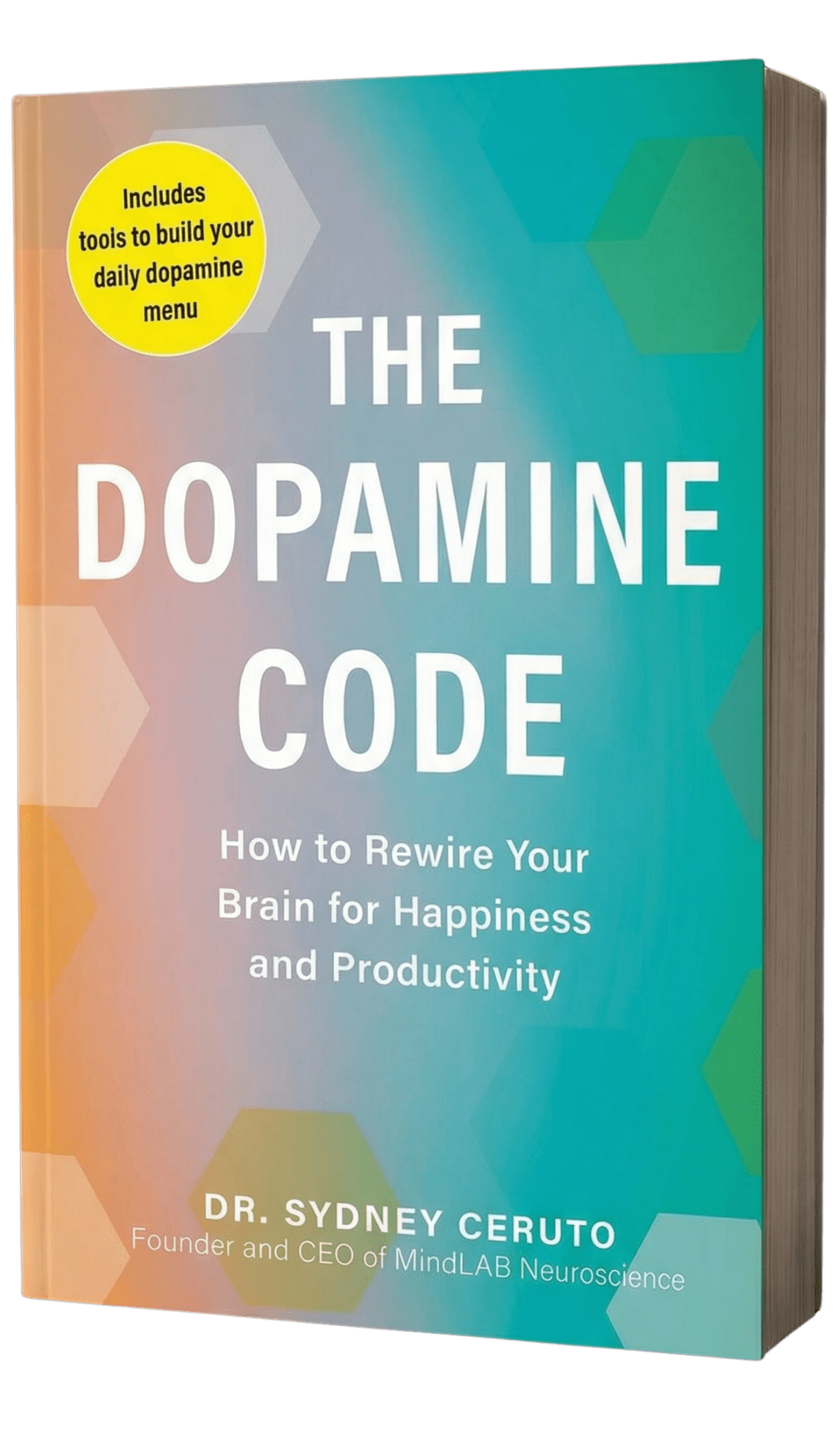
Dr. Ceruto holds a PhD in Behavioral & Cognitive Neuroscience from NYU and two Master’s degrees from Yale University. She lectures at the Wharton Executive Development Program at the University of Pennsylvania and has been an Executive Contributor to the Forbes Coaching Council since 2019. Dr. Ceruto is the author of The Dopamine Code (Simon & Schuster, June 2026). She founded MindLAB Neuroscience in 2000 and has spent over 26 years pioneering Real-Time Neuroplasticity™ — a methodology that permanently rewires the neural pathways driving behavior, decisions, and emotional responses.
Success Stories
“The way I was processing decisions under pressure had a cost I couldn't see — until Dr. Ceruto mapped it. She identified the neural pattern driving my reactivity in high-stakes situations and restructured it at the root. I don't just perform better under pressure now. I think differently under pressure. That's not something any executive coach or performance program ever came close to delivering.”

Identifying details withheld to protect client confidentiality.
All outcomes represent genuine engagements with Dr. Ceruto.
Frequently Asked Questions About Personal Identity Reconstruction in Beverly Hills
Also available in: Miami · Wall Street · Midtown Manhattan · Lisbon
Take the First Step
The Strategy Call is a focused conversation with Dr. Ceruto that maps the specific neural mechanisms driving your concerns and determines the right path forward.
Book a Strategy Call
The Dopamine Code
Decode Your Drive
Why Your Brain Rewards the Wrong Things
Your brain's reward system runs every decision, every craving, every crash — and it was never designed for the life you're living. The Dopamine Code is Dr. Ceruto's framework for understanding the architecture behind what drives you, drains you, and keeps you locked in patterns that willpower alone will never fix.
Published by Simon & Schuster, The Dopamine Code is Dr. Ceruto's framework for building your own Dopamine Menu — a personalized system for motivation, focus, and enduring life satisfaction.
Order NowShips June 9, 2026