Substance Use Patterns in Beverly Hills

Beverly Hills has the best resources and the highest relapse rates. The gap between them is the neural architecture no program has reached.

You are not drinking too much because you lack willpower. You are not unable to stop because something is morally wrong with you. Your brain's reward system has been structurally reorganized — and that reorganization is running the show every time you tell yourself this will be the last one.

Substances do not create dependency by accident. They exploit the brain's most fundamental motivational architecture: the dopamine system that determines what your brain decides is worth pursuing. Once that system has been recalibrated around a substance, the neural patterns that result are not a character defect. They are a learned response — and learned responses can be unlearned, but not by the methods most people try.

Book a Strategy Call

Key Points

  1. Every time a substance floods dopamine pathways in the nucleus accumbens — the brain's reward center — it produces a signal several times stronger than anything natural experience generates.
  2. The prefrontal cortex — the seat of planning, judgment, and the ability to weigh future consequences against present urges — is directly suppressed by chronic substance exposure.
  3. What I work with is a separate and equally important problem: the neural patterns that persist after the physical dependence is managed.
  4. The amygdala — the brain's threat-and-salience detection center — encodes associations between environmental cues and substance use.
  5. The cue-reactivity patterns in the amygdala require targeted exposure work that updates the association without triggering the response.
  6. The pattern does not dissolve when the substance is removed — it waits for the conditions that have reliably preceded it, and it activates on schedule.
  7. The neural equipment that generates good judgment has been structurally compromised by the very pattern it is supposed to help them stop.

How Substances Hijack the Reward System

“These experiences are not less meaningful — the brain's capacity to register them as meaningful has been reduced.”

The brain’s dopamine system is a prediction and motivation engine. It does not produce pleasure directly — it produces the drive to pursue what it has learned produces pleasure. Every time a substance floods dopamine pathways in the nucleus accumbens — the brain’s reward center — it produces a signal several times stronger than anything natural experience generates. The brain registers this signal as: this matters, remember this, do this again.

Repetition begins to reshape the system itself. The nucleus accumbens recalibrates its baseline to account for the new, heightened input. Natural rewards — food, connection, accomplishment, rest — produce less dopamine signal relative to the new standard. They feel flat. The substance becomes the only thing that reads as sufficiently rewarding. This is not a moral failure. It is a neural adaptation.

The prefrontal cortex — the seat of planning, judgment, and the ability to weigh future consequences against present urges — is directly suppressed by chronic substance exposure. The circuit that would normally ask “is this worth it” gets quieter. The circuit that says “do it now” gets louder. The person is not failing to use good judgment. The neural equipment that generates good judgment has been structurally compromised by the very pattern it is supposed to help them stop.

Tolerance Is Not Just a Physical Phenomenon

Most people understand tolerance as the body requiring more of a substance to produce the same physical effect. That is true, but it understates what is actually happening. Tolerance is the brain reducing its own sensitivity to dopamine — downregulating receptors, changing the density of dopamine-sensitive neurons, altering the reward circuitry itself. The brain is attempting to restore equilibrium. The cost is that everything that used to feel good no longer does.

This is the part that surprises people most: the tolerance that develops to the substance also applies to everything else. The meal that used to be genuinely satisfying. The conversation that used to feel connecting. The morning that used to feel like enough. These experiences are not less meaningful — the brain’s capacity to register them as meaningful has been reduced. The substance has not just raised the bar for intoxication. It has flattened the entire reward landscape.

This is why stopping, without addressing the underlying neural reorganization, produces such profound emptiness. The person is not experiencing withdrawal as a temporary storm before a return to normal. They are experiencing a brain that no longer has a functional baseline for reward. The anhedonia — the absence of pleasure in ordinary life — is not a symptom that resolves quickly. It is the signature of the neural adaptation that has to be directly addressed.

Physical Dependence and Neural Pattern Are Different Problems

Physical dependence — the body’s need for a substance to maintain baseline function — is a medical issue. It requires medical management and should be handled by a physician. What I work with is a separate and equally important problem: the neural patterns that persist after the physical dependence is managed.

The cue-reactivity pattern is one of the most well-documented in neuroscience. The amygdala — the brain’s threat-and-salience detection center — encodes associations between environmental cues and substance use. A specific bar. A smell. A tone of voice. A type of stress. A day of the week. These cues activate the dopamine anticipation system with startling speed and intensity — often faster than conscious awareness. The person is not choosing to crave. The neural association has already fired by the time they notice they want a drink.

This is why the physical separation from the substance is not the whole answer. The neural architecture that was built around it remains fully intact. The cues are everywhere. The anticipation circuitry is active. The reward baseline remains suppressed. The pattern does not dissolve when the substance is removed — it waits for the conditions that have reliably preceded it, and it activates on schedule.

The Identity Dimension

There is a question beneath the pattern that rarely gets asked directly: what does the substance mean to this person’s sense of who they are?

For some people, the substance is woven into the social identity. Their professional world is organized around it — the after-work ritual, the client dinner, the team dynamic. Removing the substance requires removing or renegotiating a significant portion of their social architecture. The brain does not treat that lightly. The amygdala reads social loss as danger. The resistance to stopping is not just neurochemical. It is the brain protecting a belonging system.

For others, the substance is identity-maintaining in a different way: it is the thing that makes stress manageable, that allows rest to feel like rest, that permits a version of the self that is softer or more open than the baseline. Without it, the question is not just “what do I do with the urge” — it is “who am I when I am this uncomfortable all the time.” That question is not answered by willpower or structure. It requires neural work at the level of the stress-regulation circuits and the self-concept itself.

The social permission structure also matters. Miami’s nightlife culture makes use normative. Wall Street’s client dinner circuit makes it career-adjacent. Lisbon’s decriminalized environment and cheap wine make it ambient. Beverly Hills’ wellness culture masks it behind language about plant medicine and microdosing. These are not excuses — they are neural context. The cue-reactivity system was shaped by these environments, and the patterns cannot be fully addressed without understanding what permission structure they were built inside.

What Changes When the Neural Architecture Changes

The dopamine system’s baseline can be restored. The downregulated receptors in the reward circuitry recover over time with sustained support — but that recovery requires more than abstinence. The anhedonia must be met with genuine reward stimulation. The cue-reactivity patterns in the amygdala require targeted exposure work that updates the association without triggering the response. The prefrontal circuits that were suppressed can regain function when the burden on the stress-regulation system is reduced.

The work I do addresses the neural pattern — not the substance itself. It is not detox, not a twelve-step process, not a behavioral contract. It is sustained work on the underlying architecture: what the brain learned the substance meant, what reward systems were suppressed in its absence, what stress circuits were being medicated, and what the identity requires in order to function without the substance as load-bearing infrastructure.

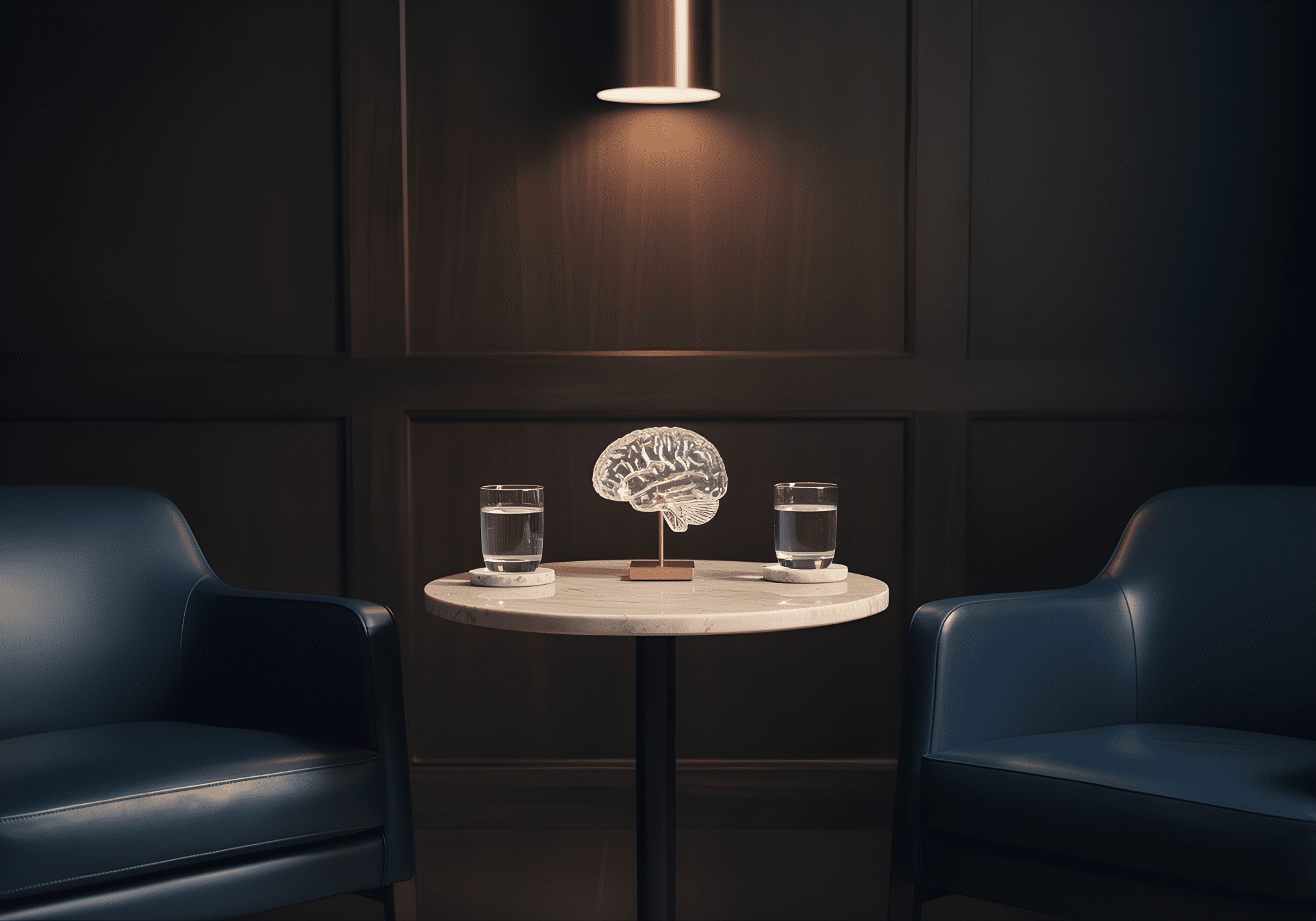
Walnut desk with marble inlay crystal brain sculpture and MindLAB journal in warm California afternoon light in Beverly Hills private study

For people who have tried everything and found that the understanding never translates into durable change — this is why. The pattern was never a knowledge problem. It was always a neural architecture problem. And neural architecture can be rebuilt.

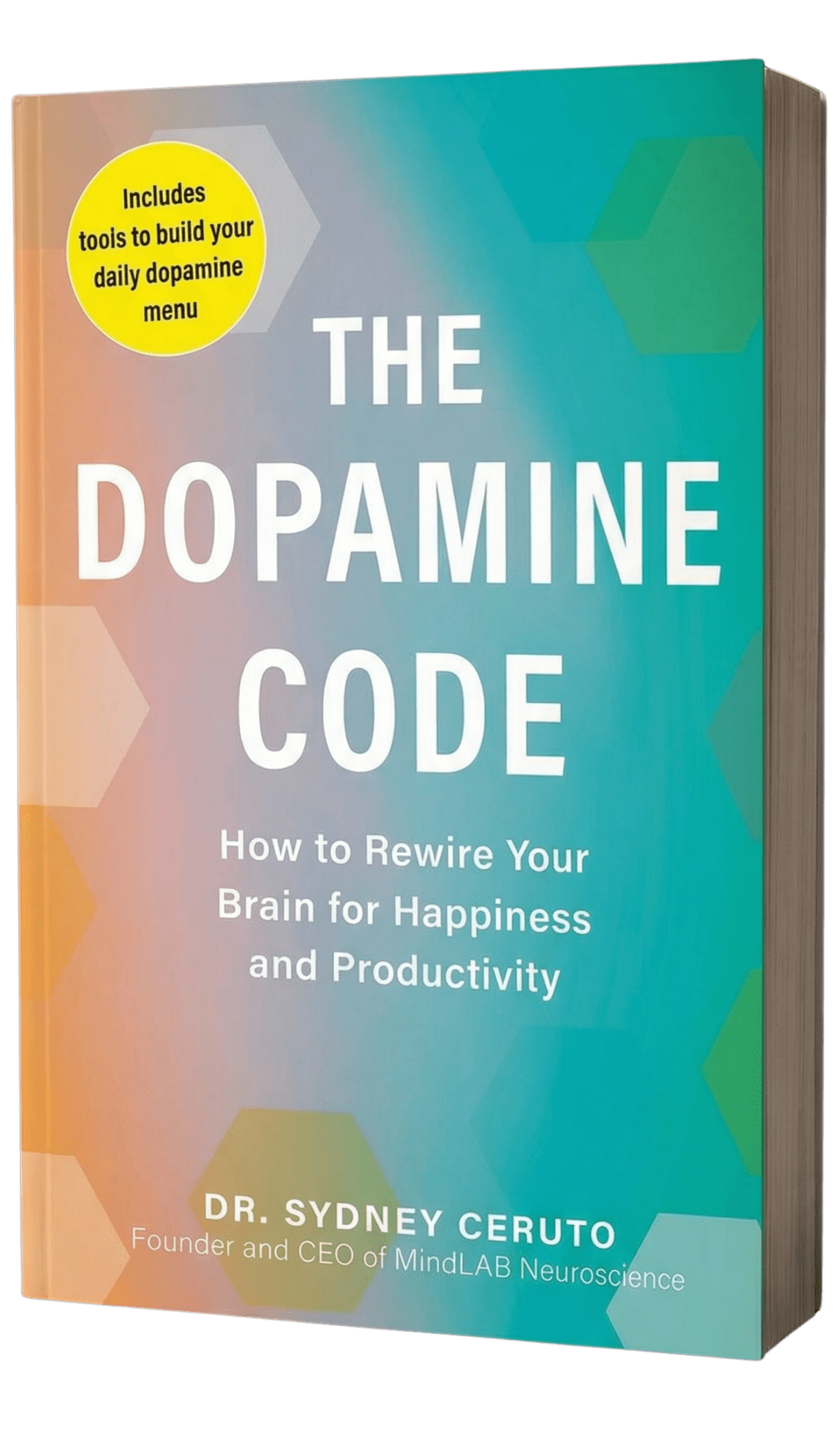
The pleasure-pain balance at the center of this pattern — how the brain calibrates baseline and what happens when that calibration is forcibly shifted — is one of the central frameworks in my forthcoming book The Dopamine Code (Simon & Schuster, June 2026). Learn more.

Marker What You Experience What's Happening Neurologically What We Restructure
Substances Hijack the Reward System Every time a substance floods dopamine pathways in the nucleus accumbens — the brain's reward center — it produces a signal several times stronger than anything natural experience generates. Every time a substance floods dopamine pathways in the nucleus accumbens — the brain's reward center — it produces a signal several times stronger than anything natural experience generates. The nucleus accumbens recalibrates its baseline to account for the new, heightened input.
Tolerance Is Not Just a The cost is that everything that used to feel good no longer does. Tolerance is the brain reducing its own sensitivity to dopamine — downregulating receptors, changing the density of dopamine-sensitive neurons, altering the reward circuitry itself. This is why stopping, without addressing the underlying neural reorganization, produces such profound emptiness.
Physical Dependence and Neural Pattern The neural association has already fired by the time they notice they want a drink. The amygdala — the brain's threat-and-salience detection center — encodes associations between environmental cues and substance use. Physical dependence — the body's need for a substance to maintain baseline function — is a medical issue.
Identity Dimension There is a question beneath the pattern that rarely gets asked directly: what does the substance mean to this person's sense of who they are? It requires neural work at the level of the stress-regulation circuits and the self-concept itself. The cue-reactivity system was shaped by these environments, and the patterns cannot be fully addressed without understanding what permission structure they were built inside.

Why Substance Use Patterns Matters in Beverly Hills

Beverly Hills has a substance problem that its wellness culture has learned to reframe beautifully. The language has shifted — not drinking, microdosing. Not dependent, exploring plant medicine. Not unable to stop, intentionally cycling. The vocabulary of precision and intentionality has been applied to the same neural patterns that produce dependence everywhere else, and the result is a population that is often the last to recognize the reorganization that has occurred in its reward architecture — because the behavior has been coded as sophisticated rather than compulsive.

The prescription pathway is a specific feature of this geography. Beverly Hills has the highest concentration of physicians, pain specialists, and plastic surgeons of any residential community in the country. The entertainment industry produces genuine injuries — physical demands, long hours, cosmetic procedures with real recovery requirements. Opioid prescriptions entered that population through legitimately medical channels. What happened next — the tolerance development, the neural reorganization, the inability to manage without the prescription — followed the same architecture it follows everywhere. But the legitimate entry point made the pattern easier to defend and much harder to see clearly.

The paradox that Beverly Hills uniquely illustrates is this: the best resources and the highest relapse rates in the same geography. The finest residential programs, the most expensive outpatient structures, the most credential-rich treatment teams — and the same people cycling through them repeatedly. The reason is not that the resources are insufficient. It is that the work being done is not reaching the neural architecture that is generating the pattern. Physical separation from the substance, behavioral structure around it, insight into its history — these are not the same as changing the dopamine system’s baseline, the amygdala’s cue-reactivity, or the self-concept that requires the substance as load-bearing support. The resources treat the behavior. The architecture remains intact.

Celebrity substance patterns are publicly documented in ways that function as a strange permission structure for the broader Beverly Hills community. When visible, successful, wealthy people cycle through the same patterns, it confirms the neural narrative without anyone naming it: this is not a willpower problem. But the publicly available story rarely gets to the specific neural mechanism, so it produces a resigned awareness rather than a useful framework. The person knows that success does not protect them. They do not have a clear account of what actually changes the pattern. Beverly Hills is full of that specific combination: sophisticated awareness of the problem, limited confidence that any approach goes deep enough to solve it.

West Hollywood’s social scene and the Malibu-to-Santa-Barbara wine country proximity create a geographic substance culture that normalizes high-frequency, high-volume use in aesthetically elevated contexts. Wine in Malibu is not framed as excess — it is framed as lifestyle. The social architecture is built around it in ways that make the cue-reactivity system extraordinarily well-developed. The sunset, the ocean view, the specific social setting — these are powerful neural anchors. The amygdala has encoded them. The dopamine anticipation fires before the first sip. Addressing the pattern requires working with the associations that the environment itself has built into the reward architecture.

Microdosing and plant medicine language deserve specific attention because they are used in Beverly Hills in ways that can delay accurate assessment. There is legitimate research on these approaches. There is also a population using that language to maintain a substance relationship that the brain has organized around, without acknowledging what the neural dynamics actually are. The question is not whether the substance is legal, culturally sanctioned, or associated with wellness. The question is whether the dopamine baseline has reorganized around it. That question can be answered. The language around the substance does not change the answer.

The work in Beverly Hills requires cutting through the wellness reframe and the prescription legitimacy narrative to reach the actual neural architecture — without dismissing the sophistication of the person in front of you. These are intelligent, aware, often extensively self-educated people. They have usually tried most of what is available. What they have not had is an account of their specific neural reorganization that is precise enough to point at what actually needs to change.

Dr. Sydney Ceruto, PhD — Founder, MindLAB Neuroscience

Dr. Sydney Ceruto, PhD — Founder & CEO, MindLAB Neuroscience

Dr. Ceruto holds a PhD in Behavioral & Cognitive Neuroscience from NYU and two Master’s degrees from Yale University. She lectures at the Wharton Executive Development Program at the University of Pennsylvania and has been an Executive Contributor to the Forbes Coaching Council since 2019. Dr. Ceruto is the author of The Dopamine Code (Simon & Schuster, June 2026). She founded MindLAB Neuroscience in 2000 and has spent over 26 years pioneering Real-Time Neuroplasticity™ — a methodology that permanently rewires the neural pathways driving behavior, decisions, and emotional responses.

References

Volkow, N. D., Koob, G. F., & McLellan, A. T. (2016). Neurobiologic advances from the brain disease model of addiction. New England Journal of Medicine, 374(4), 363–371. https://doi.org/10.1056/NEJMra1511480

Robinson, T. E., & Berridge, K. C. (2000). The psychology and neurobiology of addiction: An incentive-sensitization view. Addiction, 95(Suppl 2), S91–S117. https://doi.org/10.1080/09652140050111681

Koob, G. F., & Volkow, N. D. (2010). Neurocircuitry of addiction. Neuropsychopharmacology, 35(1), 217–238. https://doi.org/10.1038/npp.2009.110

Everitt, B. J., & Robbins, T. W. (2005). Neural systems of reinforcement for drug addiction: From actions to habits to compulsion. Nature Neuroscience, 8(11), 1481–1489. https://doi.org/10.1038/nn1579

Success Stories

“My phone was the first thing I touched in the morning and the last thing I put down at night — and every app blocker, digital detox protocol, and willpower-based system I tried lasted less than a week. Dr. Ceruto identified the variable-ratio reinforcement loop that had hijacked my attention circuits and dismantled it at the neurological level. My phone is still in my pocket. The compulsion to reach for it isn't. That's a fundamentally different kind of fix.”

Tomas R. — Architect Lisbon, PT

“Willpower, accountability systems, cutting up cards — none of it worked because none of it addressed what was actually driving the behavior. Dr. Ceruto identified the reward prediction error that had been running my purchasing decisions for over a decade. Once the loop was visible, it lost its power. The compulsion didn't fade — it stopped.”

Priya N. — Fashion Executive New York, NY

“I knew the scrolling was a problem, but I didn't understand why I couldn't stop — or why it left me feeling hollow every time. Dr. Ceruto identified the dopamine-comparison loop that had fused my sense of worth to a feed. Years of trying to set boundaries with my phone hadn't worked because the problem was never the phone. Once the loop broke, the compulsion just stopped. My relationships started recovering almost immediately.”

Anika L. — Creative Director Los Angeles, CA

“Ninety-hour weeks felt like discipline — the inability to stop felt like a competitive advantage. Nothing I tried touched it because nothing identified what was actually driving it. Dr. Ceruto mapped the dopamine loop that had fused my sense of identity to output. Once that circuit was visible, she dismantled it. I still work at a high level. I just don't need it to know who I am anymore.”

Jason M. — Private Equity New York, NY

“Anxiety and depression had been running my life for years. Dr. Ceruto helped me see them not as permanent conditions but as neural patterns with identifiable roots. Once I understood the architecture, everything changed.”

Emily M. — Physician Portland, OR

“What sets Dr. Ceruto’s dopamine work apart is the deep dive into how dopamine actually affects motivation and focus — not surface-level advice, but real science applied to your specific brain. The assessments were spot-on, and the strategies were tailored to my individual dopamine profile rather than a generic template. I noticed real improvements in my drive and mental clarity within weeks, not months. This is a must for anyone wanting to optimize their brain with real science rather than guesswork or generic programs.”

Maria P. — University Dean Monaco

Frequently Asked Questions About Substance Use Patterns

Is this a treatment program for alcohol or drug dependency?

No. MindLAB does not provide medical detox, substance abuse treatment, or any service that addresses physical dependence. If you are physically dependent on a substance, that requires medical management and a physician should be involved. What I work with is a separate and equally important problem: the neural patterns that drive the behavior — the reward system reorganization, the cue-reactivity, the stress circuits that were being medicated, and the identity architecture the substance became load-bearing for. These patterns persist after physical dependence is managed, and they are often what drives relapse. That is the work I do.

I don't think I have a real problem — I just drink more than I want to. Is this relevant to me?

Yes. The clinical threshold for a "real problem" is not the same as the neural threshold at which your reward system has reorganized. You can be functional, high-performing, and socially normal by every visible standard while your nucleus accumbens has already recalibrated its baseline around a substance. The signature is not dramatic — it is the flatness of rest without it, the tolerance that crept up without you noticing, the mornings after that take longer to resolve than they used to. If you are drinking more than you want to and the gap between intention and behavior is not closing, the neural pattern is worth examining directly.

Why haven't previous approaches worked?

Most approaches address the behavior — the quantity, the triggers, the social contexts, the coping mechanisms. These are real and relevant. What they typically do not address is the underlying neural architecture: the dopamine baseline that has been recalibrated, the amygdala associations that fire before conscious awareness, the suppression of the prefrontal circuits that would normally support better judgment, and the self-concept that the substance became load-bearing for. Behavioral and insight-based approaches can produce change that does not hold because the neural architecture generating the behavior has not been reached. The pattern returns because the system that produced it is still intact.

What is the difference between the neural pattern and physical dependence?

Physical dependence is the body's need for a substance to maintain baseline physiological function. It is a medical issue managed by physicians. The neural pattern is different: it is the reorganization of the brain's reward, motivation, and stress-regulation systems around the substance. This includes the dopamine baseline recalibration, the cue-reactivity encoded in the amygdala, and the suppression of the prefrontal circuits responsible for forward-looking judgment. Physical dependence resolves over days to weeks with medical management. The neural pattern persists for months or years without targeted work — and it is the primary driver of relapse after the physical piece is handled.

Can this work happen by phone?

Yes. Everything I do — including the Strategy Call and all ongoing work — happens by phone. Location is not a factor. The Strategy Call is one focused hour to understand the specific pattern: what the neural reorganization looks like, what the substance became functional for, and what the architecture requires in order to change. If we both determine this work is the right fit, we discuss what a structured engagement would involve. There is a $250 fee for the Strategy Call. Program investment is addressed during that conversation.

I've tried to stop and I can't. Does that mean the pattern is permanent?

No. The dopamine system's baseline is not permanently fixed at a new calibration. The downregulated receptors recover with time and appropriate support. The cue-reactivity patterns in the amygdala can be updated — the associations that trigger the pattern can be worked with directly. The prefrontal circuits that were suppressed by chronic use regain function as the load on the stress-regulation system decreases. These systems are among the most responsive to targeted work of any neural architecture. What makes change difficult is not permanence — it is addressing the surface behavior without reaching the neural system generating it.

The culture I live in normalizes drinking heavily. Does that make my pattern harder to change?

The cultural context matters because it shaped the cue-reactivity architecture — your amygdala encoded substance use as part of belonging, status, professional ritual, or daily rhythm within a specific environment. That makes the cues more pervasive and the pattern more difficult to separate from identity. But the neural mechanism is the same regardless of cultural context. The work has to account for the social architecture the pattern was built inside — not to make excuses for it, but because the associations that need to change are partially social. The cultural normalization is not an obstacle to addressing the pattern. It is part of what the pattern needs to be understood in.

Is this relevant if my substance use is cannabis or prescription stimulants — not alcohol?

Yes. The dopamine system does not distinguish between delivery mechanisms. Cannabis, stimulants, and alcohol reorganize the reward architecture through the same fundamental pathways — the specifics of the tolerance development and the withdrawal signature differ, but the underlying neural pattern is structurally similar. The cue-reactivity, the baseline recalibration, the prefrontal suppression, and the identity dimension are all present regardless of the substance. The cultural coding of the substance — as wellness, as performance enhancement, as normative — affects how visible the pattern is but does not affect what the neural reorganization requires in order to change.

What does the anhedonia I feel when I stop actually mean?

Anhedonia — the absence of pleasure or reduced ability to experience reward from ordinary life — is the most direct symptom of the neural reorganization that has occurred. The nucleus accumbens, after sustained exposure to a substance that produces above-natural dopamine signaling, has downregulated its sensitivity. Natural rewards produce less signal relative to the new baseline. Rest does not feel like rest. Meals do not taste as good. Accomplishments do not register as satisfying. This is not depression in the conventional sense, though it can feel identical. It is the reward system's adaptation to a calibration that is no longer present. It resolves — but it requires more than time. The work directly addresses the restoration of the baseline that was lost.

Do I need to stop completely before starting this work?

Not necessarily, but this depends on the specifics of your pattern. The Strategy Call begins with an honest assessment of what the neural architecture looks like and what the appropriate first steps are. If physical dependence is present, medical guidance on managing that comes before other work — attempting to address the neural pattern while the body is in active withdrawal is counterproductive. If the pattern is not one of physical dependence, the work can begin while we assess together what a sustainable transition looks like. I do not operate from a fixed framework about what "starting" requires. The architecture determines the sequence.

Also available in: Miami · Wall Street · Midtown Manhattan · Lisbon

Take the First Step

The Strategy Call is a focused conversation with Dr. Ceruto that maps the specific neural mechanisms driving your concerns and determines the right path forward.

Book a Strategy Call
MindLAB Neuroscience consultation room

The Dopamine Code

Decode Your Drive

Why Your Brain Rewards the Wrong Things

Your brain's reward system runs every decision, every craving, every crash — and it was never designed for the life you're living. The Dopamine Code is Dr. Ceruto's framework for understanding the architecture behind what drives you, drains you, and keeps you locked in patterns that willpower alone will never fix.

Published by Simon & Schuster, The Dopamine Code is Dr. Ceruto's framework for building your own Dopamine Menu — a personalized system for motivation, focus, and enduring life satisfaction.

Order Now

Ships June 9, 2026

The Dopamine Code by Dr. Sydney Ceruto — Decode Your Drive
Locations

The Intelligence Brief

Neuroscience-backed analysis on how your brain drives what you feel, what you choose, and what you can’t seem to change — direct from Dr. Ceruto.