Behavioral Addictions in Lisbon

Digital freedom in Lisbon eliminated every structural barrier between impulse and behavioral loop. Crypto trading, online gambling, shopping apps — the reward architecture found no friction left.

The brain does not have a separate category for behavioral addictions. Gambling, compulsive shopping, gaming, and binge-eating run through the same dopamine circuitry that chemical substances hijack — the same reward prediction machinery, the same variable reinforcement schedules, the same escalating loop of craving, engagement, and relief that never quite resolves. What differs is the delivery mechanism. What stays constant is the neural architecture being exploited.

At MindLAB Neuroscience, I work at the level where behavioral addiction patterns actually operate: the reward circuitry, the compulsion loops, and the consolidation process that transforms a behavior into something the brain defends as necessary. This is not about motivation or willpower. It is about restructuring the neural architecture that the behavior has reorganized — so that the loop loses its grip, and the brain regains the capacity to choose.

Book a Strategy Call

Key Points

  1. The dopamine system produces genuine pleasure; the prefrontal cortex — the brain's executive control architecture — retains the capacity to evaluate, delay, and override.
  2. Behavioral addictions exploit a specific vulnerability in this system called reward prediction error — the gap between what the brain anticipated and what actually happened.
  3. Behavioral addictions follow the same tolerance and escalation trajectory that characterizes substance dependence, because the underlying neural mechanism is the same.
  4. The nucleus accumbens — the brain's primary reward hub — releases dopamine in response to both.
  5. When a reward is unexpected, the dopamine surge is larger than when it was fully predicted.
  6. The brain cannot stop seeking the next hit because it has been trained to expect that the next one might be the one.
  7. It is not a design flaw; it is a deliberate feature of the environments behavioral addictions inhabit.

The Same Circuitry, A Different Delivery Mechanism

“The work I do with behavioral addiction patterns targets the consolidation architecture directly — the cue-response chains encoded in the reward system, the anticipatory dopamine signals that maintain the compulsion, and the prefrontal regulation capacity that has been depleted by the effort of living inside the loop.”

One of the most important — and most misunderstood — findings in reward neuroscience is this: the brain’s response to a jackpot and its response to a hit of cocaine involve the same core mechanism. The nucleus accumbens — the brain’s primary reward hub — releases dopamine in response to both. What drives the compulsion is not the substance or the behavior itself. It is the reward prediction signal: the anticipatory dopamine surge that fires in advance of the reward, encoding the cue, the context, and the behavior as things worth repeating. Urgently.

Behavioral addictions exploit a specific vulnerability in this system called reward prediction error — the gap between what the brain anticipated and what actually happened. When a reward is unexpected, the dopamine surge is larger than when it was fully predicted. This is why variable ratio reinforcement — the schedule used by slot machines, social media feeds, shopping apps, and loot boxes — produces stronger compulsion than predictable rewards. The brain cannot stop seeking the next hit because it has been trained to expect that the next one might be the one. The uncertainty is the mechanism. It is not a design flaw; it is a deliberate feature of the environments behavioral addictions inhabit.

How Behavioral Loops Consolidate Into Compulsions

The transition from behavior to compulsion is a consolidation process — a gradual reorganization of the neural architecture around the loop. In the early stages, the behavior is rewarding and controllable. The dopamine system produces genuine pleasure; the prefrontal cortex — the brain’s executive control architecture — retains the capacity to evaluate, delay, and override. The person is making a choice, and the choice feels free.

What changes over time is not the strength of the reward. It often diminishes. What changes is the structure of the compulsion. The cue — the casino floor, the shopping app notification, the loading screen of a game — begins to trigger the dopamine anticipation signal before any actual reward is delivered. The behavior is no longer primarily about pleasure. It is about resolving the tension the cue created. The prefrontal regulation system, which requires resources to override the subcortical signal, finds those resources increasingly depleted by the effort of continuous suppression. The loop is now self-sustaining. The brain has reorganized around it.

This is why willpower fails as a primary intervention. The compulsion is not operating at the level of willpower. It is operating at the level of neural architecture — in the circuits responsible for automated, incentive-driven behavior that predate conscious decision-making. Resolving it requires working at that level, not above it.

The Escalation Pattern and Tolerance

Behavioral addictions follow the same tolerance and escalation trajectory that characterizes substance dependence, because the underlying neural mechanism is the same. As the behavior is repeated, the reward system recalibrates. The dopamine response to the original behavior diminishes — the brain has updated its prediction, and what was once surprising is now expected. To generate the same level of anticipatory dopamine, the stakes must rise, the frequency must increase, or the behavior must intensify.

The gambler who started with table minimums finds them inadequate. The shopper whose purchases provided relief now requires larger amounts or higher-value items to produce the same effect. The gamer whose dopamine system was satisfied by completing a level now needs competitive ranking, achievement completionism, or financial investment in the outcome. The escalation is not a character issue. It is a predictable output of how the reward prediction system recalibrates over time — and it is one of the clearest signals that the neural architecture has reorganized around the behavior in ways that are no longer self-correcting.

What Looks Like Choice Is Already Architecture

One of the most disorienting features of behavioral compulsions is the experience of choosing while not choosing. The person is making decisions — to open the app, to walk into the casino, to put the item in the cart — but the decisions are executing faster than conscious evaluation can intervene. The prefrontal cortex registers what happened after the action, not before it. The narrative of choice is being constructed retrospectively around a behavior that was already in motion.

This is not a moral failure. It is an accurate description of how consolidated compulsion loops operate in the neural architecture. The behavior has moved from the deliberate decision-making system into the automated, habit-based circuitry. Treating it as a motivational problem — as a question of wanting to stop badly enough — misidentifies the location of the issue. The behavior is not being maintained by a decision that can be countermanded. It is being maintained by a neural pattern that has made itself structurally resistant to the kind of top-down control that decision-making requires.

The Book Connection — Hijacked Reward Architecture

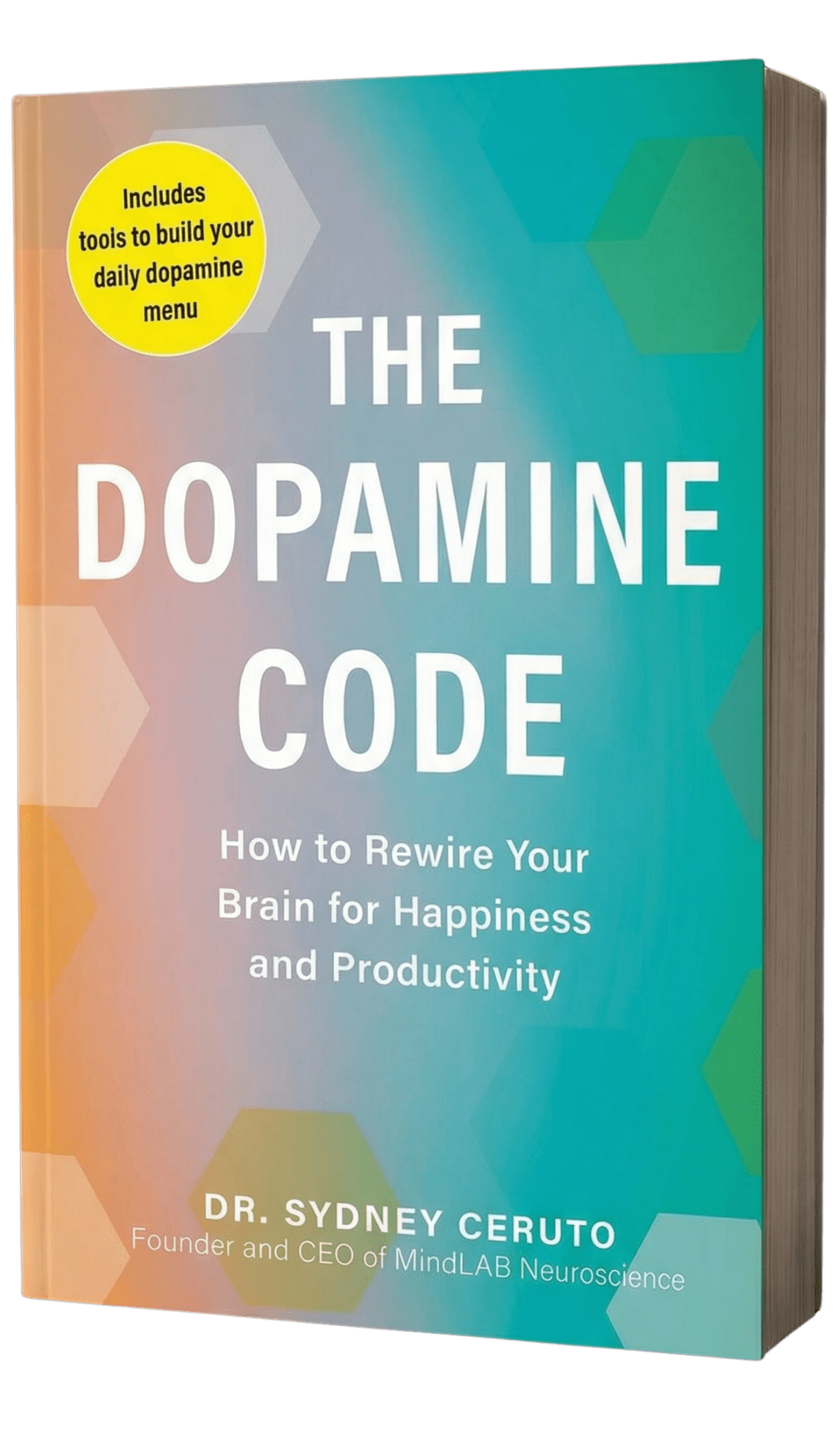
Chapter 5 of my forthcoming book The Dopamine Code (Simon & Schuster, June 2026) addresses the mechanisms by which modern environments — gambling platforms, retail design, digital gaming systems — have engineered their products specifically to exploit reward prediction circuitry. Chapter 3 examines the pleasure-pain balance and the recalibration that produces tolerance and escalation. Understanding what your brain is actually responding to — and why the environment was designed to produce that response — is the first form of precision this work requires. Learn more about the book.

Antique rosewood desk with crystal brain sculpture and MindLAB journal in warm amber Lisbon afternoon light with historic European wood paneling

Restructuring the Loop

The work I do with behavioral addiction patterns targets the consolidation architecture directly — the cue-response chains encoded in the reward system, the anticipatory dopamine signals that maintain the compulsion, and the prefrontal regulation capacity that has been depleted by the effort of living inside the loop. This is not willpower training or habit replacement. It is structural work on the neural systems that the behavior reorganized.

What changes is the brain’s relationship to the cue. The anticipatory signal that once launched the loop — the notification sound, the visual field of the casino floor, the feel of a shopping interface — no longer carries the same predictive weight. The compulsion loses its automated quality. The gap between cue and action reopens, and with it, the capacity for genuine evaluation that the consolidation process had closed down. The behavior does not become impossible. It becomes a choice again — and from that position, the neural architecture can be restructured at whatever depth the pattern requires.

Marker What You Experience What's Happening Neurologically What We Restructure
Same Circuitry, A Different Delivery The nucleus accumbens — the brain's primary reward hub — releases dopamine in response to both. The nucleus accumbens — the brain's primary reward hub — releases dopamine in response to both. One of the most important — and most misunderstood — findings in reward neuroscience is this: the brain's response to a jackpot and its response to a hit of cocaine involve the same core mechanism.
Behavioral Loops Consolidate Into Compulsions The transition from behavior to compulsion is a consolidation process — a gradual reorganization of the neural architecture around the loop. The dopamine system produces genuine pleasure; the prefrontal cortex — the brain's executive control architecture — retains the capacity to evaluate, delay, and override. What changes over time is not the strength of the reward.
Escalation Pattern and Tolerance Behavioral addictions follow the same tolerance and escalation trajectory that characterizes substance dependence, because the underlying neural mechanism is the same. It is a predictable output of how the reward prediction system recalibrates over time — and it is one of the clearest signals that the neural architecture has reorganized around the behavior in ways that. The dopamine response to the original behavior diminishes — the brain has updated its prediction, and what was once surprising is now expected.
Looks Like Choice Is Already One of the most disorienting features of behavioral compulsions is the experience of choosing while not choosing. The prefrontal cortex registers what happened after the action, not before it. One of the most disorienting features of behavioral compulsions is the experience of choosing while not choosing.
Book Connection — Hijacked Reward Understanding what your brain is actually responding to — and why the environment was designed to produce that response — is the first form of precision this work requires. Chapter 5 of my forthcoming book The Dopamine Code (Simon & Schuster, June 2026) addresses the mechanisms by which modern environments — gambling platforms, retail design, digital gaming systems — have engineered their products specifically. Chapter 3 examines the pleasure-pain balance and the recalibration that produces tolerance and escalation.
Restructuring the Loop It is structural work on the neural systems that the behavior reorganized. The work I do with behavioral addiction patterns targets the consolidation architecture directly — the cue-response chains encoded in the reward system, the anticipatory dopamine signals that maintain the compulsion, and the prefrontal regulation capacity. It becomes a choice again — and from that position, the neural architecture can be restructured at whatever depth the pattern requires.

Why Behavioral Addictions Matters in Lisbon

Behavioral Addictions in Lisbon

The defining feature of behavioral addiction in Lisbon’s digital nomad and remote worker population is the complete removal of structural friction between impulse and action. The office did not provide discipline — but it did provide interruption. The commute, the physical presence of colleagues, the embedded schedule of an in-person work context created gaps between the impulse to engage with a behavioral loop and the opportunity to act on it. Remote work in a new city, operating on flexible schedules across time zones, has eliminated those gaps entirely. The reward architecture has direct, unmediated access to the behavioral loops it has been conditioned to seek. The phone is always within reach. The app is always open. The trading platform refreshes in real time.

Online gambling is accessible in Portugal twenty-four hours a day through both licensed and unlicensed platforms. Cryptocurrency trading — mechanistically identical to gambling from the reward prediction system’s perspective — is a primary behavioral loop among digital nomads whose technical background gives the activity an intellectual framing that obscures its variable-ratio reinforcement structure. The volatility of crypto markets produces larger prediction-error dopamine responses than traditional markets precisely because the unpredictability is greater. The neural conditioning effect is correspondingly stronger. The “investment” narrative is real at the cognitive level. At the dopamine-circuitry level, it is indistinguishable from sitting at a slot machine.

Shopping app engagement has replaced the physical retail experience for a population that relocated without the proximity to the consumption environments they previously inhabited. The app is more available than Rodeo Drive or Fifth Avenue — accessible at 3 a.m., requiring no commute, providing the same anticipatory dopamine through the scroll-and-discover interface that physical retail provides through the sensory cue field. The conversion from browsing to purchase has been engineered to require as few steps as possible. For a reward prediction system that has been sensitized by repeated engagement with retail loops, the removal of every friction barrier accelerates consolidation of the compulsive pattern.

The gaming communities embedded within Lisbon’s nomad population — visible at co-working spaces like Selina and the NomadX network — concentrate a population of people whose reward systems have been shaped by years of variable-ratio gaming engagement. The structural characteristics of the gaming environment persist when the person relocates: the same cues, the same platform, the same prediction-error conditioning, now in a new city with fewer competing social obligations and more unstructured time. The loop does not need to rebuild itself in Lisbon. It arrived intact.

The “digital freedom” framing that motivates much of Lisbon’s nomad relocation culture carries a specific vulnerability: it reframes the removal of structural constraints as liberation, which makes the compulsive engagement with behavioral loops harder to identify as compulsive. Freedom from the office structure that interrupted behavioral engagement is real. The neural architecture that uses that freedom to consolidate compulsion loops around unimpeded reward-seeking is equally real. My work with behavioral addiction patterns in Lisbon addresses this specific dynamic — the way the freedom narrative obscures the compulsion architecture, and the restructuring required to make genuine choice available again where automated seeking currently operates.

Dr. Sydney Ceruto, PhD — Founder, MindLAB Neuroscience

Dr. Sydney Ceruto, PhD — Founder & CEO, MindLAB Neuroscience

Dr. Ceruto holds a PhD in Behavioral & Cognitive Neuroscience from NYU and two Master’s degrees from Yale University. She lectures at the Wharton Executive Development Program at the University of Pennsylvania and has been an Executive Contributor to the Forbes Coaching Council since 2019. Dr. Ceruto is the author of The Dopamine Code (Simon & Schuster, June 2026). She founded MindLAB Neuroscience in 2000 and has spent over 26 years pioneering Real-Time Neuroplasticity™ — a methodology that permanently rewires the neural pathways driving behavior, decisions, and emotional responses.

References

Potenza, M. N. (2008). The neurobiology of pathological gambling and drug addiction: An overview and new findings. Philosophical Transactions of the Royal Society B: Biological Sciences, 363(1507), 3181–3189. https://doi.org/10.1098/rstb.2008.0100

Volkow, N. D., Koob, G. F., & McLellan, A. T. (2016). Neurobiologic advances from the brain disease model of addiction. New England Journal of Medicine, 374(4), 363–371. https://doi.org/10.1056/NEJMra1511480

Schultz, W. (2016). Dopamine reward prediction-error signalling: A two-component response. Nature Reviews Neuroscience, 17(3), 183–195. https://doi.org/10.1038/nrn.2015.28

Grant, J. E., Potenza, M. N., Weinstein, A., & Gorelick, D. A. (2010). Introduction to behavioral addictions. The American Journal of Drug and Alcohol Abuse, 36(5), 233–241. https://doi.org/10.3109/00952990.2010.491884

Success Stories

“Willpower, accountability systems, cutting up cards — none of it worked because none of it addressed what was actually driving the behavior. Dr. Ceruto identified the reward prediction error that had been running my purchasing decisions for over a decade. Once the loop was visible, it lost its power. The compulsion didn't fade — it stopped.”

Priya N. — Fashion Executive New York, NY

“My phone was the first thing I touched in the morning and the last thing I put down at night — and every app blocker, digital detox protocol, and willpower-based system I tried lasted less than a week. Dr. Ceruto identified the variable-ratio reinforcement loop that had hijacked my attention circuits and dismantled it at the neurological level. My phone is still in my pocket. The compulsion to reach for it isn't. That's a fundamentally different kind of fix.”

Tomas R. — Architect Lisbon, PT

“Ninety-hour weeks felt like discipline — the inability to stop felt like a competitive advantage. Nothing I tried touched it because nothing identified what was actually driving it. Dr. Ceruto mapped the dopamine loop that had fused my sense of identity to output. Once that circuit was visible, she dismantled it. I still work at a high level. I just don't need it to know who I am anymore.”

Jason M. — Private Equity New York, NY

“I knew the scrolling was a problem, but I didn't understand why I couldn't stop — or why it left me feeling hollow every time. Dr. Ceruto identified the dopamine-comparison loop that had fused my sense of worth to a feed. Years of trying to set boundaries with my phone hadn't worked because the problem was never the phone. Once the loop broke, the compulsion just stopped. My relationships started recovering almost immediately.”

Anika L. — Creative Director Los Angeles, CA

“I came to Dr. Ceruto thinking I needed help with my career, but she quickly recognized that the real roadblocks were the relationships I was choosing and how I dealt with conflict. With her support, I finally left unhealthy situations I’d struggled to end for years. She helped me identify deep-seated patterns I didn’t realize were holding me back. I never feel rushed, and she follows up with detailed written insights I reflect on for weeks. She uncovered major blockers I would never have spotted alone.”

Rachel L. — Brand Strategist Montecito, CA

“I attended a lecture Dr. Ceruto was giving at my graduate school in New York and was blown away by how much I could relate to. Everything about the mind and brain made sense in a way it never had before. I booked a consultation that same day. I was confused, anxious, and unable to commit to any decision — my career and personal life were at a standstill. Dr. Ceruto changed my entire perspective. She utilizes cognitive neuroscience so practically that results come almost immediately.”

Patti W. — Graduate Student Manhattan, NY

Frequently Asked Questions About Behavioral Addictions

Are behavioral addictions real addictions, or is that just a way of describing bad habits?

The neural architecture is the same. Gambling, compulsive shopping, and gaming engage the reward prediction system through the same dopamine circuitry that substances exploit — the same anticipatory signal, the same variable-ratio conditioning, the same tolerance and escalation pattern over time. The delivery mechanism differs; the mechanism of compulsion does not. The distinction between a behavioral addiction and a bad habit is structural: a bad habit is a consolidated behavior pattern maintained by mild reward conditioning. A behavioral addiction is a pattern in which the reward prediction system has reorganized the neural architecture around the behavior — producing compulsion that operates below conscious decision-making, resistance to cessation despite consequences, and escalation driven by tolerance. If it looks like a habit from the outside but functions like a compulsion from the inside, the distinction is behavioral, not neural.

I understand why I do it and I've tried to stop. Why can't I?

Because the compulsion is not operating at the level of understanding. The reward prediction system that maintains behavioral addiction patterns is subcortical — it runs below the circuits responsible for insight, reasoning, and the kind of motivation that stopping requires. By the time you have a conscious thought about stopping, the cue has already triggered the anticipatory dopamine signal, and the behavior is already in motion in the automated circuitry. Understanding the mechanism is genuinely valuable and does not reach the mechanism. The work that resolves the pattern targets the reward prediction architecture directly — the cue-response conditioning, the tolerance dynamics, the regulatory depletion that makes the loop self-sustaining. That is a different level than where understanding lives, and it requires a different kind of precision.

How is gambling addiction different from enjoying gambling?

The distinguishing feature is the relationship between cue and control. Someone who enjoys gambling experiences engagement as a choice that remains available to decline. The cue — the casino environment, the sports-book interface, the invitation — does not automatically launch a behavioral sequence that continues despite the person's intentions. In a consolidated compulsion pattern, the cue triggers an anticipatory dopamine signal that narrows the behavioral field before conscious evaluation can intervene. The gap between cue and action has closed. What looks like a choice from the outside is executing below the threshold of genuine deliberation. Frequency and loss amount are observable proxies but not the defining feature. The defining feature is whether the loop is still governed by the prefrontal system or has been delegated to the automated reward-seeking architecture.

Can I have a behavioral addiction to something that society doesn't label as an addiction?

Yes, and this is one of the more disorienting aspects of behavioral compulsion patterns. The neural architecture does not require cultural recognition to operate. Art collecting, cosmetic procedure escalation, real estate speculation, and compulsive information-seeking can all run through the same reward prediction circuitry as gambling or shopping — with the same tolerance dynamics, the same escalation pattern, and the same compulsive quality in the relationship between cue and behavior. Social framing as sophisticated taste or investment does not change the neural mechanism. What I assess is how the reward prediction system is functioning and whether the behavioral loop is maintaining itself through compulsive architecture — not whether the cultural category assigned to the behavior includes the word addiction.

Is there a connection between professional risk-taking and gambling or behavioral compulsions?

There is a direct neural one. Professional contexts that require sustained engagement with variable-ratio reward structures — trading, sales, certain kinds of creative work — condition the reward prediction system over time. The dopamine circuitry that generates high performance in those contexts is the same circuitry that behavioral addiction environments exploit. The professional who has spent years on a trading desk has a reward prediction system that has been deeply conditioned by prediction-error dynamics. Sports betting, casino gambling, and other high-variance behavioral loops are neurologically familiar to that system — they speak its language. The professional context trained the architecture; the recreational context engages it through a different delivery mechanism. This is not a moral failing. It is a mechanistic outcome of what sustained exposure to variable-ratio reward conditioning does to the neural architecture over time.

What role does stress or emotional difficulty play in behavioral addictions?

Stress activates the threat-response system, which depletes the prefrontal regulatory resources required to override the compulsion loop when the cue arrives. The relationship is structural, not motivational. Under low-stress conditions, the prefrontal system may retain enough capacity to intervene between cue and action — to recognize the loop and decline to enter it. Under high stress, that regulatory capacity is already consumed managing the threat signal. The cue arrives and the compulsion executes unopposed. This is why behavioral loops intensify during stressful periods without the person making any conscious decision to engage more. The stress architecture is depleting the override capacity while the reward system continues seeking relief through the fastest available dopamine pathway — which is whatever behavioral loop is most consolidated in that person's neural architecture.

How does spending-to-self-soothe become a compulsive pattern?

Spending produces a genuine, measurable dopamine response — not from the object purchased, but from the anticipatory signal that fires during the search, selection, and checkout sequence. When that response is used repeatedly to interrupt or reduce an unpleasant emotional state, the behavior gets reinforced on two tracks simultaneously: the positive reinforcement of the dopamine reward, and the negative reinforcement of the emotional relief. Dual reinforcement is the fastest route to compulsion consolidation in the reward prediction system. Over time, the emotional discomfort itself becomes a cue. The brain has encoded the sequence: distress → spending → relief. The behavior is now automated. It will initiate in response to the cue before conscious deliberation is available — and the relief it provides will be shorter-lived and require escalation of the spending to reproduce the same effect.

What does the Strategy Call involve, and is it right for me?

A Strategy Call is a one-hour phone consultation. Not virtual, not in-person — phone only. It is a precision assessment: I evaluate your specific behavioral pattern, the reward architecture maintaining it, and whether my methodology is the right fit for your situation. The fee is $250. This does not apply toward any program investment. The call is not a sales process. It is a diagnostic evaluation of fit — I am determining whether the pattern you bring is one my work is designed to address, and I will tell you honestly if it is not. If the work is right for what you are dealing with, we will have a clear picture of what it involves by the end of the hour.

My behavioral pattern isn't interfering with my work or finances — does that mean it's not a problem?

Functional surface does not indicate absence of compulsion architecture. Some of the most deeply consolidated behavioral patterns exist in people whose professional performance and financial standing remain intact — because their capacity for compensatory management has been sufficient to contain the consequences. What I assess is not whether the external damage has crossed a threshold. It is whether the reward prediction system is running a compulsive loop that the person cannot choose to exit — whether the behavior is still governed by genuine deliberation or has been delegated to automated seeking. The absence of visible consequences reflects the person's adaptive capacity, not the state of the neural architecture. Patterns that are managed rather than resolved continue to consolidate, and tolerance continues to build, regardless of how well the functional surface is maintained.

How is this work different from willpower-based approaches or accountability programs?

Willpower and accountability operate above the level where behavioral compulsions are maintained. They engage the prefrontal regulatory system — the conscious executive architecture — and ask it to override a subcortical compulsion loop that is running faster and more automatically than any conscious intention can reliably interrupt. This approach can produce short-term suppression and frequently produces rebound: the regulatory resource is exhausted, the cue arrives, and the loop executes with intensity proportional to how long it was suppressed. My work does not operate through suppression. It targets the cue-response architecture in the reward prediction system — restructuring the anticipatory signal that launches the loop, rebuilding prefrontal regulatory capacity at the structural level, and completing the recalibration the reward system requires to stop defending the behavior as necessary. The goal is not to override the compulsion. It is to dissolve the neural architecture that makes it compulsive.

Also available in: Miami · Wall Street · Midtown Manhattan · Beverly Hills

Take the First Step

The Strategy Call is a focused conversation with Dr. Ceruto that maps the specific neural mechanisms driving your concerns and determines the right path forward.

Book a Strategy Call
MindLAB Neuroscience consultation room

The Dopamine Code

Decode Your Drive

Why Your Brain Rewards the Wrong Things

Your brain's reward system runs every decision, every craving, every crash — and it was never designed for the life you're living. The Dopamine Code is Dr. Ceruto's framework for understanding the architecture behind what drives you, drains you, and keeps you locked in patterns that willpower alone will never fix.

Published by Simon & Schuster, The Dopamine Code is Dr. Ceruto's framework for building your own Dopamine Menu — a personalized system for motivation, focus, and enduring life satisfaction.

Order Now

Ships June 9, 2026

The Dopamine Code by Dr. Sydney Ceruto — Decode Your Drive
Locations

The Intelligence Brief

Neuroscience-backed analysis on how your brain drives what you feel, what you choose, and what you can’t seem to change — direct from Dr. Ceruto.