The Recurring Loop of Career Uncertainty
“You are not stuck because you lack options. You are stuck because the neural circuits that evaluate career decisions have been recalibrated by years of experience to favor safety over alignment — and no amount of strategic thinking can override a biological constraint.”
You have had the conversations. With mentors who offered frameworks. With friends who suggested possibilities. With yourself, running the same calculations in the same mental loops. You arrive at the same inconclusive place every time.
The uncertainty is not new. What is new is the growing recognition that your approaches are not resolving it. They are circling it. This defines the professional who seeks career counseling. Not someone who lacks options. Someone who has too many options and no reliable internal signal.
The pros-and-cons lists produce ties. The gut feelings contradict each other depending on the day. The advice from well-meaning people reflects their neural wiring, not yours. Underneath it all, there is a persistent suspicion. The problem is not a lack of information but something deeper.
For professionals who have relocated internationally, this pattern intensifies. The career narrative that once felt solid becomes fragmented when the context changes. You arrive in a new city with the same skills and experience. But the story does not hold the same way. The question shifts from “what should I do next” to something more fundamental.
My clients describe this as professional vertigo. Not incompetence. Not failure. A loss of the internal reference point that used to make career decisions feel obvious. That reference point is not psychological. It is neurological. Reaching it requires working at the level where it is encoded.
The Neuroscience of Career Identity
Professional identity is not a story you tell yourself. It is a biological structure maintained by a specific neural network. The default mode network — the brain’s self-referential thought system — is the brain’s primary architecture for identity coherence.
Research establishes that the default mode network integrates memory, language, and meaning to create a coherent internal narrative. This narrative is central to the construction of a sense of self. When you evaluate who you are professionally, specific brain regions show sustained activity together. Professional identity assessment is not passive reflection. It is a biologically active process.
The default mode network also grounds autobiographical memory. The posterior cingulate cortex leads retrieval of personally relevant episodes. The medial prefrontal cortex regulates memory encoding and recall. The hippocampus — the brain’s memory-formation center — binds experiences into coherent personal history.
Career transitions interrupt this autobiographical coherence. Relocation removes the environmental cues and social networks that continuously refresh the coherent sense of self. The result is not confusion. It is a measurable disruption in the neural system responsible for maintaining identity.
How Your Brain Constructs the Future Self
Career counseling that addresses only the present misses the neural mechanism that actually drives career decisions. Research demonstrates that imagining specific future events activates the medial prefrontal cortex and hippocampus together. This coupling directly alters decision behavior.
When people imagined specific future scenarios vividly, they made more farsighted decisions. They chose options with higher long-term payoff. Stronger brain activation predicted better decisions on each individual trial. The mechanism was not conscious deliberation. It was the quality of future-self simulation.
The hippocampus conveyed information about the constructed future scenario to the prefrontal cortex. The prefrontal cortex then assigned full value to that imagined future. The quality of the simulation directly determined how much the brain valued the future self’s outcomes.
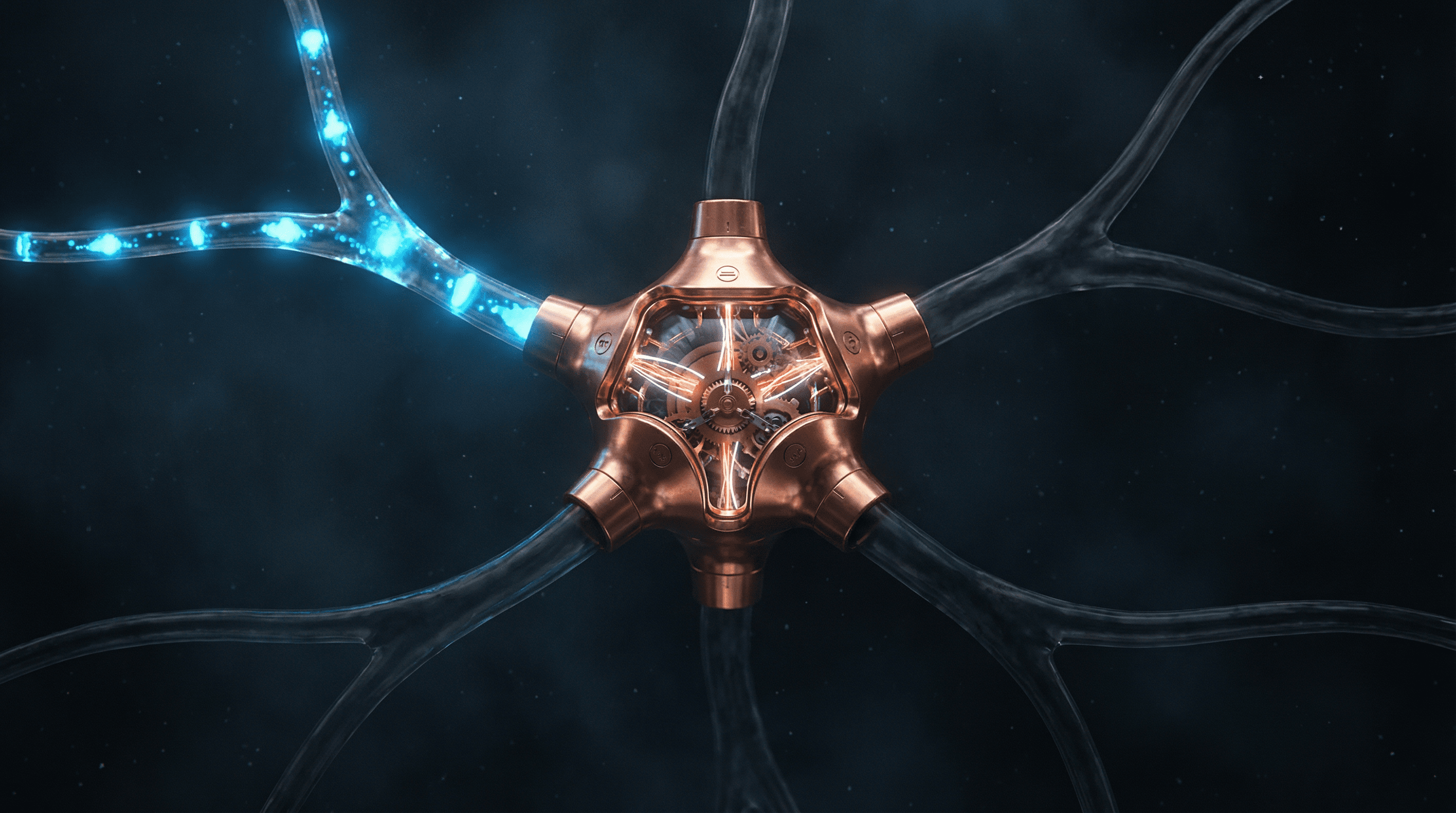
Career decisions require this brain system to simulate vivid, specific future professional selves. Without intervention, the system defaults to present-biased choices. This is why intelligent, capable professionals remain stuck in career directions they know are wrong. The neural system responsible for valuing a different future is underperforming.
The Three Subsystems That Must Work Together
Brain imaging has mapped the default mode network’s three functional subsystems. The dorsal medial prefrontal cortex subsystem specializes in social cognition and self-evaluation relative to others. This is the neural engine professionals use when asking how they are perceived and whether they are in the right role.
The medial temporal lobe subsystem handles future simulation. It generates the mental scenes of possible professional futures. The anterior medial prefrontal cortex core showed the strongest response to self-referential tasks. The brain patterns were distinct from all other task types.
Every subsystem responded to all task categories. This demonstrates that career identity work engages the full network collaboratively, not one piece at a time. This has a direct practical consequence. Career counseling that addresses only strategic planning activates different brain systems. The career identity circuits remain offline during the very conversation designed to resolve them.
How Dr. Ceruto Approaches Career Counseling
Dr. Ceruto’s methodology through Real-Time Neuroplasticity™ works directly with the neural systems that encode professional identity. Rather than facilitating a strategic conversation about career options, the process engages the brain’s self-referential architecture.
The work targets the medial prefrontal cortex and hippocampal network to rebuild narrative identity coherence. It encodes new professional self-concepts and consolidates a future-oriented career identity. The approach is specific to each individual’s neural patterns.
In over two decades of clinical neuroscience practice, the most reliable predictor of successful career direction is not the quality of available options. It is the coherence of the neural self-concept evaluating those options. When the default mode network is fragmented, even excellent options produce uncertainty. The evaluation system itself is compromised.
For professionals navigating a focused career question, the NeuroSync™ program provides structured single-issue engagement. For those whose career uncertainty reflects interconnected patterns spanning professional identity and life architecture, the NeuroConcierge™ program offers embedded partnership. Both programs work with situations and pressure rather than titles and categories.
The neural mechanisms driving career identity do not organize themselves around job descriptions. The result is not a recommendation. It is a reorganization of the neural architecture that makes the right direction self-evident. The brain’s own identity system, once coherent, produces clarity that external advice cannot replicate.
What to Expect
The process begins with a Strategy Call. This is a focused conversation where Dr. Ceruto assesses the specific nature of your career uncertainty. He determines whether neuroscience-based career counseling is the appropriate intervention.
This is not a sales conversation. It is a evaluative one. Some professionals need career assessment before counseling. Some need decision-making support rather than identity work. The Strategy Call identifies the precise entry point.
From there, the engagement follows a structured protocol. Neural baseline mapping understands the current state of your self-referential processing. Targeted identity architecture work addresses fragmentation or misalignment. Future-self simulation sequences engage the brain’s prospection network — the system that imagines possible futures. Each phase is calibrated to what emerges in the previous one.
There are no predetermined timelines for results. Neural reorganization operates on biological schedules, not calendar ones. What you can expect is progressive clarity. This is a shift from circular uncertainty to directional coherence. It builds as the underlying neural architecture consolidates.
The shift is durable because it occurs at the level of neural encoding. It is not at the level of temporary motivation or externally imposed frameworks.
The Neural Architecture of Career Navigation
Career navigation at its most fundamental level is a neural prediction problem. The brain is continuously generating predictions about future experience based on current trajectory, evaluating those predictions against the reward signals it requires to sustain motivation, and adjusting behavior accordingly. When the prediction is positive — when the trajectory produces reliable signals of challenge, mastery, and meaningful outcome — motivation sustains itself with minimal conscious effort. When the prediction turns negative — when the trajectory signals progressive misalignment between the neural architecture’s requirements and the actual experience of the career environment — the brain generates the experience of being stuck, pulled in multiple directions, or unable to commit with conviction to any particular path.
The prefrontal cortex governs the executive capacities that career navigation requires: scenario construction, value-based decision-making under uncertainty, temporal integration across short- and long-horizon considerations, and the regulation of threat responses that would otherwise narrow the decision field to immediate safety rather than long-term fit. When the prefrontal system is operating under the elevated load that career uncertainty creates — the rumination, the circular weighing of options, the anxiety about making the wrong choice — its capacity for the precise integration required for good career decisions is progressively compromised. The professional becomes less capable of clear career thinking at exactly the moment when clarity is most needed.
Dopaminergic reward calibration is the deeper variable. Career satisfaction is not primarily a function of external success metrics — title, compensation, prestige — though the brain encodes these as proxy reward signals. It is a function of whether the career environment produces reliable access to the specific categories of intrinsic reward that an individual’s neural architecture has been calibrated to require. Intellectual novelty, social influence, technical mastery, creative autonomy, leadership impact — these are not interchangeable. They engage different neural circuits, produce different neurochemical signatures, and have different long-term effects on engagement and performance.
Why Traditional Approaches Fall Short
Career counseling as conventionally practiced is an advisory conversation — a guided process of identifying preferences, examining options, assessing practical constraints, and building a career action plan. At its best, it combines solid understanding of occupational landscape with genuine empathetic attention to the individual’s situation. What it lacks is the neural specificity required to distinguish between the careers that will genuinely sustain this particular person’s engagement over time and the careers that look good on the available preference data but will produce progressive depletion once the novelty of the initial transition fades.
The gap is not in the counselor’s knowledge of the occupational landscape or in the quality of the assessment instruments. The gap is in the level of analysis. Preferences are not the same as neural requirements. What a person says they prefer under conditions of career uncertainty reflects a mix of genuine preference, socially conditioned aspiration, anxiety-driven safety-seeking, and the influence of whoever most recently made a compelling argument for a particular path. Neural requirements are more stable, more specific, and far more predictive of sustained engagement. They are also invisible to self-report instruments and conventional counseling conversations.
The downstream cost of this limitation is significant. Career transitions made on the basis of preference matching without neural architecture mapping produce a predictable pattern: initial relief and optimism, followed by progressive recognition of the same underlying dissatisfaction in the new environment, followed by the accumulated discouragement of another expensive transition that did not produce the intended result. The problem was not the career that was left or the career that was entered. The problem was that the neural variables determining long-term fit were never assessed.

How Neural Career Counseling Works
My approach to career counseling operates at the level of neural architecture rather than conscious preference. The counseling conversation is a structured investigation of the neural signatures embedded in an individual’s career history — the periods of peak engagement and peak depletion, the challenge types that generated intrinsic reward versus cognitive fatigue, the environmental conditions that produced the most reliable access to the states of absorption and mastery that the brain finds most reinforcing.
This investigation produces a neural profile of career fit that is considerably more specific than any conventional assessment. From this profile, I evaluate the career options under consideration against the actual neural variables that will determine whether sustained engagement is possible — not against a generic match of interests and aptitudes, but against the precise reward architecture of this particular individual’s dopaminergic system, the specific threat patterns that will erode regulatory capacity over time in specific work environments, and the cognitive load requirements that will either sustain or deplete prefrontal capacity across the career horizon.
The counseling relationship itself is calibrated to the decision architecture. Short-horizon career decisions — whether to take a specific offer, whether to make a lateral move, whether to transition from a specific role — are well-served by a focused engagement that produces the neural clarity the decision requires. Longer-horizon career restructuring — substantial field changes, entrepreneurial transitions, career re-entry after extended absence — require the sustained partnership of a multi-phase engagement that can track and recalibrate as the transition unfolds and new data emerges from the individual’s neural responses to new environments.
What This Looks Like in Practice
The professionals who seek this work have typically been navigating career uncertainty for longer than they anticipated. They have considered their options extensively. They have often consulted with counselors, coaches, and trusted advisors. They may have read widely on career decision-making. And they remain unable to commit with conviction to a direction. This is not indecision. It is the brain accurately registering that the available frameworks have not yet identified the answer at the level of specificity it requires.
A Strategy Call with Dr. Ceruto reframes the career question. The conversation moves from what do you think you want to what does your neural architecture require, and examines the career history for the data points that reveal the answer. From that foundation, the engagement is structured around the presenting need. For professionals navigating a specific transition decision, a NeuroSync engagement produces the directional clarity the decision requires. For those in extended career exploration or complex multi-phase transition, the NeuroConcierge partnership sustains the investigation across the full arc of the change.
For deeper context, explore neuroscience-based career counseling.