Circadian Rhythm Optimization in Lisbon

Your internal clock governs far more than when you feel sleepy. Dr. Ceruto's methodology realigns the circadian system that regulates cognition, mood, and metabolic health.

Your internal clock governs far more than when you feel sleepy. Dr. Ceruto’s methodology realigns the circadian system (relating to the body's 24-hour biological clock) that regulates cognition, mood, and metabolic health.

Book a Strategy Call

Key Points

  1. Approximately 60% of all measurable cognitive performance parameters show significant circadian phase dependence — this is not about feeling tired but about measurable capacity loss.
  2. Sleeping at the wrong circadian phase — even for eight hours — does not deliver the same quality of neural maintenance as sleeping in phase, because glymphatic clearance follows circadian control.
  3. Each additional hour of social jetlag is associated with a 33% increase in obesity risk, independent of sleep duration, diet, and exercise.
  4. The circadian system involves peripheral clocks in every organ synchronized by the master brain clock — disruption causes different systems to operate on different schedules.
  5. Night shift workers carry approximately 40% higher depression risk, and circadian disruption has been classified as a probable human carcinogen.
  6. The molecular clock is generated by a transcription-translation feedback loop in every cell — it is self-sustaining biology calibrated by light, meals, and activity timing.
  7. Optimization requires mapping each individual's chronotype against actual schedule demands and engineering specific timing signals, not imposing an arbitrary sleep schedule.

Your Body’s Internal Clock System

“Circadian misalignment impairs cognitive throughput, processing speed, and information processing — while subjects rate their own performance as relatively unchanged. The brain loses capacity without knowing it has lost capacity.”

The circadian system (relating to the body’s 24-hour biological clock) is not a single clock but an architecture. At its center sits the suprachiasmatic nucleus the brain’s master pacemaker, generating endogenous rhythms of approximately 24 hours that persist even in the complete absence of environmental cues. This master clock receives light input directly from the retina through specialized photosensitive cells containing melanopsin and uses this signal to synchronize internal biological timing with the external day-night cycle.

But the suprachiasmatic nucleus does not operate alone. Every organ system maintains its own peripheral oscillator the self-sustaining molecular mechanism generating 24-hour rhythm organs operating on different schedules, with consequences for cognition, metabolism, mood, and long-term brain health.

When Timing Disruption Affects Mental Performance

Circadian disruption degrades cognitive performance in ways that are both dose-dependent and deceptively invisible. Approximately 60% of all measurable cognitive performance parameters show significant circadian phase dependence. Using controlled laboratory conditions that separate circadian effects from sleep effects, research demonstrates that circadian misalignment impairs sustained attention, cognitive throughput, information processing, and visual-motor performance. The most dangerous finding: subjects feel subjectively sleepier during misalignment but do not rate their own performance as worse. Circadian disruption creates a deficit in metacognitive awareness — the person doesn’t recognize their impairment. The effects on learning are progressive rather than acute: circadian misalignment hinders daily learning across multiple days, meaning that chronic misalignment has cumulative consequences for skill acquisition and knowledge retention.

Translucent copper and blue wave forms visualizing sleep cycle phases against deep navy background

The Hidden Cost to Physical Health

Social jetlag affects up to 87% of the working population. Each additional hour of social jetlag is associated with significantly higher body mass index, increased waist circumference, elevated fasting insulin, higher triglycerides, and lower HDL cholesterol, independently of sleep duration, diet, and physical activity. Individuals with more than 60 minutes of social jetlag show significantly elevated metabolic markers compared to those with less — metabolic dysfunction from timing disruption. This is not a sleep quantity problem. It is a timing problem. The same meal consumed at night generates a significantly larger glycemic and insulin response than the same meal consumed in the morning. This occurs because insulin sensitivity, glucagon-like peptide secretion, and hepatic glucose uptake are all circadian-phase dependent.

How Disrupted Timing Affects Mood

The mood consequences of circadian disruption operate through direct neurobiological pathways. The molecular clock regulates neurotransmitter systems through suprachiasmatic nucleus projections to the locus coeruleus. Circadian misalignment disrupts these rhythms, contributing to dysphoric mood, anhedonia — reduced capacity for pleasure — and anxiety. Night shift workers show approximately 40% higher risk of depression compared to day workers, and the severity of major depressive disorder correlates with the degree of circadian misalignment.

Long-Term Brain Health Consequences

The long-term stakes are even higher. Sleep is associated with a 60% increase in brain interstitial space, enabling the glymphatic system to clear amyloid-beta and tau proteins — neurodegeneration’s molecular hallmarks — at dramatically accelerated rates. This clearance is circadian-gated: it requires specifically the slow-wave sleep that circadian disruption fragments. Loss of clock gene function in animal models produces astrogliosis — brain support cell inflammation — synaptic degeneration, and cognitive impairment independent of sleep loss, demonstrating that clock dysfunction is itself neurotoxic. Fragmented daily rest-activity rhythms in cognitively intact older adults predict earlier cognitive decline, incident Alzheimer’s disease, and preclinical neuropathology. This evidence suggests circadian disruption may be an upstream contributor to neurodegeneration rather than a downstream symptom.

A Comprehensive Approach to Timing Optimization

Dr. Ceruto’s circadian optimization methodology works with the hierarchy of time cues — zeitgebers — that the brain uses to calibrate its clocks. Light is the most powerful, acting directly on the master pacemaker. Meal timing is the dominant signal for metabolic peripheral clocks in the liver, pancreas, and gut. Exercise acts on both central and peripheral clocks through core body temperature and adrenergic signaling. The approach identifies where the misalignment originates. It constructs a realignment protocol that uses the appropriate combination of light exposure, meal timing, exercise scheduling, and low-dose melatonin as a chronobiotic — a clock-resetting agent — timed to the individual’s current circadian phase. The goal is not simply better sleep timing but full-system circadian coherence: the state where central and peripheral clocks operate in synchronized rhythm, supporting optimal cognition, stable mood, and metabolic health.

For deeper context, explore how to optimize circadian rhythms for energy.

Marker What You Experience What's Happening Neurologically What We Restructure
Performance decline without awareness Feeling functional while measurable cognitive output has degraded significantly Approximately 60% of cognitive performance parameters show circadian phase dependence — misalignment impairs processing without the subjective experience of impairment Alignment between the internal biological clock and the schedule demands so cognitive capacity operates at its actual peak
Schedule-biology mismatch Fighting your natural body clock to meet work demands, feeling perpetually out of sync Individual chronotype creates a measurable gap between biological timing and social timing — evening types forced into early schedules experience chronic circadian misalignment The timing signals that shift the clock toward functional alignment without fighting the underlying biology
Impaired nightly brain maintenance Sleeping adequate hours but waking unrested, with accumulating cognitive decline over months The glymphatic system clears waste products during the biological night regardless of when the person sleeps — sleeping at the wrong circadian phase does not deliver the same quality of neural maintenance Circadian architecture to optimize the waste-clearance window that determines long-term brain structural integrity
Metabolic disruption Weight gain, metabolic symptoms, or energy instability despite reasonable diet and exercise habits Peripheral clocks in the liver, gut, and other organs have decoupled from the master brain clock due to irregular meal timing — each additional hour of social jetlag raises obesity risk by 33% The hierarchy of timing signals — light for the master clock, meal timing for metabolic oscillators, activity timing for cardiovascular rhythms
Mood instability Depression or irritability that worsens with schedule changes and improves on vacation Night shift workers carry approximately 40% higher depression risk — circadian disruption alters hormonal cascades that directly regulate mood through mechanisms beyond sleep deprivation The molecular clock machinery driving hormonal output, cortisol rhythmicity, and the downstream mood regulation these systems support

Why Circadian Rhythm Optimization Matters in Lisbon

Lisbon presents one of the most complex circadian environments (relating to the body’s 24-hour biological clock) for international professionals in Europe. This creates time zone challenges, seasonal light dynamics, and cultural patterns that systematically desynchronize the biological clock.

Antique rosewood desk with crystal brain sculpture and MindLAB journal in warm amber Lisbon afternoon light with historic European wood paneling

The foundational challenge is structural. Lisbon operates on Western European Time, placing it five to eight hours ahead of US business centers. For the thousands of professionals based here who maintain real-time collaboration with American counterparts, this creates what amounts to permanent social jet lag without the benefit of an actual flight. A founder working with San Francisco investors effectively operates on a seven-to-eight-hour phase shift. Sometimes early calls with the East Coast, sometimes late calls with the West Coast in the same week prevents even this limited adjustment.

Lisbon’s seasonal light variation adds a second layer of circadian complexity. Summer solstice brings over 15 hours of daylight with sunset after 9 PM, delaying the environmental darkness cue that triggers melatonin onset. Winter compresses daylight to approximately 9 hours and 27 minutes. Research demonstrates that Portugal’s circadian rhythms are more robust than those of geographically similar western Spain — social and solar time alignment. But this advantage benefits those living on Portuguese social schedules. International professionals maintaining US working hours lose this alignment entirely.

Portuguese dining culture represents a potent peripheral clock disruptor. Dinner between 8 PM and 10 PM is standard, and international professionals who adopt local timing often do not connect their eating schedule to their circadian difficulties. Each additional hour of late evening eating increases short sleep odds by 30%. For someone dining at 9:30 PM, the metabolic signals reaching the liver and pancreas arrive at a circadian phase when these organs should be entering their overnight maintenance mode. This creates a direct conflict between the peripheral clock zeitgeber of meal timing and the central clock’s darkness signal.

The expat communities distributed across Lisbon’s neighborhoods face distinct circadian profiles. Professionals in Avenidas Novas and Parque das Nacoes operate on more structured schedules but face the same timezone compression from international corporate obligations. The creative-tech community around Santos and LX Factory in Alcantara blurs work and social schedules in environments where the boundary between stimulation and recovery is architecturally absent. In the Cascais-Estoril corridor frequent transatlantic travel adds recurring jet lag to the baseline circadian misalignment. Recovery from a five-hour eastward crossing requires four to five days of full resynchronization; for US West Coast travel, seven to eight days. A professional flying New York to Lisbon monthly spends a substantial portion of each month in circadian misalignment, with cumulative consequences that exceed the impact of any single crossing.

Dr. Sydney Ceruto, PhD — Founder, MindLAB Neuroscience

Dr. Sydney Ceruto, PhD — Founder & CEO, MindLAB Neuroscience

Dr. Ceruto holds a PhD in Behavioral & Cognitive Neuroscience from NYU and two Master’s degrees from Yale University. She lectures at the Wharton Executive Development Program at the University of Pennsylvania and has been an Executive Contributor to the Forbes Coaching Council since 2019. Dr. Ceruto is the author of The Dopamine Code (Simon & Schuster, June 2026). She founded MindLAB Neuroscience in 2000 and has spent over 26 years pioneering Real-Time Neuroplasticity™ — a methodology that permanently rewires the neural pathways driving behavior, decisions, and emotional responses.

References

Musiek, E. S., & Holtzman, D. M. (2016). Mechanisms linking circadian clocks, sleep, and neurodegeneration. Science, 354(6315), 1004–1008. https://doi.org/10.1126/science.aah4968

Walker, W. H., Walton, J. C., DeVries, A. C., & Nelson, R. J. (2020). Circadian rhythm disruption and mental health. Translational Psychiatry, 10, 28. https://doi.org/10.1038/s41398-020-0694-0

Wong, P. M., Hasler, B. P., Kamarck, T. W., Muldoon, M. F., & Manuck, S. B. (2015). Social jetlag, chronotype, and cardiometabolic risk. The Journal of Clinical Endocrinology & Metabolism, 100(12), 4612–4620. https://doi.org/10.1210/jc.2015-2923

Chellappa, S. L., Morris, C. J., & Scheer, F. A. J. L. (2018). Daily circadian misalignment impairs human cognitive performance task-dependently. Scientific Reports, 8(1), 3041. https://doi.org/10.1038/s41598-018-20707-4

Success Stories

“Endocrinologists, sleep clinics, functional medicine — every specialist cleared me, and no one could tell me why I was exhausted every single day. Dr. Ceruto identified that my HPA axis was locked in a low-grade stress activation I couldn't feel consciously. Once that pattern was disrupted at the neurological level, my energy came back in a way that felt completely foreign. I'd forgotten what it was like to not be tired.”

Danielle K. — Luxury Hospitality Beverly Hills, CA

“My body had simply stopped knowing when to sleep. Crossing time zones weekly for over two years had broken something fundamental, and every protocol, supplement, and device I tried couldn't hold longer than a few days. Dr. Ceruto identified the disruption at the level of my suprachiasmatic nucleus and recalibrated the signaling pattern driving the dysfunction. Within weeks, my circadian rhythm locked back in. I sleep now. Consistently. Regardless of where I land.”

Jonathan K. — Diplomat Geneva, CH

“Four hours a night for over two years — that was my ceiling. Supplements, sleep protocols, medication — nothing touched it because nothing addressed why my brain wouldn't shut down. Dr. Ceruto identified the cortisol loop that was keeping my nervous system locked in a hypervigilant state and dismantled it. I sleep now. Not because I learned tricks — because the pattern driving the insomnia no longer exists.”

Adrian M. — Hedge Fund Manager New York, NY

“My kids had been sleeping through the night for three years, but my brain hadn't caught up. I was still waking every ninety minutes like clockwork — no amount of sleep hygiene or supplements touched it. Dr. Ceruto identified the hypervigilance loop that had hardwired itself during those early years and dismantled it at the source. My brain finally learned the threat was over. I sleep through the night now without effort.”

Catherine L. — Board Director Greenwich, CT

“I struggled with debilitating anxiety for years, trying countless therapies and medications with little success. Finding Dr. Ceruto and her neuroscience-based approach was truly life-changing. From our very first session, her deep knowledge of brain science and how it applies to anxiety gave me real hope. What sets her apart is that perfect blend of expertise and compassion — she genuinely cared about my progress and responded quickly even outside of our scheduled sessions. I can now enjoy social situations and excel at work.”

Brian T. — Architect Chicago, IL

“Dr. Ceruto is a true professional with massive experience helping people get where they need to be. The important thing for me was understanding my strengths, developing ways to use them, and learning from the pitfalls that kept me from reaching my goals. She broke it all down and simplified the obstacles that had been painful blockers in my career, providing guidance and tools to conquer them. You will learn a lot about yourself and have a partner who works with you every step of the way.”

Michael S. — Real Estate Developer Boca Raton, FL

Frequently Asked Questions About Circadian Rhythm Optimization in Lisbon

What is circadian rhythm optimization?

Circadian rhythm optimization (relating to the body's 24-hour biological clock) is the process of realigning the body's internal timing systems — master and peripheral clocks — with each other and with the individual's actual life demands. Dr. Ceruto's approach identifies where misalignment originates and uses strategically timed light exposure, meal scheduling, exercise, and chronobiotic agents to restore the synchronized rhythm that supports optimal cognitive performance, emotional stability, and metabolic health.

How does the circadian system affect cognition and mood beyond sleep timing?

The master clock directly regulates the rhythmic activity of serotonin and dopamine systems, plus norepinephrine — a stress and alertness chemical — throughout the brain. Approximately 60% of all measurable cognitive performance parameters show significant circadian phase dependence (relating to the body's 24-hour biological clock). Misalignment degrades sustained attention, decision quality, and information processing while simultaneously disrupting the neurotransmitter — a chemical messenger between brain cells — rhythms that govern mood. This is why circadian disruption increases depression risk by approximately 40%, independent of sleep duration.

Who benefits most from circadian rhythm optimization?

Anyone whose biological timing has become chronically misaligned with their life demands. This includes individuals working across multiple time zones, people whose schedules shift unpredictably, and those who have relocated internationally and struggle to synchronize with a new environment. It also applies to frequent transatlantic travelers and anyone experiencing the combination of poor sleep, afternoon energy crashes, and mood instability that characterizes circadian desynchronization (relating to the body's 24-hour biological clock).

What does the process involve?

The process begins with a Strategy Call — a phone-based conversation where Dr. Ceruto maps the specific circadian disruption pattern (relating to the body's 24-hour biological clock) and determines the appropriate intervention approach. This includes identifying whether the primary issue is master clock phase shift, peripheral clock decoupling, or conflicting zeitgeber signals. The $250 fee reflects the depth of this analysis. Program structure and investment details are discussed during the Strategy Call.

How long does circadian realignment take?

Initial phase shifts — moving the biological clock earlier or later — can produce measurable changes within days when the right combination of light exposure and timing cues is applied. Full circadian system realignment (relating to the body's 24-hour biological clock), including synchronization of peripheral clocks and stabilization of the new rhythm under real-world conditions, typically requires a sustained program engagement. The timeline depends on the severity and duration of the misalignment, the number of conflicting zeitgeber signals in the person’s environment, and whether peripheral clock decoupling has occurred.

Also available in: Miami · Wall Street · Midtown Manhattan · Beverly Hills

Take the First Step Toward Circadian Rhythm Optimization

The Strategy Call is a focused conversation with Dr. Ceruto that maps the specific neural mechanisms driving your concerns and determines the right path forward.

Book a Strategy Call
MindLAB Neuroscience consultation room

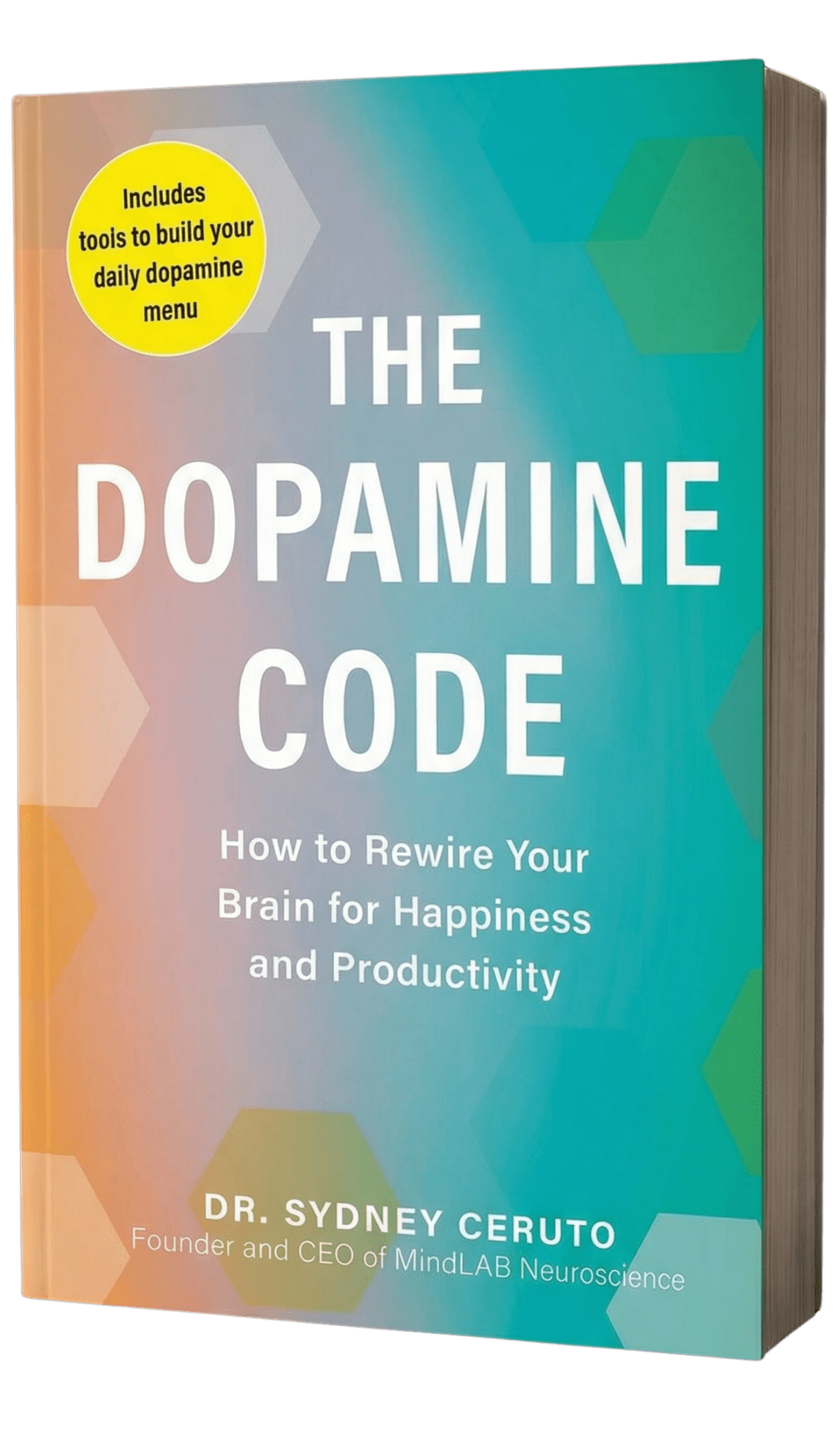
The Dopamine Code

Decode Your Drive

Why Your Brain Rewards the Wrong Things

Your brain's reward system runs every decision, every craving, every crash — and it was never designed for the life you're living. The Dopamine Code is Dr. Ceruto's framework for understanding the architecture behind what drives you, drains you, and keeps you locked in patterns that willpower alone will never fix.

Published by Simon & Schuster, The Dopamine Code is Dr. Ceruto's framework for building your own Dopamine Menu — a personalized system for motivation, focus, and enduring life satisfaction.

Order Now

Ships June 9, 2026

The Dopamine Code by Dr. Sydney Ceruto — Decode Your Drive
Locations

The Intelligence Brief

Neuroscience-backed analysis on how your brain drives what you feel, what you choose, and what you can’t seem to change — direct from Dr. Ceruto.