Energy Management in Lisbon

Mental fatigue is not a willpower problem. It is a measurable neurochemical state with specific mechanisms that targeted intervention can address.

Energy management isn't about discipline or scheduling — it's about understanding how your brain allocates, depletes, and recovers its resources across the demands of your day. At MindLAB Neuroscience, we identify the neural and behavioral patterns governing your energy output and build the biological and cognitive architecture for sustained, predictable performance.
Book a Strategy Call

Key Points

  1. A full day of demanding cognitive work produces measurable glutamate accumulation in the lateral prefrontal cortex — the first identified biological marker of decision fatigue.
  2. The brain cycles through higher and lower arousal on approximately 90-minute intervals — repeatedly overriding this rhythm produces progressively diminishing returns.
  3. Striatal dopamine synthesis capacity directly predicts willingness to expend cognitive effort — this is neurochemistry, not personality.
  4. Seven hours of office work with regular breaks fails to prevent mental fatigue, and cognitive functions do not return to baseline even after four hours of post-work rest.
  5. Heart rate variability, vagal tone, and prefrontal cognitive control are not separate systems — they share neural substrate, making autonomic health a direct determinant of cognitive energy.
  6. Cognitive energy is an emergent property of multiple interacting brain systems — metabolic, dopaminergic, and autonomic — requiring a multi-system approach to restore.
  7. The goal is restored capacity through biological realignment — working with the brain's architecture instead of against it.

Why Mental Energy Actually Runs Out

“Running out of mental energy by midafternoon is not a discipline failure. It is a biological event with a precise neurochemical signature — prefrontal glutamate accumulation that directly impairs cognitive control and shifts decisions toward low-effort options.”

The experience of running out of cognitive energy has a precise neurobiological explanation. Cognitive energy is not a single resource that depletes like a battery. It is an emergent property of multiple interacting systems: prefrontal metabolic availability, neurotransmitter pathways, adenosine signaling, and effort-cost computations. The anterior cingulate cortex — the brain’s error-detection center — coordinates these systems. When any of these systems becomes compromised, the conscious experience is identical: mental fatigue, motivational deflation, and declining performance.

The prefrontal cortex is metabolically expensive and uniquely vulnerable to energetic stress. A landmark neuroimaging study demonstrated that a full day of demanding cognitive work produces measurable glutamate accumulation in the lateral prefrontal cortex. This buildup is the brain’s primary excitatory neurotransmitter pooling beyond optimal levels. It directly impairs the neural circuits responsible for cognitive control, producing approximately 10% more impulsive decisions by end of day. This is the first biological marker ever identified for cognitive fatigue, and it explains why decision quality degrades across the workday even when motivation remains high.

How Motivation Gets Hijacked

Dopamine functions not as a simple pleasure chemical but as a motivational arbiter. It projects from the ventral tegmental area to the nucleus accumbens — the brain’s reward center — and encodes the baseline willingness to engage effort. Higher dopamine synthesis capacity in the striatum — subcortical structure central to motivation — predicts greater willingness to choose cognitively demanding tasks. The mesocortical pathway projects to the prefrontal cortex and regulates the stability of working memory representations. This follows an inverted U-shaped function: too little dopamine produces labile, disorganized representations, while too much creates rigidity and an inability to flexibly update. When dopaminergic tone drops the brain’s calculation shifts: every task is assigned a higher cost, and the motivation threshold rises.

Translucent copper and blue wave forms visualizing sleep cycle phases against deep navy background

This explains otherwise puzzling phenomena. Boredom feels exhausting because low-value tasks fail to recruit motivational signals, making prefrontal engagement effortful without neurochemical support. Passion projects feel energizing despite objective fatigue because high personal value elevates dopaminergic tone, reducing the subjective cost of effort. The experience of energy is as much about neural valuation as it is about metabolic state.

The Body’s Hidden Control System

The autonomic nervous system — the body’s automatic regulation system — provides the physiological infrastructure for cognitive energy regulation. Heart rate variability — beat-to-beat variation in cardiac rhythm — reflects the balance between sympathetic activation and parasympathetic recovery. Higher resting heart rate variability predicts superior performance across executive function domains: cognitive control, motor inhibition, flexibility, and working memory. This is not merely correlational. The neurovisceral integration model demonstrates that the same prefrontal circuits governing attentional self-regulation also regulate cardiac autonomic output. Training that improves heart rate variability also improves cognitive performance, and the relationship reverses during detraining.

When Natural Rhythms Break Down

The brain operates on approximately 90-minute ultradian cycles — the Basic Rest-Activity Cycle — that govern the oscillation between high neurochemical arousal and recovery phases. During each peak phase, key neurochemicals for sustained attention and motivation deploy at full capacity. After approximately 90 minutes of intense engagement, these concentrations deplete to a degree that degrades performance quality. Forcing continued work beyond this window does not multiply productivity. It generates cognitive debt that borrows against subsequent focus periods. This accumulates as end-of-day cortisol dysregulation that impairs sleep onset. Sleep impairment reduces the next day’s cognitive capacity in a compounding cycle. Research confirms that seven hours of simulated office work with 10-minute breaks every 50 minutes did not prevent mental fatigue, and cognitive functions did not return to baseline even after 4.5 hours of post-work rest.

The most dangerous form of energy mismanagement is allostatic overload. Under chronic stress, the prefrontal cortex begins to atrophy, and the amygdala — the brain’s threat-detection center — undergoes compensatory growth that heightens threat sensitivity. The result is the hallmark of burnout: feeling simultaneously wired and exhausted, unable to relax and unable to focus effectively.

Rebuilding Sustainable Mental Performance

Dr. Ceruto’s methodology addresses energy management at the level of neural systems rather than productivity techniques. The approach identifies which mechanisms are driving the depletion and targets each with interventions grounded in how these systems actually recover. Sustainable cognitive performance is architecturally distinct from maximum short-term output, and the brain’s biology provides the blueprint for building it.

For deeper context, explore why energy management beats time management.

Marker What You Experience What's Happening Neurologically What We Restructure
Afternoon cognitive collapse Sharp mornings degrading to foggy, impulsive decision-making by midafternoon Prefrontal glutamate has accumulated approximately 8% above baseline after sustained cognitive work, directly impairing cognitive control and shifting choices toward short-term, low-effort options Cognitive work patterns to align with the brain's ultradian architecture rather than fighting its 90-minute processing cycles
Motivational flatness Tasks that should feel engaging registering as not worth the effort, drive evaporating without explanation Dopamine signaling in the mesolimbic pathway has weakened — the brain calculates that the reward of completing a task no longer justifies the metabolic cost The upstream conditions suppressing dopamine availability — chronic stress, sleep deficit, and reward-system habituation
Diminishing returns from breaks Short breaks and coffee failing to restore the sharpness you had in the morning Seven hours of simulated office work with ten-minute breaks every fifty minutes fails to prevent mental fatigue — cognitive functions do not return to baseline even after four hours of rest The recovery architecture itself — matching break patterns to the brain's actual neurochemical clearance requirements
Wired yet depleted Simultaneously exhausted and unable to relax, a nervous energy that neither produces work nor permits rest Chronic sympathetic dominance has eroded heart rate variability and impaired prefrontal function — the body's recovery system and the brain's cognitive system are the same system, measured at different levels Vagal tone and parasympathetic capacity so the body's recovery system supports rather than undermines cognitive output
Decision quality decline Making increasingly impulsive or conservative choices as the day progresses without recognizing the shift Participants with higher prefrontal glutamate make approximately 10% more impulsive decisions — this is the first biological marker of decision fatigue, which is neurochemical decline The metabolic conditions that allow prefrontal function to sustain decision quality across a full working day

Why Energy Management Matters in Lisbon

Lisbon presents a specific and underappreciated challenge for cognitive energy management: an environment that simultaneously drains neural resources through multiple channels while masking the depletion behind an appealing lifestyle.

Antique rosewood desk with crystal brain sculpture and MindLAB journal in warm amber Lisbon afternoon light with historic European wood paneling

The most structurally significant drain is the time zone offset. Professionals based in Lisbon who collaborate with US teams face an effective workday that stretches across two distinct cognitive phases. Morning hours involve Portuguese-language operations often requiring high-quality performance in the person’s native language during the hours when the circadian system (relating to the body’s 24-hour biological clock) is signaling recovery.

The startup ecosystem concentrated around the Beato Innovation District, Parque das Nacoes, and the creative corridor running through Santos and LX Factory in Alcantara operates at remarkable intensity. This systematically overrides the brain’s natural rest-activity cycling. Web Summit alone produces a concentrated week of every energy disruptor operating simultaneously: fragmented schedules, high-stimulation networking, disrupted meal timing, and the sustained sympathetic activation of investor pitches and professional performance.

Lisbon’s 45% share of Portugal’s active startup ecosystem means the founder demographic most at risk for allostatic overload concentrates precisely here. The coworking spaces along Avenida da Republica, the creative studios in LX Factory, and the accelerator programs in Unicorn Factory all represent environments where work stimulation and personal recovery blend seamlessly. These spaces have architecturally eliminated that boundary. They systematically prevent the neural transitions necessary for genuine restoration.

The pace paradox is particularly insidious for energy management. Lisbon’s relaxed cultural rhythm creates an expectation of restorative benefit that the nervous system cannot actually access when chronic sympathetic activation persists underneath. Professionals find themselves surrounded by environmental cues that signal rest while physiologically incapable of responding to them. The dissonance itself becomes an additional energy drain, as the brain processes the gap between expected recovery and actual recovery as a form of unresolved stress.

For the international professional community the cognitive cost of cultural adaptation represents an invisible metabolic load. Code-switching between cultural norms, navigating unfamiliar administrative systems, and maintaining professional relationships across time zones all consume identity energy that is unavailable for either professional performance or genuine recovery.

Dr. Sydney Ceruto, PhD — Founder, MindLAB Neuroscience

Dr. Sydney Ceruto, PhD — Founder & CEO, MindLAB Neuroscience

Dr. Ceruto holds a PhD in Behavioral & Cognitive Neuroscience from NYU and two Master’s degrees from Yale University. She lectures at the Wharton Executive Development Program at the University of Pennsylvania and has been an Executive Contributor to the Forbes Coaching Council since 2019. Dr. Ceruto is the author of The Dopamine Code (Simon & Schuster, June 2026). She founded MindLAB Neuroscience in 2000 and has spent over 26 years pioneering Real-Time Neuroplasticity™ — a methodology that permanently rewires the neural pathways driving behavior, decisions, and emotional responses.

References

Wiehler, A., Branzoli, F., Adanyeguh, I., Mochel, F., & Pessiglione, M. (2022). A neuro-metabolic account of why daylong cognitive work alters the control of economic decisions. Current Biology, 32(17), 3564–3575.e5. https://doi.org/10.1016/j.curo.2022.07.010

Westbrook, A., van den Bosch, R., Maraone, J. I., Manohar, S., & Husain, M. (2020). Dopamine promotes cognitive effort by biasing the benefits versus costs of cognitive work. Science, 367(6484), 1362–1366. https://doi.org/10.1126/science.aaz5891

Thayer, J. F., & Lane, R. D. (2000). A model of neurovisceral integration in emotion regulation and dysregulation. Journal of Affective Disorders, 61(3), 201–216. https://doi.org/10.1016/S0165-0327(00)00338-4

Marcora, S. M., Staiano, W., & Manning, V. (2009). Mental fatigue impairs physical performance in humans. Journal of Applied Physiology, 106(3), 857–864. https://doi.org/10.1152/japplphysiol.91324.2008

Success Stories

“My body had simply stopped knowing when to sleep. Crossing time zones weekly for over two years had broken something fundamental, and every protocol, supplement, and device I tried couldn't hold longer than a few days. Dr. Ceruto identified the disruption at the level of my suprachiasmatic nucleus and recalibrated the signaling pattern driving the dysfunction. Within weeks, my circadian rhythm locked back in. I sleep now. Consistently. Regardless of where I land.”

Jonathan K. — Diplomat Geneva, CH

“My kids had been sleeping through the night for three years, but my brain hadn't caught up. I was still waking every ninety minutes like clockwork — no amount of sleep hygiene or supplements touched it. Dr. Ceruto identified the hypervigilance loop that had hardwired itself during those early years and dismantled it at the source. My brain finally learned the threat was over. I sleep through the night now without effort.”

Catherine L. — Board Director Greenwich, CT

“Four hours a night for over two years — that was my ceiling. Supplements, sleep protocols, medication — nothing touched it because nothing addressed why my brain wouldn't shut down. Dr. Ceruto identified the cortisol loop that was keeping my nervous system locked in a hypervigilant state and dismantled it. I sleep now. Not because I learned tricks — because the pattern driving the insomnia no longer exists.”

Adrian M. — Hedge Fund Manager New York, NY

“Endocrinologists, sleep clinics, functional medicine — every specialist cleared me, and no one could tell me why I was exhausted every single day. Dr. Ceruto identified that my HPA axis was locked in a low-grade stress activation I couldn't feel consciously. Once that pattern was disrupted at the neurological level, my energy came back in a way that felt completely foreign. I'd forgotten what it was like to not be tired.”

Danielle K. — Luxury Hospitality Beverly Hills, CA

“It took years and many other professionals — not to mention tens of thousands of dollars — before I was recommended to Dr. Ceruto. I’d been suffering with chronic anxiety, OCD, and distorted thinking. After just two sessions, I started to see positive change. By the time my program ended, I had my sanity and my life back. Sydney creates a warm, supportive atmosphere where I found myself sharing things I’ve never told anyone. She is there for you anytime you need her.”

Nicholas M. — Private Equity Hong Kong

“Three months. That's how long it took to go from debilitating panic to leading with clarity. Years of conventional approaches hadn't moved the needle — Dr. Ceruto identified the root neural pattern and eliminated it. She didn't teach me to manage the panic. She made it unnecessary. I didn't know that was possible.”

Ella E. — Media Executive Manhattan, NY

Frequently Asked Questions About Energy Management in Lisbon

What is neuroscience-based energy management?

Neuroscience-based energy management addresses the brain systems governing cognitive stamina, sustained focus, and mental recovery. Rather than offering productivity techniques, Dr. Ceruto's approach identifies the specific neural mechanisms driving energy depletion. These interventions target prefrontal metabolic dynamics, dopaminergic tone, autonomic balance, and stress-response regulation based on how these systems actually function and recover.

Why does mental fatigue persist even with adequate sleep and nutrition?

Cognitive energy is governed by multiple interacting neural systems, and disruption to any one of them produces the experience of fatigue regardless of other inputs. Chronic stress can dysregulate the HPA axis — the body's central stress-response system — and reduce dopaminergic tone even when sleep and nutrition are adequate. Sustained cognitive demand without aligned recovery periods accumulates glutamate — the brain's primary excitatory chemical — in prefrontal circuits, degrading performance quality independent of willpower. The brain’s effort-cost calculation — mediated by the anterior cingulate cortex — can shift toward overestimating the cost of every task when the underlying neural infrastructure is compromised.

Who benefits from this approach?

Anyone experiencing persistent cognitive fatigue, declining focus, or the sense that mental effort has become disproportionately costly. This includes individuals sustaining demanding roles across time zones, those who feel simultaneously driven and depleted, and people whose recovery periods no longer produce genuine restoration. It also includes anyone navigating the cumulative demands of cultural transition, language switching, and professional performance simultaneously.

What does the process look like?

The process begins with a Strategy Call — a phone-based conversation where Dr. Ceruto identifies which neural energy systems are compromised and determines the appropriate intervention pathway. This is a substantive analysis, not a general consultation, and carries a $250 fee. Program structure and investment details are discussed during the Strategy Call.

How long before someone notices changes in their cognitive energy?

Many individuals experience measurable improvements in sustained focus and decision quality within the first weeks of targeted intervention. This occurs particularly when autonomic balance and ultradian rhythm alignment (relating to biological cycles shorter than 24 hours) are addressed early. Deeper shifts — resolving overload, restoring dopaminergic tone — unfold over a longer engagement as the neural systems responsible for energy regulation recalibrate.

Also available in: Miami · Wall Street · Midtown Manhattan · Beverly Hills

Take the First Step Toward Energy Management

The Strategy Call is a focused conversation with Dr. Ceruto that maps the specific neural mechanisms driving your concerns and determines the right path forward.

Book a Strategy Call
MindLAB Neuroscience consultation room

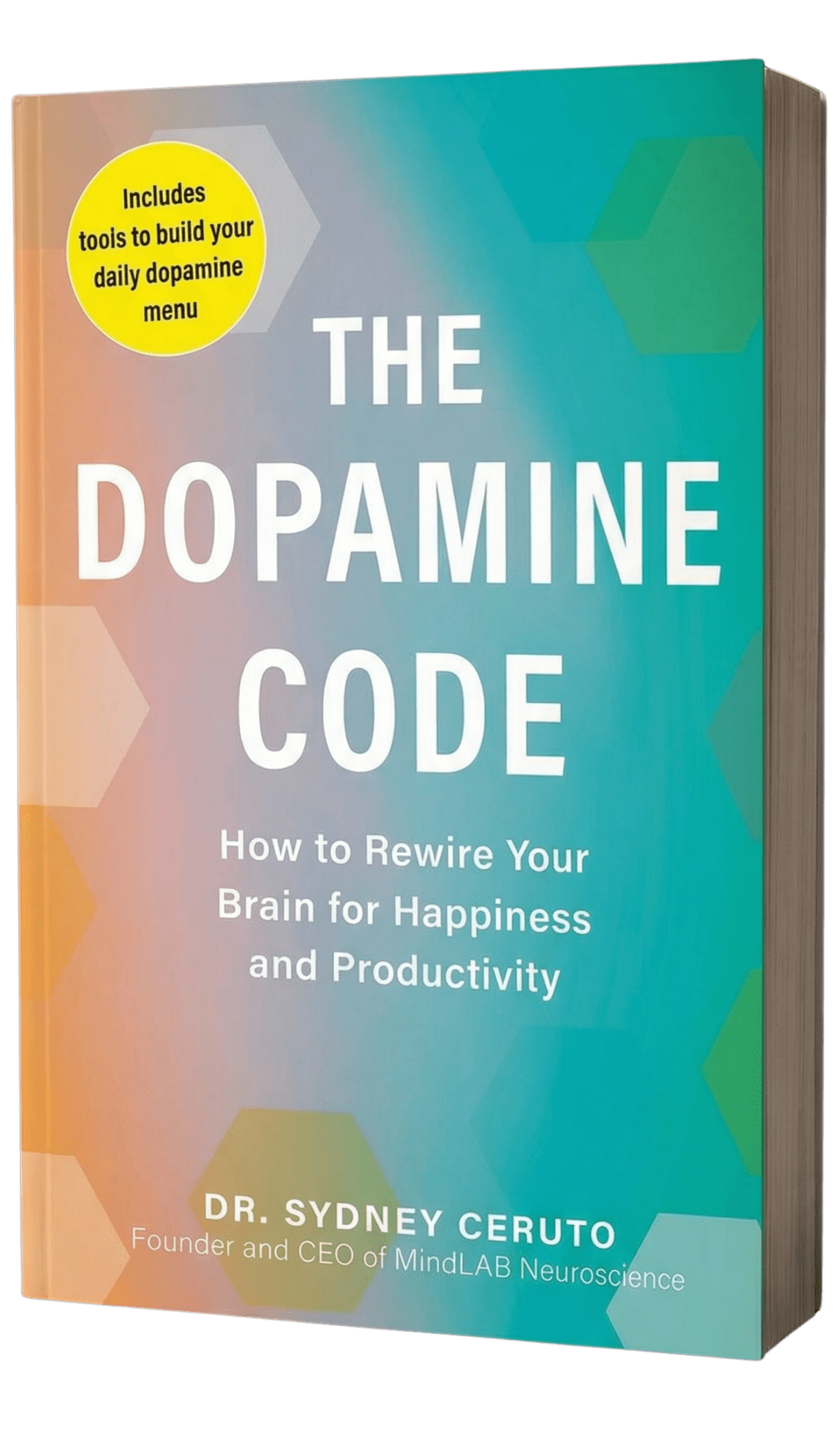
The Dopamine Code

Decode Your Drive

Why Your Brain Rewards the Wrong Things

Your brain's reward system runs every decision, every craving, every crash — and it was never designed for the life you're living. The Dopamine Code is Dr. Ceruto's framework for understanding the architecture behind what drives you, drains you, and keeps you locked in patterns that willpower alone will never fix.

Published by Simon & Schuster, The Dopamine Code is Dr. Ceruto's framework for building your own Dopamine Menu — a personalized system for motivation, focus, and enduring life satisfaction.

Order Now

Ships June 9, 2026

The Dopamine Code by Dr. Sydney Ceruto — Decode Your Drive
Locations

The Intelligence Brief

Neuroscience-backed analysis on how your brain drives what you feel, what you choose, and what you can’t seem to change — direct from Dr. Ceruto.