| Marker | Traditional Approach | Neuroscience-Based Approach | Why It Matters |
|---|---|---|---|
Why Fear & Avoidance Resolution Matters in Lisbon
How Lisbon’s International Environment Interacts with Avoidance Patterns
Lisbon has become one of Europe’s most dynamic cities for professionals in transition. The startup ecosystem around Parque das Nações, the creative industries in Santos and Príncipe Real, and the growing financial services presence along the Avenida da Liberdade attract ambitious people from across Europe and beyond. For someone carrying an avoidance pattern, the city’s opportunities create a paradox: everything you want is available, and the pattern prevents you from reaching for it.
Lisbon’s expatriate and international community adds another dimension. Many professionals in Chiado, Estrela, and Alcântara relocated specifically to build a new chapter. When avoidance patterns travel with you, the fresh start you imagined collides with the same constraints you were trying to leave behind. The geography changed. The neural pattern did not.
Why Relocation Does Not Resolve Avoidance
The brain does not reset when you change cities. The amygdala — the brain’s threat-detection center — carries its learned associations regardless of longitude. A professional who avoided difficult conversations in London will avoid them in Lisbon. A founder who hesitated to pitch investors in Berlin will hesitate at Web Summit in Parque das Nações. The scenery shifts. The pattern persists.
This discovery is common among Lisbon’s international residents. The initial excitement of a new city masks the pattern for months. Eventually, the same avoidance behaviors emerge in the new context — declining invitations in the Bairro Alto, postponing business decisions, avoiding networking events along the waterfront. The realization that the pattern followed you is often the catalyst for seeking structural change.
Dr. Ceruto’s Approach for International Clients in Lisbon
Dr. Ceruto works with clients in Lisbon by phone, which removes geography as a barrier entirely. Her methodology — Real-Time Neuroplasticity™ — targets the neural pattern generating the fear response, not the specific situations that trigger it. This makes the work equally effective whether a client’s avoidance centers on professional contexts in Avenida da Liberdade or personal relationships in Cascais.
The phone-based format is intentional. Research shows that removing visual stimuli activates deeper processing and produces greater clarity during the kind of focused work this methodology requires.
Lisbon’s environment amplifies the results. When avoidance patterns resolve, clients find themselves engaging with the city’s opportunities in ways they had been unconsciously restricting — launching the project they postponed, attending the events they declined, having the conversations they avoided.

Breaking the Cycle in a City Built for New Beginnings
Lisbon attracts people who are seeking transformation. The city’s cultural openness, the affordability relative to London or Paris, the creative energy of LX Factory and Santos, and the startup infrastructure of Web Summit and its year-round ecosystem all signal possibility. When avoidance patterns travel with you into this environment, the contrast between what the city offers and what the pattern permits becomes impossible to ignore.
Many international professionals in Lisbon describe a specific frustration: they moved to reinvent themselves, and the reinvention stalled. The social events in Bairro Alto feel intimidating rather than exciting. The professional opportunities along the waterfront feel risky rather than inviting. The pattern reframes every opening as a potential threat.
Dr. Ceruto’s work resolves this contradiction at its source. When the neural pattern changes, the city’s environment stops feeling like a test and starts feeling like what it actually is — an invitation. Clients in Lisbon consistently report that the shift transforms not just their behavior but their entire experience of living in the city.

Dr. Sydney Ceruto, PhD — Founder & CEO, MindLAB Neuroscience
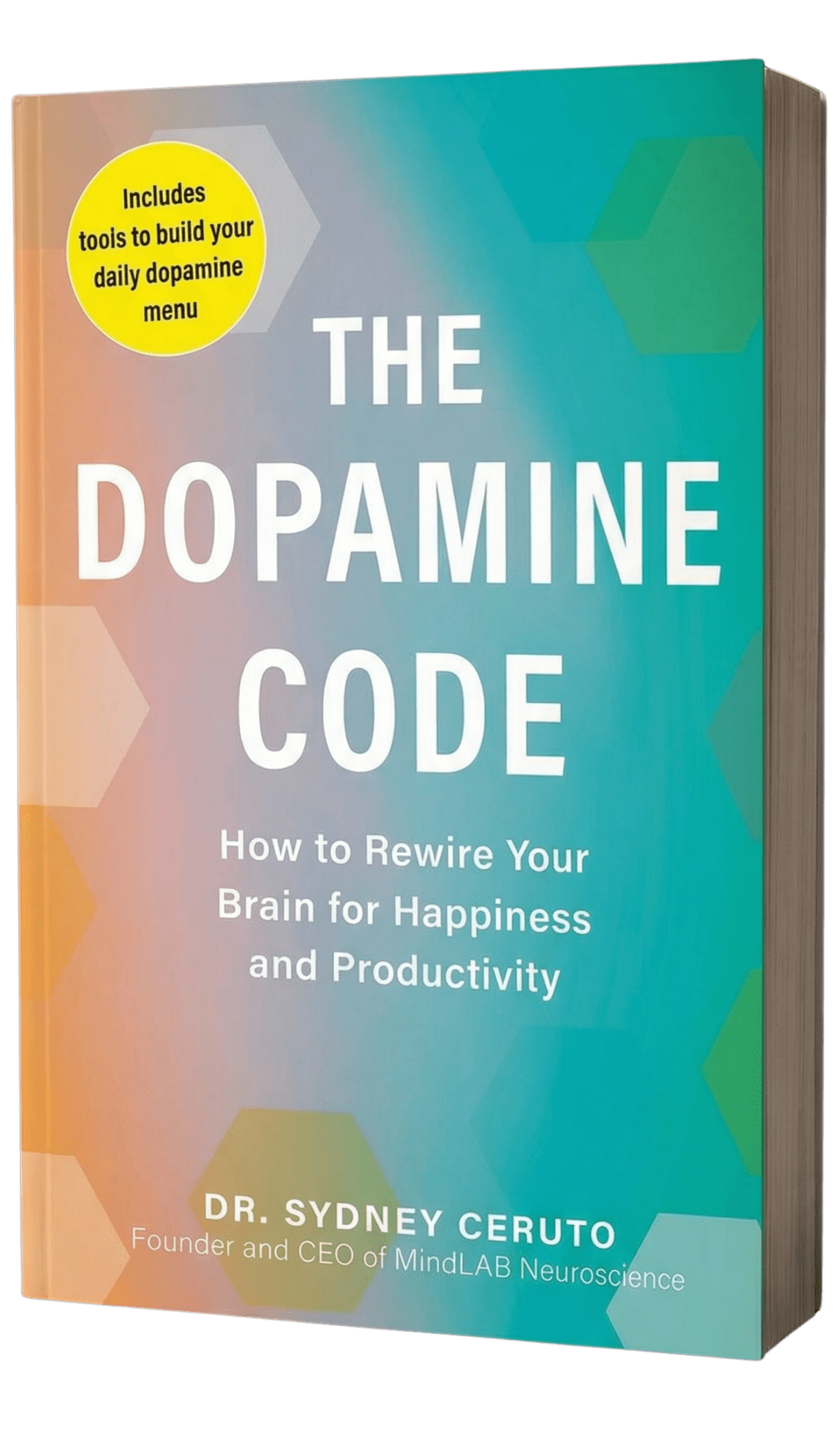
Dr. Ceruto holds a PhD in Behavioral & Cognitive Neuroscience from NYU and two Master’s degrees from Yale University. She lectures at the Wharton Executive Development Program at the University of Pennsylvania and has been an Executive Contributor to the Forbes Coaching Council since 2019. Dr. Ceruto is the author of The Dopamine Code (Simon & Schuster, June 2026). She founded MindLAB Neuroscience in 2000 and has spent over 26 years pioneering Real-Time Neuroplasticity™ — a methodology that permanently rewires the neural pathways driving behavior, decisions, and emotional responses.
Success Stories
“I'd optimized everything — diet, fitness, sleep — but my cognitive sharpness was quietly declining and no one could explain why. Dr. Ceruto identified the synaptic density patterns that were thinning and built a protocol to reverse the trajectory. This wasn't prevention in theory. My neuroplasticity reserve is measurably stronger now than it was three years ago. Nothing I'd tried before even addressed the right problem.”

Identifying details withheld to protect client confidentiality.
All outcomes represent genuine engagements with Dr. Ceruto.
Frequently Asked Questions About Fear & Avoidance Resolution
Also available in: Miami · Wall Street · Midtown Manhattan · Beverly Hills
Take the First Step
The Strategy Call is a focused conversation with Dr. Ceruto that maps the specific neural mechanisms driving your concerns and determines the right path forward.
Book a Strategy Call
The Dopamine Code
Decode Your Drive
Why Your Brain Rewards the Wrong Things
Your brain's reward system runs every decision, every craving, every crash — and it was never designed for the life you're living. The Dopamine Code is Dr. Ceruto's framework for understanding the architecture behind what drives you, drains you, and keeps you locked in patterns that willpower alone will never fix.
Published by Simon & Schuster, The Dopamine Code is Dr. Ceruto's framework for building your own Dopamine Menu — a personalized system for motivation, focus, and enduring life satisfaction.
Order NowShips June 9, 2026