





Key Points
- Relocating changes your environment but not your neural architecture. The circuits producing relationship patterns travel with you across borders and continents.
- Cross-cultural relationships add neural complexity by forcing the brain to navigate competing frameworks for intimacy and emotional expression simultaneously.
- Expat communities form accelerated bonds driven by shared displacement, masking incompatible relational architectures until the novelty phase ends.
- Language barriers surface hidden neural patterns because reduced verbal fluency forces greater reliance on automatic relational circuitry.
- Real-Time Neuroplasticity™ produces a genuine relational reset by rewiring the circuits themselves, not by changing the context around them.
| Marker | Traditional Approach | Neuroscience-Based Approach | Why It Matters |
|---|---|---|---|
| Primary Focus | Relationship Pattern Analysis | Talk-Based Counseling | Geographic Fresh Start |
| Target | Neural circuits driving repetition | Conscious beliefs and narratives | External environment only |
| Methodology | Real-Time Neuroplasticity™ | Conversational exploration | New context, same architecture |
| Durability of Change | Permanent neural rewiring | Requires ongoing reinforcement | Patterns resurface within months |
| Cross-Cultural Fit | Architecture-based, culture-independent | May lack cross-cultural nuance | No internal change mechanism |
| Speed of Results | Shifts within weeks | Months to years | Temporary novelty effect |
Why Relationship Pattern Analysis Matters in Lisbon
How Lisbon’s Expat and Cultural Landscape Reveals Relationship Patterns
Lisbon attracts people who are reinventing their lives. Entrepreneurs building startups in the Baixa, creative professionals who relocated to Principe Real, and executives working remotely from apartments in Chiado all arrived with the same unspoken assumption: a new city would mean new relational dynamics. For many, the first year confirms this hope. The novelty of navigating Alfama’s cobblestone streets, building a social circle from scratch in Santos, and experiencing the warmth of Portuguese culture masks the patterns that traveled with them. Everything feels different. The relationships feel different. But the neural architecture producing them has not changed at all.
By the second or third year, the architecture reasserts itself with unmistakable clarity. The same conflicts surface with different people. The same emotional distance appears despite a partner who speaks a different language and holds different cultural values. The same withdrawal pattern activates in friendships formed over wine in Bairro Alto or along the riverfront in Cais do Sodré. The geography changed. The neural circuits did not. The person who left New York or London or São Paulo to escape a relational pattern finds themselves reproducing it in a city that was supposed to be the fresh start. This realization is often more painful than the original pattern because it eliminates the comfortable explanation that the problem was the environment.
Lisbon’s international community adds a specific complication that accelerates pattern visibility. Relationships formed across cultural boundaries carry additional neural load as the brain navigates competing frameworks for intimacy, loyalty, and emotional expression. Someone whose architecture was built in an Anglo-Saxon emotional culture encounters a Portuguese or Brazilian partner whose neural framework for expressing love, managing conflict, and demonstrating commitment operates on entirely different circuitry. Neither person is wrong. The friction comes from two architectures colliding beneath the level of conscious communication. Language barriers amplify this because reduced verbal fluency forces greater reliance on automatic neural responses rather than the deliberate communication that might bridge the gap.
The expat social ecosystem in neighborhoods like Principe Real, Estrela, and Campo de Ourique creates its own relational dynamics. Friendships form with unusual speed because shared displacement creates instant bonding. But that accelerated intimacy masks incompatible relational architectures. When the novelty phase ends and the friendship enters the phase requiring sustained emotional investment, the same patterns that surfaced in previous cities emerge. The person who always becomes the organizer but never receives reciprocal care discovers that same dynamic in Lisbon. The person who withdraws when friends make demands finds themselves withdrawing in their Lisbon circle exactly as they did everywhere before.
Dr. Ceruto’s Real-Time Neuroplasticity™ identifies the architecture you carried to Lisbon and rewires it directly. The process does not require you to revisit every past relationship or unpack every cultural framework operating in your current connections. It maps the circuits governing how you form connections now and permanently changes them at the structural level. The result is a genuine fresh start, not just a geographic one, and it works regardless of which city, culture, or language your next relationship unfolds within.


Dr. Sydney Ceruto, PhD — Founder & CEO, MindLAB Neuroscience
Dr. Ceruto holds a PhD in Behavioral & Cognitive Neuroscience from NYU and two Master’s degrees from Yale University. She lectures at the Wharton Executive Development Program at the University of Pennsylvania and has been an Executive Contributor to the Forbes Coaching Council since 2019. Dr. Ceruto is the author of The Dopamine Code (Simon & Schuster, June 2026). She founded MindLAB Neuroscience in 2000 and has spent over 26 years pioneering Real-Time Neuroplasticity™ — a methodology that permanently rewires the neural pathways driving behavior, decisions, and emotional responses.
Success Stories
“Four hours a night for over two years — that was my ceiling. Supplements, sleep protocols, medication — nothing touched it because nothing addressed why my brain wouldn't shut down. Dr. Ceruto identified the cortisol loop that was keeping my nervous system locked in a hypervigilant state and dismantled it. I sleep now. Not because I learned tricks — because the pattern driving the insomnia no longer exists.”

Identifying details withheld to protect client confidentiality.
All outcomes represent genuine engagements with Dr. Ceruto.
Frequently Asked Questions About Relationship Pattern Analysis
What is Relationship Pattern Analysis?
It identifies the recurring neural circuits that produce the same relational dynamics across different people, contexts, and even different countries. The focus is on the architecture driving repetition, not on analyzing any single relationship.
Can relocating to Lisbon actually change my relationship patterns?
No. Geographic change alters your environment but not your neural architecture. The circuits producing your relational patterns travel with you. A new city provides new contexts for the same dynamics to replay.
Why do my patterns seem worse in an international setting?
Cross-cultural relationships add neural complexity. Your brain navigates competing frameworks for intimacy, communication, and emotional expression simultaneously. This additional load makes existing architectural weaknesses more visible, not worse.
I built a completely new social circle in Lisbon. Why are the same problems appearing?
New people activate the same neural architecture. Your brain selects for and responds to relational dynamics based on established circuitry, not based on who the specific person is. The cast changes. The script does not.
What happens during the Strategy Call?
The Strategy Call is a focused phone conversation with Dr. Ceruto. She maps the neural mechanisms behind your specific patterns and determines whether this approach fits your situation. The call is conducted by phone regardless of location.
How does this work for someone living abroad?
The process works identically regardless of your location. Real-Time Neuroplasticity™ targets neural architecture, which does not vary by geography. Many of Dr. Ceruto's clients are internationally based.
Is the language barrier a factor in my relationship patterns?
Language differences can surface neural patterns that remained hidden in your native language. When verbal fluency decreases, the brain relies more heavily on established relational circuitry, making automatic patterns more pronounced and harder to override consciously.
How long does the process take?
Most people notice shifts in automatic relational responses within the first several weeks. Complete architectural rewiring varies by complexity, but the process is faster than insight-based approaches because it targets circuitry directly.
Do expat communities in Lisbon reinforce certain patterns?
Yes. Expat social circles in areas like Principe Real and Chiado often form quickly and carry an intensity driven by shared displacement. This accelerated bonding can mask incompatible relational architectures until the novelty phase ends.
What qualifies Dr. Ceruto to do this work?
Dr. Ceruto holds a PhD in Behavioral and Cognitive Neuroscience from NYU, two Master's degrees from Yale, and has spent over 26 years pioneering Real-Time Neuroplasticity™. She works with internationally based clients across multiple continents.
Also available in: Miami · Wall Street · Midtown Manhattan · Beverly Hills
Take the First Step
The Strategy Call is a focused conversation with Dr. Ceruto that maps the specific neural mechanisms driving your concerns and determines the right path forward.
Book a Strategy Call
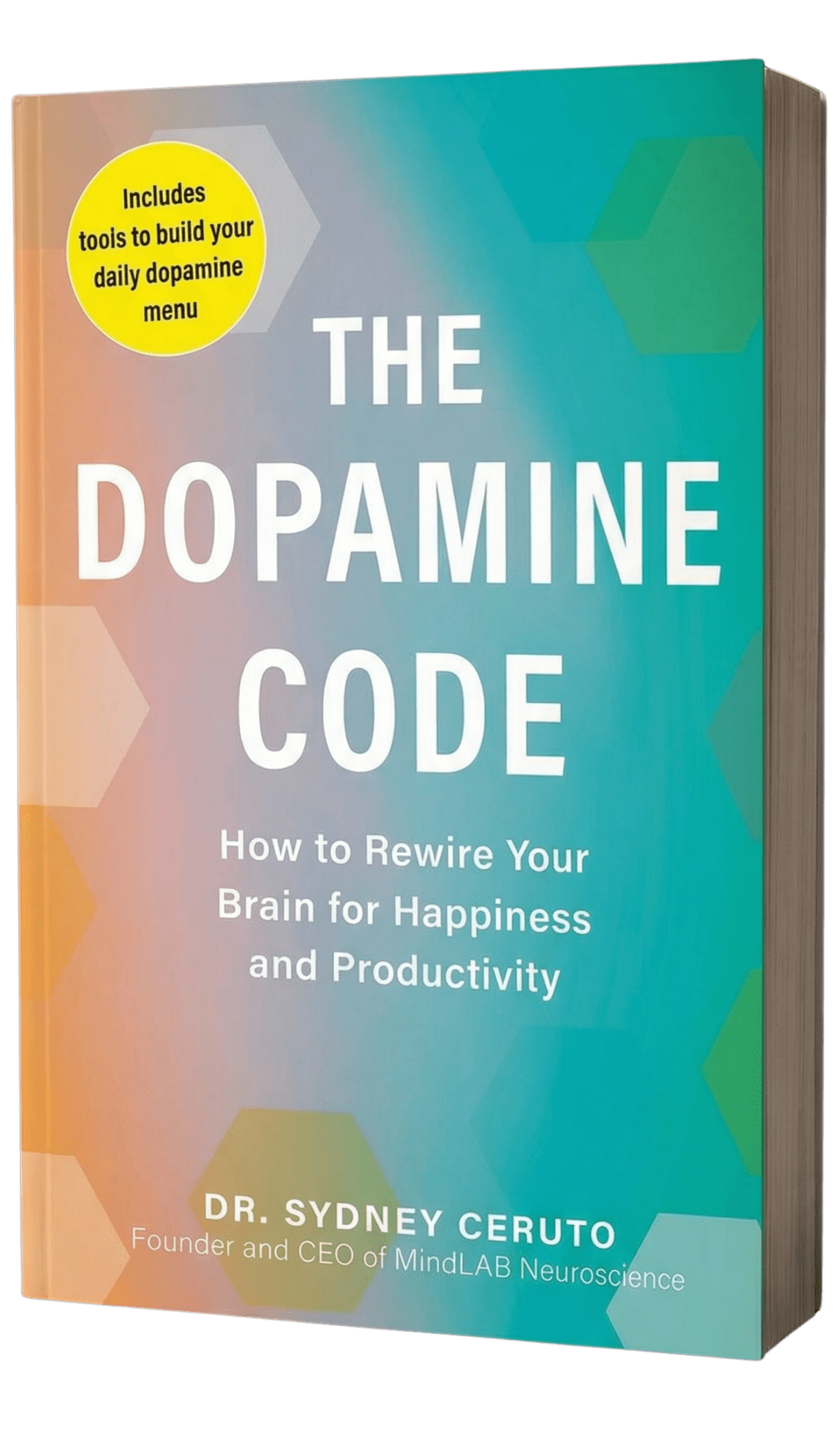
The Dopamine Code
Decode Your Drive
Why Your Brain Rewards the Wrong Things
Your brain's reward system runs every decision, every craving, every crash — and it was never designed for the life you're living. The Dopamine Code is Dr. Ceruto's framework for understanding the architecture behind what drives you, drains you, and keeps you locked in patterns that willpower alone will never fix.
Published by Simon & Schuster, The Dopamine Code is Dr. Ceruto's framework for building your own Dopamine Menu — a personalized system for motivation, focus, and enduring life satisfaction.
Order NowShips June 9, 2026