Sleep Coaching in Lisbon

Sleep difficulties are rarely about sleep itself. Dr. Ceruto's methodology targets the neural architecture keeping the brain locked in wakefulness.

Sleep difficulties are rarely about sleep itself. Dr. Ceruto’s methodology targets the neural architecture keeping the brain locked in wakefulness.

Book a Strategy Call

Key Points

  1. Sleep disruption that persists despite knowing what to do has a precise neurobiological explanation involving three overlapping mechanisms that information alone cannot override.
  2. The Default Mode Network shows elevated activity during the pre-sleep period in insomnia sufferers — the strength of that activity predicts how long it takes to fall asleep.
  3. Approximately 78 percent of surveyed professionals report sleeping fewer than the recommended seven hours, with 56 percent citing inability to turn off work thoughts as the primary barrier.
  4. The glymphatic system clears metabolic waste at dramatically higher rates during deep sleep — chronic disruption impairs the brain's nightly maintenance, contributing to long-term cognitive decline.
  5. Instructing people to fall asleep quickly under cognitive load increases the time to fall asleep compared to those told to sleep whenever they choose — effort is counterproductive.
  6. Evening cortisol elevation from a recalibrated stress system signals the brain that the environment is unsafe, preventing the sleep-wake switch from committing to sleep.
  7. Sleep work grounded in neuroscience begins with understanding the specific circuit-level failure keeping a particular brain awake — then restructuring the conditions so sleep emerges automatically.

Why Smart People Can’t Sleep

“The skills that produce results during the day — focused attention, goal monitoring, strategic adjustment — become the exact mechanisms that block sleep at night. Approximately 56 percent of professionals identify inability to turn off work thoughts as their primary barrier.”

The person who understands exactly why sleep matters yet lies awake replaying tomorrow’s decisions is not failing at discipline. The brain has developed a structural incompatibility between the neural patterns that drive daytime performance and the disengagement required for sleep onset. Three overlapping mechanisms account for the majority of sleep disruption in cognitively active individuals, and each operates below the threshold of willpower or conventional sleep advice.

When the Mind Won’t Stop Planning

The first is persistent activation of the Default Mode Network — the brain’s self-referential thought system — during the pre-sleep window. This network, centered on the medial prefrontal cortex and posterior cingulate cortex — a core self-reflection region —, governs mind-wandering, future projection, and evaluative thinking. During wakefulness, it suppresses when external tasks demand attention. At bedtime, it activates with full force. For someone whose days involve high-stakes planning, unresolved decision trees, or complex interpersonal dynamics, the Default Mode Network does not simply turn off because the lights are out. Neuroimaging confirms that individuals with chronic sleep difficulty show increased Default Mode Network activation during the exact sleep stages where these regions should be quiescent. Functional connectivity — how brain regions communicate in real time — studies demonstrate that the strength of Default Mode Network activity during pre-sleep wakefulness predicts objective sleep efficiency — the more active the network, the worse the sleep that follows.

How Stress Hormones Block Sleep

The second mechanism involves the hypothalamic-pituitary-adrenal axis — the hormonal cascade governing the body’s stress response. Under sustained cognitive demand, this system maintains elevated cortisol not just during acute stress but throughout the 24-hour cycle. Evening cortisol levels that should be at their lowest remain elevated, directly blocking the neurochemical conditions required for sleep initiation. This is not a response to a single bad day. It is a trait-level pattern that builds over weeks and months of sustained demand without adequate recovery.

Translucent copper and blue wave forms visualizing sleep cycle phases against deep navy background

When Your Brain Gets Stuck in High Gear

The third is cortical hyperarousal — a measurable state in which fast-frequency brain activity dominates during the pre-sleep period when slower oscillations should be taking over. Beta and gamma wave activity remain elevated, maintaining the brain in a “locked-on” wake state. The sleeping brain attempts to shift into restorative mode while the arousal system refuses to disengage.

These three mechanisms converge to produce a paradox: the harder the effort to perform well at sleep, the more the brain activates precisely the systems that prevent it. Instructing someone to fall asleep quickly under cognitive load actually increases sleep onset latency. The ironic monitoring process sustains the attentional systems that keep the brain awake. Every check for signs of drowsiness is itself an activating event.

The Hidden Cost of Poor Sleep

The consequences of sustained poor sleep extend far beyond fatigue. A single night of inadequate sleep produces a 60% amplification in amygdala reactivity to negative stimuli, paired with a near-complete disruption of the prefrontal cortex’s ability to regulate emotional responses. Chronic restriction to six hours per night over two weeks produces cumulative cognitive performance deficits equivalent to two full nights of total sleep deprivation the brain recruits additional regions to maintain output — while the metabolic cost of that performance escalates invisibly. This is sleep disruption’s hidden tax: maintaining quality while burning through significantly greater neural resources, creating cognitive reserve depletion that accumulates over months and years. Among working adults, insomnia costs the equivalent of 11.3 lost productivity days per year, primarily through presenteeism rather than absence.

What Your Brain Actually Does During Sleep

Sleep is not a passive process. It is the brain’s active maintenance window. During slow-wave sleep, the glymphatic system — the brain’s waste clearance network — increases interstitial space by approximately 60%, enabling accelerated removal of metabolic byproducts that accumulate during waking neural activity. During REM sleep, emotional memories are reprocessed in a neurochemical environment uniquely suited to reducing their intensity while preserving their content. Sleep spindles coordinate the transfer of new learning from temporary hippocampal (related to the brain’s memory center) storage into long-term cortical networks.

A Different Approach to Sleep Recovery

Dr. Ceruto’s methodology addresses sleep disruption at the level of neural architecture rather than surface-level habits. The approach begins with identifying which mechanisms are driving the disruption the body’s automatic regulation system — downregulation to shift the sympathetic-parasympathetic balance toward the conditions required for sleep onset, chronotype alignment to reduce the friction of forcing performance against circadian phase (relating to the body’s 24-hour biological clock), and ultradian rhythm management (relating to biological cycles shorter than 24 hours) to prevent the accumulation of cognitive debt that compounds into nighttime hyperarousal. The brain retains the neuroplastic capacity (related to the brain’s ability to rewire itself) to reconstruct healthy sleep architecture. The question is whether the intervention addresses the actual mechanism or simply adds another layer of effort to a process that requires its abandonment.

For deeper context, explore circadian health and sleep optimization.

Marker What You Experience What's Happening Neurologically What We Restructure
Mind replaying the day at bedtime Lying awake as your brain rehashes conversations, evaluates decisions, and anticipates tomorrow The Default Mode Network — active during mind-wandering and self-evaluation — does not switch off after sustained cognitive work; it accelerates during the pre-sleep period The pre-sleep cognitive environment so the Default Mode Network disengages rather than accelerates when the day ends
Physically tired but neurologically alert Exhaustion in the body with a buzzing, wired quality in the mind that will not resolve Evening cortisol remains elevated from a recalibrated HPA axis, signaling the brain that the environment is still unsafe — the sleep-wake switch cannot commit to the sleep side The cortisol rhythm so evening physiology supports rather than opposes sleep onset
Sleep strategies making things worse Darkened bedroom, phone away, breathing exercises attempted — and still lying awake at 2 AM Every deliberate strategy reintroduces executive-function circuits that must disengage for sleep — trying harder activates the planning centers and sends a signal that a task is still in progress The person's relationship with sleep itself rather than adding another technique to an already overloaded system
Accumulating cognitive decline Months of disrupted sleep producing measurable drops in memory, processing speed, and emotional regulation The glymphatic system clears metabolic waste at dramatically higher rates during sleep — each hour of lost deep sleep represents a measurable reduction in neural housekeeping capacity The circuit-level failure keeping the individual brain awake so deep-sleep glymphatic clearance can resume
Knowing what to do but unable to do it Having read every sleep article and followed every recommendation without result Three overlapping mechanisms — Default Mode Network persistence, HPA axis recalibration, and the effort paradox — are generating wakefulness through biological systems that information alone cannot override The specific mechanism driving the individual's pattern rather than layering additional sleep strategies onto a brain already overloaded with them

Why Sleep Coaching Matters in Lisbon

Lisbon’s international professional community faces a specific and clinically recognizable pattern of sleep disruption driven by structural forces that no amount of sleep hygiene can resolve.

Antique rosewood desk with crystal brain sculpture and MindLAB journal in warm amber Lisbon afternoon light with historic European wood paneling

The most immediate is time zone misalignment. Lisbon operates on Western European Time, positioning it five hours ahead of New York and eight hours ahead of Los Angeles. For the estimated 16,000 digital nomads and the thousands of startup founders, remote workers, and international corporate employees based across Chiado, Parque das Nacoes, and the Cascais corridor, this means substantive collaboration with US counterparts begins in the Lisbon afternoon and extends deep into the evening. Investor calls with US venture capital firms at 5 PM Eastern arrive at 10 or 11 PM in Lisbon. A founder working with San Francisco-based partners faces an effective workday that does not end until local midnight. This is not occasional disruption — it is systematic late-evening cognitive activation that compresses the sleep window and prevents the pre-sleep neural deceleration that healthy sleep architecture requires.

Portuguese dining culture compounds the problem. Dinner between 8 PM and 10 PM is standard, and international professionals who adopt local patterns often do not recognize the timing component of their sleep difficulties. Research demonstrates that each additional hour of late evening eating increases the odds of short sleep duration by 30% and elevates sleep latency above 30 minutes by 14%. For someone dining at 9:30 PM and targeting a midnight sleep, the interval falls well within the high-risk window for delayed sleep onset and impaired melatonin secretion.

Lisbon’s seasonal light variation adds another layer. Summer sunsets after 9 PM delay the environmental light cue that triggers melatonin onset, pushing the natural sleep window later. Combined with the social rhythm of Lisbon summers the net effect is a systematically delayed sleep schedule from June through September.

The deeper challenge is what might be called the pace paradox. Lisbon’s physical environment signals safety and deceleration — the unhurried walking culture, the slow espresso, the Atlantic proximity. Yet the professional demands of the international tech community remain structurally identical to London or New York. The body and environment suggest rest while professional obligations maintain chronic sympathetic activation. The result is a distinctive form of energetic dissonance: too stimulated to sleep fully, too drained by irregular schedules to sustain the performance expected the next morning.

For professionals embedded in the startup ecosystem radiating from the Beato Innovation District and Unicorn Factory, or the creative-tech corridor around LX Factory in Alcantara, the boundary between workspace and social environment blurs entirely — making the separation of stimulation and recovery meaningfully harder.

Dr. Sydney Ceruto, PhD — Founder, MindLAB Neuroscience

Dr. Sydney Ceruto, PhD — Founder & CEO, MindLAB Neuroscience

Dr. Ceruto holds a PhD in Behavioral & Cognitive Neuroscience from NYU and two Master’s degrees from Yale University. She lectures at the Wharton Executive Development Program at the University of Pennsylvania and has been an Executive Contributor to the Forbes Coaching Council since 2019. Dr. Ceruto is the author of The Dopamine Code (Simon & Schuster, June 2026). She founded MindLAB Neuroscience in 2000 and has spent over 26 years pioneering Real-Time Neuroplasticity™ — a methodology that permanently rewires the neural pathways driving behavior, decisions, and emotional responses.

References

Yoo, S.-S., Gujar, N., Hu, P., Jolesz, F. A., & Walker, M. P. (2007). The human emotional brain without sleep — a prefrontal amygdala disconnect. Current Biology, 17(20), R877–R878. https://doi.org/10.1016/j.cub.2007.08.007

Van Dongen, H. P. A., Maislin, G., Mullington, J. M., & Dinges, D. F. (2003). The cumulative cost of additional wakefulness: Dose-response effects on neurobehavioral functions and sleep physiology from chronic sleep restriction and total sleep deprivation. Sleep, 26(2), 117–126. https://doi.org/10.1093/sleep/26.2.117

Xie, L., Kang, H., Xu, Q., Chen, M. J., Liao, Y., Thiyagarajan, M., O’Donnell, J., Christensen, D. J., Nicholson, C., Iliff, J. J., Takano, T., Deane, R., & Nedergaard, M. (2013). Sleep drives metabolite clearance from the adult brain. Science, 342(6156), 373–377. https://doi.org/10.1126/science.1241224

Tononi, G., & Cirelli, C. (2014). Sleep and the price of plasticity: From synaptic and cellular homeostasis to memory consolidation and integration. Neuron, 81(1), 12–34. https://doi.org/10.1016/j.neuron.2013.12.025

Success Stories

“Four hours a night for over two years — that was my ceiling. Supplements, sleep protocols, medication — nothing touched it because nothing addressed why my brain wouldn't shut down. Dr. Ceruto identified the cortisol loop that was keeping my nervous system locked in a hypervigilant state and dismantled it. I sleep now. Not because I learned tricks — because the pattern driving the insomnia no longer exists.”

Adrian M. — Hedge Fund Manager New York, NY

“My kids had been sleeping through the night for three years, but my brain hadn't caught up. I was still waking every ninety minutes like clockwork — no amount of sleep hygiene or supplements touched it. Dr. Ceruto identified the hypervigilance loop that had hardwired itself during those early years and dismantled it at the source. My brain finally learned the threat was over. I sleep through the night now without effort.”

Catherine L. — Board Director Greenwich, CT

“My body had simply stopped knowing when to sleep. Crossing time zones weekly for over two years had broken something fundamental, and every protocol, supplement, and device I tried couldn't hold longer than a few days. Dr. Ceruto identified the disruption at the level of my suprachiasmatic nucleus and recalibrated the signaling pattern driving the dysfunction. Within weeks, my circadian rhythm locked back in. I sleep now. Consistently. Regardless of where I land.”

Jonathan K. — Diplomat Geneva, CH

“Endocrinologists, sleep clinics, functional medicine — every specialist cleared me, and no one could tell me why I was exhausted every single day. Dr. Ceruto identified that my HPA axis was locked in a low-grade stress activation I couldn't feel consciously. Once that pattern was disrupted at the neurological level, my energy came back in a way that felt completely foreign. I'd forgotten what it was like to not be tired.”

Danielle K. — Luxury Hospitality Beverly Hills, CA

“Everyone around me had decided I was just 'wired differently' — creative but unreliable, brilliant but scattered. Years of trying to build systems around the chaos never worked because nobody identified what was actually driving it. Dr. Ceruto mapped the default mode network pattern that was hijacking my focus and recalibrated it at the source. The ideas still come fast — but now my prefrontal cortex decides what to do with them, not the noise.”

Jonah T. — Serial Entrepreneur New York, NY

“Every close relationship I had eventually hit the same wall — I'd flood emotionally and shut down or explode, and nothing I'd tried gave me real control over it. Dr. Ceruto identified that my autonomic nervous system was defaulting to fight-or-flight the moment real intimacy was on the line. She didn't give me coping tools. She restructured the default. The flooding stopped because the trigger architecture changed.”

Simone V. — Publicist New York, NY

Frequently Asked Questions About Sleep Coaching in Lisbon

What is neuroscience-based sleep coaching?

Neuroscience-based sleep coaching identifies and addresses the specific neural mechanisms preventing healthy sleep — including Default Mode Network — the brain's self-referential thought system — hyperactivation, HPA axis dysregulation, and conditioned cortical arousal. Rather than offering generic sleep hygiene recommendations, Dr. Ceruto’s approach targets the brain architecture driving the disruption, using interventions grounded in neuroplasticity — the brain's ability to rewire itself — research to restore the conditions required for restorative sleep.

How does the brain become "stuck" in a pattern of poor sleep?

Chronic sleep disruption involves measurable changes in brain function — persistent cortical hyperarousal, elevated evening cortisol, and conditioned arousal responses where the sleep environment itself becomes a trigger for wakefulness. These patterns are maintained by the same neural learning mechanisms that underlie any form of conditioning. The brain has effectively learned to associate bedtime with activation rather than rest, and this learning strengthens with each night of disrupted sleep.

Who benefits from neuroscience-based sleep coaching?

Anyone experiencing persistent sleep difficulty despite understanding its importance and having tried conventional approaches. This includes individuals dealing with racing thoughts at bedtime, those whose sleep has deteriorated under sustained life demands, people navigating time zone challenges or irregular schedules, and anyone who finds that rest no longer produces genuine recovery. The methodology addresses the neural mechanisms common to all these presentations.

What does the process look like?

The process begins with a Strategy Call — a phone-based conversation where Dr. Ceruto assesses the specific neural patterns driving the sleep disruption and determines whether the methodology is appropriate. Program structure and investment details are discussed during the Strategy Call. The $250 fee reflects the depth of analysis involved in identifying root-cause mechanisms rather than surface symptoms.

How quickly do people typically see changes in their sleep?

Because the approach targets neural architecture rather than behavioral habits alone, the timeline varies based on which mechanisms are driving the disruption and how deeply conditioned the patterns have become. Many individuals experience measurable shifts in sleep onset and sleep quality within the first weeks of targeted intervention, though full restoration of sleep architecture — including the deeper stages critical for cognitive maintenance and emotional regulation — typically unfolds over a longer program engagement.

Also available in: Miami · Wall Street · Midtown Manhattan · Beverly Hills

Take the First Step Toward Sleep Coaching

The Strategy Call is a focused conversation with Dr. Ceruto that maps the specific neural mechanisms driving your concerns and determines the right path forward.

Book a Strategy Call
MindLAB Neuroscience consultation room

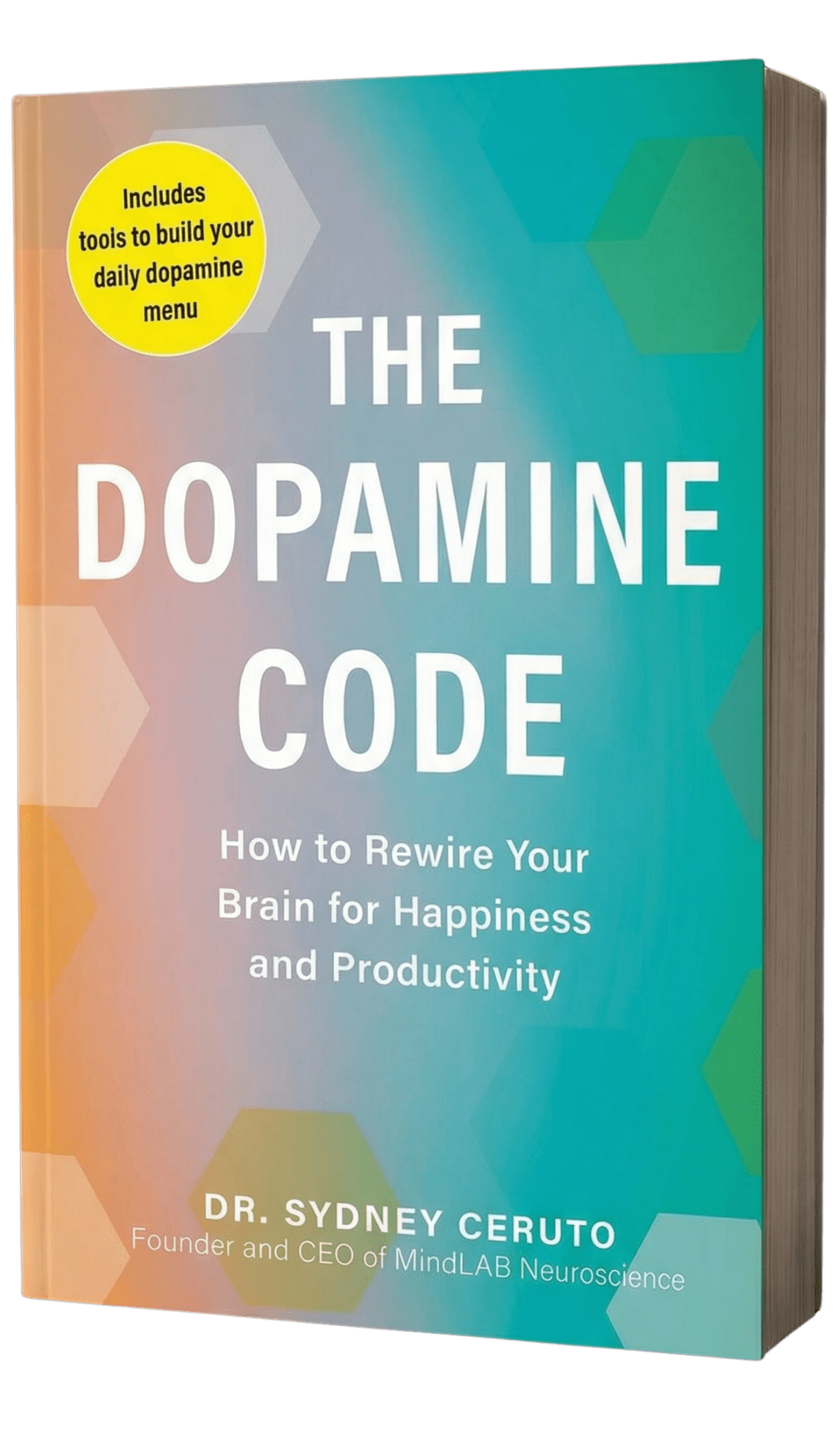
The Dopamine Code

Decode Your Drive

Why Your Brain Rewards the Wrong Things

Your brain's reward system runs every decision, every craving, every crash — and it was never designed for the life you're living. The Dopamine Code is Dr. Ceruto's framework for understanding the architecture behind what drives you, drains you, and keeps you locked in patterns that willpower alone will never fix.

Published by Simon & Schuster, The Dopamine Code is Dr. Ceruto's framework for building your own Dopamine Menu — a personalized system for motivation, focus, and enduring life satisfaction.

Order Now

Ships June 9, 2026

The Dopamine Code by Dr. Sydney Ceruto — Decode Your Drive
Locations

The Intelligence Brief

Neuroscience-backed analysis on how your brain drives what you feel, what you choose, and what you can’t seem to change — direct from Dr. Ceruto.