Business Development Service in Miami

When your brain is operating under sustained threat, your prefrontal cortex yields executive authority to faster, reactive systems. It's not a willpower issue — it's neurological.

Most executive coaches build external systems—accountability structures, strategic planning templates, communication frameworks. These typically fail because the underlying neural mechanisms don't support sustained execution. My methodology operates at the neurobiological level. I restructure how your brain encodes strategic decisions under time pressure, ambiguity, and high stakes—not through willpower, but through the same neuroplastic (related to the brain's ability to rewire itself) mechanisms your brain used to learn your first language. This is what Real-Time Neuroplasticity — the brain's ability to rewire itself —™ addresses.
Schedule a Strategy Call

Founder Coaching

For founders in capital raise cycles, market pivots, or team scaling phases, this engagement restructures how your brain encodes strategic decisions under pressure. What I observe across clients is that the founders who navigate successful fundraising cycles maintain prefrontal cortex activation even when amygdala threat systems activate. This is trainable. Egana-delSol, Sun & Sajda (2023) published an RCT in Scientific Reports demonstrating that targeted entrepreneurship training improved emotion regulation at the brain level, with neurophysiological biomarkers predicting long-term decision quality where self-report measures did not.

Over 8-12 weeks, I work with you on the specific high-pressure scenarios you’ll face: investor meetings, pivotal hiring decisions, competitive threats, capital runway decisions. Each session restructures your response patterns through real-time feedback. You leave with measurable shifts in how your brain prioritizes information under pressure and tangible improvements in the clarity of your strategic thinking. This engagement is suited for early-stage to growth-stage founders (seed through Series B), operators managing market pivots, and founders navigating investor diligence or fundraising cycles.


Learn more about Founder Coaching in Miami →

Business Growth Consulting

For established businesses with clear market presence but plateauing decision-making velocity, this engagement addresses the neural infrastructure underlying strategic stagnation. The problem isn’t usually strategy—it’s the cognitive flexibility and error-awareness required to execute strategy under changing conditions. Chang et al. (2020) conducted a meta-analysis of 26 fMRI studies and found that sustained professional training induces structural and functional brain changes: stronger activation in prefrontal planning regions, increased gray matter in language and semantic processing areas, and enlarged motor learning consolidation zones.

In my Miami practice, I work with established operators navigating the transition from scrappy startup to scaled business on the cognitive demands of that shift. The mindsets that built a $10M business often create friction at $50M. The pattern-recognition shortcuts that worked at 20 people fail at 150. Over 10-16 weeks, I rebuild your decision-making framework to handle increased complexity, delegation, and stakeholder management without losing the speed that got you here. This engagement is suited for established founders and operators ($10M-$100M+ revenue), executives transitioning to leadership, and teams managing multi-geography or multi-product scaling.

Learn more about Business Growth Consulting in Miami →

Investor Relations Coaching

For founders preparing for institutional investor engagement, this engagement optimizes the neural and communicative patterns that drive persuasion and trust during high-stakes pitch and diligence cycles. Ntoumanis et al. (2024) published fMRI data in PNAS showing that successful persuasion activates the ventromedial prefrontal cortex, which negatively correlates with investor resistance. Your pitch isn’t primarily about slides or story—it’s about activating specific neural systems in your audience while managing your own stress response.

Over 6-10 weeks, I work with you on the micro-patterns of presence, framing, and real-time responsiveness that shift investor perception at the neural level. You’ll prepare for actual investor meetings—with Brickell family offices, Miami-based VCs, and the institutional investors now flooding South Florida—using pressure-exposure methodology. You’ll learn to maintain strategic clarity and authentic presence during diligence, term sheets, and negotiation cycles. This engagement is suited for founders in active fundraising, executives preparing for investor board interactions, and growth-stage operators managing multiple investor stakeholder relationships.

Learn more about Investor Relations Coaching in Miami →

Miami in 2024-2025 represents one of the fastest-moving capital markets in North America. The city has transitioned from a secondary tech hub to a genuine institutional destination, particularly for founders navigating cross-border capital, LatAm expansion, and emerging technology sectors.

Miami’s startup ecosystem generated $2.77 billion across 358 deals in 2024, up 15% from the prior year, placing the metro area at #9 globally by deal value. In the first half of 2025, South Florida has already attracted $2 billion in VC capital—pacing for the strongest year since the peak in 2022.

Fintech remains Miami’s dominant sector, capturing $741.2 million across 58 deals. Medtech fundraising hit $572.5 million across 45 deals. AI startups showed the sharpest growth: $896.8 million across 78 funding rounds—a 3x increase in deal count over 2023. Crypto fundraising generated $1.2 billion in 2024, supporting 80+ blockchain startups and 71 active blockchain companies, with significant capital flowing into tokenization of real-world assets, crypto payments, and blockchain rails for institutional finance.

Miami hosts 40+ unicorns originating from Latin America, with 1,000+ VC-backed companies founded by LatAm entrepreneurs. For Spanish-speaking founders establishing U.S. market presence, Miami is the primary landing zone. This creates unique pressures: you’re managing cross-cultural investor expectations, multi-geography operations, and often multi-currency financial structures simultaneously. Latino-owned businesses in South Florida grew 44% over the past decade, reflecting both demographic trends and deliberate investment in underrepresented founder communities.

The strategic pressure is real. The founders who thrive in this environment aren’t necessarily the smartest or most experienced—they’re the ones whose neural infrastructure supports clear thinking under sustained pressure. I help Miami founders, operators, and executives navigate this pressure at the source: not through external systems, but through actual changes in how your brain makes decisions under time pressure, ambiguity, and high stakes.

Dr. Sydney Ceruto, PhD — Founder, MindLAB Neuroscience

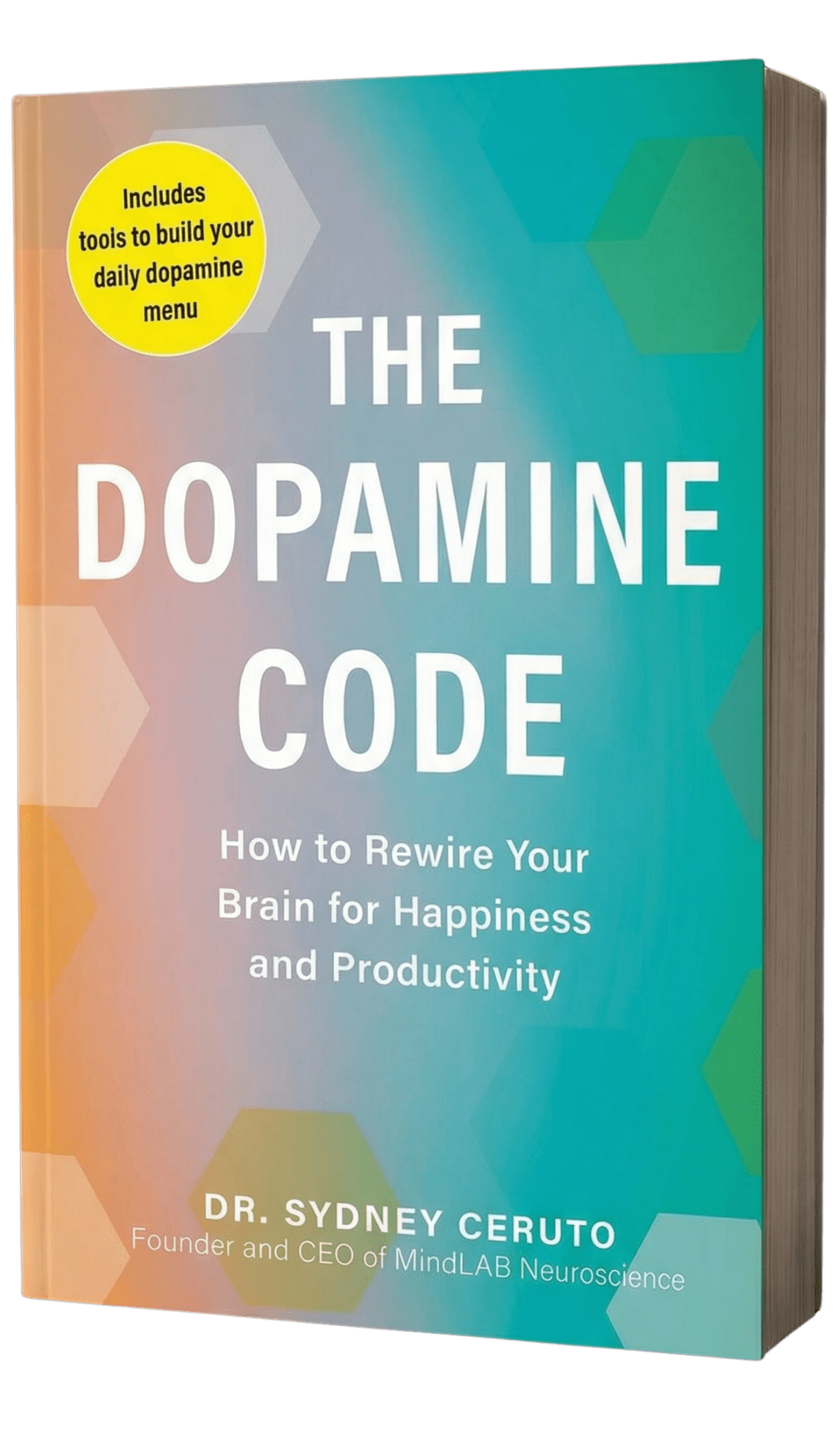
Dr. Sydney Ceruto holds a PhD in Behavioral & Cognitive Neuroscience from NYU and Master’s degrees in Clinical Psychology and Business Psychology from Yale University. She is a Lecturer in the Wharton Executive Development Program at the University of Pennsylvania, an Executive Contributor to Forbes Coaching Council, and an inductee in Marquis Who’s Who in America. Dr. Ceruto founded MindLAB Neuroscience in 2000 and has spent more than 26 years developing and refining her proprietary methodology, Real-Time Neuroplasticity™. She is the author of The Dopamine Code (Simon & Schuster, June 2026).

Frequently Asked Questions

I'm a Miami fintech founder who just closed a Series A. I keep making the same strategic mistakes under pressure. Is this a mindset problem or something deeper?
A: It's neurological. When you're under sustained threat—a Series A close, investor expectations, product pressure—your brain's default mode shifts toward reactive decision-making and away from strategic planning. Your prefrontal cortex — the brain's executive control center —, which encodes long-term judgment, yields authority to faster limbic and striatal systems. This isn't character weakness. It's how brains work under pressure. The fact that you're seeing patterns in your mistakes (not random errors) suggests your brain is defaulting to specific reactive pathways instead of engaging the more effortful strategic reasoning that worked before. I can help you rebuild that neural capacity specifically under the pressure conditions you'll actually face.
How is MindLAB different from the executive coaches at Vistage events or CEO coaching firms at eMerge Americas?
A: My methodology targets the neural baseline itself — restructuring how your brain encodes decisions under time pressure, ambiguity, and high stakes. Real-Time Neuroplasticity™ rewires how your prefrontal cortex — the brain's executive control center — and threat systems coordinate, producing change that persists independently because the architecture has been rebuilt. Engagements typically run 8-16 weeks because the methodology produces durable neural restructuring, not ongoing dependency. The changes hold under pressure because they are structurally embedded in the circuits that fire when stakes are highest.
I'm a Latin American founder using Miami as my U.S. market entry. My investor pitches don't land here—could the issue be neurological?
A: Possibly, but let's be precise. If your pitches are failing because you're losing presence under investor pressure, or because you're unable to maintain strategic framing when challenged, or because you shift into reactive defensiveness—those are neurological patterns we can address. If your pitches are failing because your product doesn't fit the U.S. market, or because your investor targeting is off, those are strategic issues separate from neuroscience. I typically start with a diagnostic conversation to distinguish between the two. Many LatAm founders I work with in Miami are excellent strategists but lose clarity and presence during U.S. investor interactions due to cultural context-switching and pressure density. That's trainable.
My Wynwood crypto startup is scaling fast and I'm struggling to transition from builder to CEO mode. Can neuroscience help with that cognitive shift?
A: Yes. The cognitive demands of building—deep technical focus, rapid prototyping, pattern-seeking—are neurologically distinct from the cognitive demands of leading—delegation, stakeholder management, multi-perspective prioritization. Zeng (2025) published findings on growth mindset neural correlates: the ability to shift between fixed and growth mindsets activates distinct neural systems, including the caudate and dorsolateral prefrontal cortex. As your startup scales past the builder phase, you need to activate these growth-oriented systems deliberately. Over 12-16 weeks, I work with founders in your exact position to restructure how your brain encodes strategic flexibility, delegation, and multi-stakeholder prioritization—without losing the technical judgment that got you here.
I've tried accountability coaching and business coaching. Neither created lasting change. What makes this approach different?
A: My methodology operates at the neurobiological level — restructuring the neural architecture itself rather than adding systems on top of it. This requires intensive work: psychological assessments, real-time neurofeedback during pressure scenarios, and restructuring of threat response patterns under conditions that closely resemble your actual business environment. You are funding neuroplastic change — measurable rewiring of how your prefrontal cortex — the brain's executive control center —, reward systems, and stress-response circuits operate under the exact conditions where your business decisions are made. The investment reflects the depth and precision of a fundamentally different category of intervention.
I have meetings with Brickell family offices and Miami VCs. How quickly can neuroscience-based investor relations preparation improve my fundraising presence?
A: Investor relations coaching typically runs 6-10 weeks depending on your baseline presence and the complexity of your round. In that timeframe, you'll see measurable improvements in your ability to maintain strategic framing under investor pressure, respond to challenging questions without defensiveness, and activate the neural systems in your audience associated with trust and persuasion. You won't go from weak pitcher to exceptional overnight, but you will dramatically improve your real-time presence, your capacity to think under pressure, and your authentic engagement with investor concerns. Most founders I work with report that their investor meetings feel less reactive and more strategic within 4-6 weeks.

Ready to Perform at Your Highest Level?

Miami's growth economy — from Brickell's venture ecosystem to South Florida's cross-border deal flow — does not lack capital or opportunity. What remains systematically underaddressed is the cognitive architecture of the individuals making the growth decisions. The brain behind the business is the variable that determines every outcome.

Schedule a Strategy Call
MindLAB Neuroscience consultation room
Locations

The Intelligence Brief

Neuroscience-backed analysis on how your brain drives what you feel, what you choose, and what you can’t seem to change — direct from Dr. Ceruto.