Chronic Fatigue in Miami

Exhaustion that does not resolve with rest is not a willpower problem. Dr. Ceruto identifies the neurobiological mechanisms trapping the brain in a depleted state and maps a path to genuine recovery.

Chronic fatigue is rarely just tiredness — it's a signal that the brain's energy allocation system is overwhelmed, dysregulated, or caught in a cycle that rest alone cannot break. At MindLAB Neuroscience, we examine the neural, hormonal, and behavioral patterns sustaining your fatigue and build a precision approach to restoring durable energy and cognitive stamina.
Book a Strategy Call

Key Points

  1. Chronic fatigue is a measurable neurological state driven by at least four intersecting biological mechanisms, not a psychological weakness or motivational deficit.
  2. PET imaging documents neuroinflammation markers in chronic fatigue at levels 45 to 199% higher than healthy controls in brain regions governing executive function and motivated behavior.
  3. The HPA axis under chronic stress progresses from hyperactivation to low cortisol — the brain loses the hormonal architecture that distinguishes active from recovering states.
  4. Inflammatory cytokines directly suppress dopamine synthesis and reduce receptor sensitivity, creating a neurochemical environment where the motivation system cannot generate adequate drive signals.
  5. The basal ganglia effort-cost computation shifts so that nearly everything registers as not worth doing — this is circuit-level recalculation, not laziness.
  6. Rest alone cannot resolve chronic fatigue because the mechanisms preventing recovery are themselves compromised by the condition — the brain needs recovery to resolve the barriers to recovery.
  7. Effective resolution requires identifying which mechanisms are primary drivers in the individual and targeting them in sequence rather than applying generic fatigue management.

Chronic fatigue that persists despite adequate sleep, time off, and lifestyle adjustments is not a psychological weakness or a motivational deficit. It is a measurable neurological state driven by at least four intersecting biological mechanisms: neuroinflammation from sustained immune activation in the brain, blunting of the stress-hormone system from prolonged cortisol exposure, mitochondrial dysfunction in neural tissue. It also involves disruption of the basal ganglia — deep brain structures governing habits and movement — motivation circuitry. Together, these mechanisms produce a system that is simultaneously depleted and unable to recover — a brain lacking energy infrastructure.

Neuroinflammation: When the Brain’s Immune System Turns Inward

“The brain is not simply tired — it is inflamed in precisely the regions responsible for executive function, memory, and the generation of motivated behavior, with neuroinflammation markers documented at levels 45 to 199% higher than healthy controls.”

Microglia — the brain’s resident immune cells — constitute approximately 10 to 15% of all cells in the central nervous system. Under normal conditions, they perform surveillance functions: pruning synapses, clearing debris, monitoring for infection. In chronic fatigue states, microglia shift from surveillance to sustained pro-inflammatory activation, releasing cytokines — immune signaling proteins — including interleukin-1 beta, interleukin-6, and tumor necrosis factor-alpha into the neural environment.

PET imaging studies have documented neuroinflammation markers in chronic fatigue patients at levels 45 to 199% higher than healthy controls across the cingulate cortex and hippocampus. This neuroinflammation directly correlates with the severity of cognitive impairment, pain, and motivational collapse. The brain is not simply tired; it is inflamed in precisely the regions responsible for executive function, memory, and the generation of motivated behavior.

The inflammatory cascade also activates indoleamine 2,3-dioxygenase reducing the availability of the neurotransmitter most associated with mood stability and well-being. The result is a neurochemical environment that simultaneously depletes energy, impairs cognition, and erodes emotional resilience through a single upstream mechanism.

Translucent copper and blue wave forms visualizing sleep cycle phases against deep navy background

The Stress System That Burned Through Its Reserves

The HPA axis is designed for acute stress response: cortisol rises rapidly, mobilizes resources, then falls as the threat passes. Under chronic stress, this system does not simply stay elevated indefinitely. It progresses through a characteristic arc: initial hyperactivation, followed by receptor downregulation as the brain attempts to protect itself from sustained cortisol exposure. Ultimately it reaches a state of hypocortisolism — chronically low cortisol.

This is the allostatic overload model the morning surge that primes daytime alertness — flattens. Diurnal cortisol variation — morning to evening difference — compresses. The brain loses the hormonal architecture that distinguishes day from night, active from resting, alert from recovering. The person experiences this as a pervasive flatness: not acutely stressed, not acutely anxious, but unable to generate the energetic state required to engage with life at the level they once did.

The Motivation Circuit That Went Offline

The basal ganglia — subcortical circuits controlling motivation — depend on dopaminergic input from the substantia nigra and ventral tegmental area to compute whether a given action is worth the effort it costs. In chronic fatigue states, this computation breaks down. The nucleus accumbens — the striatal reward region — shows altered activation patterns, with the “go” pathway (D1 medium spiny neurons) losing relative influence to the “no-go” pathway (D2 medium spiny neurons). The behavioral result is not laziness but a circuit-level recalculation: the brain has adjusted its effort-cost computation so that nearly everything registers as not worth doing.

This is compounded by the fact that neuroinflammation directly suppresses dopaminergic signaling. The inflammatory cytokines released by activated microglia impair dopamine synthesis and reduce dopamine receptor sensitivity. This creates a neurochemical environment in which the motivation system cannot generate adequate drive signals even when the person consciously wants to act.

Why Rest Alone Cannot Fix It

Genuine neural recovery requires conditions that the chronically fatigued brain often struggles to achieve: deep slow-wave sleep for glymphatic clearance low-arousal states for parasympathetic dominance. It also requires sustained absence of inflammatory triggers. The glymphatic system clears metabolic waste at dramatically higher rates during sleep than during wakefulness, but this clearance process is itself compromised when neuroinflammation, HPA dysfunction, and sleep architecture disruption are simultaneously present.

The paradox of chronic fatigue is that the brain needs recovery to resolve the mechanisms preventing recovery. Rest without addressing the underlying neuroinflammatory, hormonal, and circuit-level dysfunction produces diminishing returns — the person rests more, recovers less, and becomes progressively more depleted.

Dr. Ceruto’s Approach to Chronic Fatigue

Dr. Ceruto’s methodology recognizes chronic fatigue as a multi-system neurobiological failure, not a single-cause problem. The approach maps which mechanisms are primary drivers in the individual’s presentation and targets them in sequence.

For neuroinflammatory states, the focus is on identifying and reducing the upstream triggers maintaining microglial activation. For HPA axis exhaustion, the work rebuilds the hormonal rhythm — particularly the cortisol awakening response and diurnal variation — so that the brain can distinguish active from recovering states. For motivational circuit dysfunction, the intervention addresses the dopaminergic environment directly, restoring the effort-reward computation that allows the person to re-engage with demanding activity without the system registering it as metabolically prohibitive.

Marble console with crystal brain sculpture and MindLAB journal in warm Miami evening light with tropical hardwood and copper accents

The goal is not to push through fatigue but to dismantle the biological infrastructure that sustains it.

For deeper context, explore decision fatigue and chronic mental exhaustion.

Marker What You Experience What's Happening Neurologically What We Restructure
Exhaustion despite rest Fatigue that persists despite adequate sleep, time off, and lifestyle adjustments At least four intersecting mechanisms — neuroinflammation, HPA axis blunting, mitochondrial dysfunction, and basal ganglia disruption — produce a system simultaneously depleted and unable to recover The specific combination of biological mechanisms driving the individual's fatigue, targeted in sequence
Motivational collapse Everything registering as not worth the effort, even activities you know you care about The basal ganglia motivation circuit has recalculated effort-cost — the "go" pathway has lost influence to the "no-go" pathway, and inflammatory cytokines are simultaneously suppressing dopamine synthesis The dopaminergic environment directly, restoring the effort-reward computation that allows re-engagement without the system registering activity as metabolically prohibitive
Pervasive flatness Not acutely stressed or anxious, but unable to generate the energetic state required to engage at previous levels The HPA axis has progressed from hyperactivation through receptor downregulation to chronic low cortisol — the brain has lost the hormonal architecture distinguishing day from night, active from resting The cortisol rhythm — particularly the awakening response and diurnal variation — so the brain can distinguish active from recovering states
Cognitive impairment with fatigue Brain fog, word-finding difficulty, and processing slowdown that co-occur with physical exhaustion Activated microglia in the cingulate cortex and hippocampus are releasing cytokines that directly impair synaptic function and suppress new neuron generation The upstream triggers maintaining microglial activation, reducing the neuroinflammatory burden on cognitive circuits
Rest producing diminishing returns More sleep and more downtime yielding less and less recovery — a paradox of needing rest but not being restored by it The brain needs deep slow-wave sleep for glymphatic clearance and parasympathetic dominance for recovery, but neuroinflammation and HPA dysfunction compromise the recovery systems themselves The paradox at its root — dismantling the biological infrastructure that sustains fatigue rather than pushing through it

Why Chronic Fatigue Matters in Miami

Miami’s environmental and professional conditions create a distinctive chronic fatigue profile that compounds over time, often without the person recognizing the cumulative load until the system has already crossed into allostatic overload.

The thermal burden is the most underestimated factor. Miami-Dade County recorded 60 days with a heat index at or above 105 degrees in 2024 alone, and approximately 600 excess deaths annually are attributed to extreme heat. A 2025 University of Miami study documented indoor “feels-like” temperatures exceeding 100 degrees for weeks at a time in local residences. Sustained heat exposure drives cortisol dysregulation — the breakdown of normal control systems —, dehydration-mediated adrenal strain, and thermoregulatory demand that diverts metabolic resources from cognitive and immune function. For someone already operating near their allostatic threshold, Miami’s heat does not merely cause discomfort. It accelerates the progression from manageable stress to systemic depletion.

The transplant demographic faces a particular vulnerability. Professionals who relocated from New York, Chicago, or Boston arrived with stress-adaptation systems calibrated to seasonal variation above the national average. Sleep deprivation is both a consequence and a driver of the neuroinflammatory cascade underlying chronic fatigue.

Hurricane season layers five months of sustained anticipatory stress — June through November — onto an already compressed recovery window. The uncertainty of storm tracking, property risk assessment, and evacuation planning maintains the HPA axis in a state of low-grade activation. This occurs during precisely the months when heat, humidity, and irregular summer schedules are already taxing recovery capacity. Research from Florida International University documents sustained mental health impacts in hurricane-affected counties that persist long after physical damage is repaired.

Brickell’s financial professionals, Coral Gables’ managing partners, and Coconut Grove’s dual-income families share a common fatigue pattern: high cognitive demand during the day, insufficient neural recovery at night due to thermal and environmental disruption. The social culture interprets persistent exhaustion as a normal cost of ambition rather than a measurable neurobiological state requiring intervention. The cycle compounds silently until the person notices they can no longer sustain the output that once came naturally — by which point the underlying mechanisms have typically been active for months or years.

Dr. Sydney Ceruto, PhD — Founder, MindLAB Neuroscience

Dr. Sydney Ceruto, PhD — Founder & CEO, MindLAB Neuroscience

Dr. Ceruto holds a PhD in Behavioral & Cognitive Neuroscience from NYU and two Master’s degrees from Yale University. She lectures at the Wharton Executive Development Program at the University of Pennsylvania and has been an Executive Contributor to the Forbes Coaching Council since 2019. Dr. Ceruto is the author of The Dopamine Code (Simon & Schuster, June 2026). She founded MindLAB Neuroscience in 2000 and has spent over 26 years pioneering Real-Time Neuroplasticity™ — a methodology that permanently rewires the neural pathways driving behavior, decisions, and emotional responses.

References

Nakatomi, Y., Mizuno, K., Ishii, A., Wada, Y., Tanaka, M., Tazawa, S., … & Watanabe, Y. (2014). Neuroinflammation in patients with chronic fatigue syndrome/myalgic encephalomyelitis: An 11C-(R)-PK11195 PET study. Journal of Nuclear Medicine, 55(6), 945–950. https://doi.org/10.2967/jnumed.113.131045

McEwen, B. S. (1998). Protective and damaging effects of stress mediators. New England Journal of Medicine, 338(3), 171–179. https://doi.org/10.1056/NEJM199801153380307

Mackay, A., & Tate, W. (2022). Molecular mechanisms of neuroinflammation in ME/CFS and Long COVID to sustain disease and promote relapses. Frontiers in Neurology, 13, 877772. https://doi.org/10.3389/fneur.2022.877772

Zhao, L., Tannenbaum, A., Bakker, E. N. T. P., & Benveniste, H. (2022). The physiology of glymphatic solute transport and waste clearance from the brain. Physiology, 37(6), 402–418. https://doi.org/10.1152/physiol.00015.2022

Success Stories

“Four hours a night for over two years — that was my ceiling. Supplements, sleep protocols, medication — nothing touched it because nothing addressed why my brain wouldn't shut down. Dr. Ceruto identified the cortisol loop that was keeping my nervous system locked in a hypervigilant state and dismantled it. I sleep now. Not because I learned tricks — because the pattern driving the insomnia no longer exists.”

Adrian M. — Hedge Fund Manager New York, NY

“My kids had been sleeping through the night for three years, but my brain hadn't caught up. I was still waking every ninety minutes like clockwork — no amount of sleep hygiene or supplements touched it. Dr. Ceruto identified the hypervigilance loop that had hardwired itself during those early years and dismantled it at the source. My brain finally learned the threat was over. I sleep through the night now without effort.”

Catherine L. — Board Director Greenwich, CT

“My body had simply stopped knowing when to sleep. Crossing time zones weekly for over two years had broken something fundamental, and every protocol, supplement, and device I tried couldn't hold longer than a few days. Dr. Ceruto identified the disruption at the level of my suprachiasmatic nucleus and recalibrated the signaling pattern driving the dysfunction. Within weeks, my circadian rhythm locked back in. I sleep now. Consistently. Regardless of where I land.”

Jonathan K. — Diplomat Geneva, CH

“Endocrinologists, sleep clinics, functional medicine — every specialist cleared me, and no one could tell me why I was exhausted every single day. Dr. Ceruto identified that my HPA axis was locked in a low-grade stress activation I couldn't feel consciously. Once that pattern was disrupted at the neurological level, my energy came back in a way that felt completely foreign. I'd forgotten what it was like to not be tired.”

Danielle K. — Luxury Hospitality Beverly Hills, CA

“Nothing was wrong — and that's exactly why no one could help me. I wasn't struggling. I wanted to know what my brain was actually capable of if its resting-state architecture was optimized. Dr. Ceruto mapped my default mode network and restructured how it allocates resources between focused and diffuse processing. The cognitive clarity I operate with now isn't something I'd ever experienced before — and I had no idea it was available.”

Nathan S. — Biotech Founder Singapore

“I just finished the comprehensive program with Dr. Ceruto and felt compelled to leave a review in hopes of steering someone in need toward MindLAB. This was truly an eye-opening experience — I learned so much about myself that I didn’t know existed. Dr. Ceruto was kind, compassionate, and generous with her time. When I needed extra encouragement, she was just a text or call away, no matter the day or time. Her knowledge of how our brain works, combined with that availability, was a game-changer.”

Dee — Nonprofit Director Zurich, CH

Frequently Asked Questions About Chronic Fatigue in Miami

What is chronic fatigue from a neuroscience perspective?

Chronic fatigue is a measurable neurological state driven by intersecting biological mechanisms: sustained neuroinflammation from activated brain immune cells, exhaustion of the hormonal stress-response system, disrupted dopamine-driven motivation circuitry, and compromised sleep-dependent brain waste clearance. It is not a psychological condition or a lack of willpower — it is a system-level failure with identifiable neural signatures.

Why does rest not resolve chronic fatigue?

Rest alone addresses surface-level depletion but cannot resolve the underlying mechanisms sustaining the fatigue state. Neuroinflammation persists regardless of how many hours a person sleeps. A blunted stress-hormone system does not recalibrate through time off alone. Dopaminergic suppression (related to the brain's dopamine system) does not reverse without addressing the upstream neuroinflammatory and hormonal conditions driving it. Recovery requires targeted intervention at the mechanism level.

Who typically seeks this type of support?

Individuals whose fatigue has persisted for months despite adequate sleep, time off, and medical evaluation are strong candidates. This includes people managing sustained decision-making pressure, compounding environmental stressors, or the particular combination of professional intensity and climate-related physiological strain that characterizes subtropical urban environments.

What does the process look like?

The process begins with a Strategy Call — a phone-based conversation with Dr. Ceruto that maps the specific mechanisms contributing to the fatigue state and determines which systems require priority intervention. The Strategy Call carries a $250 fee. Program structure and investment details are discussed during the Strategy Call.

What kind of timeline is realistic for improvement?

Chronic fatigue that has been building for months or years does not resolve overnight. Initial improvements in energy consistency and cognitive clarity typically emerge within the first several weeks as the most acute mechanisms are addressed. Full restoration of the stress-hormone rhythm, dopaminergic tone (related to the brain's dopamine system), and sleep-dependent recovery capacity unfolds over a longer arc, with progressive gains as each system comes back into alignment.

Also available in: Wall Street · Midtown Manhattan · Beverly Hills · Lisbon

Take the First Step Beyond Chronic Fatigue

The Strategy Call is a focused conversation with Dr. Ceruto that maps the specific neural mechanisms driving your concerns and determines the right path forward.

Book a Strategy Call
MindLAB Neuroscience consultation room

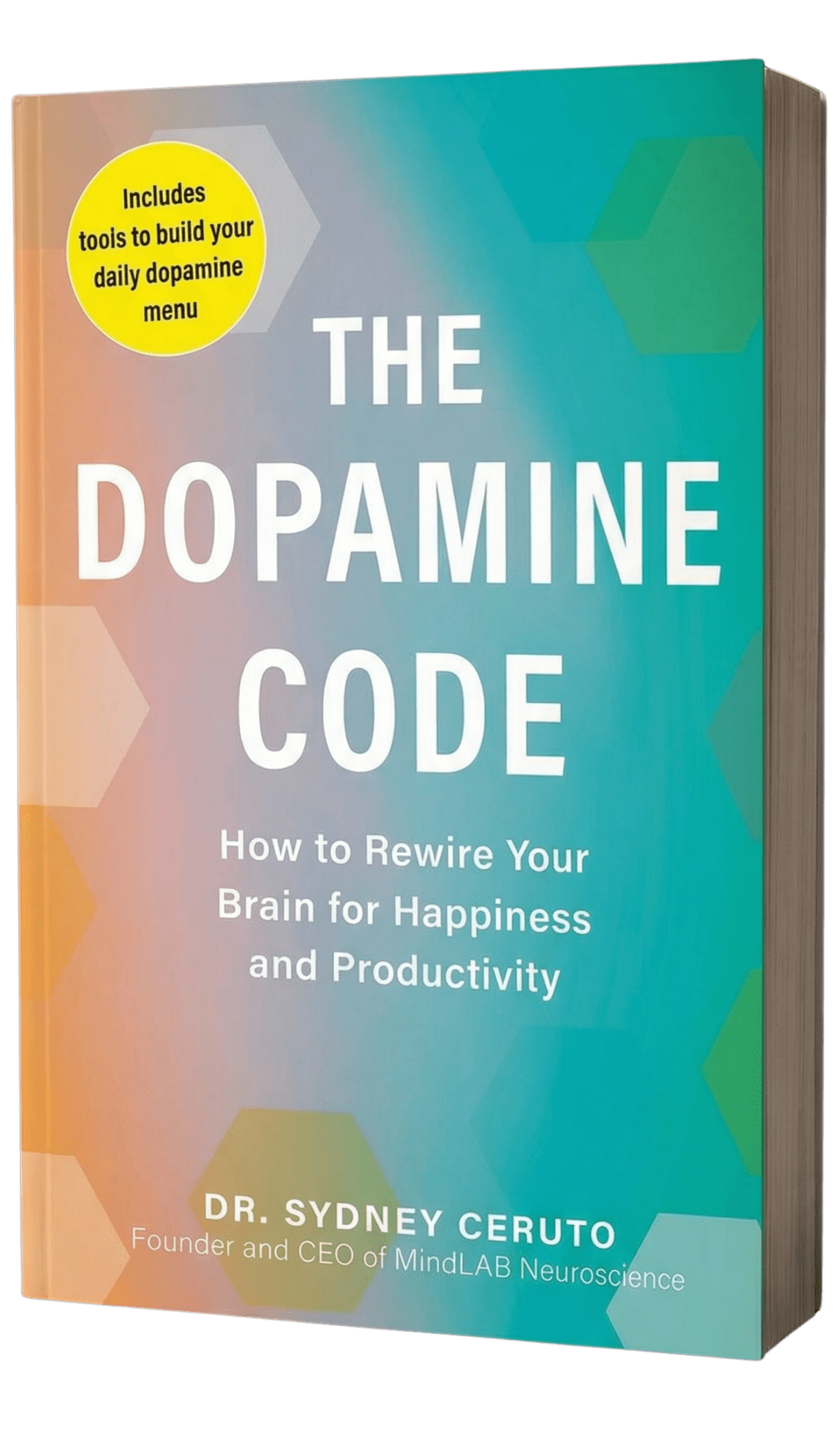
The Dopamine Code

Decode Your Drive

Why Your Brain Rewards the Wrong Things

Your brain's reward system runs every decision, every craving, every crash — and it was never designed for the life you're living. The Dopamine Code is Dr. Ceruto's framework for understanding the architecture behind what drives you, drains you, and keeps you locked in patterns that willpower alone will never fix.

Published by Simon & Schuster, The Dopamine Code is Dr. Ceruto's framework for building your own Dopamine Menu — a personalized system for motivation, focus, and enduring life satisfaction.

Order Now

Ships June 9, 2026

The Dopamine Code by Dr. Sydney Ceruto — Decode Your Drive
Locations

The Intelligence Brief

Neuroscience-backed analysis on how your brain drives what you feel, what you choose, and what you can’t seem to change — direct from Dr. Ceruto.