The experience is unmistakable. Words that once came effortlessly now stall mid-sentence. Decisions that should take minutes stretch into hours of circular deliberation. A document read three times yields no more comprehension than the first pass. This is not a productivity problem. It is not laziness, distraction, or a sign that someone has lost their edge. Brain fog is a measurable neurobiological event with identifiable mechanisms, and it is one of the most misunderstood cognitive complaints in modern professional life.
Brain fog is clinically characterized as a constellation of reduced cognition, impaired working memory — the brain’s mental workspace —, diminished processing speed, word-finding difficulties, and compromised ability to concentrate or multitask. It is not a diagnosis in itself but a symptom cluster arising from dysfunction in specific brain circuits. A large-scale characterization involving nearly 26,000 participants demonstrated that individuals reporting brain fog show significantly lower cognitive scores on tests measuring the ability to inhibit cognitive interference. This confirms that the subjective experience maps directly onto objective neural impairment.
What Drives Cognitive Fog at the Neural Level
“The mental sharpness that defined your professional performance begins to feel unreliable — persistently diminished, like cognition operating through resistance. This is brain fog, and it is far more than a subjective feeling.”
The mechanisms behind cognitive fog are precise and well-documented. At the cellular level, neuroinflammation plays a central role. Microglia — the brain’s resident immune cells — shift from their normal surveillance function into an activated state, releasing pro-inflammatory cytokines including interleukin-1 beta, interleukin-6, and tumor necrosis factor-alpha. These molecules directly impair long-term potentiation — the strengthening of neural connections through use — and long-term depression, the cellular processes that underpin learning and memory consolidation. The prefrontal cortex — the brain’s executive command center — is particularly vulnerable, experiencing dendritic retraction and reduced synaptic density that degrades working memory and cognitive flexibility.

When Chronic Stress Compounds the Problem
The hypothalamic-pituitary-adrenal axis — the brain’s primary stress system — represents a second major pathway. Sustained cortisol elevation disrupts the delicate receptor balance in the prefrontal cortex, overstimulating certain receptor types while causing structural changes in the neural architecture that supports working memory. Within as little as one week of chronic stress exposure, measurable dendritic retraction begins in prefrontal neurons. The hippocampus — the brain’s memory center —, which contains the brain’s highest concentration of cortisol receptors, is equally vulnerable: elevated cortisol suppresses hippocampal neurogenesis and reduces the structural substrate needed for new memory formation.
How a Weakened Barrier Lets Inflammation In
Blood-brain barrier integrity provides a third critical dimension. This selective barrier normally enforces strict control over which molecules reach brain tissue. When compromised by chronic inflammation, sleep deprivation, or metabolic dysfunction, peripheral immune cells and inflammatory molecules gain access to the brain, triggering localized neuroinflammation that compounds existing cognitive impairment. Increased blood-brain barrier permeability is prospectively associated with cognitive decline progression over time.
Disrupted Rhythms and Post-Viral Recovery
Circadian (relating to the body’s 24-hour biological clock) misalignment adds a fourth layer. When behavioral and environmental cycles fall out of synchrony with the brain’s internal clock, cognitive deterioration follows through mechanisms distinct from simple fatigue. Daily circadian misalignment impairs sustained attention, cognitive throughput, and information processing speed by approximately 12 to 15 percent, with deficits that persist rather than improve across consecutive misaligned days.
Post-viral immune activation has emerged as a particularly relevant mechanism. Even mild respiratory infections can trigger choroid plexus inflammation, which relays inflammatory signals to the brain, activating microglia in subcortical and hippocampal white matter. This cascade can produce a roughly 30 percent reduction in the cells responsible for maintaining the brain’s myelin sheath — oligodendrocytes and their precursor cells. This reduction slows neural conduction velocity and disrupting the brain network synchrony that cognitive processing depends upon. Hippocampal neurogenesis is simultaneously suppressed through interleukin-6 mediated inhibition, impairing the brain’s capacity for new memory encoding. A persistent elevation of the chemokine CCL11 — causally linked to cognitive impairment — has been detected in individuals with post-infectious cognitive symptoms. This provides both a potential biomarker and a mechanistic link between viral exposure and lasting cognitive dysfunction.
The Hidden Cost of Living in a Fog
The economic magnitude of brain fog is staggering. An estimated 2 to 4 million working-age Americans have left the labor force or reduced their work capacity due to post-viral cognitive impairment, translating to $170 to $230 billion in lost earnings annually. The global burden of impaired brain health costs the economy up to $8.5 trillion per year in lost productivity. These are not niche statistics — they reflect the cognitive impairment that millions of professionals experience daily, often without understanding its neurobiological basis.
Finding the Specific Driver Behind Your Fog
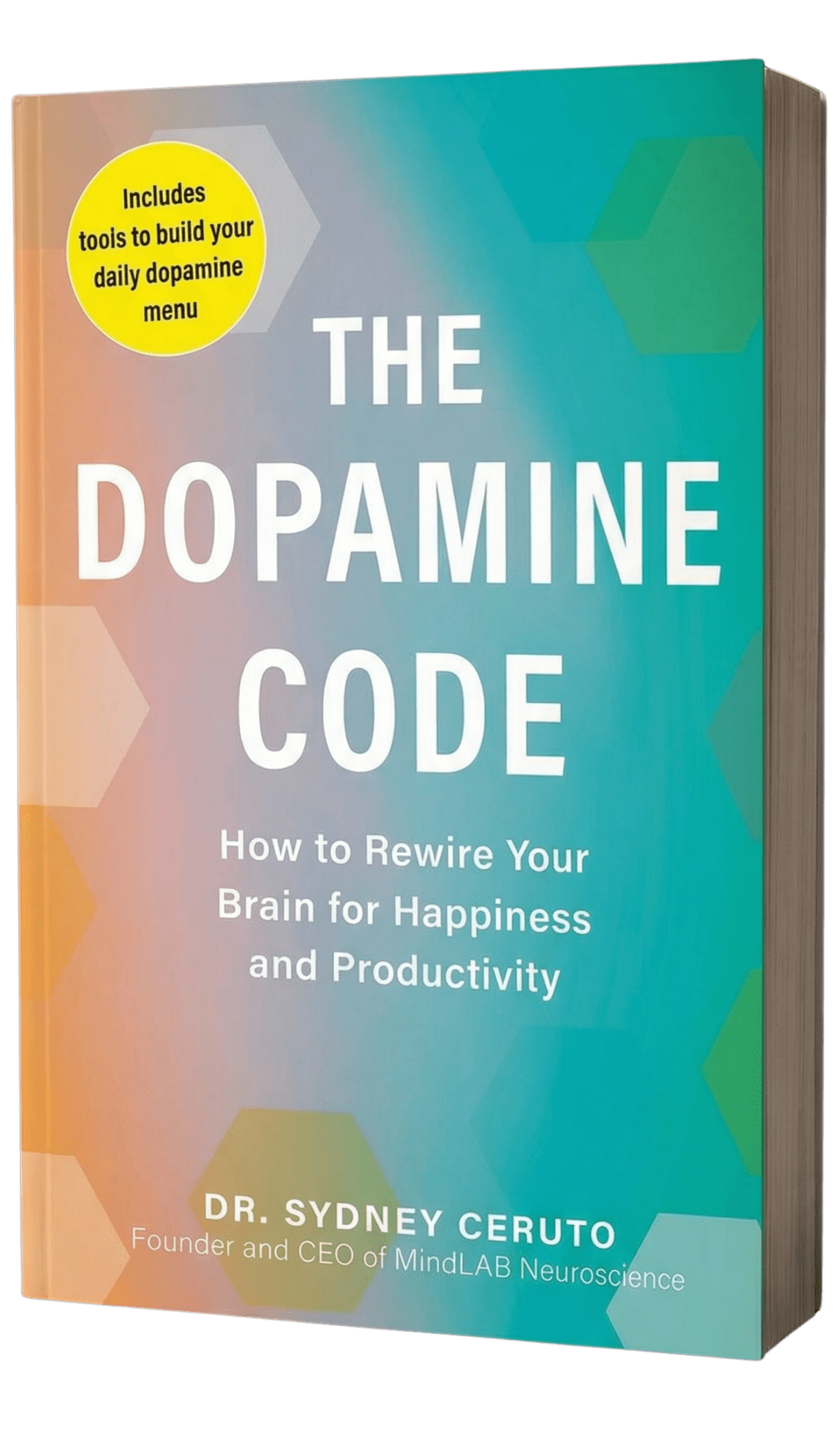
What distinguishes Dr. Ceruto’s approach is the precision of root cause identification. Brain fog that originates in neuroinflammation requires different intervention than fog driven by HPA axis dysregulation or circadian misalignment. The perimenopause-driven cognitive fog that affects women in their 40s demands a different strategy than post-viral cognitive impairment or stress-induced prefrontal dysfunction. A neuroscience-informed assessment maps the specific mechanisms at play for each individual, rather than applying generalized strategies that address symptoms without resolving the underlying neural disruption.

The brain’s capacity for recovery is substantial when the right mechanisms are targeted. Neuroplasticity — the brain’s ability to reorganize its synaptic architecture — remains active throughout adulthood. Microglial activation states can shift from pro-inflammatory back to restorative. Blood-brain barrier integrity can be re-established. Circadian rhythms can be recalibrated. The question is not whether cognitive clarity can be restored, but whether the specific biological drivers of its disruption have been accurately identified and addressed.
For deeper context, explore ADHD brain fog and cognitive clarity.