Brain Health & Optimization in Midtown Manhattan

The brain's cognitive architecture is shaped by every system feeding into it. Dr. Ceruto identifies the specific biological drivers of decline and builds targeted strategies for neural resilience and sustained performance.

Cognitive performance depends on the integrity of interlocking biological systems — stress hormones, circadian timing, neuroinflammation, autonomic balance, gut-brain signaling, and hormonal architecture. When any of these systems degrades, the brain feels the consequences directly. Dr. Ceruto maps the individual’s specific vulnerability profile and develops precision intervention at the points where the trajectory is most modifiable.

Book a Strategy Call

Brain Fog & Cognitive Clarity

Brain fog corresponds to measurable disruptions at the cellular level: neuroinflammation from activated microglia, blood-brain barrier compromise allowing peripheral inflammatory molecules into brain tissue, and circadian misalignment degrading cognitive throughput by 12 to 15%. Dr. Ceruto identifies whether the primary driver is neuroinflammatory, neuroendocrine, circadian, or post-viral and targets the specific mechanism.


Learn more about Brain Fog & Cognitive Clarity in Midtown Manhattan →

Brain Longevity & Neuroprotection

Brain longevity rests on three interconnected pillars: neuroplasticity preservation, cognitive reserve building, and neuroprotective mechanism maintenance. Individuals in the 90th percentile of brain-derived neurotrophic factor expression experience cognitive decline approximately 50% slower than those in the 10th percentile. Dr. Ceruto maps each individual’s specific risk profile and develops a precision strategy to interrupt the accelerated aging cascade during the window when intervention matters most.

Learn more about Brain Longevity & Neuroprotection in Midtown Manhattan →

Circadian Biology & Cognitive Performance

The circadian system governs the timing of cortisol release, neurotransmitter synthesis, synaptic plasticity, and the brain’s waste-clearance system. Disrupted clock gene function activates microglia, increases neuroinflammatory tone, and fragments the slow-wave sleep essential for glymphatic clearance. Dr. Ceruto assesses chronotype, light exposure, sleep architecture, and cortisol timing to map points of circadian disruption and develop a personalized realignment strategy.

Learn more about Circadian Biology & Cognitive Performance in Midtown Manhattan →

Cortisol & HPA Axis Optimization

Chronic cortisol elevation dismantles the brain’s stress-regulation architecture through specific structural changes: hippocampal dendritic atrophy weakening the cortisol brake, amygdala hypertrophy strengthening the accelerator, and prefrontal receptor loss reducing top-down regulation. Dr. Ceruto maps the individual’s HPA axis pattern and restores the precise rhythmic cortisol architecture that optimal cognition requires.

Learn more about Cortisol & HPA Axis Optimization in Midtown Manhattan →

Gut-Brain Axis & Neurotransmitter Health

The gut produces 90 to 95% of the body’s serotonin and over 50% of its dopamine. When the microbiome shifts toward a dysbiotic state, intestinal barrier integrity degrades, inflammatory signals cross the blood-brain barrier, and neurotransmitter precursor production drops. Dr. Ceruto provides the neuroscience framework connecting gut health to specific cognitive and emotional outcomes and coordinates with medical specialists for gut-specific intervention.

Learn more about Gut-Brain Axis & Neurotransmitter Health in Midtown Manhattan →

Hormones, the Brain & Cognitive Performance

Estrogen, testosterone, cortisol, thyroid hormones, and their interactions each shape specific brain circuits with specific cognitive consequences. During the perimenopausal transition, brain glucose metabolism declines 15 to 25% in regions critical for memory and spatial cognition. Chronic cortisol biochemically neutralizes testosterone’s cognitive benefits. Dr. Ceruto maps hormonal state to brain function outcomes and integrates this understanding into a comprehensive optimization strategy.

Learn more about Hormones, the Brain & Cognitive Performance in Midtown Manhattan →

Nervous System Regulation & Vagal Tone

Heart rate variability quantifies the functional integrity of the autonomic system and predicts both current cognitive performance capacity and long-term cognitive decline trajectory. Chronic sympathetic dominance produces decision fatigue, emotional blunting, and persistent scanning behavior that interferes with sustained attention. Dr. Ceruto targets the autonomic setpoint itself through neuroplastic adaptation, producing a genuine shift in the resting operating point rather than transient calm.

Learn more about Nervous System Regulation & Vagal Tone in Midtown Manhattan →

Neuroinflammation & Brain Health

Chronic low-grade neuroinflammation — driven by sustained microglial activation, blood-brain barrier compromise, and the amplification cascade between stress, sleep deprivation, and metabolic dysfunction — silently degrades the neural circuits responsible for memory, attention, and processing speed. Dr. Ceruto identifies which combination of triggers is sustaining the cascade and develops a targeted strategy to interrupt it before it translates into accelerated cognitive aging.

Learn more about Neuroinflammation & Brain Health in Midtown Manhattan →

Midtown Manhattan and the Brain Health Imperative

Midtown Manhattan’s professional class carries the convergence of every major modifiable risk factor for accelerated cognitive decline. The district imposes the highest sustained cortisol load of any professional environment in the country, with 90% of NYC employees reporting burnout symptoms in the past year. The artificial light environment from Times Square and surrounding office towers constitutes a direct circadian assault, suppressing melatonin production at hours when the brain’s waste-clearance system should be activating. Air quality exceeds WHO limits, with Manhattan’s annual PM2.5 average at 7.1 micrograms per cubic meter against a safe threshold of 5.0 — fine particulate matter that crosses the blood-brain barrier and activates the neuroinflammatory cascade. Noise levels on subway platforms average 94 decibels, activating sympathetic stress responses before the workday begins. The food culture driven by time poverty and stress-eating depletes the gut microbiome that produces serotonin and dopamine. The target demographic of 35-to-55-year-olds encompasses the VP, director, and senior leadership layers at Midtown’s major employers, precisely the population navigating hormonal transitions while carrying peak career cognitive demand. The lifetime risk of dementia at age 55 is 42%, rising to 48% for women. The pipeline to that statistic runs directly through the offices along Park Avenue, at Rockefeller Center, and throughout Hudson Yards. The biohacking and longevity culture in Midtown is already activated, but the market remains profoundly underserved by providers who can connect consumer-facing interventions to actual brain health trajectory planning grounded in the neuroscience of what determines cognitive fate.

Dr. Sydney Ceruto, PhD — Founder, MindLAB Neuroscience

Dr. Sydney Ceruto, PhD — Founder & CEO, MindLAB Neuroscience

Dr. Ceruto holds a PhD in Behavioral & Cognitive Neuroscience from NYU and two Master’s degrees from Yale University. She lectures at the Wharton Executive Development Program at the University of Pennsylvania and has been an Executive Contributor to the Forbes Coaching Council since 2019. Dr. Ceruto is the author of The Dopamine Code (Simon & Schuster, June 2026). She founded MindLAB Neuroscience in 2000 and has spent over 26 years pioneering Real-Time Neuroplasticity™ — a methodology that permanently rewires the neural pathways driving behavior, decisions, and emotional responses.

References

Diamond, A. (2013). Executive functions. Annual Review of Psychology, 64, 135–168. https://doi.org/10.1146/annurev-psych-113011-143750

Lövdén, M., Bäckman, L., Lindenberger, U., Schaefer, S., & Schmiedek, F. (2010). A theoretical framework for the study of adult cognitive plasticity. Psychological Bulletin, 136(4), 659–676. https://doi.org/10.1037/a0020080

Arnsten, A. F. T. (2009). Stress signalling pathways that impair prefrontal cortex structure and function. Nature Reviews Neuroscience, 10(6), 410–422. https://doi.org/10.1038/nrn2648

Success Stories

“After the concussion, my processing speed collapsed — I couldn't hold complex information the way I used to, and no one could explain why the fog wasn't lifting. Dr. Ceruto mapped the damaged pathways and built compensatory networks around them. My brain doesn't work the way it did before the injury. It works differently — and in some ways, more efficiently than it ever did.”

Owen P. — Orthopedic Surgeon Scottsdale, AZ

“Slower processing, foggier recall, decisions that used to be instant taking longer than they should — I'd been accepting it all as inevitable decline for two years. Dr. Ceruto identified the prefrontal efficiency pattern that was degrading and restructured it at the neurological level. The sharpness didn't just come back. It came back faster and more precise than it was a decade ago. Nothing I'd tried before even addressed the right problem.”

Elliott W. — Wealth Advisor Atherton, CA

“I'd optimized everything — diet, fitness, sleep — but my cognitive sharpness was quietly declining and no one could explain why. Dr. Ceruto identified the synaptic density patterns that were thinning and built a protocol to reverse the trajectory. This wasn't prevention in theory. My neuroplasticity reserve is measurably stronger now than it was three years ago. Nothing I'd tried before even addressed the right problem.”

Henrique L. — University Dean Lisbon, PT

“Nothing was wrong — and that's exactly why no one could help me. I wasn't struggling. I wanted to know what my brain was actually capable of if its resting-state architecture was optimized. Dr. Ceruto mapped my default mode network and restructured how it allocates resources between focused and diffuse processing. The cognitive clarity I operate with now isn't something I'd ever experienced before — and I had no idea it was available.”

Nathan S. — Biotech Founder Singapore

“Every metric was green and I felt nothing. Conventional approaches told me I was 'burned out' or needed gratitude practices — none of it touched the actual problem. Dr. Ceruto identified that my dopamine baseline had shifted so high from constant reward-chasing that normal achievement couldn't register anymore. She recalibrated the reward system itself. I didn't need more success. I needed my brain to actually experience the success I already had.”

Rafael G. — Screenwriter New York, NY

“It took years and many other professionals — not to mention tens of thousands of dollars — before I was recommended to Dr. Ceruto. I’d been suffering with chronic anxiety, OCD, and distorted thinking. After just two sessions, I started to see positive change. By the time my program ended, I had my sanity and my life back. Sydney creates a warm, supportive atmosphere where I found myself sharing things I’ve never told anyone. She is there for you anytime you need her.”

Nicholas M. — Private Equity Hong Kong

Frequently Asked Questions About Neuroscience-Based Brain Optimization

What does brain health optimization actually involve beyond general wellness recommendations?

General wellness recommendations — sleep, exercise, nutrition — provide baseline neural support. Optimization goes further: identifying the specific neural systems most constrained in your individual profile and targeting them for enhancement. This might involve strengthening prefrontal endurance for sustained cognitive demand, recalibrating stress-response architecture that is degrading other functions, or optimizing the neural conditions supporting creative and strategic processing.

At what age does brain optimization become relevant?

Neuroplasticity operates throughout adulthood — the brain's capacity for reorganization and strengthening does not expire. Optimization is relevant whenever cognitive demands exceed the brain's current architecture. For professionals under sustained cognitive load, this can be as early as the thirties. The approach is not about preventing decline — it is about expanding capacity to match the demands of your current life and professional context.

How does brain optimization differ from biohacking or nootropics?

Biohacking and nootropics attempt to modulate brain chemistry through external inputs — supplements, protocols, and devices. Dr. Ceruto's approach restructures the neural architecture itself — the circuits and systems that determine cognitive function. Chemical modulation produces temporary state changes. Architectural restructuring produces permanent capacity changes. The approaches operate at fundamentally different levels.

Can brain optimization improve creativity and strategic thinking?

Yes. Creativity depends on default mode network engagement. Strategic thinking requires sustained prefrontal activation alongside integrative processing. Both functions are degraded by chronic stress, cognitive overload, and the sustained demands of professional life. Optimizing the neural conditions that support these functions — reducing interfering activation, strengthening supporting circuits, and ensuring adequate resource allocation — measurably improves creative and strategic output.

How does Dr. Ceruto assess my current neural performance baseline?

The assessment maps cognitive function across the domains most relevant to your professional and personal demands: executive function endurance, emotional regulation capacity, stress-response calibration, attentional efficiency, and the balance between directed and creative processing modes. This identifies where your neural architecture is strongest, where it is most constrained, and where targeted intervention will produce the greatest return.

What improvements can I expect and how quickly?

Most individuals notice improved cognitive clarity, better stress recovery, and enhanced sleep quality within the first weeks of targeted work. Sustained cognitive endurance, creative capacity expansion, and decision quality improvements develop as the underlying architecture is strengthened over subsequent months. The timeline depends on which systems are being optimized and how significantly they are currently constrained.

Is this a one-time optimization or an ongoing process?

Architectural improvements are permanent — once neural circuits are strengthened and systems recalibrated, the enhanced capacity persists without ongoing maintenance. However, some individuals choose to return for optimization targeting new domains as their professional demands evolve or as they identify additional neural systems they want to enhance.

What does the Strategy Call cover for brain optimization?

The Strategy Call maps your current neural performance profile against the specific demands of your life and career. It identifies the systems where targeted optimization will produce the greatest cognitive, emotional, and performance return — providing a clear neurological picture of your current capacity and where expansion is both possible and most impactful.

Brain health is shaped by biological systems that can be measured, understood, and optimized.

The Strategy Call is a focused conversation with Dr. Ceruto that maps the specific neural mechanisms driving your concerns and determines the right path forward.

Book a Strategy Call
MindLAB Neuroscience consultation room

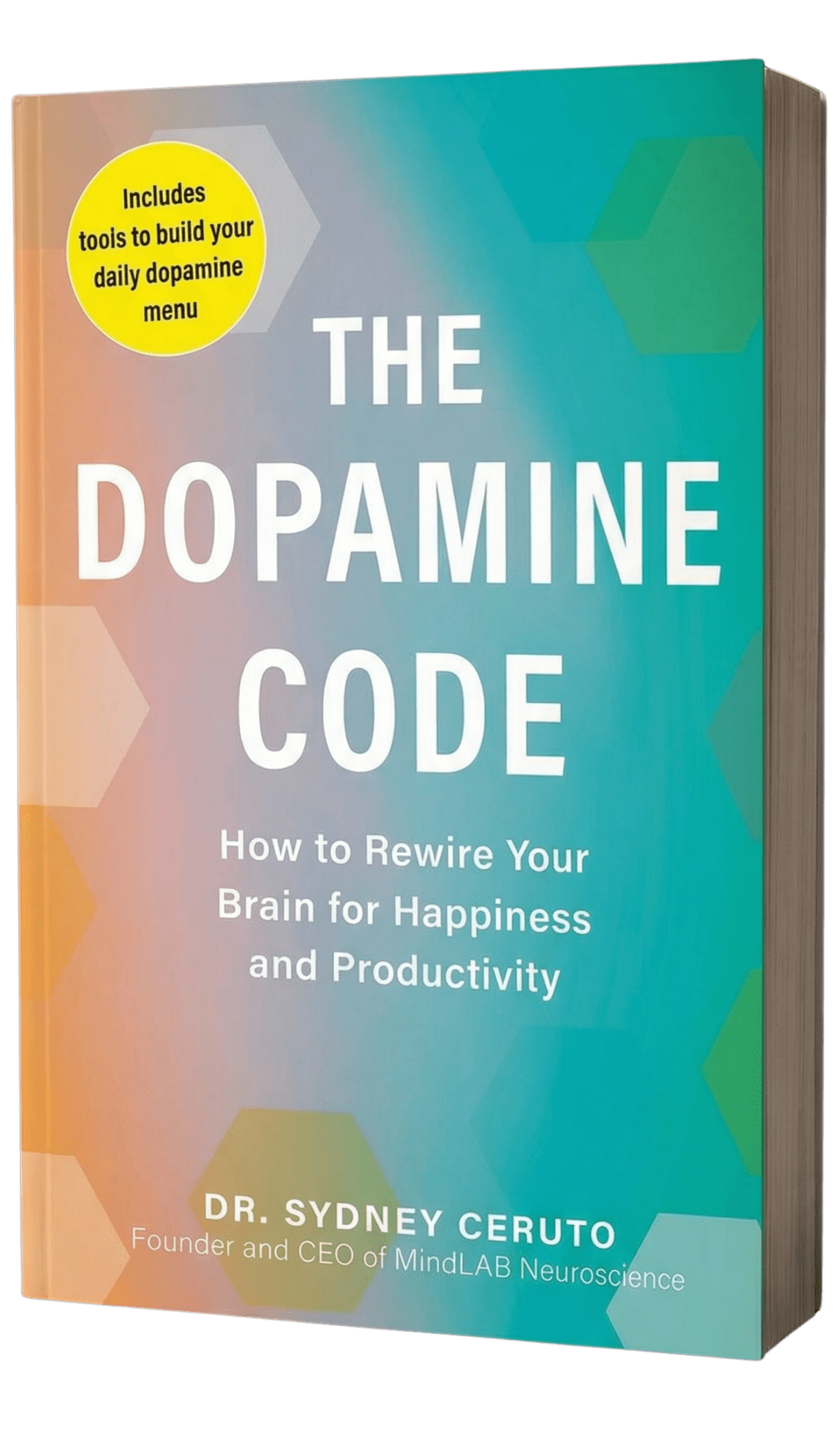
The Dopamine Code

Decode Your Drive

Why Your Brain Rewards the Wrong Things

Your brain's reward system runs every decision, every craving, every crash — and it was never designed for the life you're living. The Dopamine Code is Dr. Ceruto's framework for understanding the architecture behind what drives you, drains you, and keeps you locked in patterns that willpower alone will never fix.

Published by Simon & Schuster, The Dopamine Code is Dr. Ceruto's framework for building your own Dopamine Menu — a personalized system for motivation, focus, and enduring life satisfaction.

Order Now

Ships June 9, 2026

The Dopamine Code by Dr. Sydney Ceruto — Decode Your Drive
Locations

The Intelligence Brief

Neuroscience-backed analysis on how your brain drives what you feel, what you choose, and what you can’t seem to change — direct from Dr. Ceruto.