The Measurement Gap
“Psychometric instruments capture what you consciously believe about yourself at the moment you answer. They cannot access the deeper neural systems that encode your professional identity, govern how vividly you can imagine a different future, or determine whether a new direction will feel authentically yours.”
You have taken the assessments. StrengthsFinder gave you five words. MBTI gave you four letters. A 360-degree review gave you a chart comparing how your colleagues perceive you against an organizational benchmark. And after all of it, you still sit in the same chair with the same unresolved question: is this career actually right for who I am?
The frustration is legitimate. Conventional career assessment tools measure behavioral preferences through self-report questionnaires. They capture what you say about yourself — which traits you recognize, which work styles you endorse, which values you select from a curated list. What they cannot access is the neural architecture underneath those responses. The brain does not organize professional identity the way a psychometric inventory does. It encodes identity through importance weighting at the cellular level, through narrative construction across distributed networks, and through future-self simulation that operates below conscious awareness.
This is why two people with identical StrengthsFinder profiles can have entirely different experiences of career satisfaction. The assessment captured surface-level trait endorsement. It missed the deeper question: which of those traits does the brain actually treat as central to who this person is?
Professionals in Midtown Manhattan encounter this measurement gap at an accelerated pace. The density of career assessment options in New York City is extraordinary — from nonprofit aptitude testing organizations with century-old research pedigrees to global leadership assessment firms benchmarking against Fortune 500 databases. The tools are sophisticated. The data is voluminous. And the gap between what gets measured and what actually drives career fulfillment remains unchanged.
What I see repeatedly in this work is a specific pattern: accomplished professionals who have accumulated assessment data for years but cannot translate that data into clarity about direction. The missing variable is not more measurement. It is access to the neural system that determines which measurements matter.
The Neuroscience of Career Identity
Professional identity is not a personality type. It is a biological structure maintained by one of the brain’s most sophisticated systems — the default mode network — the brain’s self-referential thought system.
Twenty years of neuroscience research establish the default mode network as the brain’s central architecture for self-referential processing, identity construction, and personal meaning-making. The DMN operates through three core functions. First, it handles the “what does this mean about me?” process that activates every time you evaluate a career decision. Second, it upregulates the entire self-referential system during moments of introspection. Third, it retrieves personally relevant information from memory. These functions show enhanced coordination specifically during tasks requiring self-referential judgments.
This means that when you sit in a meeting, weigh a job offer, or feel visceral discomfort with your current role, the default mode network is actively computing self-referential information about fit, congruence, and meaning. Conventional career assessments capture the downstream behavioral outputs of this computation. They never access the computation itself.
A second critical finding involves how the brain encodes the importance of identity attributes — not merely whether those attributes are self-descriptive. The medial prefrontal cortex — the brain’s identity-evaluation center — contains neural populations that are each differently sensitive to how personally central incoming information is. An executive may score high on “analytical thinking” across every psychometric tool available. But if the brain assigns low self-importance to that attribute, it will not drive intrinsic motivation or career satisfaction regardless of how prominently it appears on an assessment report.
How Identity Shapes Career Deliberation
The third mechanism involves the hippocampus — the brain’s memory and simulation center — and its role in future-self projection. Research reveals a clear separation between two neural contributions to imagining your future. When the hippocampus is impaired, people produce future narratives with significantly fewer vivid details — they cannot construct rich projections of themselves in future roles. When the prefrontal identity system is impaired, people produce richly detailed scenarios but cannot anchor those scenarios to their own identity.
The two systems work in concert. The hippocampus builds the simulation of a possible future. The prefrontal cortex determines whether that future belongs to you.
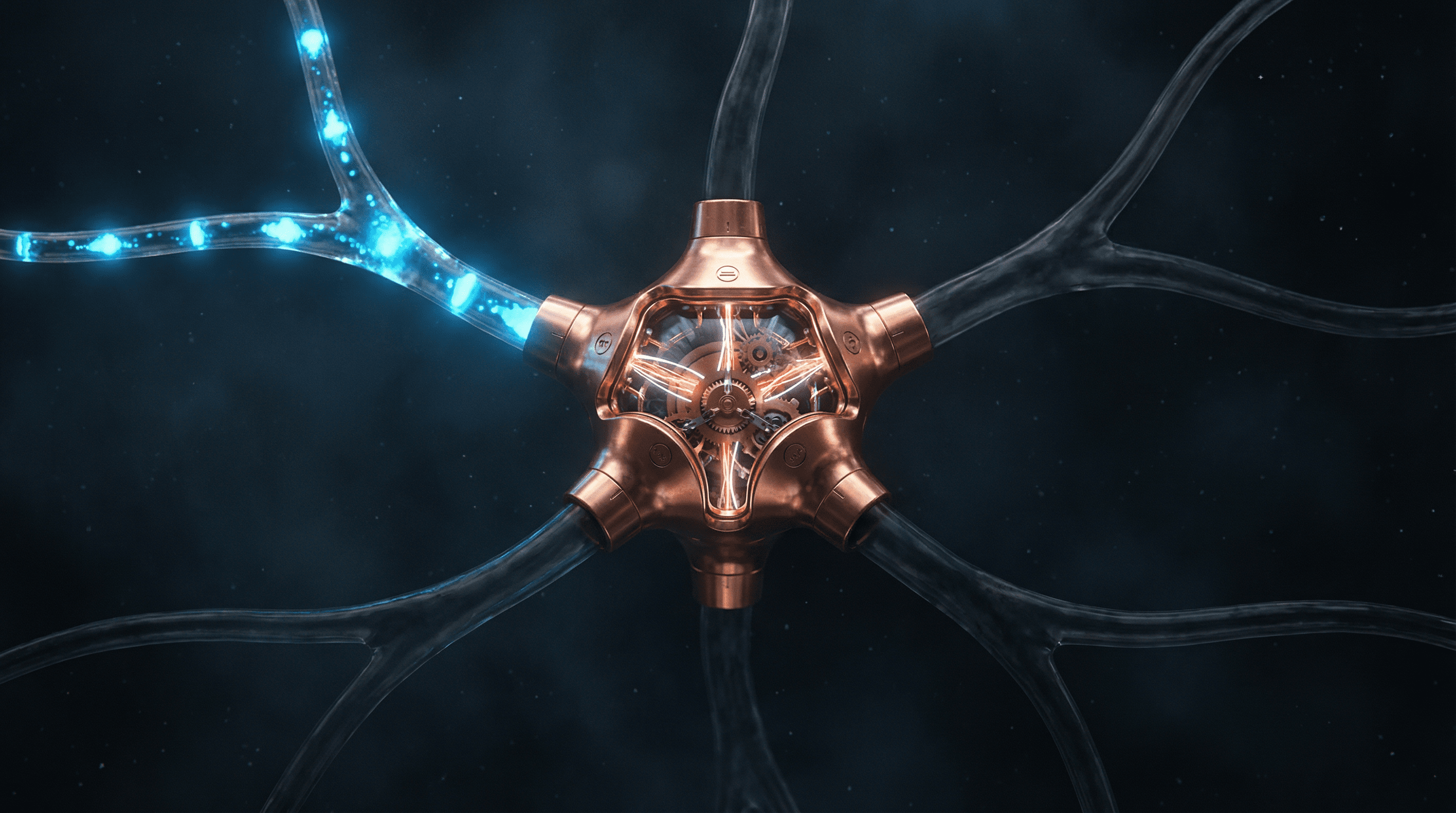
Career assessment, at its most useful, is not a trait inventory. It is a process of projecting the self into possible futures and evaluating fit. The brain accomplishes this through separable neural systems that conventional psychometric tools were never designed to engage.
How Dr. Ceruto Approaches Career Assessment
Dr. Ceruto’s methodology begins where conventional assessment ends — at the neural architecture of professional identity itself.
Real-Time Neuroplasticity(TM) applied to career assessment does not replace psychometric data. It provides the interpretive layer that makes psychometric data actionable. The process maps which career-relevant attributes the brain actually encodes as self-important, how the default mode network constructs and maintains the professional self-narrative, and whether the future-simulation system can generate coherent, emotionally rich projections of the professional paths under consideration.
The pattern that presents most often is this: an accomplished professional whose assessment data is extensive but whose neural identity architecture tells a different story from the one the data suggests. The StrengthsFinder says strategic. The brain says the attribute driving actual career satisfaction is relational trust-building. No questionnaire would have surfaced that discrepancy — because the discrepancy exists at a level the questionnaire cannot reach.
Through the NeuroSync(TM) program, Dr. Ceruto works with professionals navigating focused career alignment questions — the specific neural recalibration required to close the gap between what conventional assessments report and what the brain’s identity architecture actually prioritizes. For professionals facing broader career identity questions intertwined with other life pressures, the NeuroConcierge(TM) program provides a comprehensive partnership that addresses the full complexity of how career identity intersects with every other domain the brain manages simultaneously.
The outcome is not another report. It is structural clarity — the kind that persists because it is grounded in how your brain actually organizes professional identity, not in how a questionnaire approximated it.
What to Expect
The engagement begins with a Strategy Call — a focused conversation where Dr. Ceruto evaluates whether neuroscience-based career assessment is the right intervention for your specific situation. This is a precision step, not a sales conversation.
From there, the assessment phase maps the neural architecture underlying your professional self-concept. This is not a timed test or a standardized battery. It is a structured process calibrated to your career history, current professional context, and the specific questions driving your inquiry.
The protocol moves from assessment into structured neural recalibration — targeted work on the specific circuits where your identity architecture and your career direction are misaligned. Each phase builds on measurable neural data rather than subjective impressions.
What distinguishes this process is durability. Because the work addresses identity at the level where the brain actually constructs and maintains it, the clarity achieved does not fade when circumstances shift. It becomes part of how your neural architecture processes career decisions going forward.
References
Vinod Menon (2023). The DMN: 20 Years of Self-Reference, Identity, and Autobiographical Memory. Neuron. https://doi.org/10.1016/j.neuron.2023.04.023
Verity Smith, Daniel J. Mitchell, John Duncan (2018). DMN in Cognitive and Contextual Transitions. Cerebral Cortex. https://doi.org/10.1093/cercor/bhy167
Anna-Lena Lumma, Sofie L. Valk, Anne Böckler, Pascal Vrtička, Tania Singer (2018). Training-Induced Self-Concept Change and Structural Plasticity of the Prefrontal Cortex. Brain and Behavior. https://doi.org/10.1002/brb3.940
Huijun Wu, Hongjie Yan, Yang Yang, Min Xu, Yuhu Shi, Weiming Zeng, Jiewei Li, Jian Zhang, Chunqi Chang, Nizhuan Wang (2020). Occupational Neuroplasticity: How Professional Experience Physically Reshapes Brain Structure and Function. Frontiers in Human Neuroscience. https://doi.org/10.3389/fnhum.2020.00215
The Neural Architecture of Career Fit
Career assessment, as most professionals encounter it, is a measurement exercise. Instruments evaluate interest clusters, personality dimensions, and aptitude domains, and match the resulting profile against an occupational database. The output is a ranked list of careers for which the individual shows statistical compatibility. This is genuinely useful as a starting point. It is insufficient as a guide for the decisions that actually matter — the decisions about whether to stay or leave, advance or pivot, invest in depth or move to adjacent territory — because it does not address the neural architecture that determines whether any given career environment will produce sustained engagement, meaningful challenge, and the reward signal that the brain requires to sustain long-term performance.
Dopaminergic architecture is the missing variable. The brain’s reward system does not respond to what an individual has been told they are good at, or what a profile instrument predicts they will prefer. It responds to specific categories of challenge, uncertainty, and outcome that have been encoded through experience as reward-generating. Two individuals with nearly identical interest profiles can experience radically different levels of engagement in the same role, because their dopaminergic reward circuits are calibrated to different challenge dimensions. The person whose reward system responds to social complexity will burn out in a role optimized for technical depth, and vice versa, regardless of what their assessment profile predicts.
Predictive coding is equally relevant. The brain continuously generates predictions about future experience based on past pattern recognition, and allocates attention and motivation resources accordingly. A professional whose brain predicts that a career path will generate the specific type of challenge their neural architecture finds rewarding will sustain effort across obstacles, setbacks, and periods of slow progress. A professional whose brain predicts an increasingly poor match between their neural architecture and their career environment will experience progressive disengagement that no amount of strategic career management can prevent — because the prediction is being generated below the threshold of conscious awareness.
Why Traditional Approaches Fall Short
Standard career assessment frameworks were developed before modern neuroscience had mapped the specific neural mechanisms that determine sustained engagement. They are built on self-report data — what individuals consciously prefer, consciously value, and consciously identify as their strengths — filtered through statistical models trained on population-level correlations. These tools have real predictive power at the population level. At the individual level, they miss the neural specificity that determines whether a given career environment will actually sustain engagement for this particular brain.

The practical consequence is that professionals who follow well-designed career assessments into roles that match their profile on every measured dimension still find themselves, five or ten years in, experiencing a version of career malaise that the assessment predicted they should not be experiencing. The interest match is real. The values alignment is genuine. The aptitude fit is confirmed by performance metrics. And the internal experience of engagement — the reward signal that the brain requires to sustain motivation across a career — is progressively depleted.
This pattern is not a failure of self-knowledge. It is a reflection of the gap between what conventional assessment measures and what the neural architecture of engagement actually requires. No paper-and-pencil instrument, however sophisticated, can directly map the specific reward calibration of an individual’s dopaminergic system, the threat sensitivity of their amygdala in response to specific work conditions, or the cognitive load that their prefrontal system can sustain before regulatory capacity degrades. These are neural variables, and they require neural-level assessment.
How Neural Career Assessment Works
My approach to career assessment begins where conventional instruments end. The inventory of interests, values, aptitudes, and personality dimensions is a starting point — a map of the conscious, reportable layer of career fit. From there, I work with the neural layer: examining the specific categories of challenge and outcome that an individual’s reward system has been trained to find reinforcing, the threat patterns that erode regulatory capacity in specific work environments, and the cognitive architecture that determines which types of complex problems will sustain engagement and which will produce progressive depletion.
This assessment is not a test. It is a structured investigation conducted across a series of conversations that examine the neural signatures embedded in an individual’s career history. Every period of peak engagement and peak depletion has left a neural record. The challenge types that generated the strongest intrinsic reward, the environments that produced the most reliable access to flow states, the decision contexts that felt most alive — these are data points that reveal the specific configuration of the individual’s reward architecture far more precisely than any self-report instrument.
The output is a neural career profile: a map of the specific challenge dimensions, environmental conditions, and outcome structures that this particular brain is most wired to find reinforcing. This profile drives career strategy — not by matching it to an occupational database, but by using it to evaluate specific opportunities against the neural variables that will determine whether sustained engagement is possible. The question shifts from what does the profile predict to what does this specific role require from this specific neural architecture?
What This Looks Like in Practice
Professionals who come to this work are typically experiencing a version of career disorientation that conventional assessment has not resolved. They have taken the instruments, gotten the profiles, perhaps even consulted with career coaches, and still cannot find a coherent answer to the question of where their career should go next. The disorientation is not a failure of self-awareness. It is a signal that the assessment approach has been operating at the wrong level of specificity.
A Strategy Call with Dr. Ceruto begins the process of reframing the career question at the neural level. From that conversation, I build a structured assessment engagement designed to map the individual’s specific reward architecture against the career landscape. For professionals navigating a single, well-defined decision — whether to take a specific role, whether to stay or leave a particular organization — a focused NeuroSync engagement produces the neural clarity the decision requires. For those navigating broader career restructuring, the NeuroConcierge model provides the sustained partnership that multi-phase transitions require. The Dopamine Code explores the reward architecture science that underlies this work in detail for those who want to understand the neurological basis of career engagement.
For deeper context, explore neuroscience coaching for career assessment.