Career Guidance Service in Midtown Manhattan

Navigate career transitions with precision in a rapidly shifting Manhattan workforce. Evidence-based guidance grounded in neuroscience, not conventional wisdom.

Career change isn't a failure of planning—it's a signature of adaptation. In my practice, I consistently observe that professionals in Midtown Manhattan's media, finance, advertising, and healthcare sectors face unprecedented structural shifts: layoffs driven by AI consolidation, mandated returns to office that contradict established work patterns, and sector-wide restructuring that renders five-year career plans obsolete within months. Career guidance rooted in neuroscience addresses the mechanism of these decisions, not just the logistics. I help you map the neurological patterns that influence how you navigate choice, interpret risk, and construct a sustainable professional identity in an environment where the old categories no longer apply.
Schedule a Strategy Call

Career Counseling

The Problem: You’re facing a decision point—stay in a shrinking department, accept a lateral move, or leave entirely. The stakes feel significant, but you’re cycling through the same reasoning loop without progress. Traditional career counseling catalogs your interests and work history. That’s necessary. It’s not sufficient.

The Mechanism: When Milot-Lapointe & le Corff studied 257 individuals undergoing career counseling (2024, Career Development Quarterly), they identified a critical finding: 87% showed sustained positive change at 12-month follow-up only when counseling addressed the decision-making process itself, not just the available options. The research revealed three barriers to sound career decisions: Readiness (emotional regulation and tolerance for uncertainty), Orientation (clarity about values and constraints), and Information (access to accurate data about roles and markets). Kulcsár et al. (2020) mapped these barriers to specific patterns of cognitive rigidity—the tendency to revert to familiar reasoning even when circumstances demand novelty.

The Solution: In my practice, I guide you through a structured assessment of your actual decision-making architecture. Where are you stuck—regulation, orientation, or information? Once we identify the barrier, we build a protocol that targets the specific mechanism. This isn’t motivational reframing. It’s precision diagnosis and targeted neuroplasticity work that rewires how you approach the decision itself. You emerge with a clear, evidence-based direction and the cognitive capacity to hold it under pressure.

Learn more about Career Counseling in Midtown Manhattan →

Career Assessment

The Problem: You’ve taken every personality assessment on the market. You know your Myers-Briggs, your StrengthsFinder, your values inventory. None of it clarifies whether you should stay in your current field or pivot entirely. Assessment fatigue has replaced clarity.

The Mechanism: Conventional career assessments measure traits and preferences. They don’t measure competence—the actual neural infrastructure that makes expertise possible. Wu et al. (2020) conducted a meta-analysis of occupational neuroplasticity published in Frontiers in Human Neuroscience and found that true expertise produces measurable differences in brain organization. Experts in their field show stronger activation in the left precentral and middle frontal gyri, regions associated with fine-grained procedural knowledge and cognitive flexibility. This distinction matters: you may have natural affinity for a field without having developed the neural efficiency that produces sustained performance under pressure.

The Solution: My assessment process measures both your current neurological profile and your neuroplasticity potential—your capacity to rewire. We use advanced EEG protocols combined with targeted cognitive tasks to identify where your actual competence lies and where plasticity is available. Balconi et al. (2020, Frontiers in Psychology) demonstrated that a two-week EEG neurofeedback protocol with 16 senior managers reduced stress and anxiety while measurably improving working memory and decision speed. Unlike personality assessment, you receive a neurological baseline and a trajectory—not a label, but a map of what’s possible with targeted development.

Learn more about Career Assessment in Midtown Manhattan →

Career Transition Planning

The Problem: The financial markets, media conglomerates, and ad agencies are contracting. Simultaneously, your life circumstances may have shifted: family obligations, health factors, or simple burnout have made your previous path unsustainable. You understand intellectually that transition is necessary. Everything else—confidence, clarity, capacity—has eroded.

The Mechanism: Career transition stress ranks in the top 25 most significant life stressors. Coppola & Young (2022, Frontiers in Psychology) documented that 4.5 million people per month changed jobs during the Great Resignation—a figure that understates the number experiencing transition anxiety without completing the move. Chronic stress directly damages the prefrontal cortex, the region responsible for future planning and emotional regulation. Arnsten et al. (2021, Yale) demonstrated that prolonged stress causes measurable loss of dendritic spines and dendritic branches in the prefrontal cortex—structural damage that reduces your capacity to think clearly about the transition itself. This creates a feedback loop: the stress of transition impairs the cognitive function required to navigate it successfully.

The Solution: Transition planning begins with stress management targeted at PFC recovery. Simultaneously, we build a phased transition model that respects the neurological reality of change. Dalley et al. (2022, Cerebral Cortex) found that cognitive flexibility—the ability to shift between perspectives and consider novel solutions—is neurally encoded and predictable with 77% accuracy. We assess your current cognitive flexibility and build a transition timeline that develops it progressively. This means beginning transition work while you’re still employed, when your cognitive resources are stable. We map financial thresholds, skill-building sequences, and network expansion in a way that reduces the total stress load and preserves your capacity to make clear decisions at each stage.

Learn more about Career Transition Planning in Midtown Manhattan →

Executive Career Coaching

The Problem: You’ve reached senior level. You’re no longer competing for the role—you’re competing to execute it at the level the organization requires. Performance gaps that were manageable at mid-level now carry visibility and consequence. You need more than motivation. You need a systematic upgrade to your decision-making and emotional regulation under high-stakes conditions.

The Mechanism: Executive performance depends on three neurological systems: working memory (the ability to hold multiple priorities in mind simultaneously), cognitive flexibility (the capacity to shift strategies when conditions change), and emotional regulation (the ability to maintain clarity under stress). Balconi et al. (2020, Frontiers in Psychology) documented measurable gains in all three systems following structured coaching protocols. Smith (2025, Nursing Administration Quarterly) demonstrated that coaching specifically designed to support neuroplasticity produced sustained improvements in emotional regulation and executive function—improvements that persisted at six-month follow-up. The distinction is crucial: generic coaching addresses behavior. Neuroscience-based coaching addresses the neural substrate of behavior, producing deeper and more durable change.

The Solution: Executive coaching in my practice is a twelve-week engagement combining real-time decision analysis (where we examine high-stakes decisions you’re making and optimize your reasoning process), targeted neuroplasticity training (where we build specific cognitive capacities), and sustained feedback that measures your actual progress in working memory, flexibility, and regulation. You work with me directly on live challenges—not case studies. The coaching is tethered to the actual performance demands of your role.

Learn more about Executive Career Coaching in Midtown Manhattan →

Personal Branding

The Problem: You’ve been told to “build your personal brand.” This means LinkedIn optimization, speaking engagement visibility, thought leadership positioning. You’ve done some of this and it feels artificial—a curation of yourself that bears an approximate relation to your actual competence and values. Worse, it doesn’t seem to affect how people perceive you or how opportunities reach you.

The Mechanism: Personal branding as typically practiced is a marketing exercise. What it misses is the neuroscience of self-concept—the mental representation of who you are. Levorsen et al. (2023, Journal of Neuroscience) mapped the neural substrate of self-concept and found that your sense of self is represented in the medial prefrontal cortex (mPFC) according to self-importance weighting. Your professional identity isn’t a fixed asset you project; it’s a dynamic neural representation that your brain actively maintains. Hughes et al. (2023, Journal of Neuroscience) advanced this research, demonstrating that your brain maintains coherence of your self-concept across different contexts using a network model that includes the mPFC, posterior cingulate cortex, and temporal lobe regions. Rouault & Fleming (2020, PNAS) revealed that your ventral striatum continuously tracks global self-performance estimates—essentially, your belief about how well you’re performing across domains.

The Solution: In my practice, personal branding begins with clarifying the actual neural representation you’re trying to communicate. We identify the core competencies, values, and patterns of thinking that are genuinely central to your professional identity. Then we develop a communication strategy—across writing, speaking, and professional presence—that activates these representations consistently. The result isn’t a polished persona. It’s a clearer signal about who you actually are. People respond to this clarity. Opportunity follows.

Learn more about Personal Branding in Midtown Manhattan →

Salary Negotiation Coaching

The Problem: You know your market value. The data is clear. Yet when the negotiation conversation begins, something shifts. Your confidence erodes. You accept lower numbers than you intended or fail to present your case with the clarity it deserves. You tell yourself this is a character weakness—you’re not aggressive enough, not confident enough. This is incomplete analysis.

The Mechanism: Salary negotiation involves distinct neurological systems that don’t always work in concert. Harmer et al. (2024, PNAS) examined how the brain encodes effort costs and reward history during high-stakes negotiations. They found that the basal ganglia produce specific patterns of beta oscillations that track the effort cost of negotiation (the emotional and cognitive load), while the prefrontal cortex generates theta oscillations that track previous reward history. Critically, your reward history—previous successful negotiations, previous failures, previous moments where you accepted less than you wanted—amplifies how you weight current demands. If your history includes setbacks or periods of scarcity, your brain systematically underestimates your current market value and overestimates the risk of asking.

The Solution: Salary negotiation coaching in my practice addresses this mismatch directly. We rebuild your reward history through simulation: you practice negotiation conversations in a structured environment where you experience success. This isn’t confidence building—it’s neurological calibration. Simultaneously, we work on the effort-cost encoding: we reduce the emotional load of the negotiation itself through preparation and frameworking. You emerge with updated basal ganglia encoding (new reward history) and reduced prefrontal stress response (lower effort cost). The actual negotiation conversation becomes neurologically supported rather than neurologically opposed.

Learn more about Salary Negotiation Coaching in Midtown Manhattan →

Midtown Manhattan has become a laboratory for career transition. The Manhattan workforce comprises 2.13 million workers across finance, media, healthcare, advertising, and law—concentrated in a ten-block radius in ways that create both opportunity and acute structural risk. In the past eighteen months, this concentration has come under stress.

Media employment in particular has contracted sharply. CNN shed approximately 200 positions; NBC News cut roughly 150; CBS News eliminated around 100. Condé Nast announced layoffs affecting hundreds of editorial and business staff. Paramount Global’s merger with Skydance triggered additional waves of layoffs. These are not abstract labor statistics—they are specific people in specific offices, often with specific financial obligations (mortgages, school tuition, healthcare for dependents) tied to Midtown proximity and high Manhattan salaries.

The advertising and marketing sector, historically one of Manhattan’s largest employment bases, faces parallel pressure. New York holds approximately 35% of all advertising headquarters in the United States, supporting roughly 50,000 advertising and marketing jobs. AI implementation and consolidation have accelerated layoffs—54,000 people were laid off from tech and adjacent sectors in 2025, an increase of 54% year-over-year. New York City, with its concentration of media and advertising offices, absorbed a disproportionate share of this displacement.

Publishing employed 45,400 workers in New York State with average wages of $5.5 billion, but employment has declined at a compound annual growth rate of -2.8%. The media workforce in New York averaged $110,000 in annual compensation, with senior media executives averaging higher. Publishing workers averaged $122,000. These figures matter because they reflect the income level of people I work with in Midtown practice—people whose salaries supported specific lifestyles and financial structures that assume continued employment at comparable levels.

Simultaneously, the physical workspace has not recovered. Manhattan office attendance remains at 57% of pre-pandemic levels, far below the 76% pre-pandemic baseline. Major employers—JPMorgan Chase, Goldman Sachs, Amazon—have issued mandatory return-to-office mandates. Amazon’s November 2025 layoff of 700 corporate employees in New York came concurrent with an aggressive return-to-office mandate, creating a particular form of professional turbulence: people losing their jobs in the same breath as being told they must be physically present to do them.

The Upper East Side medical corridor—anchored by Hospital for Special Surgery, Weill Cornell, and NYU Langone—represents another transition zone. Physicians and clinical administrators in this ecosystem face distinct pressures: scope-of-practice changes driven by insurance consolidation, burnout-driven exits from clinical medicine, and the increasing prevalence of non-clinical healthcare career paths (health administration, health tech, medical economics). These professionals often have elite credentials and substantial financial obligations, yet the pathways from clinical practice to adjacent careers remain poorly mapped neurologically and professionally.

The total U.S. job market through November 2025 exceeded 1.17 million layoffs—a 54% increase year-over-year. New York City, despite being ostensibly a tech and finance hub, absorbed significant displacement. Yet simultaneously, there were 100,000-plus job postings on major platforms in the NYC area, indicating a disconnect between available positions and the available workforce. For someone in Midtown in early 2026, the market presents a paradox: abundance of opportunities alongside real structural job loss in your sector. This is not a problem that resolves through conventional career counseling or optimistic messaging. It requires specific neurological work: relearning how to evaluate opportunity under conditions where the old criteria no longer apply, rebuilding confidence through evidence rather than affirmation, and constructing a professional identity that remains coherent even as the external structure shifts.

Dr. Sydney Ceruto, PhD — Founder, MindLAB Neuroscience

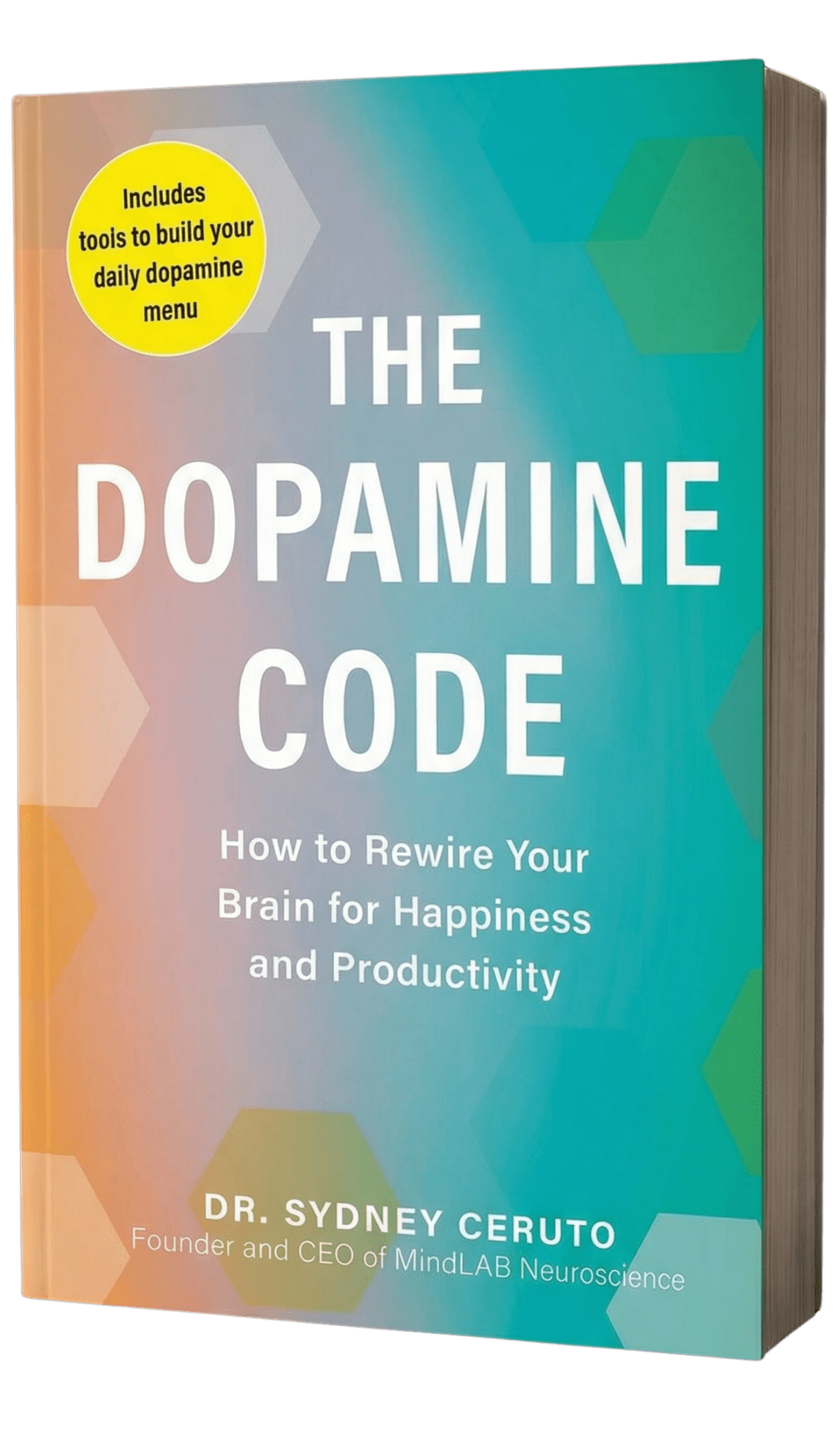
Dr. Sydney Ceruto holds a PhD in Behavioral & Cognitive Neuroscience from NYU and Master’s degrees in Clinical Psychology and Business Psychology from Yale University. She is a Lecturer in the Wharton Executive Development Program at the University of Pennsylvania, an Executive Contributor to Forbes Coaching Council, and an inductee in Marquis Who’s Who in America. Dr. Ceruto founded MindLAB Neuroscience in 2000 and has spent more than 26 years developing and refining her proprietary methodology, Real-Time Neuroplasticity™. She is the author of The Dopamine Code (Simon & Schuster, June 2026).

Frequently Asked Questions

I work in media and my department is being restructured. Is this the right time to start career coaching?
The restructuring is precisely when clarity matters most. In my practice, I've observed that people who begin career work early—before the final decision point—make better decisions and experience less disruption. The neurological reason is straightforward: your prefrontal cortex (the region responsible for planning and clear thinking) functions optimally when stress is moderate, not acute. Once layoffs become imminent, your brain shifts into protective mode, and decision-making capacity narrows. Starting now gives you the cognitive advantage: you can think expansively about options while your brain's resources are still available for strategic planning.
How is neuroscience-based career coaching different from a therapist or traditional career counselor?
Neuroscience-based career guidance targets the actual cognitive and neurological infrastructure that makes sustained career performance possible. We measure your working memory, cognitive flexibility — the ability to shift thinking between concepts —, and capacity to regulate under pressure—then we build targeted protocols that upgrade these capacities. You're not processing past experiences or exploring personality type. You're optimizing the neural systems that determine how you perform in your chosen field.
I've been at a Midtown ad agency for 12 years and AI is transforming my industry. How do you help plan for a career that hasn't been defined?
This is the core challenge in Midtown right now. The old framework—build expertise in a defined domain, advance within it—assumed domain stability. AI has collapsed that assumption. In my practice, I help you identify the core cognitive capacities that made you successful in your previous role, then map those capacities onto emerging domains where they remain valuable. This requires a different kind of assessment—not "what job should I do next" but "what are the fundamental thinking patterns that drive my competence, and where else are those patterns valuable?" You're building a career architecture based on your neurological strengths, not on the stability of external categories.
My company issued a full RTO mandate. I'm not sure if I want to go back or leave. Can career coaching help?
RTO mandates create a specific neurological challenge: they activate both cognitive and emotional stress systems simultaneously. You're being asked to make a decision (stay and comply, or leave) under conditions that impair decision-making itself. In my practice, I first help you separate the decision from the emotional load. We identify what's actually true about your preferences, financial constraints, and long-term professional goals—separately from the acute stress of the mandate. Then we build a plan that addresses the decision from a position of clarity rather than reactive pressure. Many people I work with discover they have more options than they initially perceived once the emotional fog lifts.
I'm a senior media exec laid off twice in three years. My resume is strong but I lose confidence in interviews. Is there a neurological reason?
Yes. Repeated layoffs, even when they're structural rather than performance-based, create a measurable shift in how your brain evaluates risk and encodes social hierarchy in interview situations. Your basal ganglia — deep brain structures governing habits and movement — are encoding a history of setback; your amygdala is primed for threat; your prefrontal cortex — the brain's executive control center — is struggling to maintain narrative coherence about your professional identity. This isn't a character issue. It's a predictable neurotransmitter — a chemical messenger between brain cells — pattern following repeated stress. In my practice, we deliberately rebuild your reward history through simulation and interview preparation. You practice until your brain has experienced success repeatedly. This rewires the basal ganglia encoding and reduces amygdala activation in actual interview situations.
What does the career assessment process look like? Will it tell me anything MBTI/StrengthsFinder can't?
My assessment process includes EEG-based measurement of your actual cognitive patterns during task performance, combined with specialized testing of working memory, cognitive flexibility — the ability to shift thinking between concepts —, and stress response. MBTI and StrengthsFinder measure traits and preferences—how you naturally tend to operate. My assessment measures competence—the actual neural efficiency of your executive function — the brain's ability to plan, focus, and manage tasks — systems. You might be naturally extroverted but have weak working memory (limiting your capacity for complex problem-solving). Or you might be naturally detail-oriented but have poor cognitive flexibility (limiting your ability to adapt strategy when conditions change). The assessment clarifies which neural capacities are your genuine strengths and which are available for development.
I'm a physician on the UES considering healthcare administration. Do you work with doctors making non-clinical transitions?
Regularly. Physicians face a specific transition challenge: you've spent a decade or more developing deep expertise in clinical medicine, which creates both mastery and identity fusion. The transition to non-clinical roles (health administration, healthcare economics, health tech) requires you to reframe your professional identity while leveraging different aspects of your competence. In my practice, I work with physicians to identify the core skills that will transfer (systems thinking, high-stakes decision-making, managing under uncertainty) and target development in new domains (financial analysis, organizational strategy, tech implementation). The process is accelerated because your baseline cognitive capacity and ability to sustain learning are typically quite high.
My salary has been flat for 4 years despite promotions. I'm terrified of the negotiation conversation.
This pattern is common, and it's usually not about insufficient value. It's about how your brain encodes negotiation risk. Four years of accepting your current salary creates a reward-history bias: your basal ganglia — deep brain structures governing habits and movement — become calibrated to that number as normal, safe. The prospect of negotiating activates both threat response (amygdala — the brain's threat-detection center —) and effort-cost encoding (basal ganglia), making the conversation feel disproportionately risky. In my practice, we work specifically on salary negotiation readiness. We prepare you thoroughly so the conversation feels manageable rather than threatening. We also help you rebuild your reward history by practicing successful negotiation scenarios until your brain's encoding of the interaction shifts from threat to opportunity.
I'm not sure if my problem is my career path or my personal brand.
Often both. Your career path determines whether you're in an environment that can utilize your strengths. Your personal brand determines whether you're communicating those strengths clearly enough for opportunity to reach you. In my practice, we assess both in parallel. Career assessment reveals whether your current domain is aligned with your actual competence and your neurological profile. Personal branding work clarifies how you're representing yourself. Usually, both need attention—but for different reasons. Career assessment might show you're in the wrong domain. Branding work might show you're failing to communicate your competence within the right domain. Once you're clear on both, the path forward becomes much more direct.
I've paid for career coaching before and it didn't work. Why is this different?
Most career coaching focuses on external factors: resume optimization, interview technique, networking strategy. These are useful, but they don't address the neurological substrate of performance. If your previous coaching didn't work, it may have been because no one was actually measuring or upgrading your cognitive capacity. My practice is built on specific neural measurement and targeted neuroplasticity — the brain's ability to rewire itself — protocol. We measure your actual working memory, cognitive flexibility — the ability to shift thinking between concepts —, and stress regulation. We build specific interventions designed to upgrade these capacities. You're not paying for someone to review your resume or critique your networking. You're paying for a systematic upgrade to your cognitive function, which produces measurable change in how you perform across contexts—interviews, negotiations, transitions, executive presence. That difference in approach produces different results.

Ready to Perform at Your Highest Level?

Career transition in Midtown Manhattan is navigable, but it requires precision. Let's map your neurological strengths and build a strategy grounded in evidence, not convention.

Schedule a Strategy Call
MindLAB Neuroscience consultation room
Locations

The Intelligence Brief

Neuroscience-backed analysis on how your brain drives what you feel, what you choose, and what you can’t seem to change — direct from Dr. Ceruto.