Circadian Biology & Cognitive Performance in Midtown Manhattan

Dr. Sydney Ceruto applies circadian neuroscience to restore the biological timing system that governs cognitive peak performance, memory consolidation, and brain health.

Your brain runs on biological timing. When circadian rhythms — the internal clock regulating sleep, cortisol, focus, and repair cycles — are misaligned, cognitive performance degrades in ways that caffeine and willpower cannot fix. At MindLAB Neuroscience, we identify the specific timing disruptions affecting your brain's output and build a precision realignment protocol.
Book a Strategy Call

Key Points

  1. Circadian rhythms are generated by a molecular feedback loop within individual cells — they are biological architecture, not habits that can be overridden by willpower.
  2. Controlled research documents cognitive performance differences of twelve to fifteen percent between circadian alignment and misalignment.
  3. Working memory and executive function peak during the late morning to early afternoon window for most people, driven by the interaction between cortisol, body temperature, and prefrontal activity.
  4. Chronic circadian disruption produces structural changes in prefrontal cortex neurons — shortened and less-branched connections that mirror chronic cortisol damage.
  5. Individual sensitivity to evening light varies dramatically — the same stimulus can suppress melatonin by sixty percent in one person while producing negligible effect in another.
  6. The glymphatic system's peak waste clearance follows circadian regulation, making circadian integrity a direct determinant of long-term brain health.
  7. Precision circadian optimization requires understanding each person's specific chronotype, light sensitivity, and meal-timing patterns — not imposing a universal routine.

The human brain does not operate at a single, stable level of performance across the day. It executes a precisely timed biological program governed by an ancient molecular timekeeping system embedded in nearly every cell of the body. When this system is intact, cognition, mood, energy, and memory follow predictable rhythms that can be leveraged for peak output. When it is disrupted, every downstream cognitive process degrades — not because of effort or motivation, but because the biological infrastructure that performance depends upon has lost its temporal architecture.

Your Brain’s Internal Clock

“When this timing system is aligned, cognitive performance follows a reliable architecture. When it is disrupted, the consequences extend far beyond feeling tired.”

The body’s master pacemaker resides in a paired structure of approximately 20,000 neurons in the anterior hypothalamus called the suprachiasmatic nucleus. This central clock receives light information through a dedicated neural pathway from specialized retinal cells that are maximally sensitive to short-wavelength blue light. The suprachiasmatic nucleus then coordinates downstream hormonal and neural outputs, including cortisol timing, melatonin secretion, body temperature rhythms, and growth hormone release. These outputs entrain peripheral tissue clocks throughout the body to a near-24-hour cycle. Every organ, including the brain, operates on this coordinated schedule.

When behavioral and environmental cycles fall out of synchrony with the internal clock, measurable cognitive deterioration follows through mechanisms distinct from, and additive to, simple sleep deprivation. Controlled research using forced desynchrony protocols has demonstrated that daily circadian misalignment impairs sustained attention, cognitive throughput, information processing speed, and visual-motor performance by approximately 12 to 15 percent. These deficits persist rather than improve across consecutive misaligned days. Declarative memory is relatively spared, implicating selective vulnerability of prefrontal-dependent executive networks.
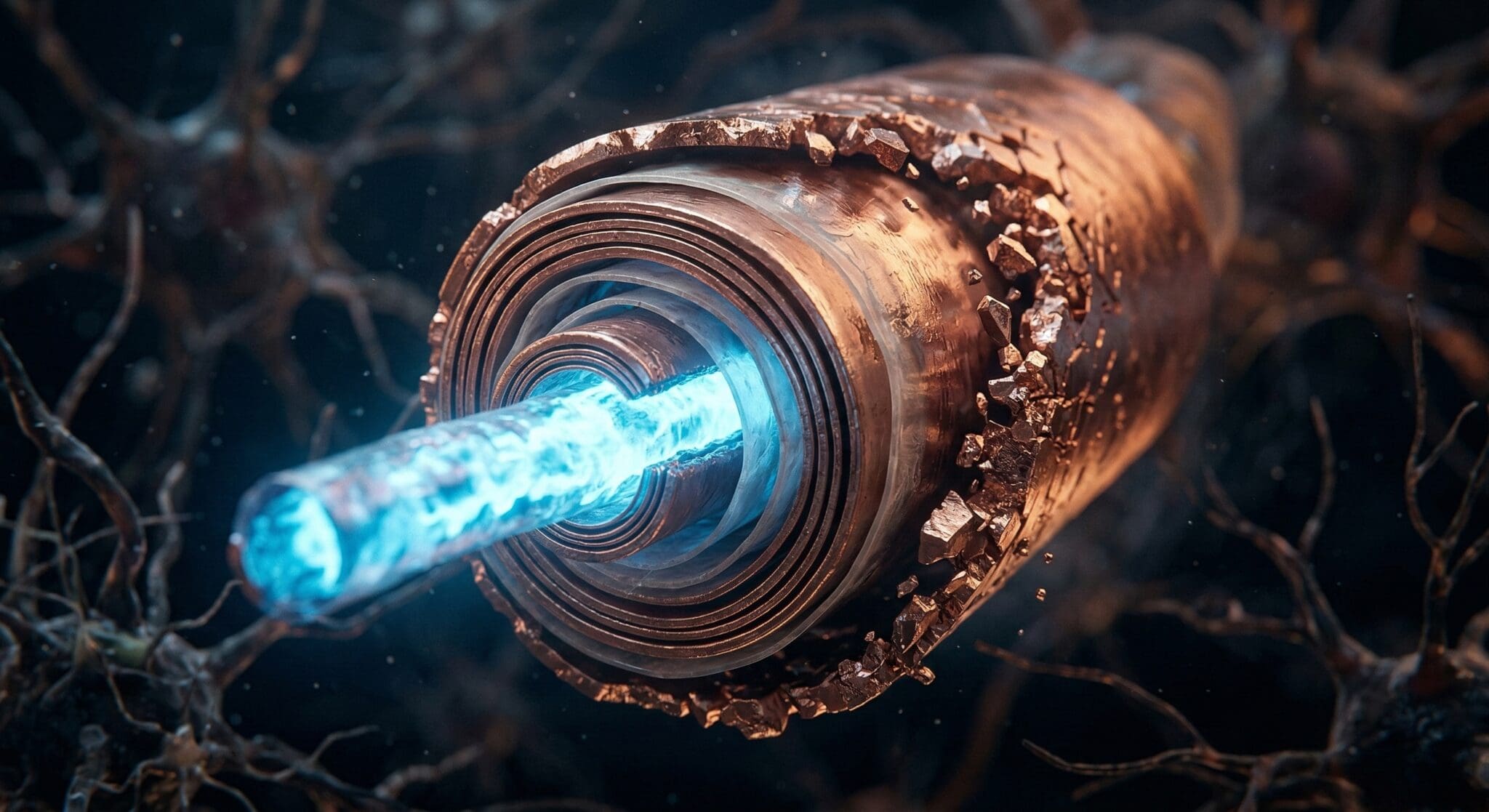
Macro cross-section of neural pathway with copper sheathing forming around blue signal core depicting active brain optimization

How Disrupted Timing Degrades Performance

The molecular machinery of the circadian clock operates through transcription-translation feedback loops involving the clock genes BMAL1, CLOCK, PER, and CRY. These genes regulate not only the timing of cellular processes but also critical brain functions including synaptic plasticity, neurotransmitter synthesis, and the brain’s waste-clearance system. Simulated night-shift work disrupts BMAL1-dependent protein synthesis specifically in the prefrontal cortex — the brain’s executive control center. This impairs the production of synaptic plasticity proteins required for learning and memory consolidation, a molecular mechanism by which circadian disruption corrupts cognitive function at its foundation.

The Brain’s Overnight Cleaning System

The glymphatic system — the brain’s primary waste-removal pathway — depends on consolidated slow-wave sleep for optimal function. During slow-wave sleep, interstitial fluid volume expands by approximately 60 percent, dramatically accelerating the clearance of amyloid-beta and tau proteins that, when accumulated, drive neurodegenerative pathology. Circadian disruption fragments slow-wave sleep, reducing glymphatic efficiency and allowing neurotoxic protein accumulation that accelerates brain aging. Amyloid-beta production follows its own circadian rhythm, rising during wakefulness and falling during sleep. When this rhythm is disrupted, clearance cannot keep pace with production.

Cortisol, Melatonin, and the Hormonal Clock

Cortisol timing provides another critical circadian dimension. The cortisol awakening response is a distinct 50 to 100 percent surge in cortisol within 30 to 60 minutes of waking. It is driven by the circadian system itself and serves as a critical biomarker of circadian integrity. A flattened cortisol awakening response signals circadian disruption and is prospectively associated with cognitive decline over follow-up periods of five to nine years. Each arousal per hour of sleep reduces the cortisol awakening response amplitude, meaning fragmented sleep directly degrades the morning cortisol signal that primes cognitive readiness.

Circadian disruption does not merely impair present-day performance. A 2026 study of older adults with cognitive concerns found that individuals with longer intrinsic cellular circadian periods showed a 4.41-fold higher hazard of clinical cognitive decline, with circadian deviation independently predicting deterioration. The circadian system is not an optional wellness consideration — it is a structural determinant of long-term brain health trajectory.

Why Melatonin Is More Than a Sleep Aid

Melatonin — the hormone that signals darkness to the circadian system — is not merely a sleep aid. It functions as a potent antioxidant and neuroprotective agent within the brain. Suppression of melatonin through evening light exposure degrades not only sleep onset timing but also the brain’s overnight neuroprotective signaling. The interaction between circadian disruption and neuroinflammation compounds the damage: disrupted clock gene function activates microglia, increases neuroinflammatory tone, and elevates the pro-inflammatory cytokines that impair synaptic plasticity and accelerate brain aging.

Sleep Architecture and Memory

The cognitive consequences of circadian disruption extend beyond attention and processing speed. Sleep architecture governs memory consolidation through a precisely timed sequence of sleep stages. Slow-wave sleep supports declarative memory and glymphatic clearance. REM sleep consolidates emotional memories and supports creative problem-solving. Circadian misalignment fragments this architecture, degrading the quality of each sleep stage even when total sleep duration appears adequate. This explains why many individuals sleep a seemingly sufficient number of hours yet wake feeling cognitively unrested — the timing, not merely the duration, has been disrupted.

When You Eat Matters Too

Feeding schedules interact directly with circadian biology. Time-restricted eating aligned with daytime activity activates autophagy through nighttime fasting, supports AMPK-mediated brain-derived neurotrophic factor expression, and reduces neuroinflammation. Circadian misalignment of food timing independently disrupts clock gene expression in peripheral tissues, compounding the disruption that light and sleep irregularities have already introduced.
Walnut credenza with crystal brain sculpture and MindLAB journal in diffused dusk light suggesting high-floor Midtown Manhattan private office

Mapping Your Circadian Profile

Dr. Ceruto’s circadian biology work begins with assessing an individual’s chronotype, light exposure patterns, sleep architecture, cortisol timing, and behavioral rhythms to map the specific points of circadian disruption. From this assessment, a personalized circadian optimization strategy is developed that addresses light timing, feeding schedules, exercise timing, and the restoration of the biological rhythms that cognitive performance depends upon.

For deeper context, explore circadian biology and cognitive longevity.

Marker What You Experience What's Happening Neurologically What We Restructure
Morning cognitive lag Struggling to reach peak mental sharpness in the first hours of the day despite adequate sleep A weakened cortisol awakening response — the circadian-driven morning cortisol rise that normally peaks three hours before habitual wake time has decoupled from the clock The coupling between the circadian system and cortisol rhythmicity to restore morning cognitive readiness
Afternoon performance collapse Processing speed and working memory dropping sharply after lunch, independent of food intake Core body temperature, cortisol rhythm, and prefrontal metabolic activity are misaligned with the schedule demands, producing twelve to fifteen percent performance deficits Alignment between biological performance peaks and highest-stakes cognitive demands
Evening cognitive wiring Mind racing at night despite physical exhaustion, unable to wind down on schedule Evening cortisol remains elevated from a flattened rhythm, compressing the nighttime recovery window neurons require for maintenance The cortisol slope — restoring the ratio between morning peak and evening trough that permits neural recovery
Chronic jet-lag feeling Persistent sense of operating on the wrong time zone even without travel Peripheral clocks in the liver, gut, and other organs have decoupled from the central brain clock due to irregular meal timing and light exposure Peripheral clock synchronization through engineered light environment and consistent eating windows
Accelerated cognitive aging Measurable decline in sustained attention and mental clarity beyond what age alone would predict Disrupted circadian function impairs glymphatic waste clearance of harmful proteins during the rest phase, accelerating protein accumulation The circadian signals that drive neuroprotective sleep and protect the waste-clearance window determining long-term brain health

Why Circadian Biology & Cognitive Performance Matters in Midtown Manhattan

New York City earns its “city that never sleeps” designation biologically as well as culturally. For Midtown’s professional workforce, circadian disruption — the body’s biological clock — is not a lifestyle complaint but a neurological baseline. This is compounded by the world’s most aggressive artificial light environment, an extreme commuter culture, a global travel requirement, and a work culture that has structurally eliminated the environmental cues the circadian system requires to function.

The sleep data is stark. New Yorkers average just 6 hours and 36 minutes of sleep nightly — nearly an hour below the 7.5-hour threshold associated with optimal cognitive performance. Over 38 percent of New York adults report sleeping fewer than seven hours nightly, exceeding the national average. Every minute spent commuting translates to a 0.22-minute reduction in sleep; a 90-minute round-trip commute from New Jersey or Long Island removes 20 minutes of sleep per night, compounding to nearly 2.5 hours per week.

Times Square’s light environment constitutes a direct circadian assault. The district operates as a continuous artificial daylight zone at hours when melatonin secretion should be rising. LED screens cycle between blue-spectrum wavelengths optimally calibrated to suppress melatonin production. Midtown office buildings with floor-to-ceiling glass maintain artificial lighting that peaks at or above 500 lux at times when circadian physiology expects darkness. The New York Review of Architecture has described Manhattan’s pervasive lighting as creating a “24/7 coerced state of nonstop productivity” that structurally prevents the light-dark cycling the circadian system depends on.

Business travel adds jet lag as a recurring circadian disruptor. A New York-to-London trip imposes a 5-day adaptation period; New York-to-Tokyo, up to 12 days in each direction. Consultants at firms like McKinsey and BCG regularly cross six to eight time zones multiple times per month. Each day spent jet-lagged is a day of substandard productivity, with circadian misalignment simultaneously degrading sleep architecture, metabolic function, mood regulation, and immune competence. The gap between generic sleep hygiene advice and the kind of individualized circadian biology assessment Dr. Ceruto provides is the gap between consumer tips and clinical science.

Dr. Sydney Ceruto, PhD — Founder, MindLAB Neuroscience

Dr. Sydney Ceruto, PhD — Founder & CEO, MindLAB Neuroscience

Dr. Ceruto holds a PhD in Behavioral & Cognitive Neuroscience from NYU and two Master’s degrees from Yale University. She lectures at the Wharton Executive Development Program at the University of Pennsylvania and has been an Executive Contributor to the Forbes Coaching Council since 2019. Dr. Ceruto is the author of The Dopamine Code (Simon & Schuster, June 2026). She founded MindLAB Neuroscience in 2000 and has spent over 26 years pioneering Real-Time Neuroplasticity™ — a methodology that permanently rewires the neural pathways driving behavior, decisions, and emotional responses.

References

Chellappa, S. L., Morris, C. J., & Scheer, F. A. J. L. (2018). Daily circadian misalignment impairs human cognitive performance task-dependently. Scientific Reports, 8(1), 3041. https://doi.org/10.1038/s41598-018-20707-4

Musiek, E. S., & Holtzman, D. M. (2016). Mechanisms linking circadian clocks, sleep, and neurodegeneration. Science, 354(6315), 1004–1008. https://doi.org/10.1126/science.aah4968

Roh, H. W., et al. (2026). Cellular circadian period and its deviation associate with Alzheimer’s pathology and brain aging in cognitively impaired older adults. Proceedings of the National Academy of Sciences, 123(9), e2527236123. https://doi.org/10.1073/pnas.2527236123

Leng, Y., Musiek, E. S., Hu, K., et al. (2019). Association between circadian rhythms and neurodegenerative diseases. The Lancet Neurology, 18(3), 307–318. https://doi.org/10.1016/S1474-4422(18)30461-7

Success Stories

“I'd optimized everything — diet, fitness, sleep — but my cognitive sharpness was quietly declining and no one could explain why. Dr. Ceruto identified the synaptic density patterns that were thinning and built a protocol to reverse the trajectory. This wasn't prevention in theory. My neuroplasticity reserve is measurably stronger now than it was three years ago. Nothing I'd tried before even addressed the right problem.”

Henrique L. — University Dean Lisbon, PT

“After the concussion, my processing speed collapsed — I couldn't hold complex information the way I used to, and no one could explain why the fog wasn't lifting. Dr. Ceruto mapped the damaged pathways and built compensatory networks around them. My brain doesn't work the way it did before the injury. It works differently — and in some ways, more efficiently than it ever did.”

Owen P. — Orthopedic Surgeon Scottsdale, AZ

“Nothing was wrong — and that's exactly why no one could help me. I wasn't struggling. I wanted to know what my brain was actually capable of if its resting-state architecture was optimized. Dr. Ceruto mapped my default mode network and restructured how it allocates resources between focused and diffuse processing. The cognitive clarity I operate with now isn't something I'd ever experienced before — and I had no idea it was available.”

Nathan S. — Biotech Founder Singapore

“Slower processing, foggier recall, decisions that used to be instant taking longer than they should — I'd been accepting it all as inevitable decline for two years. Dr. Ceruto identified the prefrontal efficiency pattern that was degrading and restructured it at the neurological level. The sharpness didn't just come back. It came back faster and more precise than it was a decade ago. Nothing I'd tried before even addressed the right problem.”

Elliott W. — Wealth Advisor Atherton, CA

“When I started working with Dr. Ceruto, I was feeling stuck, not happy whatsoever, detached from family and friends, and definitely not confident. I’d never tried a neuroscience-based approach before, so I wasn’t sure what to expect — but I figured I had nothing to lose. My life has completely changed for the better. I don’t feel comfortable discussing publicly why I sought help, but I was made to feel safe, secure, and consistently supported. Just knowing I could reach her day or night was a relief.”

Algo R. — Fund Manager Dubai, UAE

“Working with Dr. Ceruto was one of the most transformative experiences of my life. I was stuck in a cycle of dissatisfaction, unsure of where I was headed or why I felt so unfulfilled. From the very first session, she helped me peel back the layers and uncover what truly mattered. Her ability to connect neuroscience with practical life strategies was incredible. She guided me to clarify my goals, break free from limiting beliefs, and align my actions with my values. I finally feel real purpose.”

Nichole P. — Wealth Advisor Sarasota, FL

Frequently Asked Questions About Circadian Biology & Cognitive Performance in Midtown Manhattan

What does circadian biology optimization involve at MindLAB?

Dr. Ceruto conducts a comprehensive assessment of circadian function — including chronotype, sleep patterns, and behavioral rhythms — to identify the specific points where the biological clock system has been disrupted. From this assessment, a personalized circadian optimization strategy is developed that addresses the environmental, behavioral, and neurobiological factors degrading circadian integrity.

How does circadian disruption affect cognitive performance?

The circadian system governs the timing of cortisol release, neurotransmitter — a chemical messenger between brain cells — synthesis, synaptic plasticity, and the brain’s waste-clearance system. When circadian rhythms are disrupted, sustained attention, processing speed, and cognitive throughput decline by 12 to 15 percent. Sleep architecture fragments, reducing the slow-wave sleep phases essential for memory consolidation — converting short-term memories to long-term — and glymphatic clearance of neurotoxic proteins. Cortisol timing loses its optimal rhythm, degrading morning cognitive readiness and evening recovery.

Who benefits from circadian biology work?

Individuals experiencing persistent sleep disruption, jet lag that does not resolve on expected timelines, morning grogginess that persists despite adequate sleep duration, afternoon cognitive crashes, or a pervasive sense that energy and mental clarity no longer follow a predictable daily rhythm. People whose work involves frequent time zone changes, irregular schedules, or heavy exposure to artificial light during evening and nighttime hours are particularly likely to benefit.

How does someone start circadian optimization with Dr. Ceruto?

The first step is a Strategy Call, conducted by phone. The $250 fee covers an in-depth assessment of sleep patterns, work schedule, travel frequency, light exposure, and cognitive concerns. Dr. Ceruto determines whether circadian disruption (relating to the body's 24-hour biological clock) is a significant contributing factor and discusses program structure and investment during the call.

How long does circadian realignment take?

The circadian system responds (relating to the body's 24-hour biological clock) to consistent environmental and behavioral cues relatively quickly, with shifts in melatonin timing and cortisol rhythms beginning within days of implementing targeted changes to light exposure and behavioral schedules. However, restoring full circadian integrity after months or years of disruption, including the downstream effects on sleep architecture, neuroinflammation, and cognitive performance, typically requires sustained effort over several weeks to months, guided by ongoing assessment of physiological markers.

Also available in: Miami · Wall Street · Beverly Hills · Lisbon

Take the First Step Toward Circadian Biology & Cognitive Performance

The Strategy Call is a focused conversation with Dr. Ceruto that maps the specific neural mechanisms driving your concerns and determines the right path forward.

Book a Strategy Call
MindLAB Neuroscience consultation room

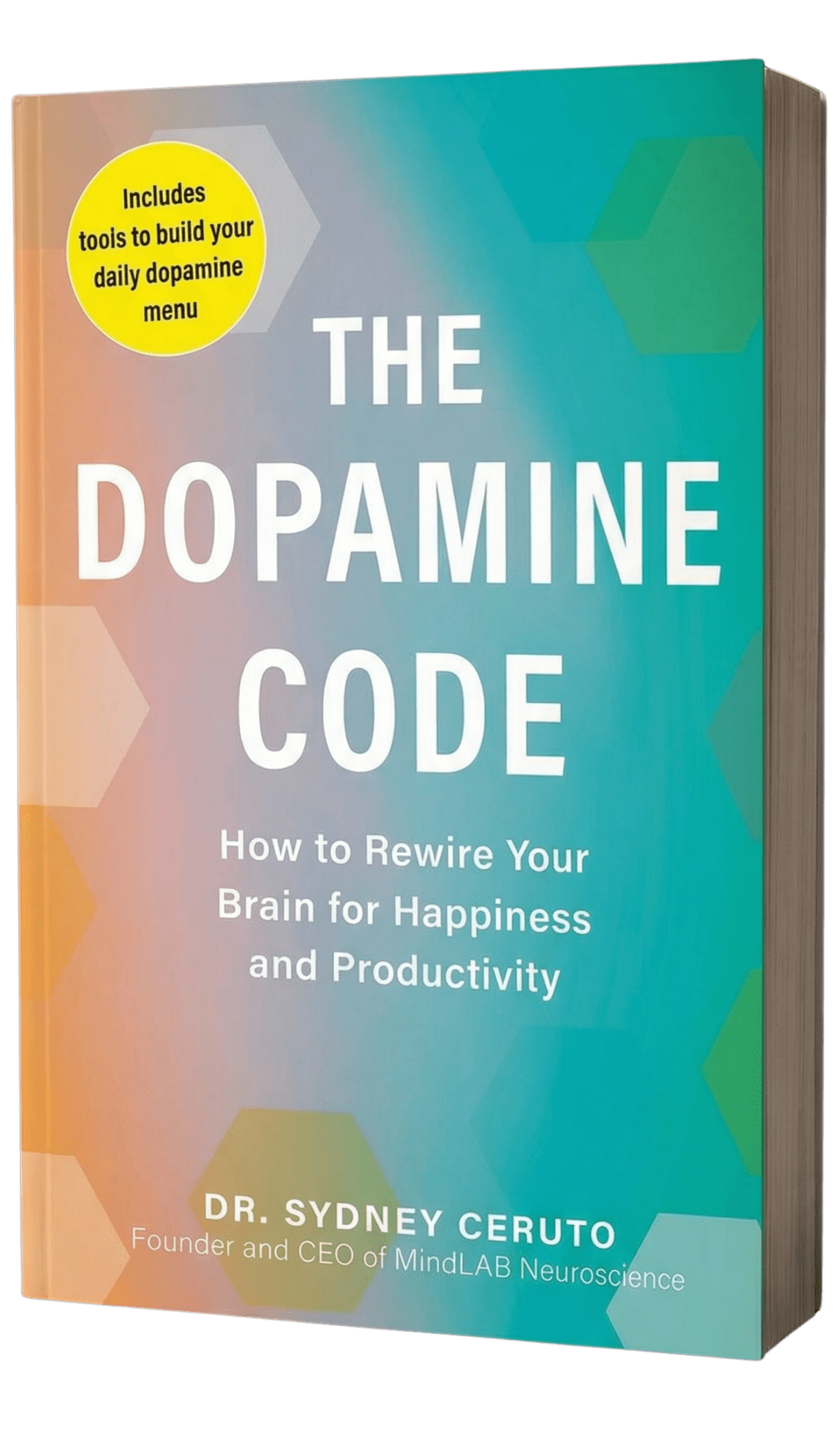
The Dopamine Code

Decode Your Drive

Why Your Brain Rewards the Wrong Things

Your brain's reward system runs every decision, every craving, every crash — and it was never designed for the life you're living. The Dopamine Code is Dr. Ceruto's framework for understanding the architecture behind what drives you, drains you, and keeps you locked in patterns that willpower alone will never fix.

Published by Simon & Schuster, The Dopamine Code is Dr. Ceruto's framework for building your own Dopamine Menu — a personalized system for motivation, focus, and enduring life satisfaction.

Order Now

Ships June 9, 2026

The Dopamine Code by Dr. Sydney Ceruto — Decode Your Drive
Locations

The Intelligence Brief

Neuroscience-backed analysis on how your brain drives what you feel, what you choose, and what you can’t seem to change — direct from Dr. Ceruto.