Consultant in Midtown Manhattan

When strategy stalls and leadership performance plateaus, the problem is rarely the thinking—it's how your brain is wired to think under pressure.

In my practice across Midtown's most demanding organizations, I consistently observe the same pattern: teams and executives have sophisticated strategies but can't execute them consistently because their neural systems are working against their intentions. The difference between a $2 million strategy that produces mediocre outcomes and one that transforms your business is not the strategy itself—it's whether your brain's decision-making apparatus is optimized to sustain focus, navigate ambiguity, and recover from setback. That's where neuroscience-based consulting changes everything. I've spent over 26 years developing a methodology that addresses the neurobiological constraints most consultants never identify, let alone resolve.
Schedule a Strategy Call

Strategy Consulting

Every strategy lives or dies in the brain. In my consulting work, I’ve found that the breakdown between ambitious strategy and actual execution traces back to a single bottleneck: how well the prefrontal cortex—the region responsible for goal-directed behavior and cognitive flexibility—can sustain activation under the chronic stress of implementation. Robbins et al. (2021) demonstrated that the dorsolateral prefrontal cortex (dlPFC) functions as the central hub for goal-directed behavior, but Girotti et al. (2024) showed that chronic occupational stress produces glucocorticoid-induced dendritic atrophy in the medial prefrontal cortex (mPFC), impairing the very cognitive flexibility required to adapt your strategy as market conditions shift.

What I do differently is reverse-engineer your strategy through a neuroscientific lens. I assess how your brain’s current wiring supports or undermines your strategic objectives. Rather than adding another layer of strategic analysis, I identify the neurobiological constraints that force organizations into repetitive decision-making loops, political gridlock, or implementation failure. Wu et al. (2020) found in their occupational neuroplasticity meta-analysis that practitioners who receive targeted neuroscience-based skill training show stronger activation in the left middle frontal gyrus—the region essential for strategic planning under uncertainty. My strategy consulting partnership uses Real-Time Neuroplasticity™ methodology to rewire how you and your leadership team approach ambiguity, allocate attention, and sustain focus across a multi-year strategic roadmap. The result is strategy that doesn’t just sound compelling in the boardroom—it actually executes.

Learn more about Strategy Consulting in Midtown Manhattan →

Leadership Training

Leadership is a neuroscience problem masquerading as a management problem. In Midtown organizations, I work with executives who are analytically brilliant but whose nervous systems are generating chronic states of defensive reactivity—high amygdala tone, reduced prefrontal engagement, impaired emotional regulation. González-García et al. (2023) conducted a bibliometric analysis of neuroleadership literature and found that structured neural interventions produce measurable improvements in decision quality, stress resilience, and team cohesion. Balcoli et al. (2020) trained 16 senior managers using a two-week neurofeedback protocol and documented statistically significant reductions in workplace stress, anxiety, and fatigue—improvements that persisted at 6-month follow-up.

My leadership training program is not skills-based instruction. It is systematic neural recalibration. I work with your senior leadership team to identify the specific stress patterns, attentional habits, and emotional regulation bottlenecks that constrain your ability to lead during uncertainty. Singer (2025) recently published findings in the Annals of the New York Academy of Sciences demonstrating that structured mental training produces measurable gray matter plasticity in regions associated with sustained attention and emotional control. Over 8-12 weeks, using Real-Time Neuroplasticity™, we restore your capacity for clear thinking, measured communication, and adaptive decision-making under the pressure that defines Midtown leadership. The outcome is executives who lead with greater clarity, resilience, and presence—and teams that follow because they experience a qualitative shift in how their leaders show up.

Learn more about Leadership Training in Midtown Manhattan →

Performance Improvement Consulting

Performance decline is often interpreted as motivation, willpower, or skill deficit. In my consulting, I’ve learned it’s almost always a neural efficiency problem. When an executive or team stops performing consistently, the underlying cause is usually that cognitive load has exceeded the brain’s processing capacity, decision fatigue has depleted prefrontal glucose, or stress has shifted the nervous system into a chronic state of self-protective reactivity. Zientz et al. (2023) tracked individuals through a 12-week standardized cognitive training protocol and found that 75% demonstrated statistically significant gains in their BrainHealth Index—a composite measure of processing speed, cognitive flexibility, and memory integration. Improvement was dose-dependent: more engagement hours correlated with larger neural gains.

When I’m brought in for performance improvement, my first assessment is always neurobiological: How is your nervous system currently organized? Are you operating from a state of resourcefulness or threat? Is your attention system intact, or are you running in a reactive mode that sabotages precision? Girotti et al. (2024) found that cognitive impairments can persist independently of mood symptoms, meaning that performance deficits can coexist with reported satisfaction or emotional stability. My methodology uses Real-Time Neuroplasticity™ to identify the specific neural constraint driving underperformance—whether it’s attentional fragmentation, decision paralysis, stress-induced risk aversion, or habitual patterns of self-sabotage—and then we rewire it. The outcome is measurable recovery in cognitive capacity, decision velocity, and execution consistency.

Learn more about Performance Improvement Consulting in Midtown Manhattan →

Organizational Development Consulting

Organizational transformation fails at scale because it treats the organization as a system of management layers and processes rather than as a distributed neural network. Fearon & Krabbendam (2022) found that higher levels of brain entropy—a measure of neural flexibility and adaptability—correlate with greater organizational resilience and adaptive capacity during periods of change. Yet most organizational development consulting ignores this entirely, treating culture change and capability development as problems of communication and incentive structure rather than neural architecture.

In Midtown, I work with organizations undergoing major transformation—market shift, merger integration, technology adoption, leadership transition—where conventional organizational development has stalled. I assess your organization’s neural fitness: Can your teams coordinate attention? Do you have the cognitive flexibility to challenge existing assumptions? Are your people operating from resourcefulness or defensive protection? A meta-analysis in Perspectives on Psychological Science (2021) showed that habitual organizational patterns—the way teams make decisions, communicate under stress, respond to failure—are stored in the dorsal striatum and basal ganglia, making them resistant to top-down prefrontal intervention. Generic change management training doesn’t reach this level. My organizational development partnership uses Real-Time Neuroplasticity™ to rebuild the neural foundations of how your organization thinks, coordinates, and adapts. We don’t just change what people know; we change how their brains work together. The result is organizations that navigate transformation with clarity, speed, and resilience.

Learn more about Organizational Development Consulting in Midtown Manhattan →

Corporate Training

Most corporate training fails because it treats learning as content delivery rather than as neural change. You can attend a two-day leadership workshop, nod enthusiastically at the insights, and return to work operating from exactly the same neural patterns because nothing in the training triggered the neuroplastic changes required for sustained behavior change. Zientz et al. (2023) examined multiple training modalities and found that when microlearning (short, focused skill sessions) was combined with ongoing coaching, participants showed dose-dependent gains in brain health metrics—stronger effects with more engagement. Goldberg (2022) demonstrated that passive instruction produces minimal neural change; learners must be active participants in problem-solving and decision-making to trigger neuroplastic reorganization.

My corporate training programs are built on a different premise: we structure every session to activate the neural systems required for learning, retention, and behavioral integration. Whether I’m training your finance team on decision-making under uncertainty, your sales organization on complex client navigation, or your product team on innovation strategy, the methodology is identical—I design the experience to trigger Real-Time Neuroplasticity™. Participants don’t just absorb information; they rewire how their brains approach problems. They leave the training with not just new knowledge but a new neural baseline. The result is training that produces measurable behavioral change, higher retention of skill, and faster application to real business challenges. In a market where corporate training budgets are scrutinized, neuroscience-based training delivers outcomes that justify the investment.

Learn more about Corporate Training in Midtown Manhattan →

Executive Coaching

Executive coaching often becomes a space where smart people think about their problems in slightly different ways. Meaningful executive coaching, by contrast, is a systematic process of neural rewiring—identifying the specific thought patterns, emotional response systems, and decision-making habits that constrain an executive’s potential, then rebuilding them. Kleingeld et al. (2023) conducted a meta-analysis of executive coaching and found an overall effect size of g=0.43, but when outcomes were behavioral (actual changes in how executives showed up and what they accomplished), the effect size jumped to g=0.73—substantially larger.

In my executive coaching partnerships, I work with C-suite leaders, emerging executives, and high-potential managers who are sophisticated, accomplished, and ready to operate at a new level. I assess not just what they want to change but how their nervous system is currently wired—where they hold chronic activation, where they over-protect, where they’re depleted. Valesi et al. (2023) published a pilot study showing that executive coaches using neurophysiological assessment (EEG and skin conductance) could identify which coaching relationships developed “relational similarity”—a neurobiological synchronization between coach and client—and those relationships produced stronger outcomes. Over 12-16 weeks, using Real-Time Neuroplasticity™, we rewire how you lead under pressure, how you make decisions when stakes are high, how you navigate conflict and ambiguity. Sánchez et al. (2023) found that executives who completed neuroscience-informed coaching partnerships showed statistically significant decreases in burnout and increases in vigor and professional efficacy. The outcome is executives who perform with greater clarity, presence, and impact—and who sustain that performance across crisis and opportunity.

Learn more about Executive Coaching in Midtown Manhattan →

Midtown Manhattan is the most concentrated corporate consulting market in North America. From Hudson Yards through Rockefeller Center to Park Avenue, every major consulting firm has established its North American headquarters here. But this isn’t simply the geography of prestige—it’s the geography of leverage and decision-making. The concentration of Fortune 500 headquarters in Midtown means the concentration of C-suite leaders making billion-dollar decisions, organizational transformations, and strategic bets that ripple across markets.

As of 2025, New York City hosts 49 Fortune 500 headquarters, with the majority clustered in Midtown. JPMorgan Chase operates from 270 Park Avenue. Morgan Stanley leads from 1585 Broadway. MetLife, Verizon, and Paramount Global occupy similarly iconic Midtown addresses. These aren’t just office locations—they’re command centers for some of the world’s largest capital allocation decisions. What happens in these buildings shapes markets, competitive positioning, and organizational outcomes across industries.

The consulting market itself reflects this concentration. The U.S. Management Consulting Market stands at $407.3 billion in 2026, with a projected compound annual growth rate of 3.7%. Midtown captures a disproportionate share of this volume. Yet the market has also fundamentally shifted. The return-to-office wave of 2025-2026 has been aggressive. JPMorgan mandated five days per week in-office. Morgan Stanley followed. NBCUniversal shifted to four days in-office beginning January 2026, followed by Paramount Global’s five-day requirement. Manhattan office leasing surged to 23.2 million square feet in the first nine months of 2025—the strongest leasing environment in 20 years and a 37.6% year-over-year increase. Organizations are betting heavily on physical proximity, collaboration intensity, and in-person culture.

Simultaneously, Midtown is experiencing profound transformation. Media and advertising—historically dominant sectors in the region—are navigating massive disruption. The Paramount-Skydance merger, AI-driven creative automation, and industry-wide restructuring have created a market where leadership teams must navigate existential strategic questions while simultaneously managing talent loss, capability rebuilding, and cultural reintegration. The consulting need isn’t just “help us grow”—it’s “help us survive transformation while rebuilding trust and execution capacity.”

What distinguishes my practice is this: Midtown consultants have MBB experience. Many have worked with McKinsey, Boston Consulting Group, Bain. They understand strategic frameworks, scenario modeling, and organizational structure. What they haven’t encountered is a consultant who addresses the neurobiological constraints that make even brilliant strategies fail to execute. That’s precisely where neuroscience-based consulting adds value. There is no other consultant in Midtown operating at this premium engagement level who builds strategy, leadership development, and organizational transformation around neuroscience mechanisms rather than around process optimization or behavioral psychology. That differentiation matters in a market where incremental improvement is the status quo and genuine transformation is what your business actually needs.

Dr. Sydney Ceruto, PhD — Founder, MindLAB Neuroscience

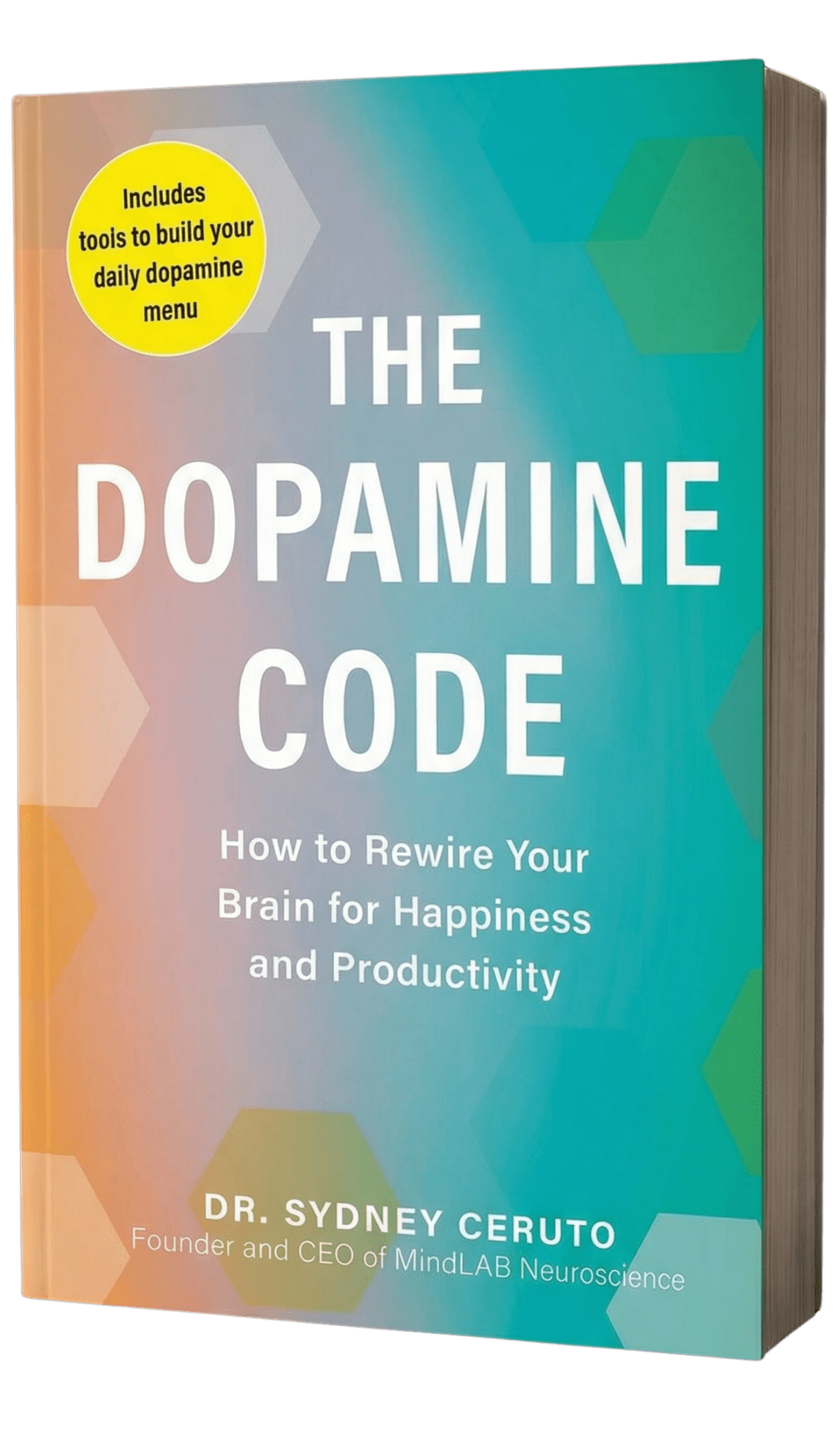
Dr. Sydney Ceruto holds a PhD in Behavioral & Cognitive Neuroscience from NYU and Master’s degrees in Clinical Psychology and Business Psychology from Yale University. She is a Lecturer in the Wharton Executive Development Program at the University of Pennsylvania, an Executive Contributor to Forbes Coaching Council, and an inductee in Marquis Who’s Who in America. Dr. Ceruto founded MindLAB Neuroscience in 2000 and has spent more than 26 years developing and refining her proprietary methodology, Real-Time Neuroplasticity™. She is the author of The Dopamine Code (Simon & Schuster, June 2026).

References

Diamond, A. (2013). Executive functions. Annual Review of Psychology, 64, 135–168. https://doi.org/10.1146/annurev-psych-113011-143750

Arnsten, A. F. T. (2009). Stress signalling pathways that impair prefrontal cortex structure and function. Nature Reviews Neuroscience, 10(6), 410–422. https://doi.org/10.1038/nrn2648

Lövdén, M., Bäckman, L., Lindenberger, U., Schaefer, S., & Schmiedek, F. (2010). A theoretical framework for the study of adult cognitive plasticity. Psychological Bulletin, 136(4), 659–676. https://doi.org/10.1037/a0020080

Success Stories

“After years of burnout, the dopamine optimization work helped me finally understand and balance my dopamine levels in a way nothing else had. The personalized plan made all the difference — I’m now motivated, focused, and performing at my best without the crashes that used to follow every productive stretch. The science behind this approach is real and the results are measurable. It gave me a daily framework I still rely on to stay consistent, sharp, and fully in control of my energy.”

Larz D. — Tech Founder Palo Alto, CA

“The conviction was always there at the start — and then the momentum would vanish, every single time. Discipline and accountability systems changed nothing. Dr. Ceruto identified a dopamine signaling deficit in my mesolimbic pathway that was collapsing my ability to sustain effort toward a goal. Once that pattern was restructured, finishing stopped requiring force. The motivation wasn't missing — it was being interrupted.”

Landon J. — Restaurateur New York, NY

“Every system, every supplement, every productivity method I tried collapsed within weeks — and nothing held because nothing addressed why my attention kept fragmenting. Dr. Ceruto identified the dopamine regulation pattern that was hijacking my prefrontal cortex every time I needed sustained focus. She didn't give me another workaround. She restructured the architecture underneath. My brain holds now. That's not something I ever thought I'd be able to say.”

Derek S. — Film Producer Beverly Hills, CA

“Nothing was wrong — and that's exactly why no one could help me. I wasn't struggling. I wanted to know what my brain was actually capable of if its resting-state architecture was optimized. Dr. Ceruto mapped my default mode network and restructured how it allocates resources between focused and diffuse processing. The cognitive clarity I operate with now isn't something I'd ever experienced before — and I had no idea it was available.”

Nathan S. — Biotech Founder Singapore

“My body had simply stopped knowing when to sleep. Crossing time zones weekly for over two years had broken something fundamental, and every protocol, supplement, and device I tried couldn't hold longer than a few days. Dr. Ceruto identified the disruption at the level of my suprachiasmatic nucleus and recalibrated the signaling pattern driving the dysfunction. Within weeks, my circadian rhythm locked back in. I sleep now. Consistently. Regardless of where I land.”

Jonathan K. — Diplomat Geneva, CH

“Excellent experience working with Dr. Ceruto. Very effective method that gave me the results I was looking for to improve my professional relationships. I loved the neuroscience woven into the art of higher-level communication and relationship building. Dr. Ceruto is extremely astute and does not require you to go back in history over and over to understand what’s going on. Her attention to detail, dedication to follow-up, and breadth of knowledge in my industry is truly unparalleled. I can’t recommend her highly enough.”

Dan G. — Hedge Fund Manager Greenwich, CT

Frequently Asked Questions About Neuroscience-Based Organizational Excellence

How does neuroscience-based organizational advisory differ from traditional consulting?

Traditional consulting optimizes systems, processes, and structures — the organizational hardware. This approach optimizes the neural architecture of the individuals operating those systems — the human software. When organizational performance is bounded by the cognitive capacity of key personnel rather than by process design, addressing the neural layer produces improvements that process optimization alone cannot achieve.

What types of organizational challenges respond best to this approach?

Challenges where human cognitive quality is the binding constraint: leadership development that must produce behavioral change rather than knowledge acquisition, organizational transformations that require leaders to sustain clarity under ambiguity, performance improvement initiatives that have plateaued at the human capacity ceiling, and culture change that depends on the neural signals leaders actually generate rather than the values they articulate.

Can this approach improve organizational training effectiveness?

Yes. Conventional training delivers information to the conscious mind, but lasting behavioral change requires restructuring neural circuits that operate below conscious awareness. Dr. Ceruto advises on training architecture that aligns with the brain's actual learning mechanisms — attention cycles, consolidation windows, and the conditions that promote neuroplastic change — producing retention and behavioral transfer rates that standard programs cannot match.

How does this work complement existing leadership development programs?

Leadership programs develop knowledge and frameworks. Dr. Ceruto develops the neural architecture that determines whether knowledge translates into behavior under real organizational conditions. Leaders frequently report that insights from development programs become actionable after neural optimization because the biological infrastructure now supports implementation rather than constraining it.

What is the typical engagement structure for organizational work?

Organizational engagements typically begin with the Strategy Call for each key leader, followed by individualized neural architecture work tailored to each person's specific constraints and the organizational demands they face. The engagement duration depends on the scope and the number of key individuals involved. Dr. Ceruto works directly with each leader — this is individualized neural intervention, not group programming.

How do you measure the impact of neural optimization on organizational performance?

Impact is measured through observable behavioral metrics in the leaders who received intervention: decision speed and quality, performance consistency, stress tolerance, communication effectiveness, and the downstream effects on their teams and organizational units. These are quantifiable changes attributable to enhanced prefrontal function, improved social cognition, and recalibrated stress-response architecture.

Is this approach appropriate for organizations of any size?

The approach is most impactful in organizations where a small number of individuals at key decision nodes disproportionately affect organizational outcomes. This describes most organizations regardless of size — from startups where the founder's cognitive quality determines everything, to large enterprises where 5-10 senior leaders set the cognitive tone for thousands of employees.

What does the initial Strategy Call cover for organizational leaders?

The Strategy Call assesses each leader's neural architecture relative to their specific organizational demands — mapping cognitive endurance, decision-making patterns, stress-response calibration, and social cognition capacity. The assessment identifies which neural systems are most constrained and where intervention will produce the greatest return for both the individual leader and the organization.

Ready to Perform at Your Highest Level?

In Midtown's most demanding environment, the difference between good strategy and transformational strategy is whether your brain—and your organization's collective brain—is wired to execute it. Let's talk about what's constraining your potential and how neuroscience-based consulting can change that.

Schedule a Strategy Call
MindLAB Neuroscience consultation room

The Dopamine Code

Decode Your Drive

Why Your Brain Rewards the Wrong Things

Your brain's reward system runs every decision, every craving, every crash — and it was never designed for the life you're living. The Dopamine Code is Dr. Ceruto's framework for understanding the architecture behind what drives you, drains you, and keeps you locked in patterns that willpower alone will never fix.

Published by Simon & Schuster, The Dopamine Code is Dr. Ceruto's framework for building your own Dopamine Menu — a personalized system for motivation, focus, and enduring life satisfaction.

Order Now

Ships June 9, 2026

The Dopamine Code by Dr. Sydney Ceruto — Decode Your Drive
Locations

The Intelligence Brief

Neuroscience-backed analysis on how your brain drives what you feel, what you choose, and what you can’t seem to change — direct from Dr. Ceruto.