Gut-Brain Axis & Neurotransmitter Health in Midtown Manhattan

Dr. Sydney Ceruto applies neuroscience to the gut-brain connection, addressing how digestive health shapes cognition, mood stability, and mental performance.

Book a Strategy Call

The Gut Brain Communication Network

The gut and the brain are not separate systems that occasionally influence each other. They are connected through a multi-channel communication network so extensive and consequential that disruption in one reliably produces measurable dysfunction in the other. This is not metaphor. It is anatomy.

The enteric nervous system contains between 200 and 600 million neurons, a count comparable to the entire spinal cord. This system communicates with the brain through the vagus nerve — the body’s main calming nerve —, which carries approximately 80 percent of its signals in the gut-to-brain direction. The gut also produces a striking share of the body’s neurotransmitters — chemical messengers between brain cells. Approximately 90 to 95 percent of total serotonin is synthesized in the intestinal tract, and more than 50 percent of the body’s dopamine originates in the gut. These are not peripheral biochemical footnotes. Serotonin governs mood stability, sleep architecture, and appetite regulation. Dopamine drives motivation, reward processing, and cognitive engagement. When production is disrupted at the source, the brain feels the consequences directly.

How Gut Bacteria Control Thinking

The gut microbiome exerts profound influence over brain structure, neurochemistry, and cognitive performance. Higher proportions of certain bacterial genera are linked to better cognitive flexibility — the ability to shift thinking between concepts —, faster motor speed, and improved attentional performance. The relationship is causal, not merely correlational: transplanting gut microbiota from aged animals into young ones impairs spatial learning and memory, while transplanting healthy microbiota into aging models rescues cognitive deficits.
The Inflammation Pathway to Brain Problems

The pathway from gut disruption to cognitive impairment follows a well-characterized inflammatory cascade. When the microbiome shifts toward a dysbiotic state — reduced diversity, depleted beneficial bacteria, increased pathogenic organisms — intestinal barrier integrity degrades. Tight junction proteins that seal the intestinal lining weaken, allowing bacterial products including lipopolysaccharide to enter systemic circulation. This metabolic endotoxemia triggers a system-wide inflammatory response. Elevated inflammatory cytokines including interleukin-6 and tumor necrosis factor-alpha then increase blood-brain barrier permeability, opening a second gate between the compromised gut and the brain.

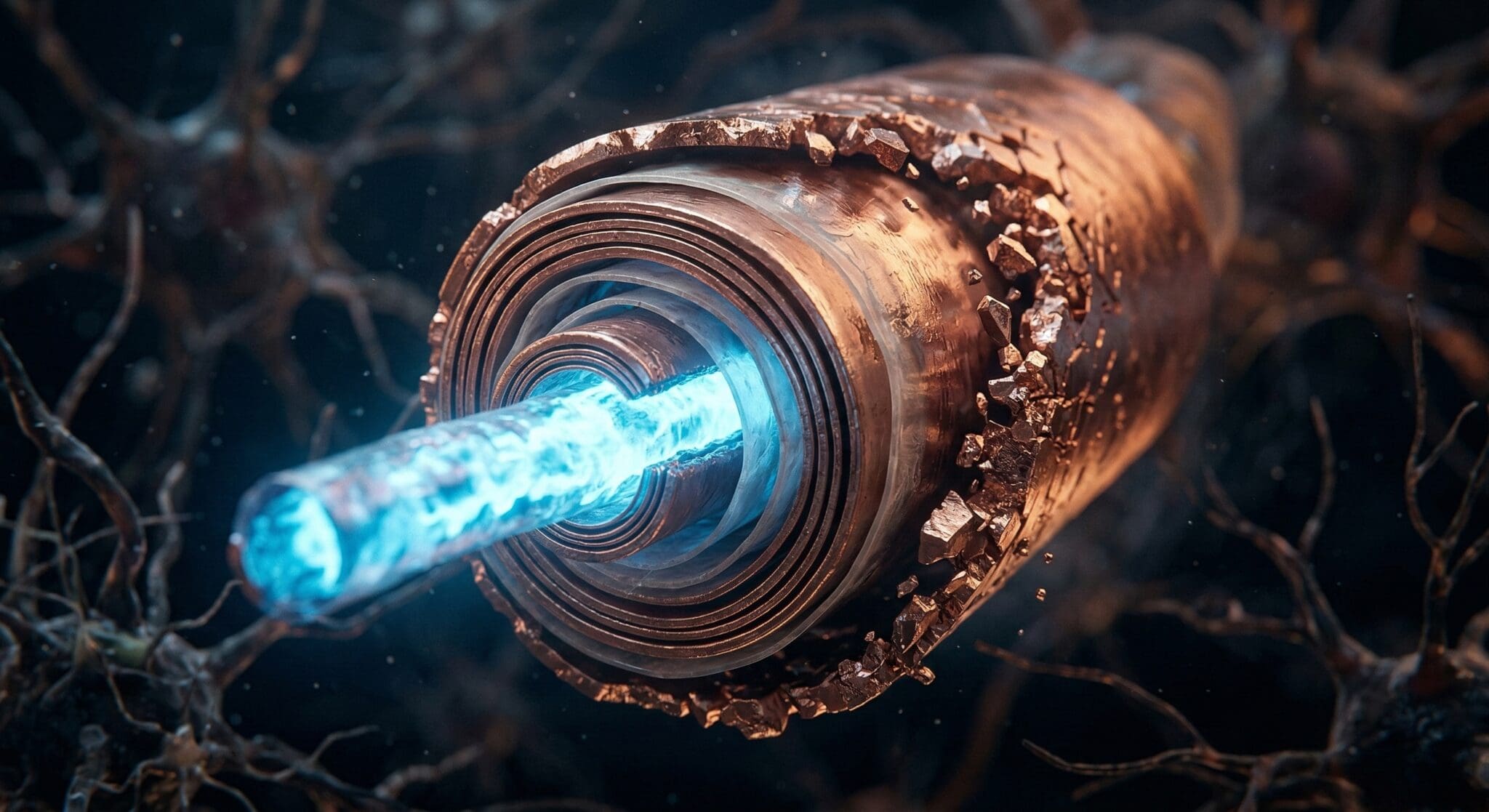
Macro cross-section of neural pathway with copper sheathing forming around blue signal core depicting active brain optimization

Once inflammatory molecules reach brain tissue, they activate microglia — the brain’s resident immune cells. This initiates neuroinflammation that impairs synaptic plasticity, suppresses neurogenesis, and degrades the neural circuits supporting working memory, emotional regulation, and cognitive flexibility. The gut microbiome also directly maintains blood-brain barrier integrity; research has demonstrated that animals raised without gut microbiota show structural alterations in the blood-brain barrier with reduced tight junction protein expression.

How Gut Bacteria Make Brain Chemicals

The neurotransmitter production chain provides another critical leverage point. Gut bacteria regulate serotonin synthesis through short-chain fatty acid production, particularly butyrate, which stimulates the gene expression pathways responsible for serotonin production in intestinal cells. The vagus nerve then transmits these gut-generated signals to brainstem nuclei that modulate the brain’s own serotonergic and noradrenergic systems (related to the brain’s alertness signaling). Specific bacterial strains have been shown to increase hippocampal brain-derived neurotrophic factor — the master regulator of neuroplasticity. These strains normalize anxiety-related behavior through vagal pathways, effects that are abolished when the vagus nerve is severed.

The concept of psychobiotics has moved from theoretical framework to clinical evidence. Randomized controlled trials have demonstrated that targeted probiotic supplementation can improve verbal learning, memory, and cognitive factor scores, with prebiotic interventions that increase beneficial bacterial populations producing measurable improvements in paired associates learning.

The gut microbiome’s influence on neuroplasticity adds another dimension. Brain-derived neurotrophic factor — the master regulator of synaptic strengthening and neurogenesis — is suppressed in animals raised without gut microbiota and in those given antibiotics that strip microbial diversity. Short-chain fatty acids, particularly butyrate, act as histone deacetylase inhibitors that enhance hippocampal synaptic plasticity and support neurogenesis through epigenetic mechanisms. This means that the state of the gut microbiome directly influences whether the brain maintains its capacity to learn, adapt, and form new neural connections.

The Stress Gut Brain Loop

The stress-gut-brain loop is particularly relevant. The gut microbiome directly shapes HPA axis calibration. Animals raised without gut bacteria show exaggerated cortisol and stress hormone responses, partially reversed by colonization with beneficial species. In humans, chronic psychological stress simultaneously elevates cortisol, disrupts gut barrier function, depletes beneficial bacteria, and increases pro-inflammatory signaling. This creates a compounding cycle where stress damages the gut, and the damaged gut amplifies the brain’s stress response. Breaking this cycle requires addressing both ends of the axis simultaneously.

The vagus nerve’s role as the primary conduit deserves emphasis. Approximately 70 to 80 percent of vagal fibers are afferent — carrying information from the body to the brain, not the reverse. The vagus is primarily an information pathway that continuously informs the brain about the gut’s state. When the gut is inflamed, dysbiotic, or metabolically compromised, the vagus transmits that information directly to brainstem nuclei that influence mood, cognition, and stress reactivity.

Walnut credenza with crystal brain sculpture and MindLAB journal in diffused dusk light suggesting high-floor Midtown Manhattan private office

What This Work Actually Addresses

Dr. Ceruto’s neuroscience framework addresses the gut-brain axis as a system, identifying where disruption in microbial ecology, intestinal barrier function, neurotransmitter precursor production, vagal signaling, or inflammatory pathways is contributing to cognitive and emotional symptoms. A neuroscientist educates on the brain side of this equation; gastroenterologists and functional medicine practitioners manage the gut directly. The integration of both perspectives is where meaningful optimization occurs.

Why Gut-Brain Axis & Neurotransmitter Health Matters in Midtown Manhattan

Midtown Manhattan’s food culture is a precise model for gut-brain axis disruption. The world’s highest concentration of corporate office workers is also one of the most reliably poorly nourished. This stems from structural work conditions — time poverty and stress-eating patterns — that systematically override nutritional intention.

The typical Midtown professional food day begins at Penn Station or Grand Central, where grab-and-go options skew toward coffee, pastries, and processed carbohydrates. The corridor between 34th and 42nd Streets is one of the most fast-food-dense zones in the country. Lunch typically compresses into 20 minutes at a desk, sourced from delivery apps or a building food court. Research surveying 5,000 employees found that 85 percent consume ultra-processed foods at least weekly. Nearly 75 percent report poor mood regulation, nearly 79 percent report low energy, and over 62 percent report reduced cognitive function.

Stress-eating compounds the damage. The cortisol load carried by Midtown professionals directly dysregulates appetite hormones — elevated cortisol increases ghrelin, drives cravings for high-fat and high-sugar foods, and slows gut motility. The same Penn Station commute that spikes cortisol in the morning primes the gut-brain axis for inflammatory dietary choices throughout the day. Research has documented direct associations between processed food consumption and anxiety and depression, creating a reinforcing loop in which stressed professionals eat poorly, further destabilizing mood and cognition.

Frequent business travel systematically disrupts the microbiome through time zone changes, airport and hotel food, alcohol consumption, and sleep deprivation. Each transcontinental trip represents a microbiome perturbation that can take weeks to stabilize. A Midtown professional whose gut is chronically inflamed and microbiome-depleted is experiencing a deficit in the very neurotransmitters — chemical messengers between brain cells — underpinning mood stability, focus, and cognitive resilience.

Dr. Sydney Ceruto, PhD — Founder, MindLAB Neuroscience

Dr. Sydney Ceruto, PhD — Founder & CEO, MindLAB Neuroscience

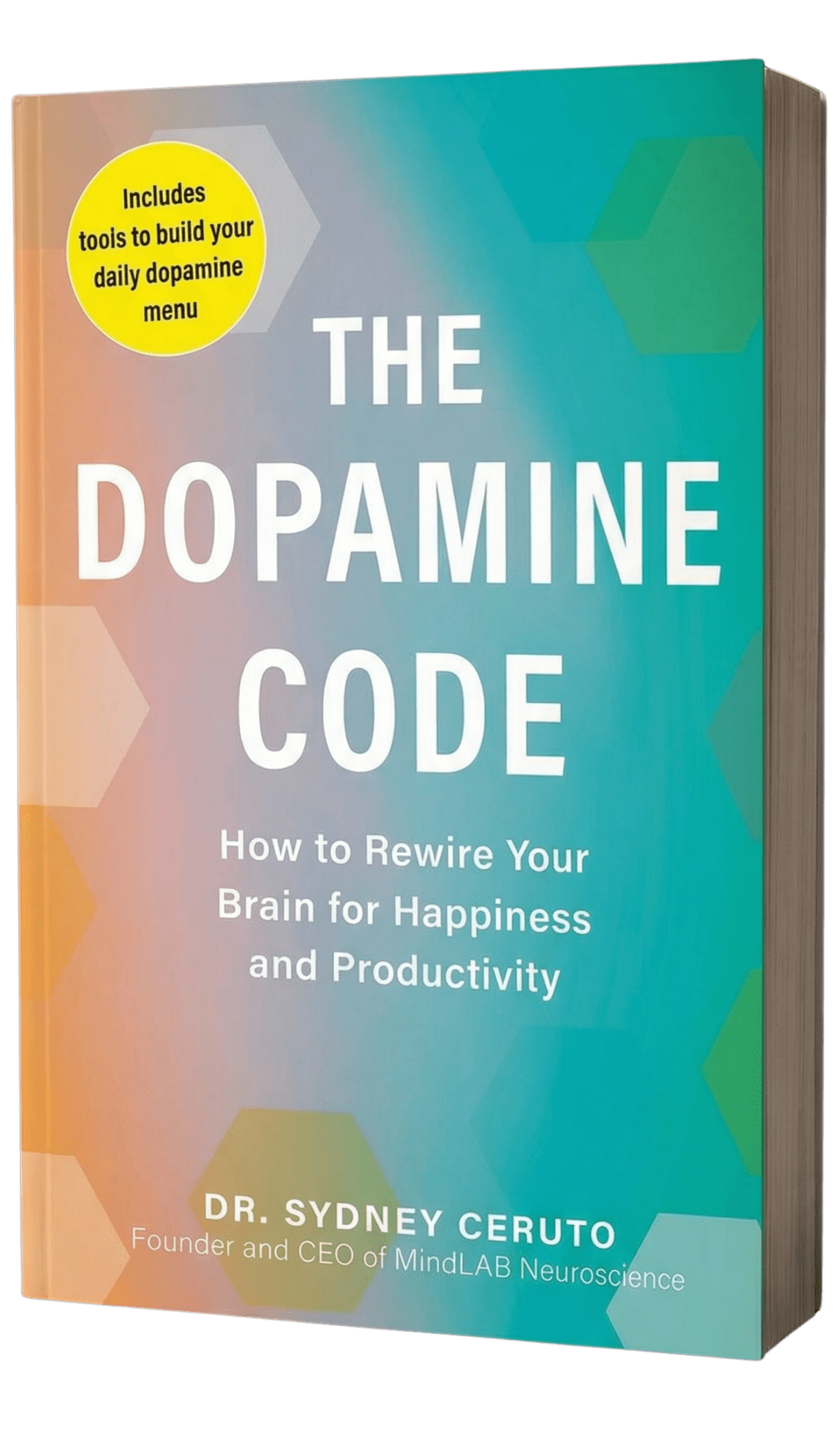
Dr. Ceruto holds a PhD in Behavioral & Cognitive Neuroscience from NYU and two Master’s degrees from Yale University. She lectures at the Wharton Executive Development Program at the University of Pennsylvania and has been an Executive Contributor to the Forbes Coaching Council since 2019. Dr. Ceruto is the author of The Dopamine Code (Simon & Schuster, June 2026). She founded MindLAB Neuroscience in 2000 and has spent over 26 years pioneering Real-Time Neuroplasticity™ — a methodology that permanently rewires the neural pathways driving behavior, decisions, and emotional responses.

References

Mayer, E. A. (2011). Gut feelings: The emerging biology of gut-brain communication. Nature Reviews Neuroscience, 12(8), 453–466. https://doi.org/10.1038/nrn3071

Ni Lochlainn, M., Bowyer, R. C. E., Steves, C. J., et al. (2024). Effect of gut microbiome modulation on muscle function and cognition: The PROMOTe randomised controlled trial. Nature Communications, 15(1), 1859. https://doi.org/10.1038/s41467-024-46116-y

Bonaz, B., Bazin, T., & Pellissier, S. (2018). The vagus nerve at the interface of the microbiota-gut-brain axis. Frontiers in Neuroscience, 12, 49. https://doi.org/10.3389/fnins.2018.00049

Success Stories

“Nothing was wrong — and that's exactly why no one could help me. I wasn't struggling. I wanted to know what my brain was actually capable of if its resting-state architecture was optimized. Dr. Ceruto mapped my default mode network and restructured how it allocates resources between focused and diffuse processing. The cognitive clarity I operate with now isn't something I'd ever experienced before — and I had no idea it was available.”

Nathan S., Senior Investment Strategist Bridgewater Associates

“I'd optimized everything — diet, fitness, sleep — but my cognitive sharpness was quietly declining and no one could explain why. Dr. Ceruto identified the synaptic density patterns that were thinning and built a protocol to reverse the trajectory. This wasn't prevention in theory. My neuroplasticity reserve is measurably stronger now than it was three years ago. Nothing I'd tried before even addressed the right problem.”

Henrique L., Head of Strategic Planning Galp Lisbon, PT

“Slower processing, foggier recall, decisions that used to be instant taking longer than they should — I'd been accepting it all as inevitable decline for two years. Dr. Ceruto identified the prefrontal efficiency pattern that was degrading and restructured it at the neurological level. The sharpness didn't just come back. It came back faster and more precise than it was a decade ago. Nothing I'd tried before even addressed the right problem.”

Elliott W., General Partner Andreessen Horowitz

“After the concussion, my processing speed collapsed — I couldn't hold complex information the way I used to, and no one could explain why the fog wasn't lifting. Dr. Ceruto mapped the damaged pathways and built compensatory networks around them. My brain doesn't work the way it did before the injury. It works differently — and in some ways, more efficiently than it ever did.”

Owen P., Founder & CEO Sports Performance Scottsdale, AZ

“When the inheritance came, it didn't feel like a gift — it felt like a grenade in every family relationship I had. I couldn't make a single financial decision without a flood of guilt and second-guessing. Years of talking through it hadn't changed anything. Dr. Ceruto identified the neural loop connecting money to fear of family rejection and dismantled it. The paralysis didn't fade — it stopped.”

Vivienne R., CFO Family Office Palm Beach, FL

“My body had simply stopped knowing when to sleep. Crossing time zones weekly for over two years had broken something fundamental, and every protocol, supplement, and device I tried couldn't hold longer than a few days. Dr. Ceruto identified the disruption at the level of my suprachiasmatic nucleus and recalibrated the signaling pattern driving the dysfunction. Within weeks, my circadian rhythm locked back in. I sleep now. Consistently. Regardless of where I land.”

Jonathan K., VP of Global Operations Maersk

Frequently Asked Questions About Gut-Brain Axis & Neurotransmitter Health in Midtown Manhattan

What does gut-brain axis work involve at MindLAB Neuroscience?

Dr. Ceruto provides the neuroscience framework for understanding how gut health impacts brain function — identifying which cognitive and emotional symptoms trace back to disrupted neurotransmitter — brain cell messenger — production. This involves vagal signaling, neuroinflammatory pathways, or microbiome imbalance. This is neuroscience education and brain optimization, not gastroenterological care. Where gut-specific intervention is needed, Dr. Ceruto coordinates with appropriate medical specialists.

How does the gut actually affect brain function?

The gut communicates with the brain through multiple channels: the vagus nerve (carrying 80 percent of signals gut-to-brain), neurotransmitter — a chemical messenger between brain cells — production, immune signaling, and microbial metabolites. Neurotransmitter production includes 90-95 percent of serotonin and over 50 percent of dopamine being gut-produced, while over 70 percent of immune cells reside in the gut. These microbial metabolites cross the blood-brain barrier and directly influence neuroinflammation and neuroplasticity — the brain's ability to rewire itself —. Disruption in any of these channels produces measurable cognitive and emotional consequences.

Who benefits from a gut-brain axis approach?

Individuals experiencing a combination of digestive issues alongside cognitive or mood changes — brain fog, anxiety, concentration issues, mood problems — particularly when these symptoms have not responded to approaches that address only one side of the equation. People navigating high-stress environments with disrupted eating patterns, frequent travel, or history of antibiotic use are particularly likely to benefit.

How does someone get started with gut-brain optimization?

The process begins with a Strategy Call with Dr. Ceruto, conducted by phone. The $250 fee covers a thorough assessment of cognitive and digestive health history, lifestyle factors, and goals. Dr. Ceruto determines whether the gut-brain axis is a significant contributing factor and discusses program structure and investment during the call.

How quickly can gut-brain interventions affect cognition?

The gut microbiome begins responding to targeted changes relatively quickly — within days of dietary modification. However, meaningful cognitive improvement typically requires sustained effort over weeks to months as neurotransmitter — a chemical messenger between brain cells — production normalizes, intestinal barrier integrity is restored, and neuroinflammatory pathways quiet. The timeline depends on the depth of disruption and the specific mechanisms involved.

Take the First Step Toward Gut-Brain Balance

The Strategy Call is a focused conversation with Dr. Ceruto that maps the specific neural mechanisms driving your concerns and determines the right path forward.

Book a Strategy Call
MindLAB Neuroscience consultation room
Locations

The Intelligence Brief

Neuroscience-backed analysis on how your brain drives what you feel, what you choose, and what you can’t seem to change — direct from Dr. Ceruto.