Hormones, the Brain & Cognitive Performance in Midtown Manhattan

Dr. Sydney Ceruto maps the neuroscience of hormonal influence on cognition — how estrogen, testosterone, and cortisol shape the brain circuits that drive performance and clarity.

Book a Strategy Call

How Hormones Shape Brain Function

Hormones do not merely circulate in the background of brain function. They actively shape the architecture, chemistry, and processing speed of the neural circuits that determine how clearly someone thinks, how quickly decisions are made, how reliably memories are formed, and how effectively emotions are regulated. When hormonal balance shifts — through natural transitions, chronic stress, or metabolic disruption — the cognitive consequences are not abstract. They are specific, measurable, and grounded in well-characterized neuroscience.

Estrogen’s Direct Impact on Memory

Estrogen — principally 17-beta-estradiol — reaches the brain through two routes. Circulating ovarian estrogen crosses the blood-brain barrier through passive diffusion. Additionally, locally synthesized estradiol is produced on-demand within neurons by the enzyme aromatase, acting directly at synaptic junctions. This dual supply system means the brain retains some capacity for local neuromodulation even after peripheral estrogen declines, though this is insufficient to fully compensate for the loss of ovarian output.

Within the brain, estradiol modulates synaptic plasticity through several precisely characterized mechanisms. It increases dendritic spine density in the hippocampus — the brain’s memory center —, strengthening the structural substrate of memory encoding. It potentiates long-term potentiation — the cellular mechanism of learning — in hippocampal CA1 neurons through estrogen receptor alpha signaling. It enhances cholinergic neurotransmission in the basal forebrain, supporting the attentional systems that underlie focused cognitive work. And it modulates prefrontal dopamine signaling, influencing working memory capacity and cognitive flexibility — shifting between concepts —.

When Hormones Change Mid-Life

The perimenopausal transition represents a critical window of cognitive vulnerability. As ovarian estrogen production becomes irregular and ultimately declines, the brain’s estrogen-dependent circuits experience fluctuating support. Research from the IGNITE study found that hormone exposure in women is associated with significantly better episodic memory, working memory, and visuospatial processing measured by FDG-PET imaging. Cognitive measures decline 15 to 25 percent in the hippocampus and parahippocampal gyrus during perimenopause, regions critical for memory and spatial cognition.

Macro cross-section of neural pathway with copper sheathing forming around blue signal core depicting active brain optimization

How Stress Blocks Performance Hormones

Testosterone and its interaction with cortisol represent another critical hormonal dimension of cognitive performance. Testosterone influences the brain through direct androgen receptor binding in the prefrontal cortex and hippocampus. It supports spatial cognition, risk assessment, and the kind of decisive action that complex environments demand. However, research examining real executives found that testosterone positively predicted leadership rank and number of subordinates only among those with low cortisol. In high-cortisol environments, testosterone’s leadership-enabling and cognition-enhancing effects are functionally suppressed. This means that chronic stress does not merely add a psychological burden — it neutralizes executive cognitive function.

The Hidden Role of Other Hormones

Thyroid hormones provide a third dimension that is frequently overlooked in cognitive complaints. The hypothalamic — brain’s hormonal control center —-pituitary-thyroid axis governs metabolic rate throughout the brain. Even subclinical hypothyroidism can produce measurable slowing of processing speed, impaired concentration, and depressed mood that is often attributed to stress or aging rather than hormonal insufficiency.

Progesterone and its neurosteroid metabolites — particularly allopregnanolone — deserve attention in this framework. Allopregnanolone is a potent positive modulator of GABA-A receptors, the brain’s primary inhibitory neurotransmitter — chemical messenger between brain cells — system. It exerts anxiolytic, calming, and neuroprotective effects. During perimenopause, progesterone decline reduces allopregnanolone availability, which can produce anxiety, sleep disruption, and heightened stress reactivity that compounds the cognitive effects of estrogen fluctuation. The simultaneous decline of both hormonal systems creates a period of particular neurological vulnerability.

Insulin resistance represents another hormonal pathway to cognitive impairment. Insulin receptors are densely expressed in the hippocampus and prefrontal cortex. When insulin signaling is impaired, glucose uptake in these regions declines, directly degrading the metabolic fuel supply that sustained cognitive work requires. Insulin resistance also promotes tau hyperphosphorylation and amyloid-beta accumulation through shared molecular pathways, connecting metabolic hormonal dysfunction to the neurodegenerative cascade.

The Science-Based Approach to Optimization

The scope of Dr. Ceruto’s work in this domain is precise: a neuroscientist educates on how hormonal states affect specific brain circuits and cognitive domains. She identifies where hormonal factors may be contributing to cognitive concerns, and integrates this understanding into a comprehensive brain optimization strategy. Endocrinologists manage hormone levels directly. The neuroscience framework connects hormonal status to the brain function outcomes that individuals are actually experiencing — bridging hormonal and psychological approaches.

Why Hormone Interactions Matter Most

The interaction effects matter as much as the individual hormones. Estrogen decline amplifies cortisol’s neurotoxic effects on the hippocampus, because estrogen normally provides neuroprotective buffering against glucocorticoid-mediated neuronal damage. When estrogen declines during perimenopause, the hippocampus becomes more vulnerable to the structural atrophy that chronic cortisol produces. Chronic cortisol suppresses testosterone’s cognitive benefits through the dual-hormone mechanism. Sleep disruption degrades growth hormone release, impairing the neural repair that overnight recovery depends upon. Metabolic dysfunction alters insulin signaling in the brain, compounding the cognitive effects of any other hormonal imbalance.

The lifetime dementia risk data adds urgency to this framework. At age 55, the lifetime risk of dementia is 42 percent, rising to 48 percent for women. These elevated risks are driven in part by the hormonal transitions that occur in midlife — hormonal transitions affecting cognitive outcomes. Dr. Ceruto’s approach maps these interactions as a system, identifying the highest-leverage intervention points for each individual’s specific hormonal and cognitive profile.

Walnut credenza with crystal brain sculpture and MindLAB journal in diffused dusk light suggesting high-floor Midtown Manhattan private office

Why Hormones, the Brain & Cognitive Performance Matters in Midtown Manhattan

Midtown Manhattan’s professional class contains an unusually high concentration of individuals for whom hormonal transitions intersect directly with peak career demand. This creates an underserved population experiencing cognitive effects often misattributed to stress or overwork.

Manhattan’s workforce reached near-gender parity in 2023, with women comprising 49.7 percent of workers employed in the borough. Women in the 35-to-50 age band populate the VP, director, and editorial leadership layers at media companies, advertising agencies, and major law firms. This is precisely the perimenopausal demographic. The average age of menopause is 51, meaning the perimenopausal transition begins for most women in their early-to-mid 40s — coinciding with peak career responsibility. Estrogen fluctuation, progesterone decline, and the cognitive manifestations that follow arrive at the exact moment when professional stakes are highest.

The hormonal health awareness movement has reached Midtown’s streets. Midi Health partnered with Mount Sinai in 2025 on a major transit advertising campaign with the tagline “Don’t blame the city. It could be your hormones,” targeting perimenopausal women at Midtown transit points. The FDA’s consideration of removing the warning label from hormone replacement has moved hormonal health into mainstream clinical and cultural conversation. This policy shift, combined with growing media coverage, is generating demand that the existing healthcare system is poorly equipped to meet with the nuance required.

Male professionals in Midtown are equally affected but less visibly served. The chronic cortisol load endemic to Midtown’s consulting, legal, and media industries functionally reduces effective testosterone in men. This contributes to irritability, decision fatigue, reduced risk tolerance, and the cognitive slowing often attributed to stress rather than hormonal dysregulation — hormonal control breakdown. The testosterone optimization market has expanded significantly, but general providers lack the neuroscience framework to connect androgen status to specific cognitive and executive function outcomes.

The NYU Langone study establishing a 42 percent lifetime dementia risk at age 55 — with women at 48 percent — underscores the long-term stakes. The hormonal transitions occurring in Midtown’s offices are not temporary inconveniences. They are neurobiological events with cognitive consequences that, without informed intervention, can accelerate the trajectory toward long-term cognitive decline.

Dr. Sydney Ceruto, PhD — Founder, MindLAB Neuroscience

Dr. Sydney Ceruto, PhD — Founder & CEO, MindLAB Neuroscience

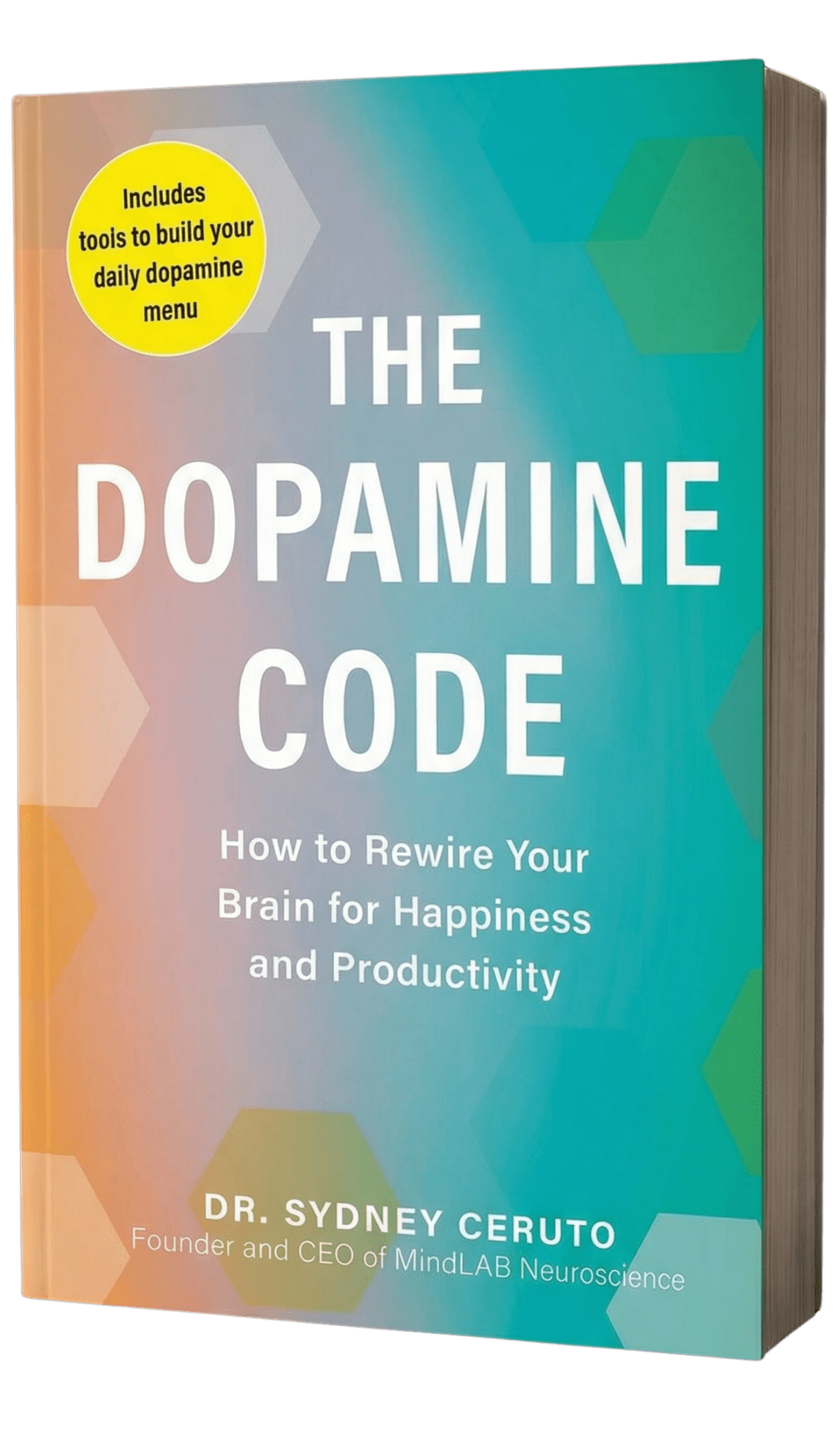
Dr. Ceruto holds a PhD in Behavioral & Cognitive Neuroscience from NYU and two Master’s degrees from Yale University. She lectures at the Wharton Executive Development Program at the University of Pennsylvania and has been an Executive Contributor to the Forbes Coaching Council since 2019. Dr. Ceruto is the author of The Dopamine Code (Simon & Schuster, June 2026). She founded MindLAB Neuroscience in 2000 and has spent over 26 years pioneering Real-Time Neuroplasticity™ — a methodology that permanently rewires the neural pathways driving behavior, decisions, and emotional responses.

References

Frick, K. M. (2015). Molecular mechanisms underlying the memory-enhancing effects of estradiol. Hormones and Behavior, 74, 4–18. https://doi.org/10.1016/j.yhbeh.2015.05.001

Mosconi, L., Berti, V., Quinn, C., et al. (2017). Sex differences in Alzheimer risk: Brain imaging of endocrine vs chronologic aging. Neurology, 89(13), 1382–1390. https://doi.org/10.1212/WNL.0000000000004425

Sherman, S. M., Mumford, J. A., & Schnyer, D. M. (2025). The IGNITE study: Hormone therapy use and cognitive function in women undergoing pre-menopausal oophorectomy. Frontiers in Aging Neuroscience, 17, 1524474. https://doi.org/10.3389/fnagi.2025.1524474

Mehta, P. H., & Josephs, R. A. (2010). Testosterone and cortisol jointly regulate dominance: Evidence for a dual-hormone hypothesis. Hormones and Behavior, 58(5), 898–906. https://doi.org/10.1016/j.yhbeh.2010.08.020

Success Stories

“I'd optimized everything — diet, fitness, sleep — but my cognitive sharpness was quietly declining and no one could explain why. Dr. Ceruto identified the synaptic density patterns that were thinning and built a protocol to reverse the trajectory. This wasn't prevention in theory. My neuroplasticity reserve is measurably stronger now than it was three years ago. Nothing I'd tried before even addressed the right problem.”

Henrique L., Head of Strategic Planning Galp Lisbon, PT

“Slower processing, foggier recall, decisions that used to be instant taking longer than they should — I'd been accepting it all as inevitable decline for two years. Dr. Ceruto identified the prefrontal efficiency pattern that was degrading and restructured it at the neurological level. The sharpness didn't just come back. It came back faster and more precise than it was a decade ago. Nothing I'd tried before even addressed the right problem.”

Elliott W., General Partner Andreessen Horowitz

“Nothing was wrong — and that's exactly why no one could help me. I wasn't struggling. I wanted to know what my brain was actually capable of if its resting-state architecture was optimized. Dr. Ceruto mapped my default mode network and restructured how it allocates resources between focused and diffuse processing. The cognitive clarity I operate with now isn't something I'd ever experienced before — and I had no idea it was available.”

Nathan S., Senior Investment Strategist Bridgewater Associates

“After the concussion, my processing speed collapsed — I couldn't hold complex information the way I used to, and no one could explain why the fog wasn't lifting. Dr. Ceruto mapped the damaged pathways and built compensatory networks around them. My brain doesn't work the way it did before the injury. It works differently — and in some ways, more efficiently than it ever did.”

Owen P., Founder & CEO Sports Performance Scottsdale, AZ

“The divorce wasn't destroying me emotionally — it was destroying me neurologically. My amygdala was treating every interaction with my ex, every legal update, every quiet evening as a survival-level threat. Years of talk-based approaches hadn't touched it. Dr. Ceruto identified the attachment disruption driving the response and restructured it at the root. The threat response stopped. Not because I learned to tolerate it — because the pattern was no longer running.”

Daniela M., Portfolio Manager Asset Management North Miami Beach, FL

“Endocrinologists, sleep clinics, functional medicine — every specialist cleared me, and no one could tell me why I was exhausted every single day. Dr. Ceruto identified that my HPA axis was locked in a low-grade stress activation I couldn't feel consciously. Once that pattern was disrupted at the neurological level, my energy came back in a way that felt completely foreign. I'd forgotten what it was like to not be tired.”

Danielle K., Chief Marketing Officer Luxury Retail Beverly Hills, CA

Frequently Asked Questions About Hormones, the Brain & Cognitive Performance in Midtown Manhattan

What does hormones-and-brain work involve at MindLAB Neuroscience?

Dr. Ceruto provides a neuroscience framework for understanding how hormonal status — estrogen, testosterone, cortisol, thyroid hormones, and interactions — affects specific brain circuits and cognitive domains. This is not hormone management or endocrinological care. It is brain health education that connects hormonal states to the cognitive outcomes individuals are experiencing, integrated into a comprehensive brain optimization strategy.

How do hormonal changes affect the brain specifically?

Estrogen modulates synaptic plasticity — how brain connections change — and dendritic spine density in the hippocampus and prefrontal cortex. This directly affects memory encoding, working memory, and attention. Testosterone influences spatial cognition and executive function through androgen receptors, but its cognitive benefits are suppressed when cortisol is chronically elevated. Thyroid hormones govern metabolic rate throughout the brain, affecting processing speed and concentration. These are not generalized effects — each hormone acts on specific circuits with specific cognitive consequences.

Who benefits from this approach?

Individuals experiencing cognitive changes that coincide with hormonal transitions — including perimenopause, andropause, chronic stress exposure, or metabolic shifts. Common experiences include difficulty with word retrieval, slower processing speed, impaired concentration, mood changes that seem disproportionate, or a sense that cognitive sharpness has changed without an obvious explanation. People who have been told their symptoms are “just stress” or “just aging” without receiving a comprehensive neurobiological assessment are particularly well-served by this approach.

How does someone begin working with Dr. Ceruto on hormonal-cognitive concerns?

The process starts with a Strategy Call, conducted by phone. The $250 fee covers an in-depth assessment of cognitive symptoms, hormonal history, stress exposure, and goals. Dr. Ceruto determines whether hormonal factors are likely contributing to cognitive concerns and discusses program structure and investment during the call.

What outcomes can someone expect from this work?

Outcomes depend on the specific hormonal and cognitive profile. Many individuals experience improvements in mental clarity, emotional regulation — the ability to manage emotional responses —, and cognitive consistency within weeks of implementing targeted strategies. For those navigating major hormonal transitions, the goal is to optimize the brain's response to changing hormonal input — supporting the neural circuits most affected, mitigating the cognitive risks of transition periods. This approach builds the neuroplastic resilience (related to the brain's ability to rewire itself) that sustains cognitive performance through the years ahead.

Take the First Step Toward Sharper Cognitive Performance

The Strategy Call is a focused conversation with Dr. Ceruto that maps the specific neural mechanisms driving your concerns and determines the right path forward.

Book a Strategy Call
MindLAB Neuroscience consultation room
Locations

The Intelligence Brief

Neuroscience-backed analysis on how your brain drives what you feel, what you choose, and what you can’t seem to change — direct from Dr. Ceruto.