The Leadership Development Ceiling
“Leadership presence is not something you project through posture tips and vocal exercises. It is something your brain transmits through biological systems operating below conscious awareness — your direct reports register the mismatch neurologically before they process it consciously.”
You have done the programs. The competency frameworks, the 360-degree feedback cycles, the multi-day leadership intensives at prestigious institutions. You have been told what effective leadership looks like. You have practiced the behaviors in controlled settings. And yet under pressure something falls short.
The frustration is specific. It is not that you lack knowledge of what good leadership requires. It is that the knowledge does not translate reliably into the moments where it counts. The presentation lands differently than rehearsed. The room shifts and you miss the signal. The composure you project does not match the composure your team perceives. You sense the gap but cannot locate its source.
This is not a skills gap. The vast majority of organizations rate their leadership development programs as ineffective, and very few say their leaders are effective at achieving business goals. The disconnect is neurological. Behavioral frameworks train conscious behavioral repertoires — what to say, how to stand, when to pause. Under stress, cognitive load, social threat, or hierarchical pressure, the brain reverts to pre-programmed neural defaults. The conscious repertoire evaporates. The defaults were never modified.
The sophisticated professional who has invested in development and still hits the ceiling is not failing. The programs addressed the wrong layer.
The Neuroscience of Leadership Influence
Leadership influence operates on three primary neural circuits, each identifiable, measurable, and modifiable through targeted intervention.
The first is the mirror neuron system. Mirror neurons discharge both when a person performs an action and when they observe another performing the same action. The system does not merely mirror movement — it mirrors meaning. When a leader enters a room with authentic composure versus performed composure, the mirror neuron systems of every observer register the distinction at a pre-conscious level. The room reads the leader before the leader speaks. This is the neurological mechanism underlying what organizations call executive presence. It is not charisma as personality trait. It is mirror neuron coherence.
The second system is the anterior insula — the brain’s internal signal-detection hub. This region governs interoception — the perception of one’s own internal states. Research confirms that anterior insula function is trainable, not a fixed personality characteristic.
What I see repeatedly in this work is leaders whose anterior insula calibration has degraded under sustained organizational pressure. They are operating on assumptions about what the room is feeling rather than reading internal signals in real time. The difference between a leader who “gets it” and one who keeps missing the signal is measured in anterior insula activation thresholds.
The third circuit is the mentalizing network — centered on the temporoparietal junction — a region involved in understanding others’ perspectives — and the medial prefrontal cortex. These form the core of theory of mind processing. The temporoparietal junction is specifically engaged during belief attribution tasks — processing what another person believes to be true even when that belief is false. Research confirms that this network continues to develop and be shaped by experience across adulthood. This is not a fixed trait. It is a plastic system that can be precisely recalibrated.
Research demonstrates that perceived charisma modulates listeners’ executive networks. The neurological implication is architecturally important: a leader whose social cognition circuits are highly calibrated creates conditions in which others enter a state of receptive trust. This is measurable neuroscience, not personality theory.
How Dr. Ceruto Approaches Leadership Development
Dr. Ceruto’s methodology targets the three neural systems that constitute leadership influence with assessment precision that behavioral frameworks cannot reach.
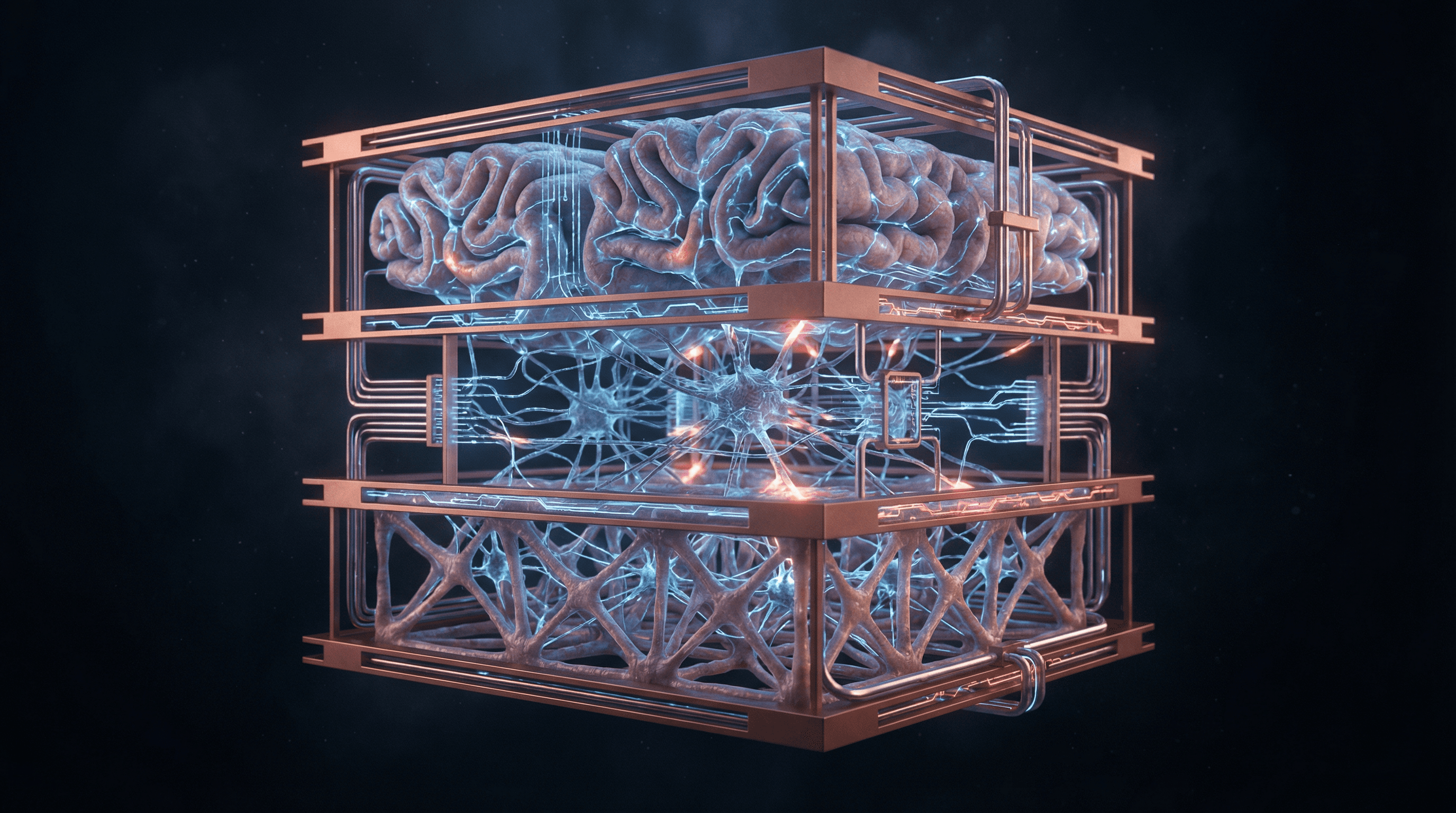
The process begins with assessment of each leader’s social cognition architecture. Rather than aggregating external perception data through 360-degree instruments, Dr. Ceruto maps the specific circuits generating those perceptions: mirror neuron coherence between stated intention and neural expression, anterior insula activation thresholds governing empathic accuracy, and mentalizing network precision in belief attribution under organizational complexity.
Real-Time Neuroplasticity™ then applies targeted interventions to recalibrate identified deficits. If the mirror neuron system produces incongruence between a leader’s internal state and their behavioral output — the gap that followers detect as inauthenticity — the intervention addresses that circuit directly. If anterior insula degradation has narrowed the leader’s capacity to read emotional subtext in high-stakes meetings, the recalibration targets interoceptive accuracy at the structural level.
For leaders navigating sustained, multi-front organizational complexity, NeuroConcierge™ provides embedded partnership across an extended engagement arc. For leaders facing a specific inflection point, NeuroSync™ delivers focused recalibration with defined scope.
In over two decades of neuroscience practice, the most reliable predictor of leadership effectiveness is not behavioral repertoire. It is the integration quality across these three systems operating in real-time coherence. That integration is architectural. And architecture can be recalibrated.
What to Expect
The engagement begins with a Strategy Call — a structured strategy conversation where Dr. Ceruto assesses the leadership context and identifies which neural systems are most likely driving the performance gap.
Following the Strategy Call, the leader undergoes neurological baseline assessment targeting social cognition architecture. This produces a precise map of circuit-level function rather than a behavioral competency profile.
The protocol is then designed around identified deficits — structured, spaced sessions that target specific neural systems with the precision required to produce durable architectural change. Progress is measured through observable shifts in mirror neuron coherence, empathic accuracy, and mentalizing precision under real organizational conditions.
There are no generic frameworks. No scripts. No one-size behavioral templates. The intervention is calibrated to the specific neural architecture of the individual leader, producing change that does not revert under pressure because the circuits generating behavior have been structurally modified.
References
Naomi P. Friedman, Trevor W. Robbins (2022). The Role of the Prefrontal Cortex in Cognitive Control and Executive Function. Neuropsychopharmacology. https://doi.org/10.1038/s41386-021-01132-0
Jessica L. Wood, Derek Evan Nee (2023). Cingulo-Opercular Subnetworks Motivate Frontoparietal Subnetworks during Distinct Cognitive Control Demands. Journal of Neuroscience. https://doi.org/10.1523/JNEUROSCI.1314-22.2022
Moataz Assem, Idan A. Blank, Zachary Mineroff, Ahmet Ademoglu, Evelina Fedorenko (2020). Activity in the Fronto-Parietal Multiple-Demand Network is Robustly Associated with Individual Differences in Working Memory and Fluid Intelligence. Cortex. https://doi.org/10.1016/j.cortex.2020.06.013
Rongxiang Tang, Jeremy A. Elman, Carol E. Franz, Anders M. Dale, Lisa T. Eyler, Christine Fennema-Notestine, Donald J. Hagler Jr., Michael J. Lyons, Matthew S. Panizzon, Olivia K. Puckett, William S. Kremen (2022). Longitudinal Association of Executive Function and Structural Network Controllability in the Aging Brain. GeroScience. https://doi.org/10.1007/s11357-022-00676-3
The Neural Architecture of Leadership Capacity
Leadership is a neural function. The capacities that define effective leadership — the ability to sustain strategic clarity under pressure, to regulate one’s own threat responses without suppressing their information value, to inspire sustained motivation in others, to make high-quality decisions under uncertainty, and to sustain authentic relational connection across authority differentials — are all expressions of specific neural architectures. They are not personality traits. They are circuit configurations. And they are trainable, restructurable, and measurably developable through targeted neural intervention.
The prefrontal cortex is the biological substrate of the leadership capacities that organizations most consistently struggle to develop. The lateral prefrontal cortex drives planning, working memory, and cognitive flexibility. The medial prefrontal cortex governs self-awareness, mentalizing, and the reading of social contexts. The ventromedial prefrontal cortex integrates somatic signals into value-based judgment. The anterior cingulate cortex monitors for conflict and error, and regulates the transition between stable and flexible behavior. These structures do not develop uniformly through career progression. They develop through specific types of experience, sustained regulatory challenge, and targeted practice — none of which are reliably produced by organizational promotion pathways.
The dopaminergic motivation architecture determines whether leadership capacity persists under the conditions that most degrade it. The leader whose reward system is poorly calibrated to the delayed, diffuse, and often socially invisible rewards of effective organizational leadership — the long-horizon impact, the team capability built over years, the cultural shift that takes place gradually and is difficult to attribute — will find their motivation for leadership investment progressively depleted by the misalignment between what their neural architecture finds reinforcing and what leadership actually delivers. This is the neural basis of leadership burnout, and it requires explicit reward recalibration rather than better time management or additional vacation.
Why Traditional Approaches Fall Short
Leadership training has evolved through multiple generations of methodological sophistication. Situational leadership, transformational leadership, servant leadership, adaptive leadership — each framework captures genuine insight about leadership effectiveness. Each has been packaged into training programs that produce measurable attitude change and minimal durable behavioral change. The frameworks are not the problem. The training format and the level of intervention are.

Workshop-based leadership training addresses the cognitive architecture of leadership: the frameworks, models, and self-awareness that inform conscious leadership choices. This is a necessary foundation and an insufficient intervention. The leadership behaviors that most reliably differentiate effective from ineffective leaders under real organizational pressure — the regulatory responses to conflict and threat, the quality of judgment under ambiguity, the authentic connection to team members across authority differentials — are not primarily cognitive. They are neural. They are generated by the regulatory architecture, the social neural system, and the reward calibration of the leader’s brain, not by the leadership framework they have memorized.
Mentoring and experiential leadership development address this more effectively, because the learning environment is closer to the real pressure conditions in which leadership behavior is generated. But mentoring depends on the quality and neural sophistication of the mentor, and experiential development in unstructured environments produces learning that is highly variable in what it actually develops. Neither approach provides the precision of targeted neural intervention — the ability to identify the specific circuit configurations limiting a particular leader’s effectiveness and design the specific experiences required to reconfigure them.
How Neural Leadership Training Works
My approach to leadership training begins with a neural architecture assessment of the leadership population. What are the specific circuit configurations producing the leadership patterns that the organization most needs to develop? Which regulatory capacities are most depleted across the leadership layer? What is the reward architecture mismatch generating the motivation patterns — or motivation deficits — most limiting leadership effectiveness? These questions produce a development target that is far more specific than any generic leadership competency model.
From this assessment, I design leadership development protocols that directly target the identified neural configurations. The protocols are structured around the neuroscience of motor and cognitive skill acquisition: deliberate practice sequences that target the specific circuits requiring development, spaced learning intervals that allow consolidation between practice episodes, increasing load conditions that progressively build the regulatory capacity required for performance under real leadership pressure, and feedback architectures that are calibrated to the neural systems they are targeting rather than to the behavioral metrics most easily measured.
The social neural dimension of leadership development receives particular attention. Leaders who model the regulatory and relational behaviors their teams need to develop are leveraging the most powerful learning mechanism available in organizations: social neural contagion, the brain’s tendency to encode and replicate the behavioral patterns of high-status, trusted others. Leadership training that builds the regulatory capacity of senior leaders and then puts that capacity on display in real organizational contexts produces development effects that cascade through the organizational hierarchy in ways that no training program delivered to a general leadership population can replicate.
What This Looks Like in Practice
Leadership training engagements begin with a Strategy Call in which I assess the specific leadership development challenge against the neural architecture most likely responsible for it. From that conversation, I design a protocol that addresses the identified neural configurations in the format that the organizational context requires.
For senior leadership teams working on a specific high-priority leadership capability — executive communication, decision quality, conflict navigation, strategic team dynamics — the NeuroSync model provides focused, intensive development designed around the neural requirements of that specific capability. For organizations investing in broad leadership development across multiple levels and capability domains, the NeuroConcierge model provides the sustained partnership required to build leadership capability as a durable organizational neural asset rather than a training event outcome. The Dopamine Code provides the scientific framework for leaders who want to understand the reward architecture principles underlying sustained leadership motivation and team engagement.
For deeper context, explore emotional intelligence in leadership training.