Neuroinflammation & Brain Health in Midtown Manhattan

Dr. Sydney Ceruto identifies the neuroinflammatory drivers behind cognitive slowing, mood instability, and accelerated brain aging — and maps the path to neural recovery.

Book a Strategy Call

How Brain Inflammation Differs From Body Inflammation

Inflammation in the brain operates differently from inflammation anywhere else in the body. A swollen ankle is visible, painful, and resolves on a predictable timeline. Neuroinflammation is invisible, often painless in the traditional sense, and can persist for months or years while silently degrading the neural circuits responsible for memory, attention, emotional regulation — the ability to manage emotional responses —, and processing speed. It is one of the most consequential yet underrecognized threats to cognitive health in the modern era.

The Brain’s Immune System Under Attack

The brain’s resident immune cells — microglia — constitute approximately 10 to 15 percent of all cells in the central nervous system. In their homeostatic state, these cells continuously survey the neural microenvironment, maintaining synaptic integrity, supporting neurogenesis — the creation of new brain cells —, and clearing cellular debris. This surveillance function is essential. The problem arises when microglia shift from their normal ramified morphology into an activated state, releasing a cascade of pro-inflammatory cytokines including interleukin-1 beta, interleukin-6, and tumor necrosis factor-alpha. These molecules act directly on neuronal circuits to impair long-term potentiation and long-term depression — the cellular mechanisms of learning and memory — while simultaneously suppressing the production of new neurons in the hippocampus — the brain’s memory-formation center —.

When Protection Becomes Destruction

The activation spectrum of microglia is a critical concept. A pro-inflammatory phenotype releases cytokines and generates reactive oxygen species that, while designed to combat acute threats, cause collateral neural damage when sustained. An anti-inflammatory phenotype releases growth factors, clears debris, and supports tissue repair. In chronic neuroinflammation, the balance tips decisively toward the pro-inflammatory state, creating a self-reinforcing cycle: activated microglia release cytokines that compromise the blood-brain barrier, which allows peripheral immune cells and inflammatory molecules to infiltrate brain tissue, further driving microglial activation.
Astrocytes — the brain’s most abundant glial cells — amplify this process when they become reactive. Reactive astrocytes adopt a neurotoxic profile, upregulating complement cascade components and secreting pro-inflammatory mediators that further activate microglia. Astrocytic senescence emerges as a major factor in age-related neuroinflammation: senescent astrocytes adopt a pro-inflammatory secretory phenotype that degrades the synaptic scaffolding and metabolic support that neurons depend upon.

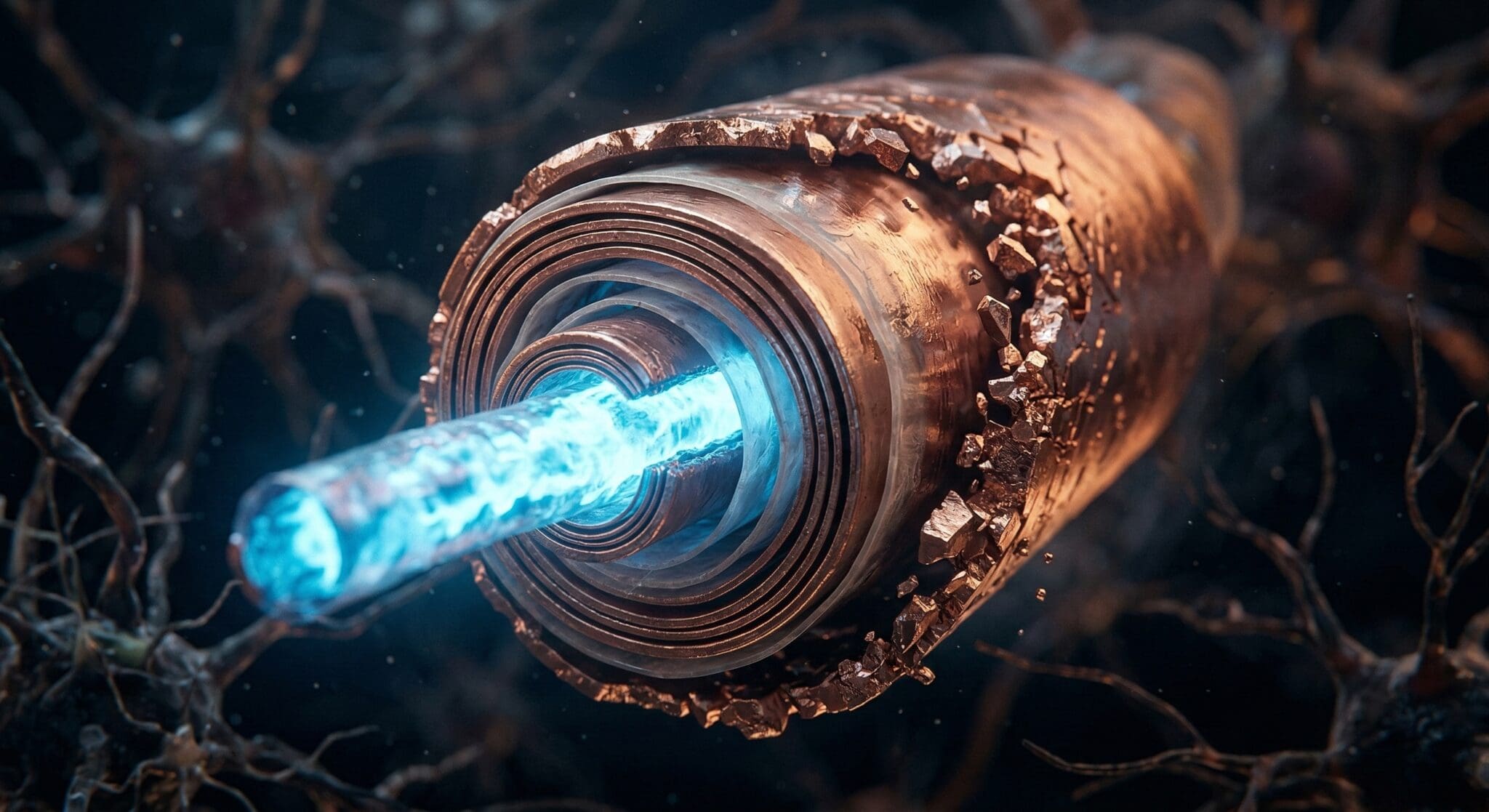
Macro cross-section of neural pathway with copper sheathing forming around blue signal core depicting active brain optimization

The Brain’s Protective Barrier Breaks Down

The blood-brain barrier provides a critical line of defense, and its compromise is both a consequence and a driver of neuroinflammation. When intact, this barrier enforces strict control over which molecules reach brain tissue. When degraded by chronic inflammation, peripheral inflammatory signals — lipopolysaccharide from gut bacteria, circulating cytokines, fibrinogen — gain access to the neural parenchyma and trigger localized immune responses. Research has demonstrated that germ-free animals raised without gut microbiota show structural blood-brain barrier alterations, establishing that the barrier’s integrity depends in part on signals originating entirely outside the brain.

Modern Life’s Hidden Brain Threats

The triggers most relevant to high-performing adult populations include chronic psychological stress, which activates the hypothalamic-pituitary-adrenal axis — the body’s central stress-response system — and produces sustained cortisol elevation that drives neuroinflammatory cascades. Sleep deprivation, which impairs glymphatic clearance and activates microglial cells. Metabolic dysfunction, which produces peripheral inflammation that crosses a compromised blood-brain barrier. Post-viral immune activation, which can establish persistent neuroinflammatory states lasting months after the original infection has resolved. Air pollution, specifically fine particulate matter that crosses the blood-brain barrier and directly activates microglia. And chronic noise exposure, which activates the sympathetic nervous system — the body’s accelerator for stress and alertness — and creates neurological stress responses.

How One Problem Creates Another

These triggers do not operate independently. They form an amplification cascade where each factor worsens the others. Chronic stress degrades sleep. Poor sleep amplifies metabolic dysfunction. Metabolic dysfunction heightens inflammatory tone. Environmental exposures compound the biological burden. The cumulative effect is a state of chronic low-grade neuroinflammation that manifests as cognitive slowing, mood instability, memory fragmentation, and accelerated brain aging — but that standard medical approaches rarely identify or address.

Why the Brain Becomes Oversensitive

The concept of microglial priming deserves particular attention. Prior inflammatory challenges — whether from viral illness, traumatic brain injury, chronic stress, or environmental exposure — render microglia hypersensitive to subsequent stimuli. A brain that has been primed by one neuroinflammatory event responds more aggressively to the next, even if the second trigger would normally produce only a minor response. This priming mechanism explains why cognitive impairment can persist or worsen long after the original precipitant has resolved, and why individuals with multiple risk factor exposures experience disproportionate cognitive consequences.

The Nrf2 antioxidant defense pathway represents one of the brain’s most important endogenous protective mechanisms against neuroinflammation. Nrf2 activation upregulates antioxidant genes, inhibits the NF-kB inflammatory signaling cascade, improves mitochondrial function, and supports protein clearance. Critically, Nrf2 activity declines with aging, progressively leaving neurons more vulnerable to the inflammatory cascade. This age-related decline in endogenous neuroprotection, combined with cumulative environmental exposure, helps explain why neuroinflammatory consequences become increasingly severe in midlife and beyond.

A Targeted Approach to Brain Protection

Dr. Ceruto’s approach to neuroinflammation operates at the intersection of these drivers — identifying which combination of stress, sleep, metabolic, environmental, and post-infectious factors is sustaining the neuroinflammatory cascade for each individual, and developing a targeted strategy to interrupt it before it translates into the accelerated cognitive aging that the dementia pipeline data predicts. A neuroscientist maps the brain-side consequences and educates on the neural mechanisms; medical specialists manage the laboratory markers and clinical interventions. The integration of both perspectives is where meaningful progress occurs.

Walnut credenza with crystal brain sculpture and MindLAB journal in diffused dusk light suggesting high-floor Midtown Manhattan private office

Why Neuroinflammation & Brain Health Matters in Midtown Manhattan

Midtown Manhattan delivers neuroinflammation at scale. The combination of urban air quality, acoustic stress, post-COVID immune activation, sleep deprivation, and pro-inflammatory dietary patterns creates a convergence of every major neuroinflammatory trigger in a single geographic zone.

Air quality is the first vector. Manhattan’s annual PM2.5 average was 7.1 micrograms per cubic meter in 2024, exceeding the WHO annual limit of 5.0. In 2022, 81 percent of days in NYC exceeded the WHO safe threshold. The Midtown-West zone around 34th and 42nd Streets is tracked as a congestion-sensitive area, with PM2.5 spikes during peak commute hours. The June 2023 wildfire smoke event drove NYC’s PM2.5 to over 300 micrograms per cubic meter for a day — a single-day exposure capable of triggering measurable neuroinflammation. Fine particulate matter crosses the blood-brain barrier, activates microglial cells, and initiates the same inflammatory cascade implicated in early Alzheimer’s pathology.

Noise functions as a second neuroinflammatory pathway. Research confirms that urban noise activates the sympathetic nervous system and creates neurological stress responses. Noise levels above 65 decibels are associated with significantly greater neurological symptoms including headaches, dizziness, and difficulty concentrating. NYC received 750,000 noise complaints in 2024, and a Columbia University study found that nine in ten New Yorkers are regularly exposed to levels that exceed safe thresholds.

Post-COVID neuroinflammation is the third vector. The NYC Department of Health launched a 10,000-person long COVID cohort study in 2024. Research published in Nature Immunology confirmed that long COVID is characterized by persistent activation of proinflammatory cytokine pathways lasting more than 180 days. Mount Sinai’s five-year post-pandemic review documented that approximately 50 percent of long COVID patients report cognitive impairment among their most prevalent symptoms.

Sleep deprivation is the fourth amplifier. Research from Mount Sinai found that chronic insufficient sleep negatively impacts immune stem cells, causing them to produce more inflammatory cells — and that this immune imprint persists even after recovery sleep. New Yorkers averaging 6.5 hours of sleep nightly are in a state of chronic neuroinflammatory activation.

Dr. Sydney Ceruto, PhD — Founder, MindLAB Neuroscience

Dr. Sydney Ceruto, PhD — Founder & CEO, MindLAB Neuroscience

Dr. Ceruto holds a PhD in Behavioral & Cognitive Neuroscience from NYU and two Master’s degrees from Yale University. She lectures at the Wharton Executive Development Program at the University of Pennsylvania and has been an Executive Contributor to the Forbes Coaching Council since 2019. Dr. Ceruto is the author of The Dopamine Code (Simon & Schuster, June 2026). She founded MindLAB Neuroscience in 2000 and has spent over 26 years pioneering Real-Time Neuroplasticity™ — a methodology that permanently rewires the neural pathways driving behavior, decisions, and emotional responses.

References

Müller, N., & Di Benedetto, B. (2025). From neuroinflammation to neurodegeneration: Insights from microglial activation patterns. Frontiers in Cellular Neuroscience, 19, 1575022. https://doi.org/10.3389/fncel.2025.1575022

Musiek, E. S., & Holtzman, D. M. (2016). Mechanisms linking circadian clocks, sleep, and neurodegeneration. Science, 354(6315), 1004–1008. https://doi.org/10.1126/science.aah4968

Monje, M., & Iwasaki, A. (2022). The neurobiology of long COVID. Neuron, 110(21), 3484–3496. https://doi.org/10.1016/j.neuron.2022.10.006

Dinkova-Kostova, A. T., Kostov, R. V., & Kazantsev, A. G. (2018). The role of Nrf2 signaling in counteracting neurodegenerative diseases. FEBS Journal, 285(19), 3576–3590. https://doi.org/10.1111/febs.14379

Success Stories

“Nothing was wrong — and that's exactly why no one could help me. I wasn't struggling. I wanted to know what my brain was actually capable of if its resting-state architecture was optimized. Dr. Ceruto mapped my default mode network and restructured how it allocates resources between focused and diffuse processing. The cognitive clarity I operate with now isn't something I'd ever experienced before — and I had no idea it was available.”

Nathan S., Senior Investment Strategist Bridgewater Associates

“I'd optimized everything — diet, fitness, sleep — but my cognitive sharpness was quietly declining and no one could explain why. Dr. Ceruto identified the synaptic density patterns that were thinning and built a protocol to reverse the trajectory. This wasn't prevention in theory. My neuroplasticity reserve is measurably stronger now than it was three years ago. Nothing I'd tried before even addressed the right problem.”

Henrique L., Head of Strategic Planning Galp Lisbon, PT

“After the concussion, my processing speed collapsed — I couldn't hold complex information the way I used to, and no one could explain why the fog wasn't lifting. Dr. Ceruto mapped the damaged pathways and built compensatory networks around them. My brain doesn't work the way it did before the injury. It works differently — and in some ways, more efficiently than it ever did.”

Owen P., Founder & CEO Sports Performance Scottsdale, AZ

“Slower processing, foggier recall, decisions that used to be instant taking longer than they should — I'd been accepting it all as inevitable decline for two years. Dr. Ceruto identified the prefrontal efficiency pattern that was degrading and restructured it at the neurological level. The sharpness didn't just come back. It came back faster and more precise than it was a decade ago. Nothing I'd tried before even addressed the right problem.”

Elliott W., General Partner Andreessen Horowitz

“The same relational patterns my mother and grandmother lived through kept repeating in my own life — the hypervigilance, the emotional shutdown, the inability to feel safe even when nothing was wrong. Talking through it changed nothing. Dr. Ceruto identified the epigenetic stress signatures driving the pattern and restructured them at the neurological level. The cycle that ran through three generations stopped with me.”

Gabriela W., Managing Partner Immigration Law Miami, FL

“My phone was the first thing I touched in the morning and the last thing I put down at night — and every app blocker, digital detox protocol, and willpower-based system I tried lasted less than a week. Dr. Ceruto identified the variable-ratio reinforcement loop that had hijacked my attention circuits and dismantled it at the neurological level. My phone is still in my pocket. The compulsion to reach for it isn't. That's a fundamentally different kind of fix.”

Tomás R., COO Logistics & Supply Chain Lisbon, PT

Frequently Asked Questions About Neuroinflammation & Brain Health in Midtown Manhattan

What is neuroinflammation work at MindLAB Neuroscience?

Dr. Ceruto identifies the specific combination of factors sustaining chronic neuroinflammation — whether stress-driven, sleep-related, metabolic, post-infectious, or environmental in origin — and develops a personalized neuroscience-based strategy to interrupt the inflammatory cascade. This is brain health education and optimization, not medical management of inflammatory markers. Where clinical testing or medical intervention is needed, Dr. Ceruto coordinates with appropriate specialists.

How does neuroinflammation affect everyday cognitive function?

Chronic low-grade neuroinflammation impairs the cellular mechanisms of learning and memory, suppresses new neuron production in the hippocampus — the brain's memory-formation center —, degrades blood-brain barrier integrity, and shifts the brain’s immune cells into a sustained pro-inflammatory state. The practical experience is cognitive slowing, difficulty retrieving words or information, mood instability that seems disproportionate to circumstances, mental fatigue that does not resolve with rest, and a gradual sense that thinking has become less sharp.

Who is most at risk for neuroinflammation-related cognitive issues?

Individuals carrying multiple neuroinflammatory triggers simultaneously — chronic stress combined with disrupted sleep, post-viral recovery, processed food consumption, urban environmental exposures, or metabolic concerns. People living and working in dense urban environments with high air pollution, noise exposure, and limited natural light are carrying a baseline neuroinflammatory burden that compounds with any additional triggers.

How does someone begin neuroinflammation assessment with Dr. Ceruto?

The process begins with a Strategy Call, conducted by phone. The $250 fee covers an assessment of cognitive symptoms, health history, environmental exposures, lifestyle factors, and goals. Dr. Ceruto determines whether neuroinflammation is likely playing a role and discusses program structure and investment during the call.

Can neuroinflammation be reversed, and how long does it take?

The brain possesses significant capacity for recovery when neuroinflammatory drivers are identified and interrupted. Microglia can shift from pro-inflammatory back to anti-inflammatory states, blood-brain barrier integrity can be restored, and the downstream cognitive effects can improve. Timeline varies substantially based on the depth and duration of the inflammatory state. Some individuals notice cognitive improvements within weeks of addressing foundational factors like sleep and stress. Full resolution of chronic neuroinflammatory patterns typically unfolds over months of sustained, targeted intervention.

Take the First Step Toward Better Brain Health

The Strategy Call is a focused conversation with Dr. Ceruto that maps the specific neural mechanisms driving your concerns and determines the right path forward.

Book a Strategy Call
MindLAB Neuroscience consultation room
Locations

The Intelligence Brief

Neuroscience-backed analysis on how your brain drives what you feel, what you choose, and what you can’t seem to change — direct from Dr. Ceruto.