The Change Initiative Failure Pattern
“Seventy percent of organizational change initiatives fail to achieve their stated objectives. This is not a management failure — it is a neuroscience failure. The brain's threat-detection architecture, evolved for physical survival, cannot distinguish between a territorial predator and an ambiguous organizational announcement.”
The restructuring has been planned for months. The consulting firm delivered a rigorous strategic framework. Communications have been carefully staged. The leadership team has been briefed and aligned. And within ninety days, the initiative is stalling. Resistance hardens in unexpected pockets. Key leaders who endorsed the change publicly begin subtly undermining it operationally. Decision-making slows. The very executives tasked with driving transformation become the primary friction point.
This is not a communication failure. It is not a strategy failure. It is one of the most documented patterns in organizational science: approximately seventy percent of major change initiatives fail to achieve their objectives. The explanation that conventional consulting offers addresses symptoms while ignoring the biological root cause.
The root cause is neurological. Organizational change registers in the human brain as threat. The amygdala does not distinguish between a restructuring announcement and a physical danger signal. Both trigger the same cascade: cortisol release, sympathetic nervous system — stress and alertness acceleration — activation, prefrontal suppression. The leaders responsible for executing change are doing so with neurologically compromised decision-making architecture.
My clients describe this as the moment where intellectual commitment to the change and biological resistance to it collide. They understand the strategy. They endorsed the plan. And yet every meeting feels harder, every decision takes longer, every interaction with resistant stakeholders depletes resources they cannot replenish. The problem is not will. It is wiring.
The Neuroscience of Organizational Change Resistance
The biological basis for why smart, committed leaders struggle to execute change is documented across multiple converging research streams.
The foundational mechanism is the amygdala’s threat-response architecture. Research on fear circuits has established that the amygdala activates a subcortical pathway through the superior colliculus and pulvinar nucleus before reaching conscious awareness. Threat responses to organizational ambiguity occur below the threshold of executive awareness. Leaders believe they are making rational change decisions while their neural architecture has already biased them toward rigidity and self-protection. At the organizational level, a landmark study documented that under threat conditions, information processing narrows, control centralizes, and behavioral flexibility decreases. What they described behaviorally, neuroscience now maps to specific amygdala-prefrontal circuitry — emotion regulation pathways.
The second mechanism involves prefrontal-limbic dysbalance under chronic uncertainty. Research (2013), demonstrated that chronic stress impairs prefrontal cortex — executive control center — functioning through glucocorticoid receptor activation, disruption of HPA-axis feedback loops, and measurable loss of dendritic spines in prefrontal neurons. The net effect is that prolonged organizational uncertainty reduces the biological capacity for strategic planning, cognitive flexibility, and inhibitory control — the exact executive functions leaders need to navigate transformation. A professional managing eighteen months of AI-driven restructuring, return-to-office culture battles, and policy recalibrations is not operating with full prefrontal capacity. Their decision architecture has been neurologically compromised by allostatic load.
Research (2018) by Shields and colleagues established that cumulative stress exposure produces a blunted cortisol response but elevated DHEA response to acute stressors. This represents a neuroendocrine signature of allostatic load that directly impairs cognitive performance, hippocampal memory function, and attentional capacity. The seventy percent change failure rate is, at least partially, a neurobiological phenomenon.
The third mechanism is neuroplasticity — brain rewiring capacity — as the change substrate itself. Contemporary research (2022), extended Hebb’s foundational principle to white matter: Hebbian stimulation produces measurable increases in myelin markers within fiber bundles, confirming that plasticity is not merely synaptic but structural. Behavioral change programs that rely on single training events fail because the neural pathways required for new operational behavior have not been sufficiently activated to achieve structural consolidation.
How Dr. Ceruto Approaches Organizational Development
Dr. Ceruto’s organizational development methodology operates at the individual neural level within leadership teams — the layer that enterprise consulting cannot reach by design.
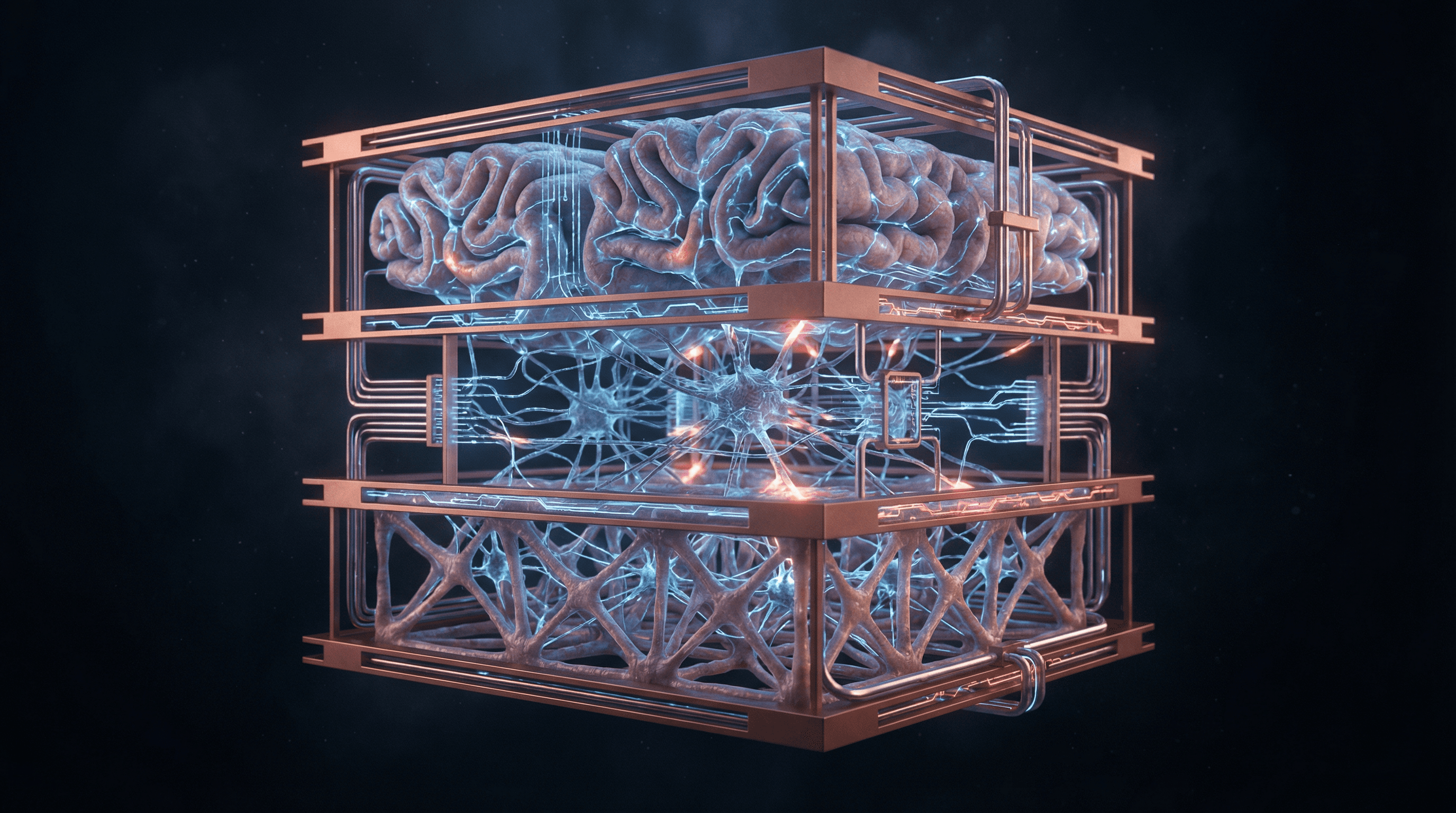
The process begins with a neurobiological assessment of the leadership layer. Rather than administering culture surveys or stakeholder interviews, Dr. Ceruto maps each leader’s threat-activation architecture. This includes amygdala sensitivity patterns and prefrontal-limbic balance under conditions of sustained uncertainty. This produces a biological portrait of each leader’s capacity to execute change — revealing why some leaders thrive during transformation while others who are equally talented become friction points.
Real-Time Neuroplasticity(TM) then applies targeted interventions to recalibrate the identified deficits. If a leader’s amygdala threat-response is chronically elevated by role ambiguity, the intervention targets that specific circuit. If prefrontal capacity has been degraded by cumulative allostatic load, the protocol addresses restoration of dendritic spine function and executive control architecture. If the leadership team’s collective neurochemical environment is suppressing the psychological safety required for adaptive behavior, Dr. Ceruto recalibrates at the neurochemical source — oxytocin pathway activation, cortisol downregulation, and prefrontal-limbic balance restoration.
For organizations navigating sustained, multi-front transformation, NeuroConcierge(TM) embeds Dr. Ceruto within the leadership ecosystem across the full change arc. For specific inflection points NeuroSync(TM) delivers focused intervention with defined scope and measurable neural outcomes.
The distinction is fundamental. Enterprise consulting firms can design your transformation framework. Dr. Ceruto recalibrates the neural architecture of the leaders who must execute it.
What to Expect
Every organizational engagement begins with a Strategy Call — a strategy conversation where Dr. Ceruto assesses the transformation context. Dr. Ceruto identifies the neural mechanisms most likely driving resistance or execution friction, and determines the appropriate engagement scope.
Following the Strategy Call, leaders within the engagement perimeter undergo individual neurobiological baseline assessment. The aggregate data reveals patterns that organizational surveys cannot detect. These include shared threat-activation signatures, common allostatic load profiles, collective prefrontal degradation patterns that explain why the entire leadership team seems to be hitting the same ceiling simultaneously.
Protocol design then targets identified mechanisms through structured, spaced intervention sessions. Progress is measured through observable shifts in decision-making efficiency, change tolerance, and leadership cohesion under real organizational conditions — not through self-report surveys.
The engagement is precise, biologically grounded, and designed to build neural change capacity that persists long after the consulting engagement concludes — because the circuits driving leadership behavior have been structurally recalibrated.
References
Oriel FeldmanHall, Paul Glimcher, Augustus L. Baker, Elizabeth A. Phelps (2019). The Amygdala and Prefrontal Cortex as Separate Systems Under Uncertainty. Journal of Cognitive Neuroscience. https://doi.org/10.1162/jocn_a_01443
Juyoen Hur, Jason F. Smith, Kathryn A. DeYoung, Allegra S. Anderson, Jinyi Kuang, Hyung Cho Kim, Rachael M. Tillman, Manuel Kuhn, Andrew S. Fox, Alexander J. Shackman (2020). Uncertain Threat Anticipation and the Extended Amygdala-Frontocortical Circuit. Journal of Neuroscience. https://doi.org/10.1523/JNEUROSCI.0704-20.2020
Cristina Orsini, David Conversi, Paolo Campus, Simona Cabib, Stefano Puglisi-Allegra (2020). Functional and Dysfunctional Neuroplasticity in Learning to Cope with Stress. Brain Sciences. https://doi.org/10.3390/brainsci10020127
Rajita Sinha, Cheryl M. Lacadie, R. Todd Constable, Dongju Seo (2016). VmPFC Neuroflexibility Signals Resilient Coping Under Sustained Stress. Proceedings of the National Academy of Sciences. https://doi.org/10.1073/pnas.1600965113
The Neural Architecture of Organizational Performance
Organizational development is, at its most precise, the study of how collective human neural architecture produces organizational behavior — and how to modify that architecture to produce different behavior at scale. The structures, systems, and culture that OD consulting addresses are not independent of the people who inhabit them. They are the aggregate output of the neural prediction systems, reward architectures, threat responses, and social neural circuits of every individual in the organization, operating in interaction with each other and with the organizational environment. Changing organizational performance requires changing these neural systems, not just the structures that express them.
The prefrontal capacity of the organizational leadership layer is the primary constraint on organizational development. The structures and systems that OD consultants design cannot be more sophisticated than the prefrontal capacity of the leadership population implementing them. A governance structure that requires sustained cognitive flexibility, nuanced contextual judgment, and complex multi-stakeholder integration to function effectively will be simplified by the brains operating it to a level they can manage — regardless of how well it was designed. This simplification is not a conscious decision. It is the brain’s predictive coding system finding the most efficient operating pattern given its current regulatory capacity.
The social neural architecture of the organization is the second critical variable. Every organizational structure exists within a social neural environment — a distributed network of threat responses, status hierarchies, belonging signals, and social reward patterns that determines which of the structure’s intended functions are actually reinforced by the social environment and which are quietly overridden by social neural imperatives. An accountability structure that creates social threat for the behaviors it is trying to reinforce will be systematically subverted by the social neural imperative to minimize threat, regardless of its logical coherence.
Why Traditional Approaches Fall Short
Organizational development consulting has built sophisticated frameworks for diagnosing organizational dysfunction and designing structural, systemic, and cultural interventions. The best OD practice combines rigorous diagnostic methodology, evidence-based intervention design, and skilled change management to produce genuine organizational improvement. The fundamental limitation is that these frameworks operate at the level of organizational systems and professional behavior without directly addressing the neural architecture generating the behavior the systems are designed to modify.

This produces a characteristic pattern: structural interventions that improve organizational performance in the short term, followed by a progressive reversion to previous performance patterns as the neural architectures of the people inhabiting the new structures reassert their established patterns. The new accountability structure is adopted and then gradually re-interpreted to be consistent with existing threat avoidance patterns. The new collaborative model is implemented and then progressively undermined by the status and belonging dynamics that the social neural architecture generates. The performance management redesign produces initial behavioral compliance and then the normative drift that always follows when the system conflicts with the neural environment it is embedded in.
The missing element is neural-level diagnosis and intervention. OD consulting that can identify the specific neural architectures most powerfully maintaining the organizational patterns that need to change, and design interventions that address those architectures directly, can produce organizational development that holds — because the neural substrate generating the organizational behavior has been modified, not just the systems expressing it.
How Neural OD Consulting Works
My approach to organizational development consulting begins with a neural diagnostic layer that operates beneath the conventional OD assessment. The standard diagnostic — organizational surveys, leadership interviews, process analysis, structural mapping — reveals the behavioral and systemic expression of organizational patterns. The neural diagnostic examines the circuits generating those patterns: the threat architectures most powerfully shaping decision behavior, the reward systems most powerfully sustaining the existing performance patterns, the social neural dynamics most powerfully overriding the intended functions of existing structures, and the prefrontal capacity available in the leadership layer to sustain and model the organizational development the change requires.
From this layered diagnostic, I design OD interventions that address both the structural and neural dimensions simultaneously. The structural interventions — the governance redesign, the process architecture, the accountability systems, the role clarity — are designed not just for their logical coherence but for their compatibility with the neural architectures that will implement them. This means designing structures that work with the brain’s reward and threat systems rather than against them — creating environments in which the neural imperatives of the professional population and the intended functions of the organizational systems are aligned rather than in conflict.
The neural development component focuses on the leadership layer, because leadership neural architecture is the primary determinant of whether organizational development holds or reverts. Leaders whose regulatory capacity is rebuilt, whose reward systems are recalibrated to the actual reward landscape of organizational leadership, and whose threat responses are recalibrated to the specific threat signals most undermining their organizational development effectiveness are the most powerful OD intervention available. They are the social neural models that the rest of the organization’s prediction systems are most powerfully calibrated to.
What This Looks Like in Practice
Organizational development consulting engagements begin with a Strategy Call in which I map the presenting organizational performance challenge against its most likely neural substrates. This conversation identifies whether the presenting challenge is primarily a structural problem, a neural architecture problem, or the more common combination of the two — and designs an engagement accordingly.
For organizations addressing a specific, well-defined organizational development challenge — a particular team’s dysfunction, a specific process failure, a leadership transition requiring organizational realignment — the NeuroSync model provides focused consulting designed around both the structural and neural dimensions of that specific challenge. For organizations undertaking broad organizational development initiatives spanning multiple years and affecting the full professional population, the NeuroConcierge model provides the embedded consulting partnership required to address organizational development at the neural depth that lasting change requires. The engagement is calibrated to organizational and neural development timelines simultaneously — because the rate of lasting organizational change is ultimately constrained by the rate of neural change in the people generating organizational behavior.
For deeper context, explore personal development in organizational growth.