Overthinking & Rumination in Midtown Manhattan

Rumination is not deep thinking. It is a neural loop the brain cannot exit — and the circuitry that sustains it can be retrained.

Rumination isn't weak thinking — it's the default mode network — the brain's internal monologue system — caught in a loop it cannot self-interrupt. The harder you try to stop, the deeper the circuit runs. At MindLAB Neuroscience, we identify the neural pattern sustaining the loop and build new pathways that redirect your brain's energy toward resolution instead of repetition.
Book a Strategy Call

Key Points

  1. Chronic rumination is structurally distinct from productive thought — neuroimaging reveals persistent default mode network hyperactivation as its primary neural signature.
  2. The brain's attention-switching system is impaired in chronic ruminators, with reduced connectivity to the executive control regions that should interrupt unproductive loops.
  3. Verbal intelligence is positively associated with reflective pondering, creating a particular vulnerability for professionals whose work demands sustained analytical thinking.
  4. Rumination fully mediates the bidirectional pathway between depression and anxiety — it is the mechanism through which these conditions develop and reinforce each other.
  5. Approximately 63% of individuals who develop clinical depression do so because a ruminative response to initial distress amplifies and sustains the mood disturbance.
  6. Chronic rumination elevates baseline cortisol, reduces hippocampal volume over time, and impairs the formation of new memories — the cognitive costs compound beyond the emotional ones.
  7. Rumination has a stable, measurable neuroimaging signature that generalizes across populations, confirming it as a neural state that can be identified and systematically restructured.

Why Your Mind Won’t Stop Racing

“Rumination mimics problem-solving so convincingly that the person caught in it often believes they are making progress. But it is a repetitive, self-referential loop that cycles through the same negative content without resolution — consuming cognitive resources while producing nothing actionable.”

The experience of overthinking is not a thinking problem. It is a network regulation problem. The brain contains a system called the default mode network that is supposed to deactivate when attention is directed outward toward tasks. In chronic ruminators, this deactivation fails. The default mode network remains active during task performance, competing with the brain’s goal-directed circuits for processing resources and producing the characteristic experience of thoughts that intrude, persist, and repeat without resolution.

The neural signature of rumination — repetitive, stuck-loop negative thinking — has been mapped with increasing precision. Neuroimaging consistently identifies hyperconnectivity between a region called the subgenual anterior cingulate cortex — the area sustaining negative self-focused emotional states — and the broader default mode network. This hyperconnectivity functions as a reverberating circuit: the subgenual region generates emotionally charged self-referential content, the default mode network amplifies and sustains it. The prefrontal cortex — the brain’s executive control center — fails to interrupt the cycle. The result is a brain that cannot stop talking to itself about itself.

The Hidden Cost of Endless Analysis

This is not a minor cognitive inconvenience. Rumination degrades executive function across measurable dimensions. Work-related rumination predicts poorer performance across eight of nine executive function domains, with cognitive flexibility — the ability to shift mental sets — showing the strongest impairment. A single exposure to ruminative content when cognitive shifting resources are taxed produces intrusive rumination that persists more strongly at twenty-four-hour follow-up. This indicates that one bad ruminative episode during a demanding workday can generate a cycle that carries into the next day.

Dense luminous neural threads condensing into single focused copper beam of clarity in deep navy void

The relationship between intelligence and rumination adds a layer of clinical complexity. Reflective pondering — the analytical dimension of rumination — is positively associated with intelligence measures. The same cognitive architecture that enables deep analytical thinking creates vulnerability to the ruminative pattern. The brain that is wired to analyze thoroughly is the brain most susceptible to analyzing endlessly.

How Overthinking Spreads Through Your Life

Rumination also operates as a transdiagnostic mechanism it is the pathway through which mood disturbance propagates.

Sleep disruption compounds the cycle. Rumination is the most commonly reported cause of presleep cognitive hyperarousal, with the majority of chronic ruminators reporting that the pattern intensifies at night. Rumination predicts poorer sleep quality even after controlling for depression and anxiety, indicating an independent sleep-degrading effect. The resulting sleep deficit further impairs the prefrontal regulatory capacity needed to interrupt ruminative loops, creating a self-reinforcing cascade.

What This Work Actually Addresses

Dr. Ceruto’s methodology targets the network-level dysregulation — the breakdown of normal control systems — that sustains rumination rather than attempting to modify the content of ruminative thought. The approach addresses three interdependent systems: restoring the salience network’s — the brain’s relevance-detection system’s — capacity to redirect attention away from internal loops. It strengthens the dorsal attention network’s ability to sustain external task focus and recalibrating the default mode network’s activity level so that it deactivates appropriately during goal-directed behavior. Metacognitive awareness training shifts the client’s relationship with rumination from engagement with content to recognition of process. Clients learn to observe the ruminative mode as a pattern of mental behavior rather than a necessary response to genuine problems. Attentional training protocols rebuild the neural infrastructure for disengagement, producing measurable reductions in anterior cingulate cortex activation during attentional tasks and restoring the flexibility that chronic rumination erodes.

How Stuck Patterns Can Change

The neuroplastic capacity to restructure these circuits is well established. Structured intervention has been shown via neuroimaging to reduce default mode network dominance. It facilitates transitions toward a central executive network — the brain’s focused-attention system — dominant brain state — a measurable shift from internal rumination toward goal-directed cognition. The brain that learned to ruminate can learn to regulate.

Walnut credenza with crystal brain sculpture and MindLAB journal in diffused dusk light suggesting high-floor Midtown Manhattan private office

For deeper context, explore why the brain gets stuck in rumination.

Marker What You Experience What's Happening Neurologically What We Restructure
Thought loops that will not stop The same distressing thoughts cycling through your mind for hours, replaying conversations, rehashing decisions The default mode network remains hyperactivated even during tasks that should suppress it — self-referential processing stays engaged when it should disengage The default mode network's deactivation response so the brain can disengage from self-referential processing when it becomes unproductive
Inability to redirect attention Knowing you are stuck in a loop but being unable to break out of it despite conscious effort The salience network — the brain's attention-switching system — has impaired connectivity to executive control regions, weakening the mechanism that should redirect attention The switching mechanism itself, strengthening the brain's capacity to detect unproductive thought patterns and redirect cognitive resources
Analytical skill converting to rumination The same intellectual capacity that makes you effective at work turns against you during downtime Verbal intelligence is positively associated with reflective pondering — the brain does not automatically distinguish between productive analysis and unproductive rumination Clear attentional boundaries that allow analytical capacity to serve productive thinking without converting to ruminative capacity
Emotional amplification Distressing thoughts intensifying over time rather than fading, each cycle making the content feel more threatening The subgenual anterior cingulate cortex binds negative emotional content to self-referential thought, creating a loop where distressing thoughts are continuously regenerated and amplified The hyperconnectivity between the emotional hub and the default mode network that amplifies negative content with each cycle
Cascading into depression and anxiety Rumination that started about one concern spreading to encompass everything, with mood progressively darkening Rumination fully mediates the bidirectional pathway between depression and anxiety — it is the mechanism through which they develop and reinforce each other The ruminative circuit at its root so the mechanism through which mood disturbances develop and sustain each other is interrupted

Why Overthinking & Rumination Matters in Midtown Manhattan

Midtown Manhattan’s dominant industries do not merely permit rumination. These are the professional skills that Kirkland & Ellis, Greenberg Traurig, and the dozens of AmLaw firms clustered between 42nd and 56th Streets train, evaluate, and reward. Seventy-one percent of attorneys report experiencing anxiety, and more than seventy-five percent report that their work environment contributes to self-doubt, cynicism, and exhaustion.

The pattern extends beyond law. Management consultants at McKinsey, BCG at 10 Hudson Yards, and Bain across from Bryant Park are professionally conditioned to believe that every problem has more layers than the current analysis has uncovered. The imperative is always to dig deeper. This framework, applied to personal decisions generates the same depth of analysis that excels in client engagements and creates paralysis in personal life, where sufficient data never arrives.

The physical environment amplifies the neural pattern. Midtown’s daytime population approaches four million people. The 42nd Street corridor linking Grand Central to Port Authority passes through one of the highest-information-density environments on the planet. Back-to-back meeting culture eliminates the inter-task recovery intervals that cognitive science identifies as essential for clear thinking — reduced working memory capacity occurs — by the third consecutive meeting. Seventy-three percent of attorneys report doing some work on at least half of their days off, meaning that for the majority of Midtown’s legal professionals, cognitive rest is structurally prevented even on weekends.

The ruminative pattern that presents clinically in Midtown professionals is not a character flaw. It is a professional skill that has been transferred to domains where it is maladaptive. The intervention is not to eliminate the analytical capacity but to restore the regulatory capacity that allows it to be switched on and off with intention.

Dr. Sydney Ceruto, PhD — Founder, MindLAB Neuroscience

Dr. Sydney Ceruto, PhD — Founder & CEO, MindLAB Neuroscience

Dr. Ceruto holds a PhD in Behavioral & Cognitive Neuroscience from NYU and two Master’s degrees from Yale University. She lectures at the Wharton Executive Development Program at the University of Pennsylvania and has been an Executive Contributor to the Forbes Coaching Council since 2019. Dr. Ceruto is the author of The Dopamine Code (Simon & Schuster, June 2026). She founded MindLAB Neuroscience in 2000 and has spent over 26 years pioneering Real-Time Neuroplasticity™ — a methodology that permanently rewires the neural pathways driving behavior, decisions, and emotional responses.

References

Hamilton, J. P., Farmer, M., Fogelman, P., & Gotlib, I. H. (2015). Depressive rumination, the default-mode network, and the dark matter of clinical neuroscience. Biological Psychiatry, 78(4), 224–230. https://doi.org/10.1016/j.biopsych.2015.02.020

Kim, J., Andrews-Hanna, J. R., Eisenbarth, H., Lux, H. J., Lee, E., Lindquist, M. A., Losin, E. A. R., Wager, T. D., & Woo, C.-W. (2023). A dorsomedial prefrontal cortex-based dynamic functional connectivity model of rumination. Nature Communications, 14, 3692. https://doi.org/10.1038/s41467-023-39142-9

McLaughlin, K. A., & Nolen-Hoeksema, S. (2011). Rumination as a transdiagnostic factor in depression and anxiety. Behaviour Research and Therapy, 49(3), 186–193. https://doi.org/10.1016/j.brat.2010.12.006

Ehring, T. (2021). Thinking too much: Rumination and psychopathology. World Psychiatry, 20(3), 441–442. https://doi.org/10.1002/wps.20910

Success Stories

“My phone was the first thing I touched in the morning and the last thing I put down at night — and every app blocker, digital detox protocol, and willpower-based system I tried lasted less than a week. Dr. Ceruto identified the variable-ratio reinforcement loop that had hijacked my attention circuits and dismantled it at the neurological level. My phone is still in my pocket. The compulsion to reach for it isn't. That's a fundamentally different kind of fix.”

Tomas R. — Architect Lisbon, PT

“Color-coded calendars, alarms, accountability partners — I'd built an entire scaffolding system just to stay functional, and none of it addressed why my brain couldn't sequence and prioritize on its own. Dr. Ceruto identified the specific prefrontal pattern that was misfiring and restructured it. I don't need the scaffolding anymore. My brain actually does what I need it to do.”

Jordan K. — Venture Capitalist San Francisco, CA

“After the concussion, my processing speed collapsed — I couldn't hold complex information the way I used to, and no one could explain why the fog wasn't lifting. Dr. Ceruto mapped the damaged pathways and built compensatory networks around them. My brain doesn't work the way it did before the injury. It works differently — and in some ways, more efficiently than it ever did.”

Owen P. — Orthopedic Surgeon Scottsdale, AZ

“The way I was processing decisions under pressure had a cost I couldn't see — until Dr. Ceruto mapped it. She identified the neural pattern driving my reactivity in high-stakes situations and restructured it at the root. I don't just perform better under pressure now. I think differently under pressure. That's not something any executive coach or performance program ever came close to delivering.”

Rob W. — Portfolio Manager Manhattan, NY

“When the inheritance came, it didn't feel like a gift — it felt like a grenade in every family relationship I had. I couldn't make a single financial decision without a flood of guilt and second-guessing. Years of talking through it hadn't changed anything. Dr. Ceruto identified the neural loop connecting money to fear of family rejection and dismantled it. The paralysis didn't fade — it stopped.”

Vivienne R. — Philanthropist Palm Beach, FL

“I'd optimized everything — diet, fitness, sleep — but my cognitive sharpness was quietly declining and no one could explain why. Dr. Ceruto identified the synaptic density patterns that were thinning and built a protocol to reverse the trajectory. This wasn't prevention in theory. My neuroplasticity reserve is measurably stronger now than it was three years ago. Nothing I'd tried before even addressed the right problem.”

Henrique L. — University Dean Lisbon, PT

Frequently Asked Questions About Overthinking & Rumination in Midtown Manhattan

What is neuroscience-based support for overthinking and rumination?

This approach addresses the neural network dysregulation that sustains chronic rumination — specifically the failure of the default mode network — the brain's self-referential thought system — to deactivate during goal-directed tasks. It also targets the hyperconnectivity between self-referential brain regions that keeps negative thought loops circulating. Dr. Ceruto identifies which systems are driving the pattern and targets them directly rather than attempting to manage thought content.

Why can't intelligent, capable people simply stop overthinking?

Rumination — repetitive, stuck-loop negative thinking — is sustained by the same neural architecture that enables deep analytical thinking. The default mode network — the brain's self-referential thought system — hyperactivation that drives ruminative loops is not a failure of willpower. It is a network regulation problem in which the brain's self-referential circuits remain active when they should deactivate. Research shows that reflective analytical capacity is positively associated with vulnerability to this pattern, which is why high-performing professionals are disproportionately affected.

Who benefits most from this approach?

Anyone whose overthinking has become persistent, intrusive, and resistant to conventional strategies for managing it. It is particularly relevant for professionals whose analytical skills — the same skills their careers depend on — have generalized into chronic ruminative patterns. These patterns interfere with sleep, decision-making, and the ability to be mentally present outside of work.

What does the process look like?

The process begins with a Strategy Call — a phone-based conversation with Dr. Ceruto that maps the specific ruminative pattern, identifies the neural systems most likely driving it, and determines the appropriate methodology. The $250 Strategy Call fee applies to this initial conversation. Program structure and investment details are discussed during the Strategy Call.

How quickly do people typically see improvement?

The timeline depends on the duration and severity of the ruminative pattern. Neuroimaging studies confirm that structured intervention produces measurable shifts in brain network activity — reducing rumination and increasing cognitive control — within weeks of consistent work. Many individuals notice meaningful reductions in ruminative intensity and improved capacity to disengage from thought loops within the first several weeks, with deeper restructuring occurring over a longer engagement.

Also available in: Miami · Wall Street · Beverly Hills · Lisbon

Take the First Step Beyond Overthinking

The Strategy Call is a focused conversation with Dr. Ceruto that maps the specific neural mechanisms driving your concerns and determines the right path forward.

Book a Strategy Call
MindLAB Neuroscience consultation room

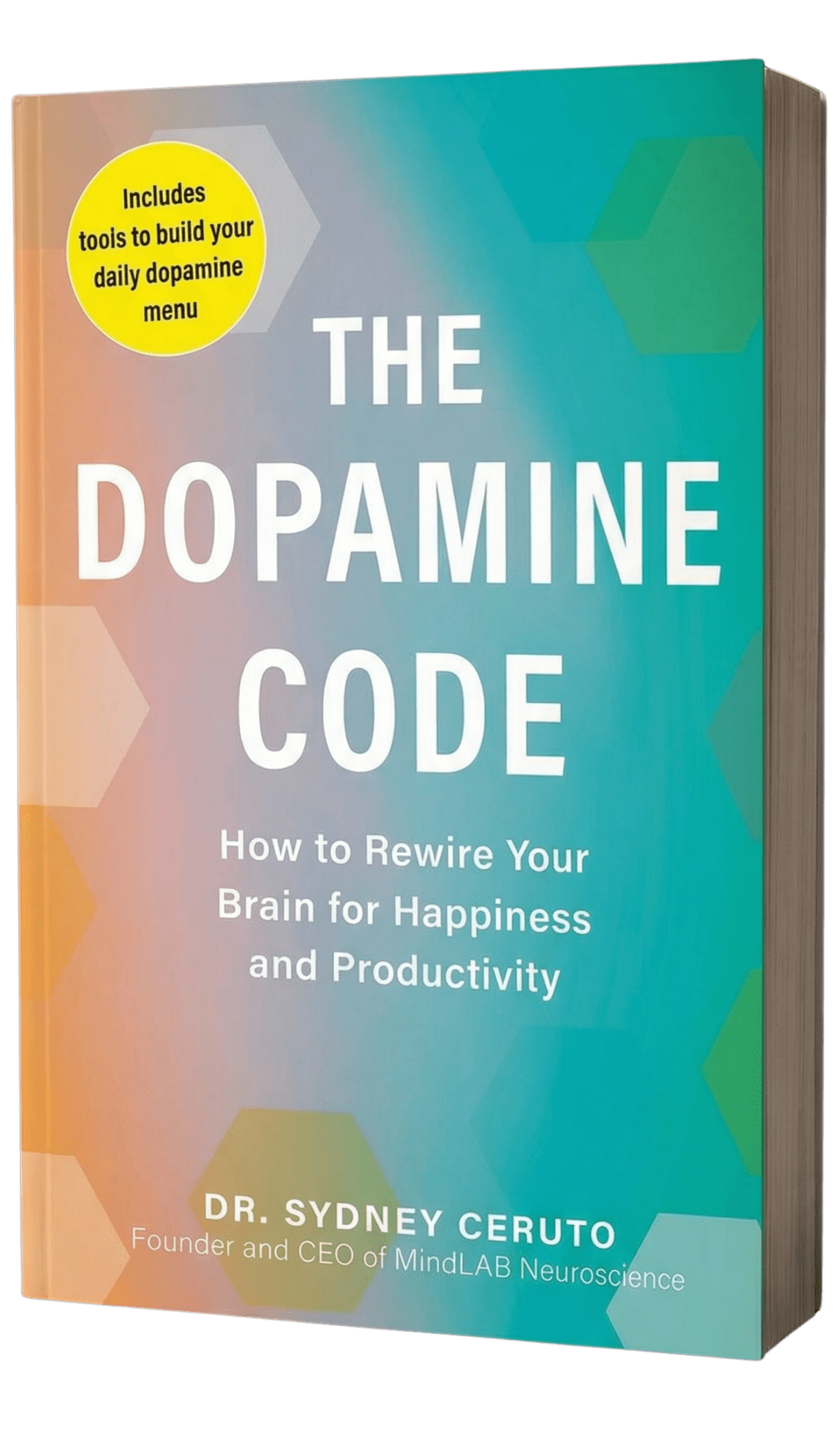
The Dopamine Code

Decode Your Drive

Why Your Brain Rewards the Wrong Things

Your brain's reward system runs every decision, every craving, every crash — and it was never designed for the life you're living. The Dopamine Code is Dr. Ceruto's framework for understanding the architecture behind what drives you, drains you, and keeps you locked in patterns that willpower alone will never fix.

Published by Simon & Schuster, The Dopamine Code is Dr. Ceruto's framework for building your own Dopamine Menu — a personalized system for motivation, focus, and enduring life satisfaction.

Order Now

Ships June 9, 2026

The Dopamine Code by Dr. Sydney Ceruto — Decode Your Drive
Locations

The Intelligence Brief

Neuroscience-backed analysis on how your brain drives what you feel, what you choose, and what you can’t seem to change — direct from Dr. Ceruto.