The Performance Plateau
“You still perform at a level that looks competent from the outside, but internally the machinery feels different — slower, less certain, more effortful where it used to be fluid. That shift is not motivational. It is biological.”
You know what high performance feels like. You have experienced it — the quarter where everything connected, the presentation that landed with precision, the period where decisions came easily and results followed. And then it stopped. Not dramatically, not through any identifiable failure, but through a gradual compression of the gap between your capability and your output. The inconsistency is what makes it maddening. You are the same person with the same skills, yet the results fluctuate in ways that neither effort nor strategy can reliably predict.
The standard explanations do not satisfy. You are not burned out in any conventional sense. You are not lacking motivation. The performance frameworks you have studied and the development programs you have completed have given you tools that work under controlled conditions. But under the sustained pressure of quarterly cycles, high-visibility presentations, and continuous evaluation, something in the machinery does not hold.
What compounds the frustration is observation-dependent performance variability. You notice that you perform differently when directly observed than when working independently. The pitch to the senior partner feels different than the rehearsal. The quarterly review preparation carries a weight that distorts execution. The gap between private capability and public output is not a confidence problem in the way that word is typically used. It is a biological phenomenon with identified neural mechanisms.
The professionals who arrive at this recognition are the professionals for whom neuroscience-based advisory produces the most significant change.
The Neuroscience of Performance
Performance is not a behavioral output. It is a biological event generated by specific neural systems that can be identified, measured, and recalibrated.
The first mechanism is self-efficacy architecture. Self-efficacy is the brain’s prior probability estimate of successful execution before attempting a challenge. Research has shown that self-efficacy is physically encoded in brain regions involved in self-awareness, memory, and skill acquisition. It is not a mindset. It is a measurable brain structure.
The second mechanism is the dopamine reward prediction circuit. Dopamine neurons do not simply respond to rewards — they respond to the difference between predicted and received reward. When an outcome exceeds prediction, dopamine neurons fire strongly, producing a positive prediction error that drives learning and approach behavior. When an outcome falls short, dopamine activity is suppressed, producing a negative prediction error that drives avoidance. When outcome exactly matches prediction, there is no dopamine response at all.
The pattern that presents most often in this work is professionals whose prediction architecture has been systematically miscalibrated by corporate evaluation environments. Those who set safe targets generate zero neurological reinforcement from predictable success. Those who chronically fall short of stretch targets generate sustained negative prediction errors that progressively suppress the dopamine system driving motivated performance. The ceiling is not strategic. It is a prediction-error miscalibration that no behavioral framework can detect or correct.
The third mechanism is error processing architecture. Research demonstrated that a growth-oriented processing style is associated with enhancement of a specific neural signal reflecting conscious awareness of and attention to errors. This signal mediates the relationship between processing style and post-error accuracy. Individuals with fixed error-response patterns showed weaker neural processing of mistakes and less adaptive behavioral corrections on subsequent attempts. In high-stakes corporate environments with semi-annual review architecture, a negative evaluation triggers threat responses that suppress the neural flexibility required for the adaptive improvement the review was designed to produce.
How Dr. Ceruto Approaches Performance Improvement
Dr. Ceruto’s methodology treats performance not as a behavioral output to be modified but as a biological system to be calibrated with precision.
The process begins with a neurological assessment of the individual’s performance architecture. Rather than administering competency profiles or behavioral assessments, Dr. Ceruto maps the specific circuits generating the performance pattern. This includes self-efficacy encoding in the brain’s learning and planning regions, dopamine reward prediction calibration, error-response architecture in the brain’s conflict-monitoring center, and the balance between intrinsic reward-seeking and extrinsic threat-avoidance circuitry.
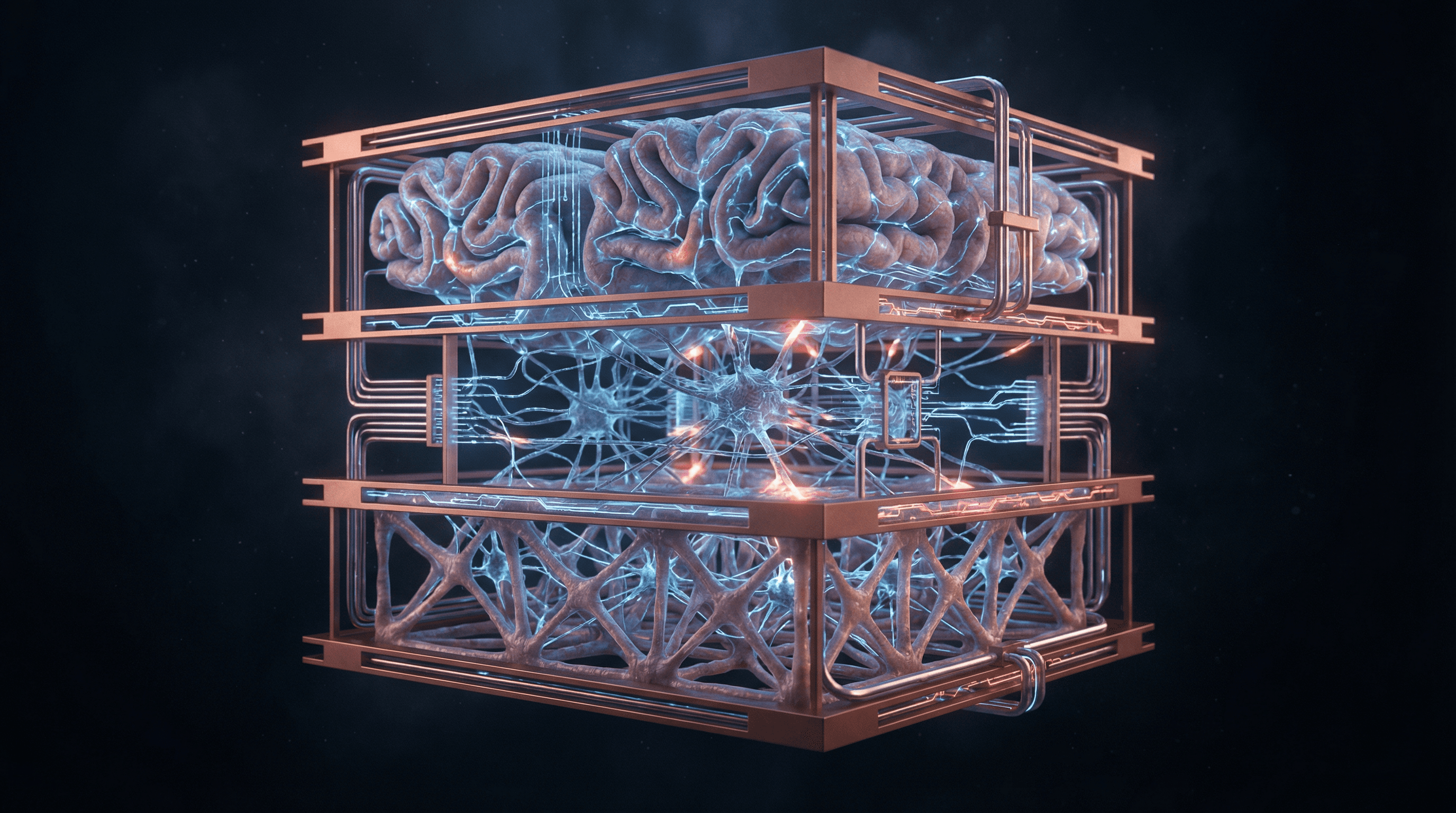
Real-Time Neuroplasticity™ then applies targeted interventions to recalibrate identified deficits. If self-efficacy architecture is structurally pessimistic relative to actual capability, the intervention targets the circuits encoding those estimates. If the dopamine prediction system has been suppressed by sustained negative prediction errors from corporate evaluation cycles, the protocol recalibrates prediction architecture to generate the neurological conditions for continuous reinforcement of improvement.
For professionals navigating sustained, multi-domain performance demands, NeuroConcierge™ provides embedded partnership across an extended engagement arc. For a specific performance bottleneck, NeuroSync™ delivers focused recalibration with defined scope.
In over two decades of neuroscience practice, the distinction between behavioral surface and neural substrate is the distinction that determines whether performance change is temporary or permanent. Dr. Ceruto operates at the substrate.
What to Expect
The engagement begins with a Strategy Call — a structured strategy conversation where Dr. Ceruto assesses the performance context and identifies which neural systems are most likely producing the ceiling.
Following the Strategy Call, the professional undergoes neurological baseline assessment targeting performance architecture — self-efficacy encoding, dopamine calibration, error-response patterns, and intrinsic-extrinsic motivation circuit balance. This produces a precise biological map of why performance is constrained.
Protocol design then targets identified mechanisms through structured, spaced sessions calibrated to neuroplasticity timing rules. Progress is measured through observable shifts in performance consistency, error-response adaptivity, and output quality under the real-world conditions where the ceiling previously appeared.
The intervention is precise, individualized at the circuit level, and designed to produce performance change that persists because the neural architecture generating performance has been structurally recalibrated — not temporarily motivated.
References
Chihiro Hosoda, Satoshi Tsujimoto, Masaru Tatekawa, Manabu Honda, Rieko Osu, Takashi Hanakawa (2020). Frontal Pole Cortex Neuroplasticity and Goal-Directed Persistence. Communications Biology. https://doi.org/10.1038/s42003-020-0930-4
Noriya Watanabe, Jamil P. Bhanji, Hiroki C. Tanabe, Mauricio R. Delgado (2019). vmPFC Controls Performance Success by Suppressing Reward-Driven Arousal. NeuroImage.
Simon Dunne, Vikram S. Chib, Joseph Berleant, John P. O’Doherty (2018). Reappraisal of Incentives Eliminates Choking Under Pressure via Ventral Striatum Recalibration. Social Cognitive and Affective Neuroscience.
Lindsay Willmore, Courtney Cameron, John Yang, Ilana B. Witten, Annegret L. Falkner (2022). Dopaminergic Signatures of Resilience: NAc DA Differentiates Sustained Performers from Non-Performers. Nature. https://doi.org/10.1038/s41586-022-05328-2
The Neural Architecture of Performance
Performance is not a behavior. It is a state — a specific configuration of neural systems that determines what you are capable of producing at any given moment. Most performance improvement efforts treat the output without touching the state that generates it, which is why the improvements they produce are temporary and context-dependent.
At the neurological level, sustained high performance depends on the coordinated function of three systems: the prefrontal executive network, which governs goal maintenance and impulse regulation; the dopaminergic motivation circuit, which drives the effort required to close the gap between current state and desired outcome; and the default mode network, which is responsible for the mental simulation and self-referential processing that allow you to learn from experience and project into future scenarios. When these three systems are aligned and adequately resourced, performance appears almost automatic. When any one of them is depleted, dysregulated, or operating at cross-purposes with the others, the output degrades in ways that are immediately visible but whose causes are rarely obvious from the outside.
The prefrontal network is particularly sensitive to chronic cognitive load. High-performing individuals carry enormous amounts of unresolved decision weight — open loops, deferred choices, unprocessed outcomes — that occupy working memory bandwidth without producing any useful output. This load does not feel like a problem in the moment. It feels like being busy. But the cumulative effect is a measurable narrowing of attentional flexibility, reduced capacity for creative problem-solving, and a gradual shift toward reactive rather than proactive behavior. The person is still performing. They are simply performing below their actual ceiling, and they have been doing it long enough that they have forgotten the ceiling exists.
The dopaminergic circuit introduces a different set of constraints. Motivation at the neural level is prediction-based: the system fires in response to expected reward signals, not actual ones. When the gap between effort and visible progress becomes too large — when results feel uncoupled from action — the motivation circuit begins to disengage. This is not weakness. It is the brain operating exactly as designed, conserving resources in response to a perceived low-return environment. Correcting it requires changing the prediction model, not exhorting yourself to try harder.
Why Traditional Performance Improvement Falls Short
Conventional performance improvement consulting tends to operate in one of two registers: behavioral and systemic. Behavioral approaches focus on habits, routines, and disciplines — the visible actions that high performers take. Systemic approaches focus on structures, incentive alignment, and process design. Both have genuine value. Neither addresses the neural substrate that determines whether the behaviors will actually be executed, whether the structures will be used as designed, or whether the person at the center of the system will have the cognitive and motivational resources required to perform at the level the system assumes.
The result is a familiar pattern: the consulting engagement produces a well-designed plan, the client implements it with genuine commitment, and within three to six months the improvements have eroded. Not because the plan was wrong. Not because the client lacked discipline. But because the brain that was supposed to execute the plan was operating under the same constraints that produced the performance gap in the first place, and no one addressed those constraints directly.

Performance improvement that does not reach the neural level is renovation without structural repair. You can resurface the floor, repaint the walls, and replace the fixtures — but if the foundation has shifted, the renovation does not hold.
How Neural-Level Performance Restructuring Works
My approach begins with a precise diagnostic of the specific neural systems that are limiting performance for this individual, in this context, at this moment. Performance gaps are not generic. A CEO whose output is constrained by prefrontal overload presents differently from one whose dopaminergic motivation circuit has been blunted by a sequence of misaligned incentives, and both present differently from the individual whose performance is limited by a default mode network that generates catastrophic simulations in the absence of sufficient positive feedback. The intervention must be calibrated to the actual constraint.
For prefrontal load, the work involves systematic reduction of open cognitive loops — not through time management techniques, but through protocols that allow the brain’s executive system to release working memory resources by achieving genuine closure on pending decisions, rather than merely deferring them. For motivational circuit recalibration, the work involves restructuring the relationship between effort and feedback so that the prediction model the brain uses to allocate energy is receiving accurate, high-resolution information about the progress that is actually occurring. For default mode dysregulation, the work involves directed neuroplasticity practices that reshape the content and valence of the self-referential simulations the brain runs automatically in the background of every waking hour.
Each protocol is applied within the specific professional context of the individual — the actual decisions they face, the actual pressures they navigate, the actual performance domains where the gap is visible. This is not generic coaching. It is precision restructuring calibrated to a specific human nervous system in a specific operational environment.
What This Looks Like in Practice
Clients typically notice two categories of change. The first is a reduction in friction — the sense that things that used to require significant effort now come more readily. Decisions that previously consumed extended deliberation resolve more cleanly. Creative output that required sustained forcing now arrives with less resistance. The experience is not of working harder, but of the work matching the effort invested in a way it had not been doing before.
The second category is a shift in ceiling. When the neural systems that govern performance are operating at higher baseline function, the absolute upper limit of what the person can produce in their best moments increases. This is what separates performance improvement at the neural level from performance improvement at the behavioral level: behavioral improvements raise the floor; neural restructuring raises the ceiling.
We begin with a strategy call — one hour of precise strategy conversation that maps the specific constraints on your current performance and identifies the restructuring pathway that will produce the most significant and durable change. No generic frameworks. No borrowed best practices. A precise protocol built around the actual architecture of your performance system.
For deeper context, explore dopamine and workplace performance improvement.