The Authenticity Problem
“Your personal brand is not what you say about yourself — it is the neurological signature you transmit in every interaction. When your internal state and external presentation are misaligned, sophisticated audiences detect the gap before you have finished your opening sentence.”
The personal branding industry is built on a premise that sounds reasonable but collapses under neuroscience scrutiny: that you can construct a professional identity from the outside in. Define your message. Craft your narrative. Optimize your LinkedIn. Secure media placements. Build a content cadence. Project authority.
The execution is often sophisticated. The problem is that it starts at the wrong layer.
You have likely experienced this already. A branding consultant helped you articulate a positioning statement. A PR firm placed you in industry publications. A LinkedIn strategist built a content schedule. And despite the quality of the external work, something does not align. The brand feels performative. The thought leadership feels forced. The public narrative you project and the private sense of who you actually are do not converge.
This is not a creativity problem or a strategy problem. It is a neural architecture problem. The brain constructs and maintains professional identity through specific, identifiable systems — and when those systems are not consolidated, every external branding effort built on top of them inherits the incoherence.
The professionals who notice this gap most acutely are often the most accomplished. They have spent decades inside powerful institutions where identity was supplied by the organization — JPMorgan, McKinsey, Pfizer, Goldman Sachs. The institutional brand became their identity anchor, reinforced daily through title, compensation, social context, and professional community. When the moment arrives to build an individual brand — for a board appointment, a lateral move, a venture launch, or a thought leadership platform — the neural architecture of individual identity has not been constructed. It has been subsumed.
What I see repeatedly in this work is senior professionals who can describe what they want their brand to convey but cannot locate the internal architecture from which authentic brand expression would naturally emerge. The description comes from strategic analysis. The architecture comes from the brain’s self-concept system. They are not the same thing.
The Neuroscience of Professional Identity
Professional identity — the substrate from which any authentic personal brand must emerge — is maintained by three interlocking neural systems.
The first is the medial prefrontal cortex — the brain’s executive control center —’s self-concept encoding function. Functional MRI with representational similarity analysis across two experiments demonstrates that the mPFC does not merely register which traits are self-descriptive. It encodes which traits are self-important — which attributes the brain treats as central to identity versus peripheral. Neural populations within the mPFC are each differently sensitive to how personally central incoming information is. This finding explains why externally imposed branding often feels inauthentic: it projects attributes that may be market-validated but are not neurally encoded as self-important. The brand looks right on paper and feels wrong in practice because the mPFC did not generate it.
The second system is autobiographical reasoning. the cognitive process of deriving meaning from self-defining career experiences — not just remembering them — recruits a left-lateralized network anchored by the dorsal medial prefrontal cortex (Brodmann areas 8, 9, and 10). This network is distinct from simple memory retrieval. Critically, individuals with higher dispositional self-reflection showed greater ventral mPFC engagement during reasoning, suggesting that the capacity for deep professional self-analysis has a measurable neural correlate.
This is the system that transforms a career history into a coherent narrative. Without this autobiographical reasoning process, professionals default to resume-style positioning — “twenty years in finance” — rather than identity-grounded narrative that communicates who they are and what they stand for. The distinction between listing experience and constructing meaning is a mPFC function.
The Narrative Architecture of Self
The third mechanism is the default mode network — the brain’s self-referential thought system —’s narrative integration function. Vinod Menon’s landmark synthesis in 2023 established that the DMN — Default Mode Network, the brain’s self-referential system — integrates memory, language, and semantic representations to produce a coherent internal narrative reflecting individual experience. Menon describes this as the brain’s “epistemic self.” Core DMN nodes critical to this narrative function include the medial PFC, the posterior cingulate cortex, and the left angular gyrus. Disruptions to this narrative — through identity transitions, institutional departure, or the accumulated fragmentation of a career that evolved reactively rather than deliberately — produce the coherence loss that conventional branding strategies cannot address.
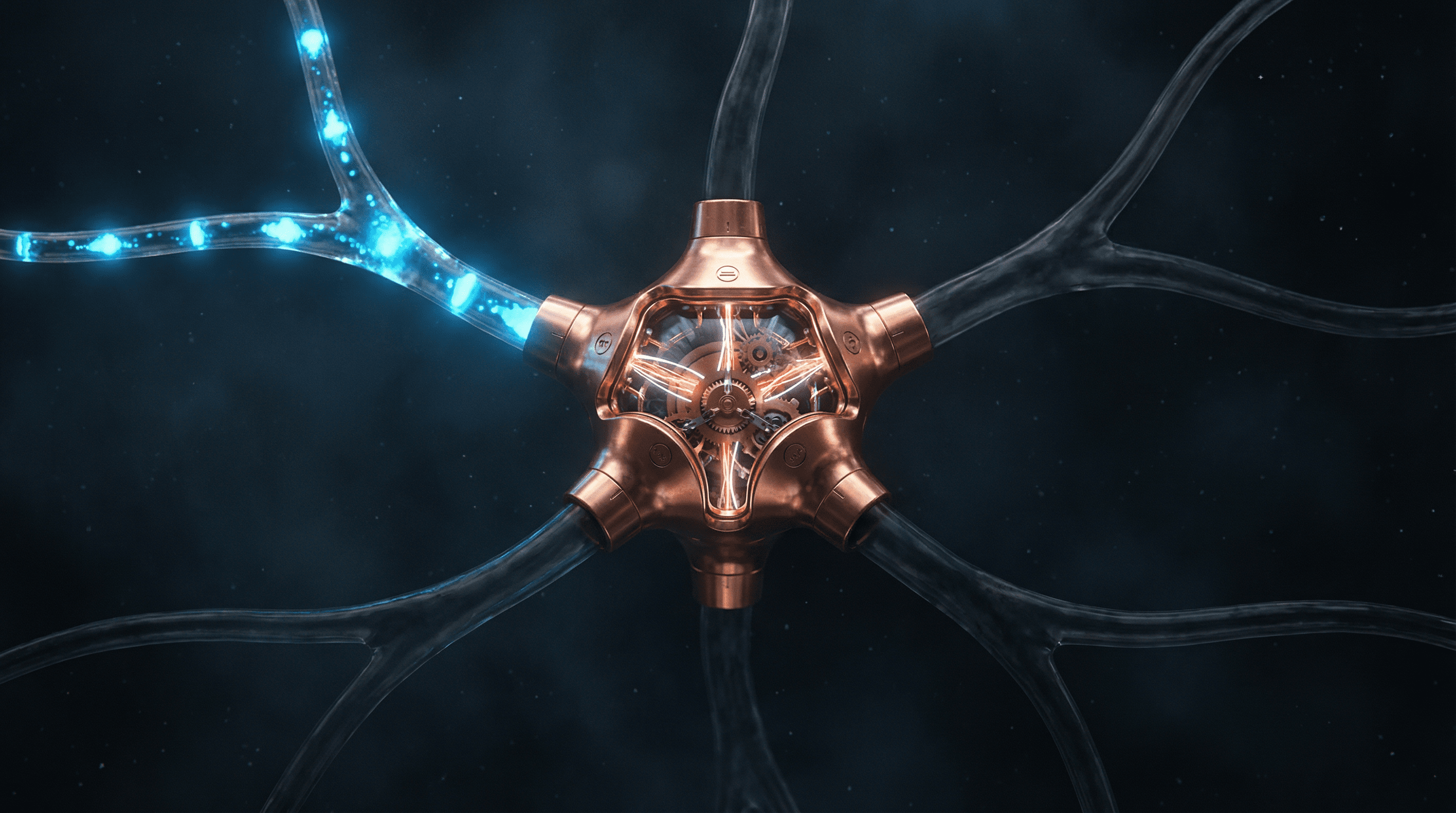
The implication is direct: a personal brand built on a fragmented DMN narrative will be fragmented. A personal brand built on a consolidated DMN narrative will be coherent. The neural architecture determines the brand’s authenticity ceiling, regardless of how skilled the external strategist is.
How Dr. Ceruto Approaches Personal Branding
Dr. Ceruto’s methodology reverses the conventional sequence. Instead of building a brand strategy and hoping it aligns with identity, she begins at the neural identity architecture and builds the brand from there.
Real-Time Neuroplasticity — the brain’s ability to rewire itself —(TM) applied to personal branding starts with mapping the mPFC’s self-importance encoding. This identifies which professional attributes, values, and strengths the brain actually treats as central to identity. This is different from what a branding consultant would surface through interview questions, because conscious self-report does not reliably track neural self-importance weighting. The divergence between what an executive says matters to them and what the mPFC encodes as self-important is often where the authenticity breakdown originates.
The second phase engages the DMN’s narrative integration function — helping the professional construct a coherent self-narrative from career experiences that may have been accumulated reactively. My clients describe this as the difference between having a story they tell others and having a story they actually recognize as theirs. The neural distinction is between scripted narrative and autobiographically reasoned narrative, and it is detectable in how the brand lands with audiences.
Through the NeuroSync(TM) program, Dr. Ceruto works with professionals addressing focused personal branding questions. These include building a thought leadership platform, preparing for board-level visibility, or constructing an individual identity during a transition away from institutional brand dependence. For professionals whose personal branding needs are interwoven with broader career transitions, identity pressures, and high-stakes demands, the NeuroConcierge(TM) program provides a comprehensive partnership. It addresses building authority while maintaining current responsibilities and handles the full complexity simultaneously.
The outcome is a professional brand that feels consistent because it is neurally integrated — not because it has been scripted.
What to Expect
The engagement begins with a Strategy Call. This is a focused conversation where Dr. Ceruto evaluates your professional context, the specific branding question you are navigating, and whether neuroscience-based identity work is the appropriate foundation.
The protocol moves from neural identity mapping through structured consolidation of the self-concept architecture and into the translation of that architecture into professional brand expression. Each phase is personalized to your career history, current professional context, and the specific authority or visibility goals you are pursuing.
This is not a branding exercise followed by a deliverables package. It is structural identity work that produces durable brand coherence — the kind that does not require constant maintenance because it originates from consolidated neural architecture rather than external strategy.
References
Michela Balconi, Laura Angioletti, Davide Crivelli (2020). Neuro-Empowerment of Executive Functions in the Workplace: Direct Evidence from Managers. Frontiers in Psychology. https://doi.org/10.3389/fpsyg.2020.01519
Vinod Menon (2023). The DMN: 20 Years of Self-Reference, Identity, and Autobiographical Memory. Neuron. https://doi.org/10.1016/j.neuron.2023.04.023
Verity Smith, Daniel J. Mitchell, John Duncan (2018). DMN in Cognitive and Contextual Transitions. Cerebral Cortex. https://doi.org/10.1093/cercor/bhy167
Anna-Lena Lumma, Sofie L. Valk, Anne Böckler, Pascal Vrtička, Tania Singer (2018). Training-Induced Self-Concept Change and Structural Plasticity of the Prefrontal Cortex. Brain and Behavior. https://doi.org/10.1002/brb3.940
The Neural Architecture of Perceived Authority
Personal branding is not, at its core, a communication problem. It is a perception problem — and perception is generated entirely within the nervous systems of other people. Understanding how those nervous systems construct impressions of expertise, authority, and trustworthiness reveals why most personal branding advice produces the opposite of its intended effect.
When someone encounters your work, your presence, or your name for the first time, their brain runs an almost instantaneous credibility evaluation using two parallel processing streams. The fast stream — operating through the amygdala and the orbitofrontal cortex — generates an initial evaluative response in milliseconds, before conscious analysis has begun. This response is pattern-based: it compares available signals against stored representations of competence and trustworthiness and returns a rapid rating that will color everything that follows. The slow stream — operating through the prefrontal cortex — then applies deliberate evaluation to the content and logic of what you are saying. But the critical finding from social neuroscience is that this slow stream rarely overrides the fast one. It mostly generates post-hoc rationalizations for the rapid initial impression.
This means that the content of what you communicate — the quality of your ideas, the depth of your expertise, the rigor of your analysis — is being evaluated through a perceptual frame that was set before the content was encountered. If the fast evaluation system has already generated a credibility signal, the content will be received through that frame. If it has generated a low-credibility signal, the same content will be discounted, misread, or simply ignored. Most personal branding work focuses almost exclusively on the content layer while leaving the fast evaluation layer unaddressed.
What the fast evaluation system responds to is coherence — the degree to which every available signal about a person maps onto a consistent internal representation of who they are, what they know, and what they stand for. Incoherence — signals that are inconsistent, ambiguous, or contradictory — triggers uncertainty, and uncertainty triggers caution. Coherence triggers the recognition response that underlies perceived authority.

Why Conventional Personal Branding Strategies Fall Short
Standard personal branding guidance focuses on external artifacts: the professional headshot, the LinkedIn summary, the content strategy, the speaker reel. These elements matter. But they are outputs of a brand identity, not the identity itself. When the underlying identity is unclear — when you have not achieved genuine precision about what you represent, who you are for, and what problem your presence in the world solves — no amount of professional photography or content production will generate the coherence that perceived authority requires.
The deeper problem is that most people approach personal branding as a positioning exercise rather than an identity clarification exercise. Positioning asks: how do I want to be perceived? Identity clarification asks: what is actually true about how I think, what I value, and what I am uniquely capable of that no one else in my field can replicate? Positioning without identity clarification produces a brand that is technically well-constructed but fundamentally hollow — and sophisticated audiences, including the fast evaluation systems of the people you most need to impress, detect that hollowness immediately.
How Neural-Level Brand Clarity Works
My work in this domain begins with identity excavation — a rigorous process of mapping the specific cognitive and perceptual architecture that makes you genuinely distinctive. Not the surface-level differentiators that appear on a comparison chart with your competitors, but the deep structural patterns in how you think, how you see problems, what you notice that others miss, and what you are willing to say that others in your field are not. These are the actual foundations of a brand that generates the coherence response in other people’s nervous systems.
From this foundation, we build outward to the communication layer — developing a precise vocabulary for what you do and what it produces that is specific enough to generate recognition in the people you want to reach and simple enough to be retained and repeated. This is not a messaging exercise. It is a translation exercise: converting internal clarity into external signals that the fast evaluation systems of your target audience can read accurately and rapidly.
The final layer is presence — the constellation of behavioral and environmental signals that communicate your identity in real time, across contexts, without conscious effort. This includes how you frame questions, what you choose to comment on publicly, which opportunities you decline and which you accept, and how you carry yourself in high-stakes interactions. Presence, at this level, is not performance. It is the external expression of genuine internal coherence.
What This Looks Like in Practice
The work tends to produce two visible outcomes. First, a sharpening: clients find that they can articulate what they do and why it matters with a clarity and specificity they did not previously have. The language becomes more precise, the examples more illustrative, and the overall communication more efficient. The people who encounter their work know immediately whether it is relevant to them — which means the right people engage more readily and the wrong people self-select out earlier.
Second, a consistency: the brand stops requiring maintenance. When your external signals are expressions of genuine internal clarity rather than deliberate constructions, they stay coherent across contexts without effort. You do not have to remember your positioning because you are simply being who you actually are, expressed with greater precision than before.
The strategy session — for one hour — functions as a strategy conversation that identifies the specific elements of your identity that are ready to be translated into brand signals, and the elements that require further clarification before they can be communicated with precision. We leave with a clear map of what is working, what is not, and what the restructuring pathway looks like.
For deeper context, explore neuroplasticity and personal brand growth.