Relapse Prevention & Pattern Breaking in Midtown Manhattan

In Midtown's creative ecosystem, every professional event is a trigger environment. Behavioral interrupt strategies aren't built for that density.

You broke the pattern. You know you did — there was a period, maybe a long one, when the loop simply was not running. And then it came back. Not gradually, but with the same pull, the same momentum, the same familiar quality it had before you stopped. That experience is not a moral failure. It is a neural one, and understanding the difference changes what the work looks like.

The compulsive loop does not disappear when behavior stops. It goes quiet. The underlying neural structure — the circuits that encoded the pattern, the environmental cues that activate them, the memory systems that hold the reward association — remains intact during every period of abstinence or behavioral change. When the right trigger arrives, the brain does not start learning a new pattern. It finishes executing the one it already holds. Understanding this mechanism is not the same as working with it. But it is where the work has to begin.

Book a Strategy Call

Key Points

  1. When any of those cues is re-encountered, the circuit activates — not as a faint reminder, but as a full expression of the encoded pattern.
  2. The brain does not need the original cue to find its way back to the original pattern.
  3. When you walk into the bar where you used to drink, the brain does not encounter a temptation.
  4. The most significant thing I can tell someone who has relapsed is this: the experience of returning to a pattern after genuine behavioral change is not evidence that you failed.
  5. The hippocampus — the brain's primary memory consolidation structure — encodes compulsive patterns with unusual stability.
  6. The circuits that hold compulsive patterns are encoded in association with the specific sensory context in which the behavior occurred: physical locations, social environments, emotional states, visual inputs, even time-of-day patterns.
  7. That information is the starting point for work that addresses the pattern at the level where it actually lives — in the neural memory that behavioral interruption alone cannot reach.

Why Breaking the Pattern Once Is Not Enough

“The alternative frame — that relapse means something about your character, your strength, or your commitment — is not only inaccurate.”

The experience of relapse is consistent across patterns: you made real change, lived differently for a period that felt meaningful, and then returned — sometimes within hours of re-encountering the right cue. This consistency is not coincidence. It reflects a specific property of how the brain stores compulsive loops.

The hippocampus — the brain’s primary memory consolidation structure — encodes compulsive patterns with unusual stability. High-frequency, high-emotion, and high-reward behaviors are written into memory architecture with a depth that ordinary behavioral interruption does not reach. When the behavior stops, the memory does not. It remains encoded, dormant, fully available for retrieval when the right contextual signal arrives.

This is the core of what neuroscientists describe as memory reconsolidation — the process by which stored memories are briefly rendered unstable when retrieved, then re-stabilized in their updated form. Compulsive loops that are interrupted without being neurologically updated simply reconsolidate in their original form. The circuit that learned the pattern is still intact. Stopping the behavior is not the same as updating the circuit. It is the difference between behavioral interruption and structural neural change.

The Reconsolidation Problem

Here is what most people experience without having a name for it: the craving that arrives years after stopping, triggered by something specific — a location, a smell, a social context, a particular quality of emotion — and feels exactly as it did when the loop was active. That is reconsolidation. The memory circuit was retrieved by the cue, and in the moment of retrieval, it re-expressed itself with the same intensity as when it was originally encoded.

Environmental cues are the primary driver of this dynamic. The brain’s memory architecture is deeply contextual. The circuits that hold compulsive patterns are encoded in association with the specific sensory context in which the behavior occurred: physical locations, social environments, emotional states, visual inputs, even time-of-day patterns. When any of those cues is re-encountered, the circuit activates — not as a faint reminder, but as a full expression of the encoded pattern. The nucleus accumbens — the brain’s reward-salience system — fires in response to cues associated with past reward before any conscious decision has been made. The pull arrives before the thought does.

This is why the person who moves cities, changes relationships, or restructures their life to escape the pattern is still vulnerable. The cue set may be partially different. But cue generalization — the brain’s capacity to recognize abstract patterns in environmental signals — means that cues in the new environment can activate circuits encoded in the old one. A certain kind of tension. A social dynamic that resembles a familiar one. An emotional state that previously preceded the loop. The brain does not need the original cue to find its way back to the original pattern. It needs a cue that resembles it.

The Difference Between Interruption and Change

Behavioral interruption is what most approaches to pattern-breaking accomplish. The behavior stops, often through external accountability, environmental restriction, or sustained willpower. In the short term, this works. In the longer term, it leaves the underlying circuit intact — and places the entire weight of prevention on the behavioral layer, which is the most easily overwhelmed layer the brain has.

Willpower is a prefrontal cortex resource. It is finite, depletes under stress and sleep deprivation, and is precisely the resource most compromised by the high-arousal states that typically precede compulsive loop activation. Asking someone to use their most depletable resource to override their most reinforced neural circuit is not a strategy for durable change. It is a strategy for holding the pattern at bay until the right conditions return.

Structural neural change requires something different: reaching the circuit at the moment of reconsolidation — when the memory is retrieved and briefly labile — and providing a different experience or association that updates the encoding before it re-stabilizes. This is not about replacing the pattern with a better habit. It is about updating the neural memory that the compulsive loop is built on. The distinction matters because it changes both the target and the method of the work.

What Triggers Are Actually Doing

A trigger is not a test of resolve. It is a retrieval cue for a specific neural memory. When you walk into the bar where you used to drink, the brain does not encounter a temptation. It encounters a context that is indexically associated with a specific learned sequence: cue — craving — behavior — relief. The hippocampus retrieves the full episodic memory of that sequence. The nucleus accumbens fires the reward salience signal attached to it. The body begins preparing for the behavior before any part of the conscious mind has decided anything.

Understanding this does not remove the pull. But it reframes what the pull means. The craving in the trigger environment is not evidence that the change was not real, not durable, or not yours. It is evidence that the encoding is intact. And intact encoding, unlike broken resolve, is something that can be worked with at the level of the neural system itself.

Environmental triggers for substance and behavioral patterns can remain active for years after behavioral interruption. The circuits do not decay from disuse the way motor skills or vocabulary degrade when unused. They are held in long-term memory with the same stability as any other significant emotional memory. This is not pessimism — it is the accurate map. And an accurate map is the only way to navigate the territory.

The Neuroscience of Lasting Change

Durable pattern change happens when the compulsive circuit is neurologically updated — not suppressed, bypassed, or managed, but changed at the encoding level. This requires working with the memory reconsolidation window: the period following cue-triggered retrieval during which the circuit is briefly unstable and open to update.

The work I do at MindLAB targets this window precisely. It identifies the specific encoding structure of the compulsive loop — the cue associations, the emotional architecture of the craving state, and the relief mechanism the loop was providing — and creates the conditions for structural updating during reconsolidation. The goal is not a person who successfully resists the pattern each day. It is a person whose brain no longer generates the compulsion at the same intensity when the original cue arrives. That is what lasting change looks like neurologically — not permanent vigilance, but updated circuitry.

The work begins with a strategic assessment: what the pattern is, when it consolidates most strongly, what the cue architecture looks like in your specific life, and where the behavioral interruption approaches you have used fell short. From that map, the structural work can proceed.

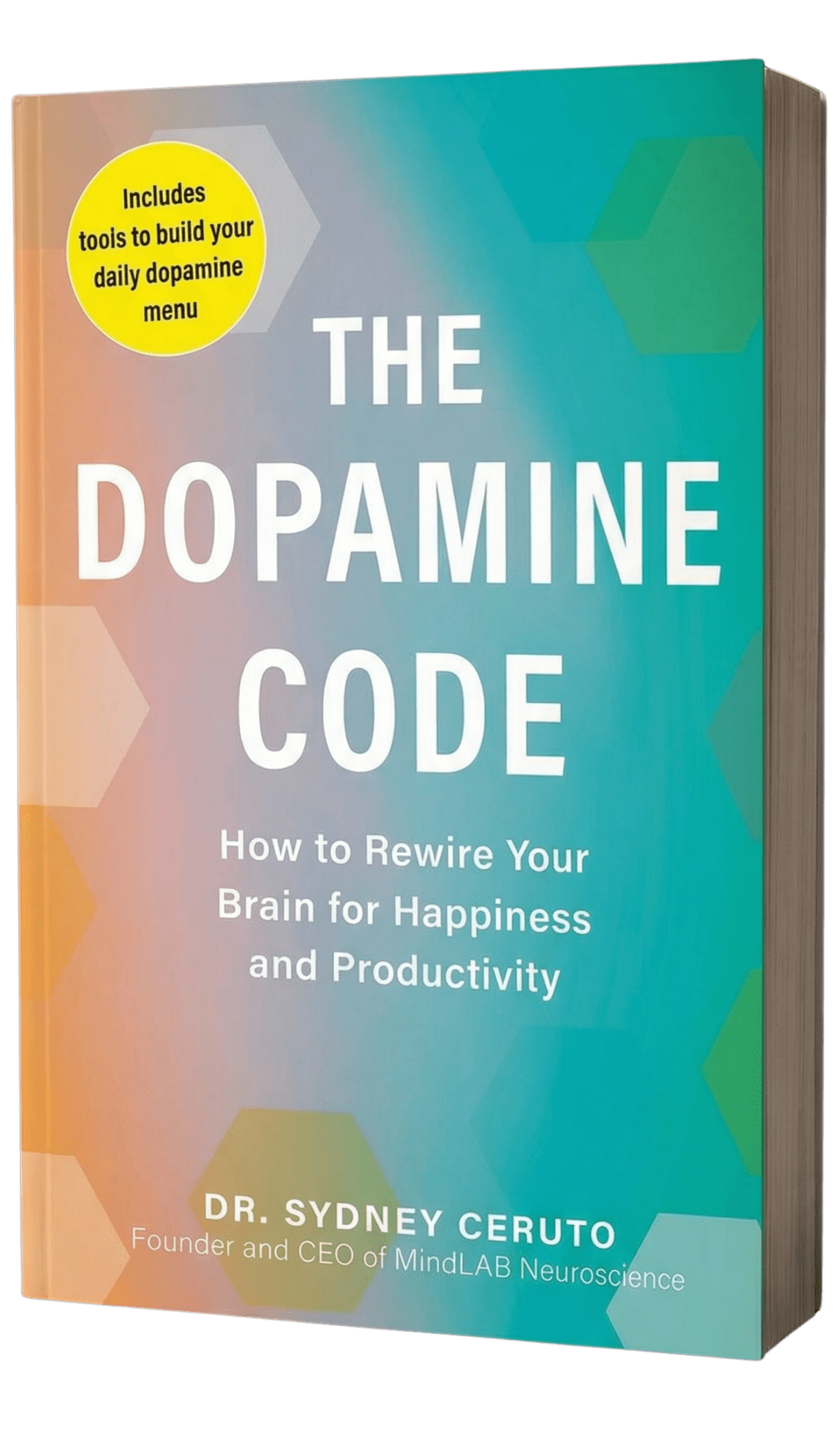
The neuroscience of dopamine-driven compulsive loops — including the reconsolidation mechanisms that make them resistant to behavioral interruption alone — is covered in depth in my forthcoming book The Dopamine Code (Simon & Schuster, June 2026). Chapter 9 addresses strategic reset protocols and the specific conditions under which reconsolidation-based change becomes possible. Learn more.

Walnut credenza with crystal brain sculpture and MindLAB journal in diffused dusk light suggesting high-floor Midtown Manhattan private office

Relapse Is Not Failure

The most significant thing I can tell someone who has relapsed is this: the experience of returning to a pattern after genuine behavioral change is not evidence that you failed. It is evidence that your brain is doing exactly what it learned to do. The encoding was not addressed. The circuit is intact. Reconsolidation occurred when the cue arrived, exactly as the neuroscience predicts it would.

The alternative frame — that relapse means something about your character, your strength, or your commitment — is not only inaccurate. It is actively counterproductive. Shame and self-blame are high-arousal emotional states. High-arousal emotional states are precisely the conditions under which compulsive circuits activate most readily. The judgment that follows relapse creates the emotional substrate for the next one.

What the relapse does reveal is where the encoding is. The circuit fired. The cue activated it. The reconsolidation occurred. That information is the starting point for work that addresses the pattern at the level where it actually lives — in the neural memory that behavioral interruption alone cannot reach.

Marker What You Experience What's Happening Neurologically What We Restructure
Breaking the Pattern Once Is The experience of relapse is consistent across patterns: you made real change, lived differently for a period that felt meaningful, and then returned — sometimes within hours of re-encountering the right cue. It reflects a specific property of how the brain stores compulsive loops. The experience of relapse is consistent across patterns: you made real change, lived differently for a period that felt meaningful, and then returned — sometimes within hours of re-encountering the right cue.
Reconsolidation Problem The memory circuit was retrieved by the cue, and in the moment of retrieval, it re-expressed itself with the same intensity as when it was originally encoded. The nucleus accumbens — the brain's reward-salience system — fires in response to cues associated with past reward before any conscious decision has been made. This is why the person who moves cities, changes relationships, or restructures their life to escape the pattern is still vulnerable.
Difference Between Interruption and Change The behavior stops, often through external accountability, environmental restriction, or sustained willpower. In the longer term, it leaves the underlying circuit intact — and places the entire weight of prevention on the behavioral layer, which is the most easily overwhelmed layer the brain has. The distinction matters because it changes both the target and the method of the work.
Triggers Are Actually Doing When you walk into the bar where you used to drink, the brain does not encounter a temptation. The nucleus accumbens fires the reward salience signal attached to it. The craving in the trigger environment is not evidence that the change was not real, not durable, or not yours.
Neuroscience of Lasting Change The work begins with a strategic assessment: what the pattern is, when it consolidates most strongly, what the cue architecture looks like in your specific life, and where the behavioral interruption approaches you have used. Durable pattern change happens when the compulsive circuit is neurologically updated — not suppressed, bypassed, or managed, but changed at the encoding level. Chapter 9 addresses strategic reset protocols and the specific conditions under which reconsolidation-based change becomes possible.
Relapse Is Not Failure The alternative frame — that relapse means something about your character, your strength, or your commitment — is not only inaccurate. It is evidence that your brain is doing exactly what it learned to do. The most significant thing I can tell someone who has relapsed is this: the experience of returning to a pattern after genuine behavioral change is not evidence that you failed.

Why Relapse Prevention & Pattern Breaking Matters in Midtown Manhattan

The creative and media industries concentrated in Midtown create a relapse architecture built around professional social ritual. Every industry event is a trigger environment. Every client dinner is a cue context. Every team celebration encodes the same sensory field — the specific combination of social relief, professional performance pressure releasing, and the particular quality of belonging that comes with peer acknowledgment — that compulsive loops frequently organized around in the first place. The person who manages the pattern at home encounters it at every professional inflection point of the year.

The Omnicom-IPG merger and the layoffs that followed introduced a specific relapse driver that does not fit neatly into either environmental trigger or emotional state categories. Grief. Collective professional grief — for the agencies, the teams, the institutional identities that were retired — is an emotional state that the brain processes with the same arousal architecture as personal loss. High emotional arousal, uncertainty, disrupted identity, the specific quality of feeling that something real was taken — these are the conditions under which compulsive circuits that were dormant can fully re-express. The merger did not just disrupt careers. For some people, it disrupted the stability that was holding the pattern quiet.

The commute through Midtown is a compulsive loop enabler at the screen-behavior level in a way that few environments match. The forty-five minutes on the 6 train or the crosstown bus, with a phone and no external accountability, is the precise structure of a behavioral pattern activation window. The scrolling, the comparison, the content loop that was managed during office hours runs uninterrupted in transit. The commute is not the cause of the pattern. But it is a daily reconsolidation event for circuits that encode around screen-based behavioral loops — and daily reconsolidation is the mechanism that keeps encoding strong.

The creative professional who breaks the pattern at home — who manages the environment, structures the days, removes the primary cues — and then encounters the full cue set at an industry event is experiencing one of the most predictable relapse architectures: controlled-environment interrupt meeting uncontrolled cue exposure. The gap between home and professional context reveals exactly where the encoding lives. The circuit was not updated. The home environment was simply not retrieving it. The industry event retrieved it fully.

Midtown’s bar density is a structural feature with behavioral consequences that are underappreciated as a relapse context. The availability is not incidental. When the cue is always proximate — the bar on every corner, the happy hour constantly beginning one block from wherever you are — the behavioral cost of activation is low. Proximity reduces friction. Reduced friction increases frequency. Increased frequency strengthens encoding. The behavioral loop that runs easily in the Midtown environment does not recede during the periods when it is not actively running. It consolidates.

Layoff grief in the media and advertising community is producing a relapse pattern that runs across both substance and behavioral loops. The specific structure of this grief — loss of professional identity, loss of institutional belonging, loss of a clear story about what comes next — generates a sustained low-arousal depressive state that behavioral patterns evolved to interrupt. The loop offers a reliable state change. In the absence of other reliable state-change mechanisms, the circuit activates not because the person decided to relapse but because the brain found its most efficient route out of the emotional state it was in.

If you are navigating the Midtown creative environment and the pattern has come back — or never fully went away — a Strategy Call begins the process of identifying what the encoding actually is and what structural work with it looks like. Phone only. $250. An hour of genuine assessment.

Dr. Sydney Ceruto, PhD — Founder, MindLAB Neuroscience

Dr. Sydney Ceruto, PhD — Founder & CEO, MindLAB Neuroscience

Dr. Ceruto holds a PhD in Behavioral & Cognitive Neuroscience from NYU and two Master’s degrees from Yale University. She lectures at the Wharton Executive Development Program at the University of Pennsylvania and has been an Executive Contributor to the Forbes Coaching Council since 2019. Dr. Ceruto is the author of The Dopamine Code (Simon & Schuster, June 2026). She founded MindLAB Neuroscience in 2000 and has spent over 26 years pioneering Real-Time Neuroplasticity™ — a methodology that permanently rewires the neural pathways driving behavior, decisions, and emotional responses.

References

Nader, K., Schafe, G. E., & LeDoux, J. E. (2000). Fear memories require protein synthesis in the amygdala for reconsolidation after retrieval. *Nature*, 406(6797), 722–726. https://doi.org/10.1038/35021052

Hyman, S. E., Malenka, R. C., & Nestler, E. J. (2006). Neural mechanisms of addiction: The role of reward-related learning and memory. *Annual Review of Neuroscience*, 29, 565–598. https://doi.org/10.1146/annurev.neuro.29.051605.113009

Pickens, C. L., Airavaara, M., Theberge, F., Fanous, S., Hope, B. T., & Shaham, Y. (2011). Neurobiology of the incubation of drug craving. *Trends in Neurosciences*, 34(8), 411–420. https://doi.org/10.1016/j.tins.2011.06.001

Lee, J. L. C. (2009). Reconsolidation: Maintaining memory relevance. *Trends in Neurosciences*, 32(8), 413–420. https://doi.org/10.1016/j.tins.2009.05.002

Success Stories

“Ninety-hour weeks felt like discipline — the inability to stop felt like a competitive advantage. Nothing I tried touched it because nothing identified what was actually driving it. Dr. Ceruto mapped the dopamine loop that had fused my sense of identity to output. Once that circuit was visible, she dismantled it. I still work at a high level. I just don't need it to know who I am anymore.”

Jason M. — Private Equity New York, NY

“I knew the scrolling was a problem, but I didn't understand why I couldn't stop — or why it left me feeling hollow every time. Dr. Ceruto identified the dopamine-comparison loop that had fused my sense of worth to a feed. Years of trying to set boundaries with my phone hadn't worked because the problem was never the phone. Once the loop broke, the compulsion just stopped. My relationships started recovering almost immediately.”

Anika L. — Creative Director Los Angeles, CA

“Willpower, accountability systems, cutting up cards — none of it worked because none of it addressed what was actually driving the behavior. Dr. Ceruto identified the reward prediction error that had been running my purchasing decisions for over a decade. Once the loop was visible, it lost its power. The compulsion didn't fade — it stopped.”

Priya N. — Fashion Executive New York, NY

“My phone was the first thing I touched in the morning and the last thing I put down at night — and every app blocker, digital detox protocol, and willpower-based system I tried lasted less than a week. Dr. Ceruto identified the variable-ratio reinforcement loop that had hijacked my attention circuits and dismantled it at the neurological level. My phone is still in my pocket. The compulsion to reach for it isn't. That's a fundamentally different kind of fix.”

Tomas R. — Architect Lisbon, PT

“What I appreciate about Dr. Ceruto is her candid, direct approach — truly from a place of warmth and support. Every week delivered concrete value, and I never felt like I was wasting time the way I had with traditional methods. She draws from her clinical and academic expertise to dig deeper into the roots of issues. She helped me make enormous progress after a year of personal loss, including getting my faltering career back on track. She follows up after every session with additional materials.”

Eric F. — Surgeon Coral Gables, FL

“The numbness crept in so gradually I didn't notice until I couldn't feel anything — not stress, not connection, not even relief when things went well. Dr. Ceruto identified it as a dorsal vagal shutdown — my nervous system had flatlined as a survival strategy. Nothing I'd tried before had even named the problem. Within ninety days, the signal came back. I feel things again, clearly and without overwhelm.”

Marcus H. — Fund Manager Dallas, TX

Frequently Asked Questions About Relapse Prevention & Pattern Breaking

Does relapsing mean I was never really recovered?

No. Relapse means the neural encoding of the compulsive pattern was not structurally updated during the period of behavioral change. The pattern was interrupted at the behavioral level — which is real and significant — but the circuit that holds the loop, including all of its cue associations and reward memories, remained intact. When the right cue arrived, the circuit activated. That is not evidence of insufficient recovery. It is evidence of how memory reconsolidation works. The behavioral change was genuine. The neural encoding simply was not addressed at the same time.

Why does the craving feel exactly as strong years later as it did when I was actively in the pattern?

Because the circuit that holds the craving has not degraded. Memory circuits encoding compulsive patterns — particularly those tied to strong emotional and reward experiences — do not weaken with disuse the way motor skills do. The hippocampus holds the encoding at full strength. When a cue retrieves it, the nucleus accumbens fires the reward-salience signal attached to the original memory with the same intensity as when the memory was formed. The years of behavioral change do not update the encoding. They simply represent a period when the cue was not encountered, or not recognized.

I moved to a completely different city and environment. Why is the pattern still happening?

Because the encoding traveled with you. The brain's memory architecture associates compulsive circuits with cue sets, not with locations. When the new environment generates cues that resemble the original encoding — similar emotional states, analogous social dynamics, a sensory quality that matches the original context closely enough — the circuit activates. The brain does not require the original location. It requires a sufficiently similar input pattern. Geographic change disrupts cue exposure and interrupts behavioral habit. It does not update hippocampal encoding. That distinction is the gap between what relocation accomplishes and what structural change requires.

What is memory reconsolidation and why does it matter for relapse?

Memory reconsolidation is the process by which a stored memory becomes briefly unstable when it is retrieved, then re-stabilizes. In compulsive patterns, this means that every time a cue triggers the loop — every time the craving fires — the underlying memory circuit briefly becomes open to change before it locks back in. If nothing happens in that window except the original behavior, the circuit reconsolidates unchanged, or stronger. If the retrieval is met with a different experience or outcome, the encoding can be updated. Most behavioral interrupt strategies work outside this window. Structural change requires working within it.

Is this work appropriate for me if I've already tried other approaches and they haven't held?

Yes — and the history of what has not held is itself useful diagnostic information. It reveals where the behavioral interrupt was occurring, how far into the loop activation sequence the intervention was arriving, and what the cue architecture looks like in your specific life. Prior approaches that produced real but temporary change typically confirm that the behavioral level was addressed without reaching the encoding level. The work I do targets the encoding directly. Previous attempts are not failure. They are the map that shows where the structural work needs to begin.

Can triggers really stay active for years — even decades?

Yes. This is one of the most consistently documented findings in the neuroscience of compulsive patterns. The circuits encoding the loop do not decay from disuse. They can be reactivated by a sufficiently matched cue after years of behavioral abstinence, producing a craving response that feels indistinguishable in intensity from the one present when the pattern was active. The timeline of behavioral change is not a reliable indicator of encoding strength. The only reliable indicator is whether the cue set has been structurally updated — or merely avoided.

What does the Strategy Call involve, and is it a phone call?

Yes — it is a phone call, one hour, and the fee is $250. The conversation is a genuine assessment, not an intake form or a sales script. I want to understand the specific architecture of your pattern: what the cue set looks like, where behavioral interrupt has succeeded and where it has broken down, what the emotional structure of the craving state is, and what a structural engagement would actually involve. From that conversation, we can determine whether this work is the right fit and what it would look like in practice.

I feel ashamed about relapsing. Does that affect the work?

It does — and not in a direction that helps. Shame is a high-arousal emotional state, and high-arousal states are the conditions under which compulsive circuits activate most readily. The judgment that arrives after relapse often creates the emotional substrate for the next activation. This is not a reason to dismiss the feeling — shame is real and it carries information about what the pattern has cost. But it is a reason to understand that self-blame is not a therapeutic mechanism. The relapse occurred because a neural circuit executed the program it was built to run. That is the level where the response needs to be addressed.

How is this different from what I've already tried?

Most approaches to pattern breaking operate at the behavioral level: accountability structures, environmental restriction, willpower-based interrupt, substitution habits. These work as long as the conditions supporting them hold. What they do not do is update the underlying neural encoding of the compulsive circuit. The encoding remains intact, available for retrieval by the right cue, reconsolidating in its original form every time it is retrieved without being updated. My work targets the encoding directly — identifying the specific memory architecture of the loop and creating the conditions under which reconsolidation produces structural change rather than unchanged re-stabilization.

Can patterns involving both substances and behavioral loops be addressed together, or do they need separate approaches?

They can be addressed together, and in many cases they should be. Substance and behavioral compulsive loops frequently share encoding architecture — they may have been learned in overlapping contexts, serve the same emotional function, and be activated by the same cue set. Treating them as separate problems can produce a situation where addressing one loop creates a vacuum that the other fills, because the underlying circuit — the reward-seeking pattern that the loops both express — was never the target. The relevant question is not which loop to address first. It is what the shared encoding structure looks like and where the structural work should enter it.

Also available in: Miami · Wall Street · Beverly Hills · Lisbon

Take the First Step

The Strategy Call is a focused conversation with Dr. Ceruto that maps the specific neural mechanisms driving your concerns and determines the right path forward.

Book a Strategy Call
MindLAB Neuroscience consultation room

The Dopamine Code

Decode Your Drive

Why Your Brain Rewards the Wrong Things

Your brain's reward system runs every decision, every craving, every crash — and it was never designed for the life you're living. The Dopamine Code is Dr. Ceruto's framework for understanding the architecture behind what drives you, drains you, and keeps you locked in patterns that willpower alone will never fix.

Published by Simon & Schuster, The Dopamine Code is Dr. Ceruto's framework for building your own Dopamine Menu — a personalized system for motivation, focus, and enduring life satisfaction.

Order Now

Ships June 9, 2026

The Dopamine Code by Dr. Sydney Ceruto — Decode Your Drive
Locations

The Intelligence Brief

Neuroscience-backed analysis on how your brain drives what you feel, what you choose, and what you can’t seem to change — direct from Dr. Ceruto.