Strategy Consulting in Midtown Manhattan

Strategic decisions are not produced by frameworks. They are produced by prefrontal architecture — and that architecture degrades under the exact conditions Midtown Manhattan demands.

The binding constraint on strategic performance is not information quality or analytical sophistication. It is the neural architecture through which decisions are processed, weighed, and executed under cognitive load — the total demand on mental processing capacity. MindLAB Neuroscience addresses the biological substrate that determines whether strategy translates into execution.

Book a Strategy Call

Key Points

  1. Strategic decisions are processed through the same prefrontal circuits that handle every other cognitive demand — meaning operational load directly reduces strategic decision quality.
  2. The brain's loss aversion produces strategic conservatism that is biologically automatic, not rationally chosen — explaining why leaders consistently underweight transformative options.
  3. Intuitive expertise — the rapid pattern recognition that guides experienced strategists — is encoded in neural networks that can be specifically identified and strengthened.
  4. Group strategic planning triggers social conformity circuits that suppress dissenting evaluations, producing consensus that reflects neural dynamics rather than analytical rigor.
  5. Superior strategic capacity requires neural architecture that maintains integrative thinking under the same conditions that typically force other executives into reactive processing.

The Execution Gap

“The frameworks get more sophisticated. The data gets more granular. The advisory teams get more credentialed. And the executive who must synthesize, evaluate, and decide — the most critical variable in the entire chain — is treated as a constant. That assumption is almost always false.”

The strategy is sound. The data supports it. The framework is rigorous. And yet execution falters — not dramatically, but through progressive erosion — not dramatically, not through any single identifiable failure, but through a progressive erosion of decision quality that compounds across weeks and months. By mid-afternoon, the analytical precision that defined the morning’s thinking has degraded. By the end of a demanding quarter, strategic decisions that should reflect deliberate calibration instead reflect fatigue-driven defaults.

You notice it in specific moments. The 4 PM strategic review where you chose the expedient option over the optimal one. The Friday afternoon personnel decision where your assessment felt flattened. The board preparation session where you could articulate what the strategy required but could not hold all the competing variables in working memory simultaneously. The gap between your strategic clarity when rested and your strategic output under sustained load is not explained by skill, experience, or effort.

This pattern is especially acute for professionals operating in high-complexity environments where context-switching is not an exception but a baseline condition. Managing upward, managing teams, managing client expectations, and managing personal brand simultaneously produces a cognitive load profile that degrades the prefrontal architecture responsible for strategic thinking. The binding constraint is not what you know. It is the neural hardware through which you process what you know.

The professionals who have invested in strategic advisory, completed executive education programs, and refined their analytical frameworks and still experience this gap are encountering a biological ceiling. No amount of strategic methodology can address this ceiling. The strategy is not the problem. The brain processing the strategy is.

The Neuroscience of Strategic Decision-Making

Strategic cognition depends on specific neural systems that are identifiable, measurable, and vulnerable to degradation under the conditions that define high-stakes professional environments.

The dorsolateral prefrontal cortex — the brain’s planning center — is the primary neural substrate for executive control and strategic decision-making. Research has demonstrated that when this region is compromised, it produces specific deficits in manipulating verbal and spatial knowledge. These cognitive operations are most directly relevant to strategic analysis. The dlPFC is architecturally necessary for stress-testing strategic options, maintaining multiple competing scenarios in working memory, and updating mental models as new information arrives.

A landmark 2022 study established the neurometabolic mechanism underlying decision fatigue. By monitoring brain metabolites across a full workday, the research team found that sustained cognitive control work causes glutamate — the brain’s primary excitatory chemical — to accumulate in the lateral prefrontal cortex. This glutamate buildup triggers a regulatory mechanism that makes prefrontal activation metabolically more costly. The behavioral consequence is measurable. By the end of a demanding cognitive workday, professionals shift toward low-cost bias. They prefer options requiring less effort and shorter time horizons, even when higher-value long-term options are clearly superior.

The 3 PM strategic review, the 5 PM acquisition decision, the Friday afternoon personnel determination are moments when professionals believe they are making deliberate choices. But they are neurologically making depleted choices. Research has demonstrated that glutamate clearance is accomplished primarily during sleep. Professionals with chronic sleep compression operate with progressively degraded prefrontal function across the week.

Research has further established that even mild acute uncontrollable stress causes rapid and dramatic loss of prefrontal cognitive abilities. During stress, neurochemical shifts impair the sustained neural firing in the dlPFC that underlies working memory maintenance. Critically, stress does not impair all cognition equally. It specifically degrades prefrontal functions like planning, cognitive flexibility, and inhibitory control while leaving and often enhancing habit-based behaviors. This is the neural explanation for professionals who describe themselves as operationally efficient but strategically stuck.

The anterior cingulate cortex — the brain’s conflict-detection center — functions as the neural interface between conflict detection and adaptive behavioral flexibility. Research has provided causal evidence that the ACC supports flexible learning under motivationally challenging and cognitively demanding conditions. When organizational stress chronically elevates perceived control costs, the ACC systematically down-regulates executive engagement. This produces the strategic conservatism where leaders avoid high-effort, high-reward decisions precisely when their organizations need them most.

How Dr. Ceruto Approaches Strategic Performance

Strategy consulting and organizational development — layered copper neural blueprint connecting operational tiers

Dr. Ceruto’s methodology addresses the neural architecture — the decision-producing brain systems — that produces strategic decisions.

The process begins with assessment of the individual’s executive function architecture. This includes dlPFC capacity under load, ACC calibration for conflict detection and effort allocation, and working memory capacity. It also includes the functional balance between the executive control network and the default mode network — the brain’s resting-state system — whose intrusion during strategic work degrades decision quality.

Real-Time Neuroplasticity™ then applies targeted interventions to recalibrate identified deficits. If dlPFC capacity has been degraded by chronic glutamate accumulation and inadequate recovery architecture, the protocol addresses restoration of prefrontal metabolic efficiency. If ACC calibration has shifted toward excessive strategic conservatism under sustained organizational stress, the intervention targets the effort-cost calculation directly. If the switching architecture between executive and resting-state networks allows cognitive intrusion during strategic work, the protocol optimizes the transition into executive engagement.

For professionals navigating sustained strategic complexity across multiple domains, NeuroConcierge™ provides embedded partnership across an extended engagement period. For a specific strategic inflection point, NeuroSync™ delivers focused prefrontal recalibration with defined scope.

The result is not a better framework. It is a recalibrated neural system that produces higher-quality strategic output because the biological architecture processing the decision has been structurally optimized.

What to Expect

The engagement begins with a Strategy Call — a strategy performance assessment conversation — where Dr. Ceruto assesses the strategic performance context. Dr. Ceruto identifies which neural systems are most likely producing the execution gap.

Following the Strategy Call, the professional undergoes neurological baseline assessment targeting executive function architecture. This produces a precise map of prefrontal capacity, ACC calibration, working memory integrity, and network switching efficiency. These biological systems determine strategic decision quality.

Protocol design then targets identified mechanisms through structured sessions spaced according to neuroplasticity consolidation requirements. Progress is measured through observable shifts in decision quality under load, strategic flexibility during complex analysis, and sustained prefrontal performance across the workday and workweek.

The engagement is calibrated to the individual’s neural architecture, not to a generic development framework. The intervention produces permanent architectural change — not temporary insight — because the circuits generating strategic cognition have been structurally recalibrated.

References

Katharina Zühlsdorff, Jeffrey W. Dalley, Trevor W. Robbins, Sharon Morein-Zamir (2022). Cognitive Flexibility and Changing One’s Mind: Neural Correlates. *Cerebral Cortex*. [https://doi.org/10.1093/cercor/bhac431](https://doi.org/10.1093/cercor/bhac431)

Grace Steward, Vikram S. Chib (2024). The Neurobiology of Cognitive Fatigue and Its Influence on Effort-Based Decisions. *Journal of Neuroscience*. [https://doi.org/10.1101/2024.07.15.603598](https://doi.org/10.1101/2024.07.15.603598)

G.R. Wylie, B. Yao, H.M. Genova, M.H. Chen, J. DeLuca (2020). Functional Connectivity Changes in the Cognitive Fatigue Network (Prefrontal Connectivity under Mental Load). *Scientific Reports*. [https://doi.org/10.1038/s41598-020-78768-3](https://doi.org/10.1038/s41598-020-78768-3)

Bastien Blain, Guillaume Hollard, Mathias Pessiglione (2016). Neural Mechanisms Underlying the Impact of Daylong Cognitive Work on Economic Decisions (Decision Fatigue — PNAS). *PNAS — Proceedings of the National Academy of Sciences*. [https://doi.org/10.1073/pnas.1520527113](https://doi.org/10.1073/pnas.1520527113)

The Neural Architecture of Strategic Judgment

Strategy consulting, at the level where it actually produces transformation rather than documentation, is fundamentally a problem of judgment — and judgment is the output of a neural system that most consulting frameworks have never examined. Understanding the neuroscience of how strategic decisions are actually made, as opposed to how consulting models assume they are made, explains why so much technically rigorous strategic analysis fails to change organizational behavior in any durable way.

The standard consulting model assumes a rational decision-making process: gather data, apply analytical frameworks, generate option sets, evaluate against criteria, select the optimal option, implement. This model is an accurate description of the slow, deliberate processing system — the prefrontal cortex operating in its analytical mode. It is almost entirely disconnected from the fast processing system — the amygdala, the basal ganglia, and the ventromedial prefrontal cortex — that actually governs most decisions made under conditions of ambiguity, time pressure, and high stakes. These two systems do not operate in clean sequence. The fast system generates an initial response almost instantaneously, and the slow system then operates on top of that response — modifying it at the margins, rationalizing it in sophisticated language, occasionally overriding it when the stakes are high enough to motivate the cognitive effort. But the initial response was already there, already shaping what data gets noticed and what gets filtered, what options feel viable and what feels impossible.

This means that strategic consulting that delivers its recommendations to the slow system — through PowerPoint decks, financial models, and structured presentations to executive teams — is addressing the system that will write the approval memo. It is not addressing the system that determined whether the recommendation was actually adopted in the way it was designed to be adopted, executed with genuine commitment rather than bureaucratic compliance, or abandoned when the first significant obstacle emerged.

Walnut credenza with crystal brain sculpture and MindLAB journal in diffused dusk light suggesting high-floor Midtown Manhattan private office

The executives who approve transformational strategic recommendations and the middle managers who implement them are both operating primarily through the fast system in their day-to-day decision-making. Strategic consulting that has not accounted for how those systems work, what they respond to, and what conditions allow them to update their operating models is consulting that will look excellent in the boardroom and fail in the organization.

Why Conventional Strategy Consulting Falls Short

The limitations of conventional strategy consulting are not primarily analytical. The major firms have sophisticated analytical capabilities, and the frameworks they apply have genuine intellectual substance. The limitations are behavioral and neuroscientific: the gap between recommendation and implementation, the failure of change initiatives that were strategically sound, the reversion to prior behavior once the consulting engagement concludes and the external pressure to execute is removed.

These failures follow a predictable pattern because they have a common cause: the recommendations were designed by and for the slow processing system, and the implementation required the fast processing system to behave in ways it had not been prepared to behave. The data was compelling. The logic was sound. The people responsible for execution simply did not have the neural circuitry — the new habits, the updated associations, the restructured prediction models — required to operate differently in the conditions they actually faced.

How Neuroscience-Integrated Strategy Consulting Works

My consulting work integrates strategic analysis with a precise understanding of the neural mechanisms that will determine whether the strategy is executed. This is not a substitute for rigorous analysis — it is an additional layer of precision that conventional consulting omits.

At the diagnostic level, I map not only the strategic situation — the competitive landscape, the capability gaps, the resource constraints — but also the behavioral and neural architecture of the organization: how decisions are actually made at each level, what the fast system’s current associations are with the strategic direction being proposed, what the threat response looks like for the individuals and groups who will bear the cost of the change, and what the current motivational architecture rewards and punishes in practice rather than in stated values.

The strategic recommendation that emerges from this dual analysis is different from one that emerges from analysis of the strategic situation alone: it is designed to be implementable by the actual human nervous systems in the organization, not by the idealized rational actors that most strategic models assume. The change sequencing, the communication approach, the metrics and feedback structures, and the early win design are all calibrated to the fast processing systems that will actually govern behavior during implementation.

What This Looks Like in Practice

Clients describe a consistent experience: the strategic recommendations feel different from those produced by previous engagements. Not more complex — often simpler, because they have been stripped of elements that were analytically elegant but behaviorally unrealistic. More grounded. More executable. The executives who receive them can see not just what the strategy requires but how it will actually get done, by whom, in what sequence, and what the obstacles will be — because those elements have been incorporated into the recommendation rather than treated as implementation details to be worked out afterward.

The implementation track record reflects this. Strategy that is designed for actual human nervous systems, rather than for rational actors, is strategy that gets executed. Not perfectly — organizations are complex adaptive systems and outcomes are never perfectly predictable — but with a fidelity to the original design that conventional consulting engagements rarely achieve.

The initial conversation — a strategy call — functions as a diagnostic meeting that maps the strategic situation and the behavioral and neural context in which it is operating. From that map, we establish what the consulting engagement needs to address and what it can realistically produce. One hour. Precise. No boilerplate.

For deeper context, explore brain-based strategies for strategic decisions.

Marker Traditional Approach Neuroscience-Based Approach Why It Matters
Focus Strategic frameworks, competitive intelligence, and analytical planning methodologies Strengthening the neural circuits that support integrative strategic thinking, risk calibration, and pattern recognition under pressure
Method Strategy consulting engagements with analytical tools, facilitated sessions, and deliverable reports Targeted intervention in the prefrontal and pattern-recognition circuits that determine individual strategic capacity
Duration of Change Analysis-dependent; strategic clarity requires ongoing consulting input as markets and conditions evolve Permanent enhancement of the neural architecture governing strategic processing that executives apply independently

Why Strategy Consulting Matters in Midtown Manhattan

Midtown Manhattan is the single most concentrated corporate advisory market on the planet. The Penn Plaza corridor sits at the convergence of three of New York’s most powerful industry corridors. These include the Avenue of the Americas consulting belt, the Seventh Avenue media and fashion axis, and the Park Avenue financial services spine. Within a ten-minute walk of MindLAB’s location, the headquarters of major financial institutions, global management consultancies, media conglomerates, and advertising holding companies create the highest density of strategic decision-making per square foot in the world.

This density produces a specific cognitive load profile. Professionals in this corridor routinely make sixty to one hundred significant decisions per day across competing strategic priorities. They operate simultaneously across financial, personnel, strategic, and client-facing domains. They compress genuine strategic thinking time into sub-forty-five-minute blocks between meetings. The ambient stimulation of Midtown’s corporate environment creates interference conditions under which working memory — the brain’s short-term mental workspace — capacity limitations become strategically decisive.

Midtown’s corporate culture is conspicuously different from markets where optimization language and wellness culture are accepted without skepticism. The professionals here are trained to demand evidence. They interact daily with peers who hold identical credentials. The value proposition must be offered peer-to-peer, with the analytical rigor expected in board presentations and analyst calls. The neuroscience framing — real studies, named researchers, specific brain regions — is not supplementary. It is the credibility requirement for engagement with this audience.

The return-to-office dynamic has intensified the strategic performance challenge. Post-pandemic occupancy approaching pre-pandemic levels means professionals are operating with maximum in-person decision density. They are navigating the cognitive transition from remote-work patterns built over several years. The pre-pandemic neural patterns for sustained strategic work in high-density office environments require active recalibration, not passive readjustment.

Array

Midtown Manhattan is the global center of strategy consulting — McKinsey, BCG, Bain, and dozens of specialty firms operate from offices along Park Avenue and Sixth Avenue. The strategists at these firms face a specific neural challenge: producing original strategic insight for clients who have likely engaged every competing firm, read every relevant framework, and attended every industry conference. Strategic differentiation in this environment requires neural architecture for genuine creative strategic synthesis — the capacity to see connections and possibilities that the conventional strategy toolkit does not surface.

Corporate strategy teams at Midtown headquarters must integrate strategic input from multiple external advisors, internal planning functions, and board members whose strategic perspectives may conflict. The cognitive demand of maintaining strategic coherence while processing contradictory strategic inputs represents a specific prefrontal challenge that Dr. Ceruto addresses — building the integrative processing architecture that produces strategic clarity from complex, competing strategic inputs.

Dr. Sydney Ceruto, PhD — Founder, MindLAB Neuroscience

Dr. Sydney Ceruto, PhD — Founder & CEO, MindLAB Neuroscience

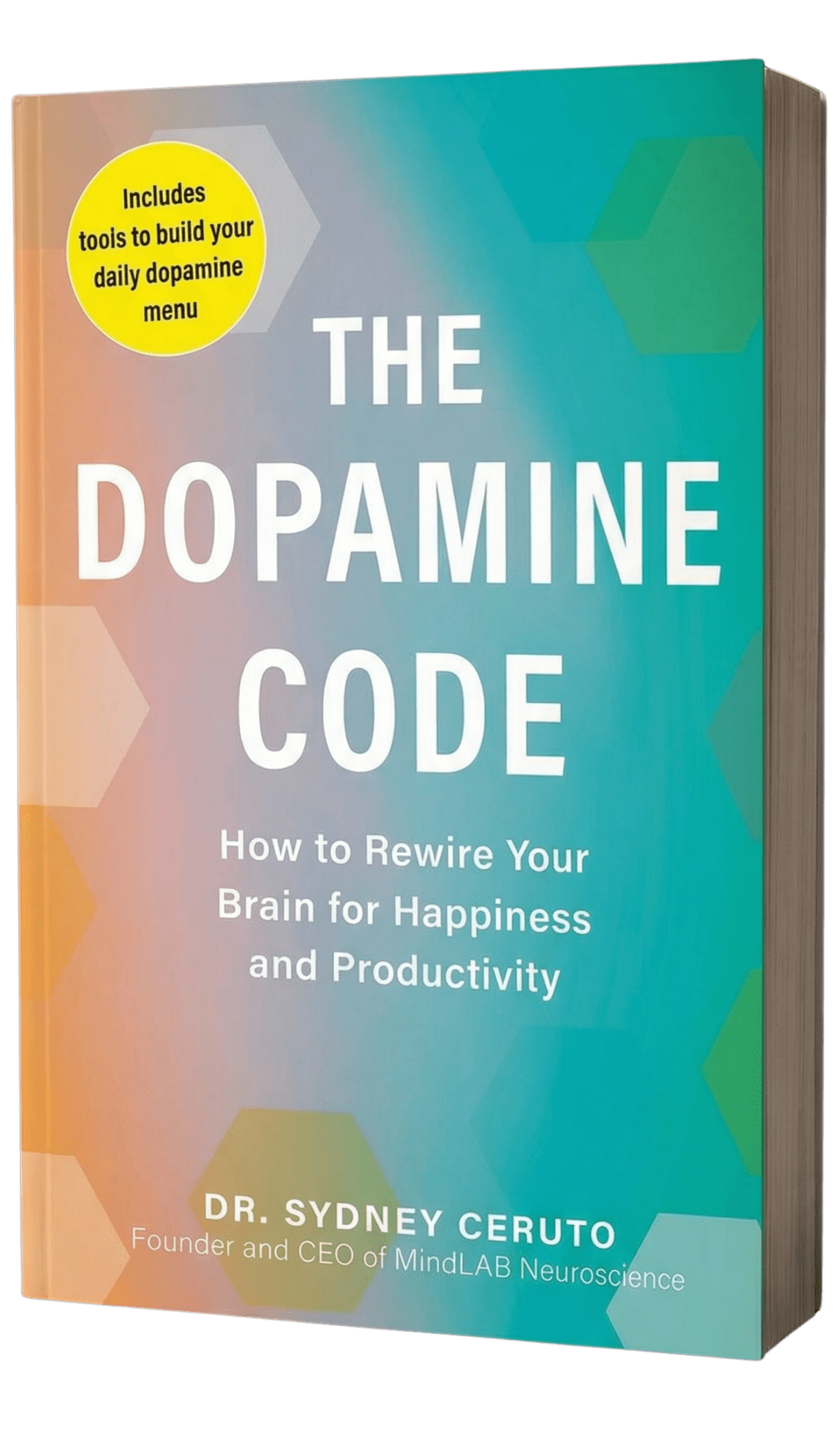
Dr. Ceruto holds a PhD in Behavioral & Cognitive Neuroscience from NYU and two Master’s degrees from Yale University. She lectures at the Wharton Executive Development Program at the University of Pennsylvania and has been an Executive Contributor to the Forbes Coaching Council since 2019. Dr. Ceruto is the author of The Dopamine Code (Simon & Schuster, June 2026). She founded MindLAB Neuroscience in 2000 and has spent over 26 years pioneering Real-Time Neuroplasticity(TM) — a methodology that permanently rewires the neural pathways driving behavior, decisions, and emotional responses.

References

Rangel, A., Camerer, C., & Montague, P. R. (2008). A framework for studying the neurobiology of value-based decision making. Nature Reviews Neuroscience, 9(7), 545–556. https://doi.org/10.1038/nrn2357

Miller, E. K., & Cohen, J. D. (2001). An integrative theory of prefrontal cortex function. Annual Review of Neuroscience, 24, 167–202. https://doi.org/10.1146/annurev.neuro.24.1.167

Kahneman, D., & Klein, G. (2009). Conditions for intuitive expertise: A failure to disagree. American Psychologist, 64(6), 515–526. https://doi.org/10.1037/a0016755

Hare, T. A., Camerer, C. F., & Rangel, A. (2009). Self-control in decision-making involves modulation of the vmPFC valuation system. Science, 324(5927), 646–648. https://doi.org/10.1126/science.1168450

Success Stories

“I found Dr. Ceruto at a time when I needed to change my thinking patterns to live a happier, healthier life, after trying multiple forms of therapy that weren’t resonating. She goes above and beyond to personalize your experience and wastes no time addressing core issues. Sessions aren’t limited to conventional one-hour weekly time slots — they’re completely centered around your specific needs. She’s always available for anything that comes up between sessions, and for me, that was huge. The progress came faster than I expected.”

Palak M. — Clinical Researcher Toronto, ON

“Four hours a night for over two years — that was my ceiling. Supplements, sleep protocols, medication — nothing touched it because nothing addressed why my brain wouldn't shut down. Dr. Ceruto identified the cortisol loop that was keeping my nervous system locked in a hypervigilant state and dismantled it. I sleep now. Not because I learned tricks — because the pattern driving the insomnia no longer exists.”

Adrian M. — Hedge Fund Manager New York, NY

“The conviction was always there at the start — and then the momentum would vanish, every single time. Discipline and accountability systems changed nothing. Dr. Ceruto identified a dopamine signaling deficit in my mesolimbic pathway that was collapsing my ability to sustain effort toward a goal. Once that pattern was restructured, finishing stopped requiring force. The motivation wasn't missing — it was being interrupted.”

Landon J. — Restaurateur New York, NY

“Dr. Ceruto is a true professional with massive experience helping people get where they need to be. The important thing for me was understanding my strengths, developing ways to use them, and learning from the pitfalls that kept me from reaching my goals. She broke it all down and simplified the obstacles that had been painful blockers in my career, providing guidance and tools to conquer them. You will learn a lot about yourself and have a partner who works with you every step of the way.”

Michael S. — Real Estate Developer Boca Raton, FL

“The numbness crept in so gradually I didn't notice until I couldn't feel anything — not stress, not connection, not even relief when things went well. Dr. Ceruto identified it as a dorsal vagal shutdown — my nervous system had flatlined as a survival strategy. Nothing I'd tried before had even named the problem. Within ninety days, the signal came back. I feel things again, clearly and without overwhelm.”

Marcus H. — Fund Manager Dallas, TX

“Every close relationship I had eventually hit the same wall — I'd flood emotionally and shut down or explode, and nothing I'd tried gave me real control over it. Dr. Ceruto identified that my autonomic nervous system was defaulting to fight-or-flight the moment real intimacy was on the line. She didn't give me coping tools. She restructured the default. The flooding stopped because the trigger architecture changed.”

Simone V. — Publicist New York, NY

Frequently Asked Questions About Strategy Consulting in Midtown Manhattan

How is MindLAB's approach different from traditional strategy consulting firms?

Traditional strategy consulting addresses external factors like market analysis and competitive dynamics. MindLAB addresses the internal neural systems that process those decisions. Where consulting firms deliver strategic frameworks, Dr. Ceruto calibrates the prefrontal cortex and anterior cingulate systems that determine execution quality. These approaches complement rather than compete with each other.

What does a neuro-advisory engagement for strategic performance actually look like?

The engagement begins with neurological baseline assessment of executive function — the brain's cognitive control system — architecture. This includes dorsolateral prefrontal capacity, anterior cingulate calibration, working memory integrity, and frontoparietal network switching efficiency. Dr. Ceruto then designs a structured Real-Time Neuroplasticity(TM) protocol targeting identified deficits through spaced sessions calibrated to neuroplasticity consolidation requirements.

Can neuroscience actually improve strategic decision quality — is there evidence?

The evidence is extensive. Wiehler and colleagues demonstrated in Current Biology (2022) that sustained cognitive work causes glutamate accumulation in the lateral prefrontal cortex — the brain's executive control center —, measurably degrading decision quality. Arnsten at Yale documented in Nature Reviews Neuroscience that even mild stress causes rapid loss of prefrontal function. These are identified mechanisms with documented interventions. The biology of strategic cognition is well-characterized, and the neural systems involved respond to targeted recalibration.

Is this relevant if my strategic decisions are generally strong but inconsistent under pressure?

Inconsistency under pressure is one of the most common presenting patterns. It typically reflects stress-induced prefrontal degradation — the dlPFC and ACC systems responsible for strategic analysis are specifically vulnerable to catecholamine modulation under stress. Meanwhile, habit-based systems in the basal ganglia — deep brain structures — remain intact. The result is a professional who executes routine operations flawlessly but loses strategic precision when it matters most. This is a calibration problem, not a capability problem.

Is this available virtually for Midtown Manhattan professionals?

Yes. Dr. Ceruto works with professionals both in-person at the Midtown Manhattan location and through virtual engagement. The neurological assessment and protocol design adapt to either format. The location near Penn Station offers accessibility for in-person sessions, while virtual sessions accommodate the compressed schedules that define the Midtown executive's calendar.

What does the Strategy Call involve?

The Strategy Call is a strategy conversation — not a pitch. Dr. Ceruto assesses the strategic performance context, identifies which neural systems are most likely producing the execution gap, and determines the appropriate engagement structure. It is one hour of precision: understanding the biological architecture before designing the intervention.

What specific problems do Midtown professionals typically bring to MindLAB for strategic performance work?

Decision fatigue accumulation across the workday, cognitive inflexibility under sustained organizational pressure, and the gap between strategic intent and execution consistency. Attention fragmentation in high-stimulation environments, and strategic conservatism driven by ACC effort-cost miscalibration under chronic load. These are not motivation problems. They are neural architecture problems with identified mechanisms and targeted solutions.

How does improving individual strategic neural capacity differ from providing strategic advisory services?

Strategic advisory services provide external analysis, frameworks, and recommendations — they add strategic input to the leader's decision process. This is valuable when the leader has the neural capacity to process and evaluate the input effectively. But when cognitive load, stress, or decision fatigue has degraded the prefrontal circuits responsible for strategic evaluation, even excellent advisory input is processed through compromised architecture.

Dr. Ceruto's approach optimizes the neural architecture that processes strategic input — ensuring the leader's brain evaluates analysis, weighs alternatives, and synthesizes recommendations with full cognitive capacity rather than the degraded processing that sustained organizational demand typically produces.

Can neuroscience-based strategy work improve an entire leadership team's strategic capacity?

Yes — and group strategic capacity often improves faster than individual capacity because of social cognition dynamics. When the 2-3 most influential members of a leadership team improve their strategic neural processing, their upgraded cognition influences the group through mirror neuron systems and social conformity circuits. The team's collective cognitive quality rises disproportionately to the number of individuals who received direct intervention.

Dr. Ceruto identifies the individuals whose neural states most powerfully influence group strategic dynamics and targets them for intervention. This produces the maximum improvement in collective strategic output with the minimum number of individual engagements.

What specific cognitive biases does this approach address that affect strategic decision-making?

Strategic decision-making is systematically distorted by several neural biases: loss aversion (overweighting potential losses by approximately 2:1 versus gains), status quo bias (assigning disproportionate risk to novel states), anchoring (over-relying on initial information), and sunk cost bias (continuing investment based on past spending rather than future value). These are not reasoning errors — they are features of neural architecture that evolved for survival, not strategic planning.

Dr. Ceruto addresses these biases at the circuit level — recalibrating the risk-assessment, valuation, and prediction systems that generate biased strategic processing. When the neural computation is more accurate, strategic decisions naturally improve without requiring the conscious bias-correction efforts that are cognitively expensive and frequently fail under pressure.

Also available in: Miami · Wall Street · Beverly Hills · Lisbon

The Prefrontal Architecture Behind Every Strategic Decision Made in Midtown Manhattan

From the consulting belt along Avenue of the Americas to the financial towers on Park Avenue, strategic decisions carry biological weight that no framework can account for. Dr. Ceruto maps your executive function architecture in one conversation.

Book a Strategy Call
MindLAB Neuroscience consultation room

The Dopamine Code

Decode Your Drive

Why Your Brain Rewards the Wrong Things

Your brain's reward system runs every decision, every craving, every crash — and it was never designed for the life you're living. The Dopamine Code is Dr. Ceruto's framework for understanding the architecture behind what drives you, drains you, and keeps you locked in patterns that willpower alone will never fix.

Published by Simon & Schuster, The Dopamine Code is Dr. Ceruto's framework for building your own Dopamine Menu — a personalized system for motivation, focus, and enduring life satisfaction.

Order Now

Ships June 9, 2026

The Dopamine Code by Dr. Sydney Ceruto — Decode Your Drive
Locations

The Intelligence Brief

Neuroscience-backed analysis on how your brain drives what you feel, what you choose, and what you can’t seem to change — direct from Dr. Ceruto.