Anxiety Management
The brain’s threat-detection system miscalibrated to fire at thresholds far below actual danger. Dr. Ceruto identifies the specific circuits maintaining the pattern and recalibrates the system at the structural level.










The brain’s threat-detection system miscalibrated to fire at thresholds far below actual danger. Dr. Ceruto identifies the specific circuits maintaining the pattern and recalibrates the system at the structural level.
The full threat cascade firing without a proportionate trigger: the neural equivalent of a false alarm that the body experiences as genuinely life-threatening. The fear-of-fear loop that follows often becomes more debilitating than the attacks themselves.
A distinct neural pattern where the brain treats social evaluation as a physical threat. The amygdala fires on social cues that pose no actual danger, while the prefrontal cortex suppresses the approach behavior needed to disprove the threat.
The brain’s internal body-monitoring system stuck in threat mode: misinterpreting normal sensations as danger signals. Every heartbeat variation, muscle twitch, or digestive shift gets flagged as evidence of serious illness.
When the stress response system has been running at elevated baseline for so long that the brain has recalibrated what it considers normal. Chronic cortisol elevation depletes the cognitive and emotional resources needed to function.
The brain’s future-threat modeling system stuck in overdrive: generating worst-case scenarios about events that haven’t happened and may never happen. The anticipation becomes more debilitating than the event itself.
Distinct from confidence: this is the freeze response. The amygdala hijacks motor and cognitive systems at the moment of performance, blocking access to prepared material and practiced capability despite thorough preparation.
The autonomic nervous system locked in its mobilization state: unable to shift into recovery mode. Every environment is assessed for danger, every interaction filtered for threat, and the body sustains a level of activation it was never designed to maintain.
Wall Street's stress architecture is the most extensively documented occupational stress environment in the United States, and the documentation is consistent: the financial district produces chronic physiological stress that is not an aberration of the profession but a structural feature of it. Junior bankers averaging five hours of sleep, a 22% decline in reported mental health since starting current positions, and what a London cardiologist characterized as a clinically significant rise in cardiac events among banking professionals under 30: these are not anecdotes. They are data points describing a professional environment engineered to produce sustained cortisol output and chronic prefrontal depletion. Anxiety in this context is not a clinical disorder. It is a predictable physiological response to an environment calibrated to produce it.
The performance evaluation structure of Wall Street creates a specific anxiety architecture that extends far beyond the immediate evaluation event. In an environment where a single year's performance can determine career trajectory and compensation for years forward, the evaluation is not periodic: it is continuous. The analyst is always being assessed. The VP is always being ranked relative to peers. The MD's book of business is always being compared to others. This means the threat-detection system responsible for social evaluation monitoring is in continuous deployment, which is the neurological equivalent of running a high-intensity process in the background of every waking moment. The cognitive and energetic cost of sustained social evaluation monitoring explains much of what Wall Street professionals describe as unexplained exhaustion and difficulty concentrating on tasks that should be manageable.
Market volatility produces a specific type of anxiety that is neurologically distinct from generalized anxiety and poorly addressed by generalized anxiety interventions. The trader or portfolio manager whose financial exposure shifts moment to moment is experiencing real-time threat monitoring that tracks actual financial danger. The amygdala's response to watching a portfolio decline in real time is not disproportionate: the threat is real. The challenge is that the physiological stress response mobilized by this real threat is identical to the fight-or-flight response, and repeated activation of that response without physical discharge creates the chronic cortisol burden and adrenal dysregulation that characterize the Wall Street professional who presents with "burnout" but does not recognize it as such.
The bonus cycle's psychological impact on anxiety extends well beyond the bonus date itself. The anticipation phase, typically beginning in Q3 and intensifying through year-end, produces sustained anxiety activation as professionals construct competing models of what their bonus might be, compare signals about team and firm performance, and navigate the social dynamics of a culture where discussing compensation is simultaneously forbidden and universally practiced. This sustained anticipatory anxiety depletes exactly the regulatory resources that would allow the person to manage the result, whatever it is, with equanimity. The system arrives at year-end already exhausted from the anticipation of the event it is now trying to manage.
The anxiety management work I do with Wall Street professionals starts from an accurate understanding of the stress environment rather than an assumption that the anxiety is a cognitive distortion. The threats are often real. The regulatory failures are often predictable given the working conditions. The work is to build prefrontal regulatory capacity that can manage real threats without chronic activation, to recalibrate the threat-detection system's sensitivity so it responds proportionately to actual risk rather than worst-case scenarios, and to restore the sleep and recovery architecture that the working environment has systematically eroded.

Dr. Sydney Ceruto, PhD, Neuroscientist & Author, MindLAB Neuroscience
Dr. Ceruto holds a PhD in Behavioral & Cognitive Neuroscience from NYU and Master’s degrees in Clinical Psychology and Business Psychology from Yale University. She lectures at the Wharton Executive Development Program at the University of Pennsylvania and has been an Executive Contributor to the Forbes Coaching Council since 2019. Dr. Ceruto is the author of The Dopamine Code (Simon & Schuster, June 2026). She founded MindLAB Neuroscience in 2000 and has spent over 26 years leading it, pioneering Real-Time Neuroplasticity™, a methodology that durably rewires the neural pathways driving behavior, decisions, and emotional responses.
Shin, L. M., & Liberzon, I. (2010). The neurocircuitry of fear, stress, and anxiety disorders. Neuropsychopharmacology, 35(1), 169–191. https://doi.org/10.1038/npp.2009.83
McEwen, B. S. (2007). Physiology and neurobiology of stress and adaptation: central role of the brain. Physiological Reviews, 87(3), 873–904. https://doi.org/10.1152/physrev.00041.2006
Arnsten, A. F. T. (2009). Stress signalling pathways that impair prefrontal cortex structure and function. Nature Reviews Neuroscience, 10(6), 410–422. https://doi.org/10.1038/nrn2648
Management techniques teach strategies for coping with anxiety after it activates: breathing exercises, cognitive reframing, mindfulness awareness. These approaches accept that the brain will continue generating excessive threat responses and focus on handling the output. Dr. Ceruto's approach targets the neural architecture generating the disproportionate response, recalibrating amygdala thresholds and restoring prefrontal regulatory capacity so the excessive activation stops occurring at its source.
Yes. Neuroplasticity research demonstrates that the amygdala's threat-detection thresholds and the prefrontal cortex's regulatory capacity remain modifiable throughout adulthood. Chronic anxiety reflects sustained miscalibration, not permanent damage. The neural systems that have become hyperreactive can be recalibrated through targeted intervention: even after years of chronic activation.
The amygdala processes potential threats approximately 300 milliseconds before the prefrontal cortex can evaluate them rationally. By the time your conscious mind determines the situation is safe, the anxiety response is already fully activated: heart rate elevated, cortisol released, prefrontal function partially suppressed. The irrationality you experience is the gap between two neural systems operating at different speeds on the same situation.
Chronic stress produces measurable structural changes that are significant but not permanent: the prefrontal cortex thins, the amygdala enlarges, and the hippocampus, the brain's memory center, loses volume. Neuroplasticity ensures these structures can be restored under the right conditions. However, restoration does not happen spontaneously through rest or stress removal alone. Targeted intervention is required to reverse the architectural changes that sustained stress has produced.
Physical anxiety symptoms are generated by the autonomic nervous system in direct response to amygdala threat activation. When the brain classifies a situation as dangerous, it triggers the same physiological cascade designed for physical survival threats: regardless of whether the threat is physical. Recalibrating the amygdala's threat classification at the neural level eliminates the physical symptoms at their source because the signal that triggers them is no longer being generated.
Generalized background anxiety typically reflects an amygdala whose baseline activation threshold has dropped below the level of ordinary daily stimuli: meaning the brain is generating low-level threat responses to situations that should register as neutral. This is an architectural calibration issue, not a response to specific triggers. Dr. Ceruto recalibrates the baseline threshold so the threat-detection system returns to appropriate sensitivity.
Genuine architectural change does not require ongoing maintenance. When the amygdala's threat thresholds are recalibrated and the prefrontal cortex's regulatory capacity is restored, the improved processing becomes the brain's new default. This is fundamentally different from management approaches that require continuous practice to maintain their effects. Structural neural change is self-sustaining because the architecture has been durably updated.
The Strategy Call maps the neural landscape of your anxiety pattern: identifying which threat-detection circuits are miscalibrated, how the stress-response system has been affected by chronic activation, what the relationship between your specific triggers and your amygdala's classification system looks like, and where targeted intervention will produce the most significant recalibration. You leave with a neurological understanding of why your anxiety operates the way it does.
One hour with Dr. Sydney Ceruto. You leave knowing which neural pattern is actually driving this, and what to do about it.
Book a Strategy Call
Decode Your Drive
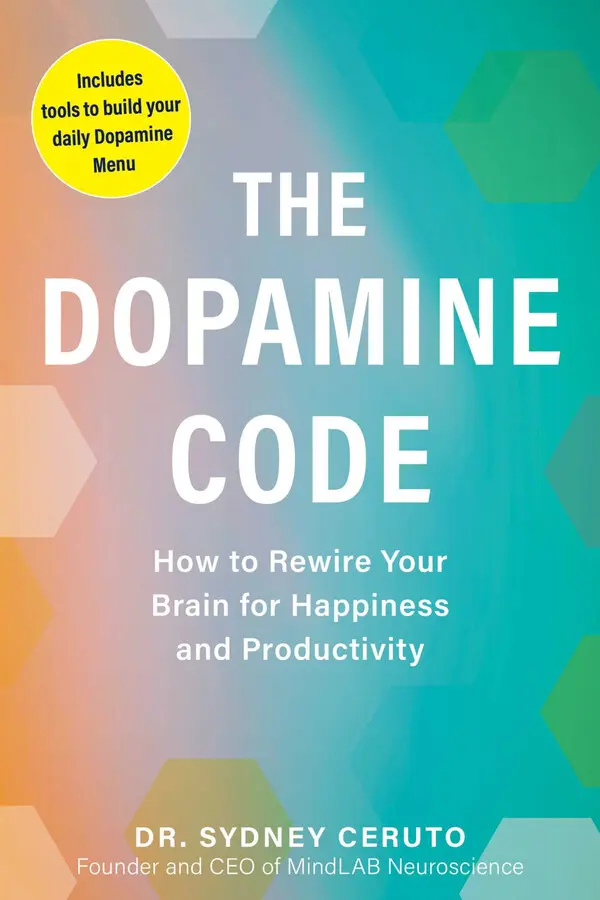
Your brain's reward system runs every decision, every craving, every crash, and it was never designed for the life you're living. The Dopamine Code is Dr. Ceruto's framework for understanding the architecture behind what drives you, drains you, and keeps you locked in patterns that willpower alone will never fix.
Published by Simon & Schuster, The Dopamine Code is Dr. Ceruto's framework for building your own Dopamine Menu, a personalized system for motivation, focus, and enduring life satisfaction.
Order Now!Available now