Brain Fog & Cognitive Clarity in Wall Street

Dr. Sydney Ceruto provides neuroscience-based brain fog assessment and cognitive clarity optimization for individuals experiencing persistent mental cloudiness, attention deficits, and impaired processing speed.

Brain fog isn't vagueness or laziness — it's a measurable disruption in the prefrontal cortex's ability to filter, prioritize, and execute. At MindLAB Neuroscience, we identify the specific neural and metabolic drivers behind your cognitive cloudiness and build targeted protocols to restore the clarity your brain is capable of producing.
Book a Strategy Call

Key Points

  1. Brain fog arises from identifiable disruptions across interconnected neural systems including neuroinflammation, HPA axis dysregulation, blood-brain barrier compromise, and circadian misalignment.
  2. Microglial priming explains why cognitive impairment persists long after the original trigger resolves — the brain's immune cells remain hypersensitive to inflammatory stimuli.
  3. Circadian misalignment produces performance deficits of twelve to fifteen percent in sustained attention and processing speed through mechanisms distinct from simple sleep deprivation.
  4. Post-viral neurological impact can trigger sustained brain immune activation and alter structural wiring for months or years after acute infection resolves.
  5. Brain fog is a symptom cluster requiring precise differentiation of which biological systems are compromised — generic interventions produce generic results.
  6. The same factors driving brain fog actively suppress neuroplasticity, requiring a dual strategy: removing suppressors while activating restoration pathways.
  7. Effective resolution requires identifying root mechanisms across stress physiology, sleep architecture, inflammatory markers, and metabolic factors — not symptom management.

When Sharp Thinking Starts to Fade

“The mental sharpness that defined your professional performance begins to feel unreliable — persistently diminished, like cognition operating through resistance. This is brain fog, and it is far more than a subjective feeling.”

The experience is unmistakable. Sentences that once formed effortlessly now require deliberate assembly. A name sits on the edge of recall but refuses to surface. A spreadsheet that would have taken forty minutes now consumes an entire morning, not because the work is harder but because the brain processing it has changed. Brain fog is not a diagnosis in itself but a symptom cluster arising from measurable neurobiological dysfunction. This includes reduced cognition, impaired working memory, diminished processing speed, word-finding difficulties, and an inability to sustain attention across complex tasks.

What makes brain fog particularly insidious is its invisibility. Unlike a broken limb or a fever, cognitive impairment leaves no external trace. The person experiencing it often cannot articulate what has changed, only that something fundamental feels different. They describe it as thinking through gauze, operating at sixty percent, or losing the thread of their own reasoning mid-sentence. For anyone whose livelihood depends on precision thinking, this is not a minor inconvenience. It is an existential threat to professional identity.

The Biology Behind Clouded Thinking

When the Brain’s Immune System Backfires

The neurobiological mechanisms behind brain fog are now well characterized. At the cellular level, neuroinflammation plays a central role. When the brain’s resident immune cells — microglia — shift from their normal surveillance function into a chronically activated state, they release pro-inflammatory cytokines including TNF-alpha, IL-1-beta, and IL-6. These molecules directly suppress long-term potentiation, the synaptic mechanism underlying memory formation and cognitive flexibility. The result is a brain that can still function but operates with degraded signal clarity, slower processing, and impaired ability to consolidate new information.

Macro cross-section of neural pathway with copper sheathing forming around blue signal core depicting active brain optimization

When Protection Becomes the Problem

Blood-brain barrier integrity is another critical factor. The blood-brain barrier functions as a selective gatekeeper, controlling which molecules access neural tissue. When this barrier becomes permeable peripheral inflammatory molecules enter the central nervous system and activate neuroinflammatory cascades that would not otherwise occur. Emerging research has linked increased blood-brain barrier permeability to accelerated cognitive decline even in individuals with no prior neurological diagnosis.

The hypothalamic-pituitary-adrenal axis — the brain’s central stress-response system — adds a third layer of disruption. Chronic activation of this system produces sustained cortisol elevation that suppresses hippocampal neurogenesis, reduces brain-derived neurotrophic factor expression, and promotes dendritic retraction in the very brain regions responsible for memory and executive function. A flattened cortisol rhythm has been associated with impaired cognitive capability across multiple longitudinal cohort studies.

Modern Triggers for Mental Fatigue

Post-COVID neurological sequelae have added a fourth, now well-documented pathway. Approximately 27% of COVID-19 survivors exhibit measurable cognitive impairment, with brain fog affecting roughly 60% of long COVID patients. Longitudinal tracking of long-COVID patients over two to three years found that brain fog persisted in 60% of patients even years after the initial infection resolved. The mechanisms include viral neurotropism, sustained microglial activation, disrupted neurotransmitter signaling, and persistent blood-brain barrier dysfunction. For anyone who contracted COVID between 2020 and 2022, unresolved neuroinflammation may be silently degrading cognitive performance years later.

Circadian disruption compounds all of these pathways. The brain’s waste-clearance system — the glymphatic system — operates primarily during deep sleep, flushing metabolic byproducts including amyloid-beta proteins that accumulate during waking hours. When sleep is chronically restricted or poorly timed, this clearance process is impaired, and the toxic burden on neural tissue accumulates night after night. The individual who sleeps five or six hours consistently is not merely tired — they are allowing neurotoxic metabolites to accumulate in the very brain regions responsible for the cognition they need most.

The gut-brain axis adds yet another dimension. The enteric nervous system communicates with the central nervous system through the vagus nerve — the body’s main calming nerve. Disruptions to gut microbiome diversity impair the synthesis of neurotransmitters including serotonin and GABA that the brain depends on for sustained attention and emotional regulation. For someone experiencing brain fog alongside digestive irregularity, mood instability, or anxiety, the gut-brain connection is often the missing piece of the biological picture.

Mapping Your Path to Mental Clarity

Dr. Ceruto’s approach to brain fog begins with understanding which of these mechanisms — or which combination — is driving the cognitive impairment in a specific individual. The brain is not a single system that fails uniformly. It is a network of interdependent systems, each with its own vulnerability profile and its own capacity for recovery. Neuroinflammation, HPA axis dysregulation — the breakdown of normal control systems —, circadian misalignment, blood-brain barrier compromise, and post-viral sequelae each produce distinct cognitive signatures and each respond to different optimization strategies.

Mahogany desk with crystal brain sculpture and MindLAB journal in warm lamp light surrounded by leather-bound volumes in institutional Wall Street study

Beyond Quick Fixes and Band-Aids

This is the critical distinction between neuroscience-based cognitive clarity work and conventional approaches that default to stress management or medication. A neuroscientist educates on the specific biological mechanisms degrading cognitive function and maps a path toward restoring the neural conditions under which clarity, speed, and sustained attention become possible again. The brain retains remarkable neuroplastic capacity when the biological obstacles are identified and addressed with precision.

For deeper context, explore ADHD brain fog and cognitive clarity.

Marker What You Experience What's Happening Neurologically What We Restructure
Mental sluggishness Decisions that once took seconds now require minutes of deliberation Neuroinflammation — the brain's immune cells have shifted from maintenance to chronic activation, impairing working memory and attention circuits The inflammatory cascade driving sustained microglial activation and its suppression of cognitive function
Word retrieval failure Words that were readily available disappear mid-sentence Excess cortisol is suppressing growth factors the brain's memory center depends on for consolidation and flexible thinking HPA axis regulation to restore cortisol rhythm and protect hippocampal function
Persistent cognitive haze Fog that seems disproportionate to current circumstances, lingering long after the original stressor resolved Microglial priming — prior stress or illness has left immune cells hypersensitive, mounting exaggerated inflammatory responses to normal stimuli The priming threshold so the brain's immune system returns to proportionate, adaptive responses
Post-viral impairment Cognitive difficulties persisting months after illness, with reduced productivity and increased error rates Viral infections triggered sustained activation of brain immune cells and compromised the blood-brain barrier, allowing systemic inflammation into the brain Blood-brain barrier integrity and the neuroinflammatory markers maintaining the post-viral cognitive state
Circadian fog Performance deficits that do not improve with extra sleep or consecutive days of adjustment Behavioral patterns have fallen out of sync with the brain's internal clock, producing cognitive deterioration through mechanisms distinct from sleep deprivation Circadian alignment — synchronizing the molecular clock with behavioral patterns to restore optimal neural timing

Why Brain Fog & Cognitive Clarity Matters in Wall Street

Lower Manhattan concentrates one of the highest densities of cognitively demanding professionals in the world and one of the most significant neurological burden profiles. The approximately 300,000 daily commuters who flow into the Financial District include tens of thousands of knowledge workers for whom cognitive sharpness is not a lifestyle preference but an occupational prerequisite. A single miscalculation, a delayed decision, or an attention lapse in high-stakes financial work carries consequences measured in millions.

The structural environment of the Financial District compounds cognitive fatigue through factors that most professionals never consciously register. The narrow canyon streets of Lower Manhattan limit natural daylight access, depriving the prefrontal cortex and hippocampus of the light-mediated circadian entrainment needed for optimal memory consolidation. This process converts short-term memories to long-term and supports executive function. First-year analysts at major firms have reported averaging 95 hours of work per week with five hours of sleep per night. This combination systematically degrades working memory — short-term mental workspace —, processing speed, and decision quality.

New York City was one of the earliest and hardest-hit pandemic epicenters in 2020. This means the cohort of professionals now in their late twenties through early forties who contracted COVID during the first and second waves may be carrying undiagnosed cognitive deficits that conventional medicine has no reliable protocol to address. The Federal Reserve Bank of New York itself published research noting that long COVID’s brain fog is driving an increase of approximately 1.3 million people reporting difficulties with concentration or memory since mid-2020. About 75% of disabled long-COVID patients experience cognitive difficulties.

The existing wellness landscape in the Financial District offers little that specifically targets cognitive optimization at the neurological level. Meditation apps, corporate wellness programs, and even the fitness culture of nearby Battery Park City address symptoms rather than the underlying neurobiological mechanisms. For anyone navigating high-stakes decisions while experiencing persistent cognitive cloudiness, the gap between what conventional providers offer and what neuroscience can address is substantial. Dr. Ceruto’s practice at 99 Wall Street fills that gap with the mechanistic precision that the complexity of brain fog demands.

Dr. Sydney Ceruto, PhD — Founder, MindLAB Neuroscience

Dr. Sydney Ceruto, PhD — Founder & CEO, MindLAB Neuroscience

Dr. Ceruto holds a PhD in Behavioral & Cognitive Neuroscience from NYU and two Master’s degrees from Yale University. She lectures at the Wharton Executive Development Program at the University of Pennsylvania and has been an Executive Contributor to the Forbes Coaching Council since 2019. Dr. Ceruto is the author of The Dopamine Code (Simon & Schuster, June 2026). She founded MindLAB Neuroscience in 2000 and has spent over 26 years pioneering Real-Time Neuroplasticity™ — a methodology that permanently rewires the neural pathways driving behavior, decisions, and emotional responses.

References

Haywood, D., Hart, N. H., & Rossell, S. L. (2025). Cutting through the fog: Recognising brain fog as a significant public health concern. BMC Public Health, 25, 22525. https://doi.org/10.1186/s12889-025-22525-6

Hussain, B., Fang, C., & Chang, J. (2021). Blood-brain barrier breakdown: An emerging biomarker of cognitive impairment in normal aging and dementia. Frontiers in Neuroscience, 15, 688090. https://doi.org/10.3389/fnins.2021.688090

Monje, M., & Iwasaki, A. (2022). The neurobiology of long COVID. Neuron, 110(21), 3484-3496. https://doi.org/10.1016/j.neuron.2022.10.006

Singh-Manoux, A., Dugravot, A., Brunner, E., Kumari, M., Shipley, M., Elbaz, A., & Kivimaki, M. (2014). Interleukin-6 and C-reactive protein as predictors of cognitive decline in late midlife. Neurology, 83(6), 486-493. https://doi.org/10.1212/WNL.0000000000000665

Success Stories

“I'd optimized everything — diet, fitness, sleep — but my cognitive sharpness was quietly declining and no one could explain why. Dr. Ceruto identified the synaptic density patterns that were thinning and built a protocol to reverse the trajectory. This wasn't prevention in theory. My neuroplasticity reserve is measurably stronger now than it was three years ago. Nothing I'd tried before even addressed the right problem.”

Henrique L. — University Dean Lisbon, PT

“Slower processing, foggier recall, decisions that used to be instant taking longer than they should — I'd been accepting it all as inevitable decline for two years. Dr. Ceruto identified the prefrontal efficiency pattern that was degrading and restructured it at the neurological level. The sharpness didn't just come back. It came back faster and more precise than it was a decade ago. Nothing I'd tried before even addressed the right problem.”

Elliott W. — Wealth Advisor Atherton, CA

“Nothing was wrong — and that's exactly why no one could help me. I wasn't struggling. I wanted to know what my brain was actually capable of if its resting-state architecture was optimized. Dr. Ceruto mapped my default mode network and restructured how it allocates resources between focused and diffuse processing. The cognitive clarity I operate with now isn't something I'd ever experienced before — and I had no idea it was available.”

Nathan S. — Biotech Founder Singapore

“After the concussion, my processing speed collapsed — I couldn't hold complex information the way I used to, and no one could explain why the fog wasn't lifting. Dr. Ceruto mapped the damaged pathways and built compensatory networks around them. My brain doesn't work the way it did before the injury. It works differently — and in some ways, more efficiently than it ever did.”

Owen P. — Orthopedic Surgeon Scottsdale, AZ

“My kids had been sleeping through the night for three years, but my brain hadn't caught up. I was still waking every ninety minutes like clockwork — no amount of sleep hygiene or supplements touched it. Dr. Ceruto identified the hypervigilance loop that had hardwired itself during those early years and dismantled it at the source. My brain finally learned the threat was over. I sleep through the night now without effort.”

Catherine L. — Board Director Greenwich, CT

“Outperforming every metric for years and feeling absolutely nothing — no satisfaction, no drive, just a compulsive need to keep going. Executive retreats, meditation protocols, none of it made a difference. Dr. Ceruto identified the dopamine downregulation that was driving the entire pattern. My reward system had essentially gone offline from overstimulation. She didn't teach me to reframe success — she restored the neurochemistry that lets me actually experience it.”

Mikhail D. — Family Office Principal Washington, DC

Frequently Asked Questions About Brain Fog & Cognitive Clarity in Wall Street

What is brain fog assessment at MindLAB Neuroscience?

Dr. Ceruto’s brain fog assessment identifies the specific neurobiological mechanisms driving cognitive impairment — whether neuroinflammation, HPA axis dysregulation — the breakdown of normal control systems —, circadian misalignment, blood-brain barrier compromise, or post-viral sequelae. Rather than treating brain fog as a single condition, the assessment maps which systems are underperforming and designs a targeted optimization strategy based on each individual’s unique neurological profile.

What causes brain fog at the neurological level?

Brain fog arises from measurable dysfunction across multiple neural systems. Chronic neuroinflammation suppresses the synaptic mechanisms responsible for memory and attention. Sustained cortisol elevation from HPA axis dysregulation — the breakdown of normal control systems — damages hippocampal neurons and reduces neurotrophic factor expression. Impaired glymphatic clearance during disrupted sleep allows metabolic waste to accumulate in neural tissue. Post-COVID neurological changes add a fourth common pathway. These mechanisms often overlap, producing compound cognitive impairment.

Who typically seeks brain fog and cognitive clarity services?

Individuals who notice persistent changes in their cognitive sharpness — slower processing, difficulty sustaining focus through complex tasks, word-retrieval delays, or a general sense of operating below their baseline. Many have already consulted primary care physicians or undergone standard bloodwork without finding an explanation. Others recognize that years of high-pressure demands, insufficient sleep, or a past COVID infection may have accumulated into a cognitive deficit they can no longer compensate for.

How does someone begin working with Dr. Ceruto on brain fog?

The process begins with a Strategy Call — a phone-based conversation with Dr. Ceruto to assess whether neuroscience-based cognitive optimization is the right fit. The Strategy Call costs $250 and provides an opportunity to discuss cognitive concerns, relevant history, and what a targeted program might look like. Program structure and investment details are discussed during the Strategy Call.

How long does it typically take to see improvements in cognitive clarity?

Timelines vary depending on which mechanisms are driving the impairment and how long they have been active. Some individuals notice measurable improvements in focus and processing speed within the first several weeks as acute neuroinflammatory and circadian factors are addressed (relating to the body's 24-hour biological clock). Deeper neuroplastic changes — rebuilding synaptic density and restoring neurotransmitter balance — unfold over months. Dr. Ceruto provides ongoing assessment to track progress against objective cognitive benchmarks.

Also available in: Miami · Midtown Manhattan · Beverly Hills · Lisbon

Take the First Step Toward Cognitive Clarity

The Strategy Call is a focused conversation with Dr. Ceruto that maps the specific neural mechanisms driving your concerns and determines the right path forward.

Book a Strategy Call
MindLAB Neuroscience consultation room

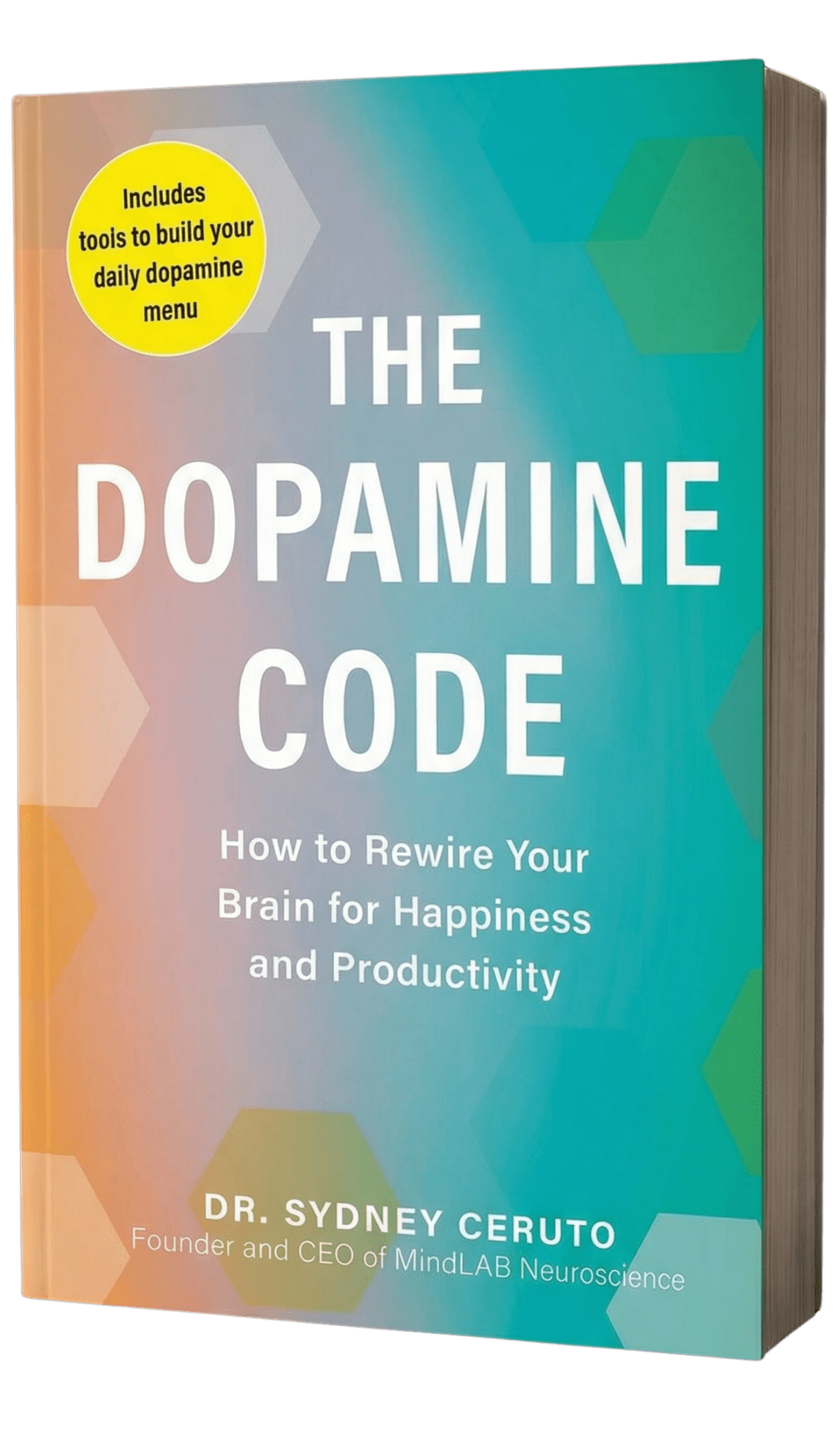
The Dopamine Code

Decode Your Drive

Why Your Brain Rewards the Wrong Things

Your brain's reward system runs every decision, every craving, every crash — and it was never designed for the life you're living. The Dopamine Code is Dr. Ceruto's framework for understanding the architecture behind what drives you, drains you, and keeps you locked in patterns that willpower alone will never fix.

Published by Simon & Schuster, The Dopamine Code is Dr. Ceruto's framework for building your own Dopamine Menu — a personalized system for motivation, focus, and enduring life satisfaction.

Order Now

Ships June 9, 2026

The Dopamine Code by Dr. Sydney Ceruto — Decode Your Drive
Locations

The Intelligence Brief

Neuroscience-backed analysis on how your brain drives what you feel, what you choose, and what you can’t seem to change — direct from Dr. Ceruto.