The Misalignment Problem
“Psychometric instruments capture what you consciously believe about yourself at the moment you answer. They cannot access the deeper neural systems that encode your professional identity, govern how vividly you can imagine a different future, or determine whether a new direction will feel authentically yours.”
You have performed well by every external metric available. Compensation has grown. Titles have advanced. Colleagues regard you as successful. And yet something registers as wrong, not dramatically, not catastrophically, but persistently. A low-grade tension between what your career demands and what your internal compass signals has been building for years, and no amount of professional achievement seems to resolve it.
This is not a motivation problem. It is not burnout in the conventional sense, although burnout often accompanies it. What you are experiencing is a structural misalignment between your career trajectory and the neural architecture that encodes your actual identity. This architecture includes your values, your sense of purpose, the attributes that matter most to who you believe yourself to be. The career you built at twenty-two was constructed on a set of assumptions about what would matter. A decade or more later, those assumptions no longer match the person you have become.
The standard response is to take an assessment. Personality inventories, strengths profiles, interest questionnaires are instruments designed to catalog self-reported preferences and match them to career categories. These tools capture the conscious, deliberate layer of career preference. They measure what you say you want. They do not measure what your brain has encoded as foundational to your identity. The gap between those two layers is precisely where career misalignment lives, and it is precisely where conventional career assessment tools fall silent.
For professionals operating in high-compensation, high-pressure environments, this gap carries enormous consequence. The tension between externally validated success and internally registered misalignment produces decision paralysis, chronic dissatisfaction, and a creeping sense. That sense tells you that the next promotion or the next fund will not resolve what the last one failed to fix. The pattern repeats because the underlying architecture has never been accurately mapped.
The Neuroscience of Career Identity
Career identity is not a preference. It is a biological structure, a graded hierarchy of self-relevant attributes encoded in specific neural circuits. Understanding why career misalignment persists requires understanding how the brain constructs and maintains the sense of who you are professionally.
Functional MRI with representational similarity analysis across two preregistered experiments to demonstrate that the medial prefrontal cortex, the brain’s executive control center, does not simply activate during self-reflection. It actively represents the structure of self-identity in terms of personal importance. The mPFC encodes which attributes are most central to your self-concept, not which are most descriptive, and not which are most relevant to other people. This finding has direct consequences for career assessment. A professional who scores high in analytical rigor on a standard inventory but whose mPFC — medial prefrontal cortex — encodes creative autonomy as foundational to identity will appear career-satisfied by conventional measures while experiencing the exact misalignment.
The architecture runs deeper than the mPFC alone. A landmark review by Stanford neuroscientist Vinod Menon synthesizes twenty years of research on the default mode network. The medial prefrontal cortex and posterior cingulate cortex function as an integrated network during career deliberation. When you contemplate whether your current role still fits, these systems activate. When you imagine what a different professional life would feel like, when you attempt to reconcile past choices with present dissatisfaction, your DMN — default mode network — is the biological substrate performing that work.
What I see repeatedly in this work is that the DMN — default mode network — does not operate as a passive resting-state network. It is actively engaged during episodic future thinking, personal goal processing, and the integration of autobiographical memory with prospective planning. Career assessment, at its most fundamental level, is an exercise in these exact DMN functions. Conventional instruments capture only the surface-level output of this system. They bypass the deeper DMN-mediated processes where career identity conflicts actually originate.
Research by Yeshurun, Nguyen, and Hasson extends this further. The DMN functions as an active sense-making system integrating incoming external information with prior internal information, accumulated memories, personal values, and self-models, to construct rich, context-dependent models of situations. For finance professionals, career decisions are never made in isolation from the social world of their industry. Compensation benchmarks, title trajectories, peer comparisons, institutional prestige hierarchies are all being integrated by the DMN — default mode network — with the individual’s idiosyncratic values in real time. The DMN is simultaneously encoding what matters to you personally and simulating how those values will be perceived and validated in your professional world. When those two streams diverge, the result is the chronic low-grade career tension that no standard assessment can diagnose, because no standard assessment engages the integrative function where the conflict lives.
How Dr. Ceruto Approaches Career Assessment
Dr. Ceruto’s methodology begins where conventional assessment instruments end. The brain’s ability to rewire itself addresses the specific mPFC and DMN systems that encode professional identity. This targets the self-importance hierarchies, future-self projection capacities, and social-world integration processes that govern career satisfaction at a biological level.
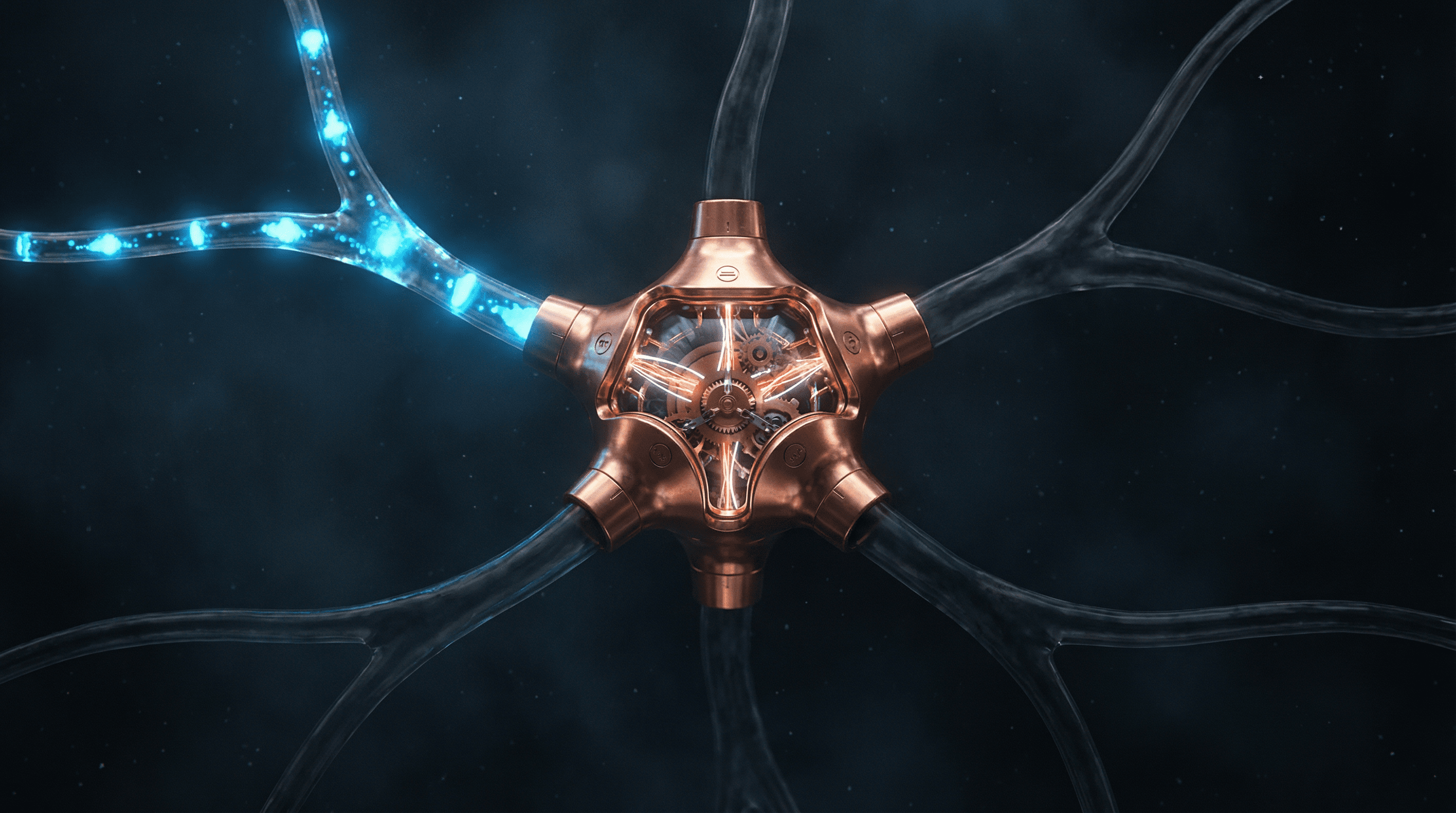
The pattern that presents most often is a professional whose conscious career preferences have drifted substantially from what their neural self-concept actually prioritizes. Standard instruments cannot detect this drift because they rely on the conscious layer. Dr. Ceruto’s approach engages the deeper architecture, mapping which professional attributes carry genuine self-importance in the mPFC. It reveals how the DMN is constructing the ongoing career narrative, and where the integration between personal identity and professional context has broken down.
This is not a generic exploration process. It is targeted to the specific neural mechanisms the research identifies as foundational to career identity. The methodology produces a map of the client’s actual identity architecture it is a specific, identifiable gap between neural self-concept and professional trajectory, and it can be addressed with precision.
For professionals navigating complex career questions the NeuroSync program addresses focused, single-issue career assessment with targeted precision. For those whose career questions intersect with broader life architecture, relationships, purpose, legacy, the NeuroConcierge program provides a comprehensive embedded partnership that addresses the full scope of neural identity.
What to Expect
The engagement begins with a Strategy Call, a focused conversation that establishes whether the career assessment need maps to the neural mechanisms Dr. Ceruto’s methodology addresses. This is not a sales conversation. It is a evaluative filter that protects both the client’s investment and the integrity of the process.
From there, the assessment phase maps the client’s neural self-concept architecture. This identifies the hierarchies of personal importance encoded in the mPFC and the current state of DMN narrative integration. It reveals the specific points of divergence between identity and trajectory. This is followed by a structured protocol that translates assessment findings into actionable career clarity.
In over two decades of clinical neuroscience practice, the most reliable predictor of assessment value is the client’s recognition that something is structurally misaligned, not just situationally frustrating. The process is personalized to each client’s neural architecture. There are no generic templates, no predetermined outcomes, and no standardized timelines. The assessment reveals what the brain already knows about career fit but has not yet surfaced to conscious awareness.
References
Vinod Menon (2023). The DMN: 20 Years of Self-Reference, Identity, and Autobiographical Memory. Neuron. https://doi.org/10.1016/j.neuron.2023.04.023
Hannah Kiesow, Lucina Q. Uddin, Boris C. Bernhardt, Joseph Kable, Danilo Bzdok (2021). mPFC Structural Remodeling During Midlife Career and Social Transitions. Communications Biology. https://doi.org/10.1038/s42003-021-02206-x
Yaara Yeshurun, Mai Nguyen, Uri Hasson (2021). Nature Reviews Neuroscience. https://doi.org/10.1038/s41583-020-00420-w
Shunsui Matsuura, Shinsuke Suzuki, Kosuke Motoki, Shohei Yamazaki, Ryuta Kawashima, Motoaki Sugiura (2021). Cerebral Cortex Communications. https://doi.org/10.1093/texcom/tgab018
The Neural Architecture of Career Fit
Career assessment, as most professionals encounter it, is a measurement exercise. Instruments evaluate interest clusters, personality dimensions, and aptitude domains, and match the resulting profile against an occupational database. The output is a ranked list of careers for which the individual shows statistical compatibility. This is genuinely useful as a starting point. It is insufficient as a guide for the decisions that actually matter — the decisions about whether to stay or leave, advance or pivot, invest in depth or move to adjacent territory — because it does not address the neural architecture that determines whether any given career environment will produce sustained engagement, meaningful challenge, and the reward signal that the brain requires to sustain long-term performance.
Dopaminergic architecture is the missing variable. The brain’s reward system does not respond to what an individual has been told they are good at, or what a profile instrument predicts they will prefer. It responds to specific categories of challenge, uncertainty, and outcome that have been encoded through experience as reward-generating. Two individuals with nearly identical interest profiles can experience radically different levels of engagement in the same role, because their dopaminergic reward circuits are calibrated to different challenge dimensions. The person whose reward system responds to social complexity will burn out in a role optimized for technical depth, and vice versa, regardless of what their assessment profile predicts.
Predictive coding is equally relevant. The brain continuously generates predictions about future experience based on past pattern recognition, and allocates attention and motivation resources accordingly. A professional whose brain predicts that a career path will generate the specific type of challenge their neural architecture finds rewarding will sustain effort across obstacles, setbacks, and periods of slow progress. A professional whose brain predicts an increasingly poor match between their neural architecture and their career environment will experience progressive disengagement that no amount of strategic career management can prevent — because the prediction is being generated below the threshold of conscious awareness.
Why Traditional Approaches Fall Short
Standard career assessment frameworks were developed before modern neuroscience had mapped the specific neural mechanisms that determine sustained engagement. They are built on self-report data — what individuals consciously prefer, consciously value, and consciously identify as their strengths — filtered through statistical models trained on population-level correlations. These tools have real predictive power at the population level. At the individual level, they miss the neural specificity that determines whether a given career environment will actually sustain engagement for this particular brain.
The practical consequence is that professionals who follow well-designed career assessments into roles that match their profile on every measured dimension still find themselves, five or ten years in, experiencing a version of career malaise that the assessment predicted they should not be experiencing. The interest match is real. The values alignment is genuine. The aptitude fit is confirmed by performance metrics. And the internal experience of engagement — the reward signal that the brain requires to sustain motivation across a career — is progressively depleted.

This pattern is not a failure of self-knowledge. It is a reflection of the gap between what conventional assessment measures and what the neural architecture of engagement actually requires. No paper-and-pencil instrument, however sophisticated, can directly map the specific reward calibration of an individual’s dopaminergic system, the threat sensitivity of their amygdala in response to specific work conditions, or the cognitive load that their prefrontal system can sustain before regulatory capacity degrades. These are neural variables, and they require neural-level assessment.
How Neural Career Assessment Works
My approach to career assessment begins where conventional instruments end. The inventory of interests, values, aptitudes, and personality dimensions is a starting point — a map of the conscious, reportable layer of career fit. From there, I work with the neural layer: examining the specific categories of challenge and outcome that an individual’s reward system has been trained to find reinforcing, the threat patterns that erode regulatory capacity in specific work environments, and the cognitive architecture that determines which types of complex problems will sustain engagement and which will produce progressive depletion.
This assessment is not a test. It is a structured investigation conducted across a series of conversations that examine the neural signatures embedded in an individual’s career history. Every period of peak engagement and peak depletion has left a neural record. The challenge types that generated the strongest intrinsic reward, the environments that produced the most reliable access to flow states, the decision contexts that felt most alive — these are data points that reveal the specific configuration of the individual’s reward architecture far more precisely than any self-report instrument.
The output is a neural career profile: a map of the specific challenge dimensions, environmental conditions, and outcome structures that this particular brain is most wired to find reinforcing. This profile drives career strategy — not by matching it to an occupational database, but by using it to evaluate specific opportunities against the neural variables that will determine whether sustained engagement is possible. The question shifts from what does the profile predict to what does this specific role require from this specific neural architecture?
What This Looks Like in Practice
Professionals who come to this work are typically experiencing a version of career disorientation that conventional assessment has not resolved. They have taken the instruments, gotten the profiles, perhaps even consulted with career coaches, and still cannot find a coherent answer to the question of where their career should go next. The disorientation is not a failure of self-awareness. It is a signal that the assessment approach has been operating at the wrong level of specificity.
A Strategy Call with Dr. Ceruto begins the process of reframing the career question at the neural level. From that conversation, I build a structured assessment engagement designed to map the individual’s specific reward architecture against the career landscape. For professionals navigating a single, well-defined decision — whether to take a specific role, whether to stay or leave a particular organization — a focused NeuroSync engagement produces the neural clarity the decision requires. For those navigating broader career restructuring, the NeuroConcierge model provides the sustained partnership that multi-phase transitions require. The Dopamine Code explores the reward architecture science that underlies this work in detail for those who want to understand the neurological basis of career engagement.
For deeper context, explore neuroscience coaching for career assessment.